On this page
You've seen a seven-stone bracelet or a chart pairing crystals with chakras, and you want to know what each one is supposed to mean.
This guide goes through the chakra stones one by one: what each stone is, which chakra it's paired with, and why.
The short answer
Chakra stones are crystals matched to the seven chakras, mostly by color. Red goes with the root, orange with the sacral, yellow with the solar plexus, green and pink with the heart, light blue with the throat, deep blue with the third eye, and violet with the crown.
Each stone is a symbol for the theme of its chakra, such as steadiness, honest speech or compassion. The pairings are tradition and color logic, not a fixed rulebook, which is why two charts rarely agree on every stone.
Where chakra stones come from
Chakra is a Sanskrit word meaning "wheel." The idea of energy centers along the spine comes from Indian yogic and tantric traditions, and older texts describe different numbers of them. The seven-chakra version most Western readers know was popularized in English by Sir John Woodroffe's 1919 book The Serpent Power, a translation of a 16th-century Sanskrit text.

The rainbow scheme, one color per chakra from red at the base to violet at the top, is a 20th-century Western addition, and matching a crystal to each color came after that. So a stone "belongs" to a chakra because of its color and long-standing symbolism, and you have real choice within each color.
The seven chakras at a glance
| Chakra | Where | Theme | Color | Classic stone |
|---|---|---|---|---|
| Root (Muladhara) | Base of the spine | Safety, stability | Red | Red Jasper |
| Sacral (Svadhisthana) | Below the navel | Creativity, emotion | Orange | Carnelian |
| Solar Plexus (Manipura) | Upper abdomen | Willpower, self-worth | Yellow | Citrine |
| Heart (Anahata) | Center of the chest | Compassion, openness | Green or pink | Rose Quartz, Green Aventurine |
| Throat (Vishuddha) | Throat | Honest communication | Light blue | Blue Lace Agate |
| Third Eye (Ajna) | Between the eyebrows | Intuition, insight | Deep blue | Lapis Lazuli |
| Crown (Sahasrara) | Top of the head | Connection, reflection | Violet | Amethyst |
The stones
The chakra stones one by one
The heart is the one chakra with two colors, so it gets two stones.

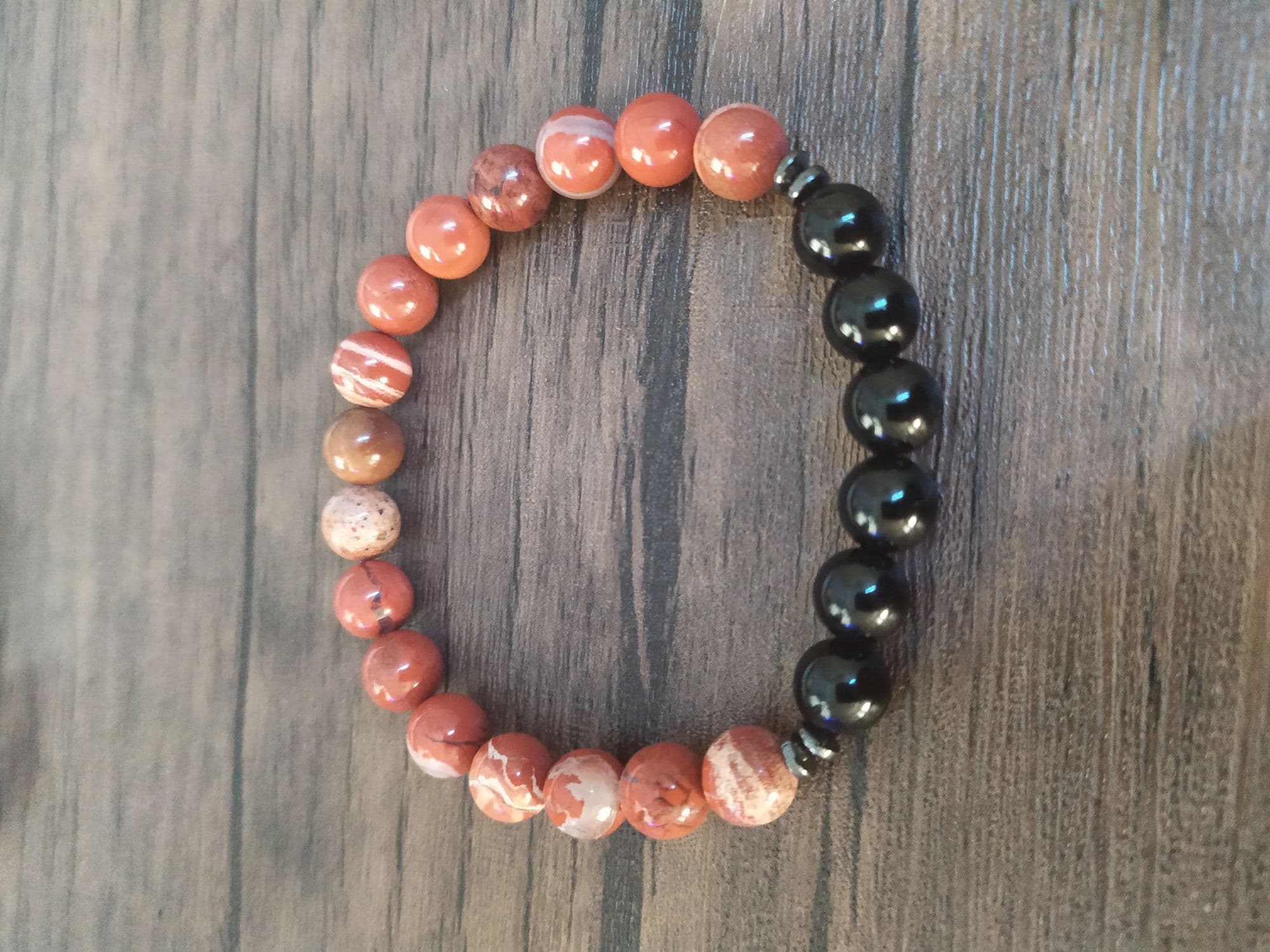
Red Jasper
The Supreme Nurturer
root chakra (Muladhara)
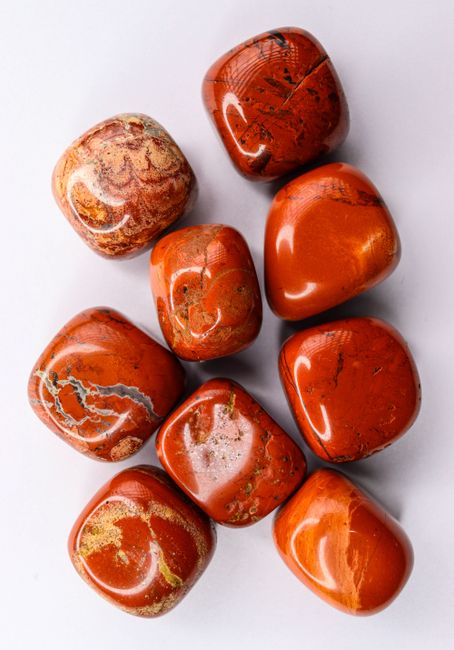
An opaque, fine-grained quartz colored brick red by iron. It's traditionally carried as a steadying stone for unsettled days, matching the root's theme of safety and stability.
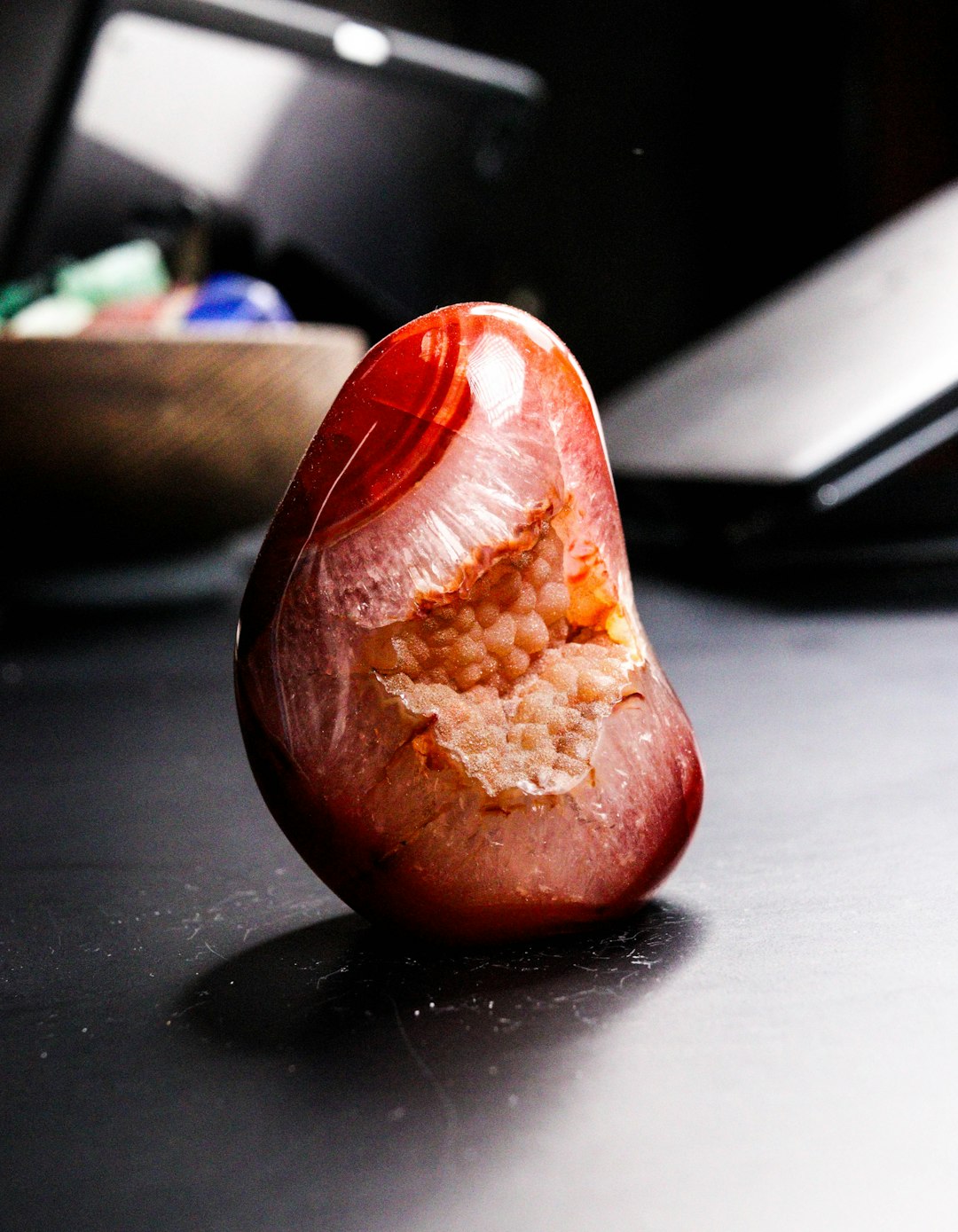
Carnelian
Stone of Motivation
sacral chakra (Svadhisthana)
An orange to red-orange chalcedony, carved into seals and beads since antiquity. It's traditionally associated with motivation and creative confidence, the sacral's themes of creativity and pleasure.
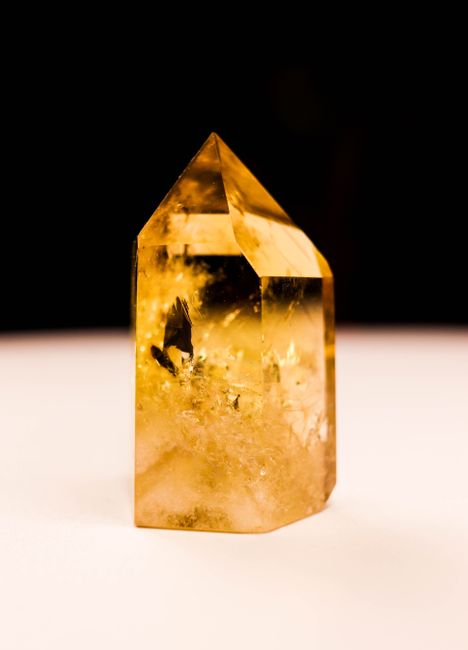
Citrine
The Merchant's Stone
solar plexus chakra (Manipura)
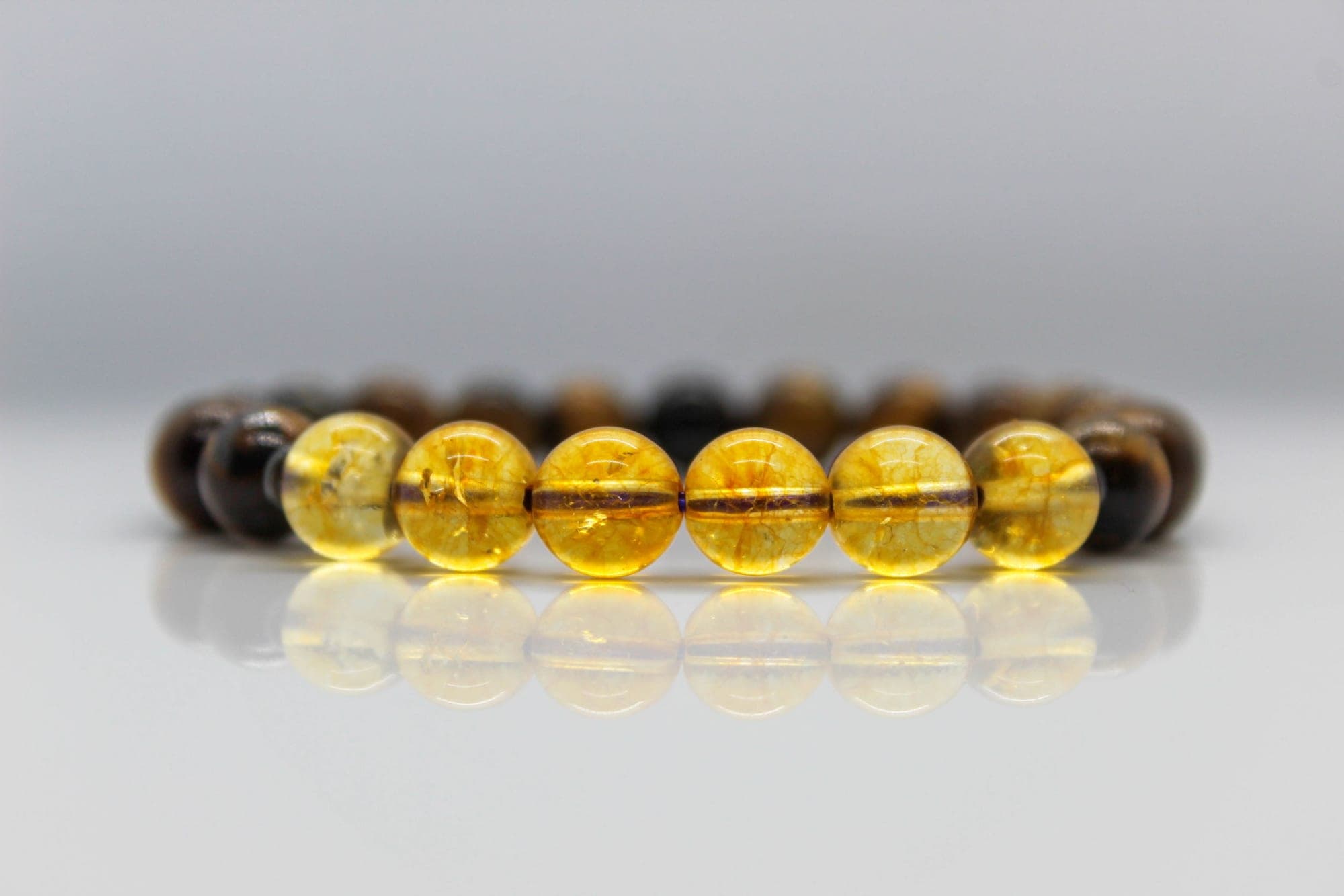
Yellow quartz whose sunny color has made it a long-standing symbol of optimism and drive. The solar plexus stands for willpower and self-worth.
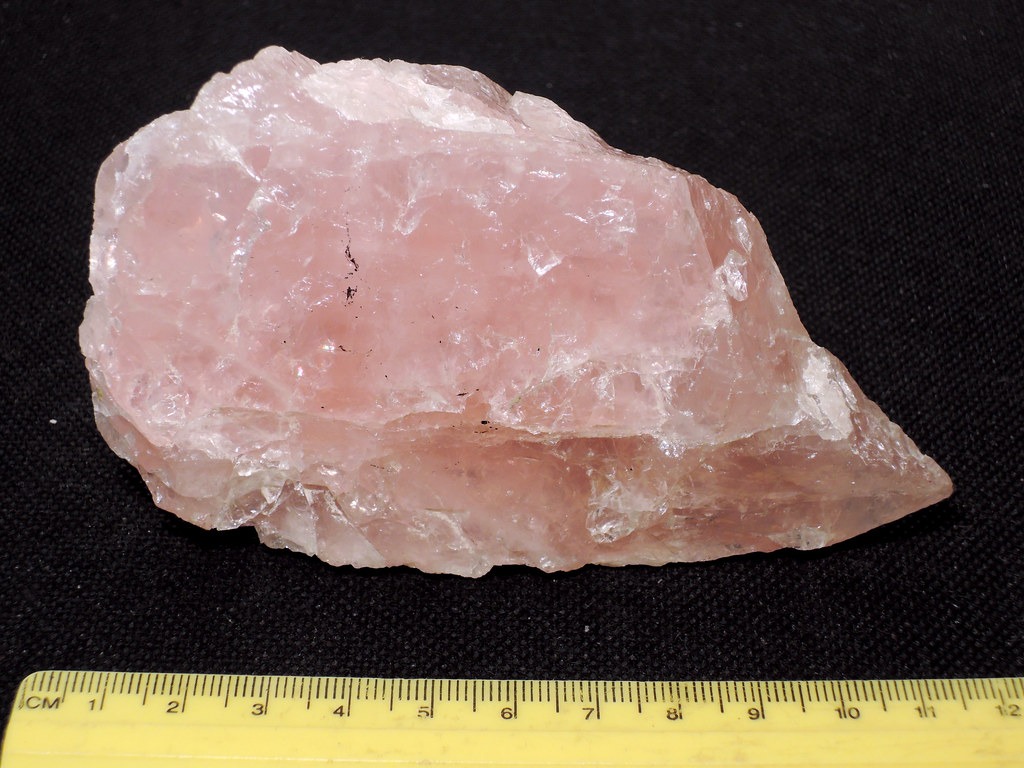
Rose Quartz
Stone of Unconditional Love
heart chakra, pink
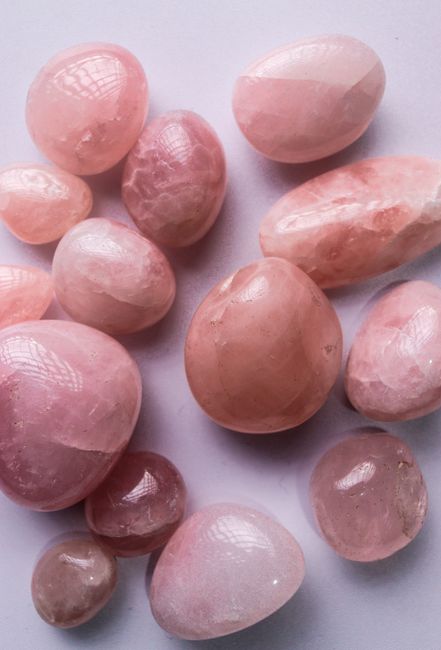
The pink heart stone, traditionally tied to compassion and self-acceptance. Its soft, even color is a large part of that reputation.
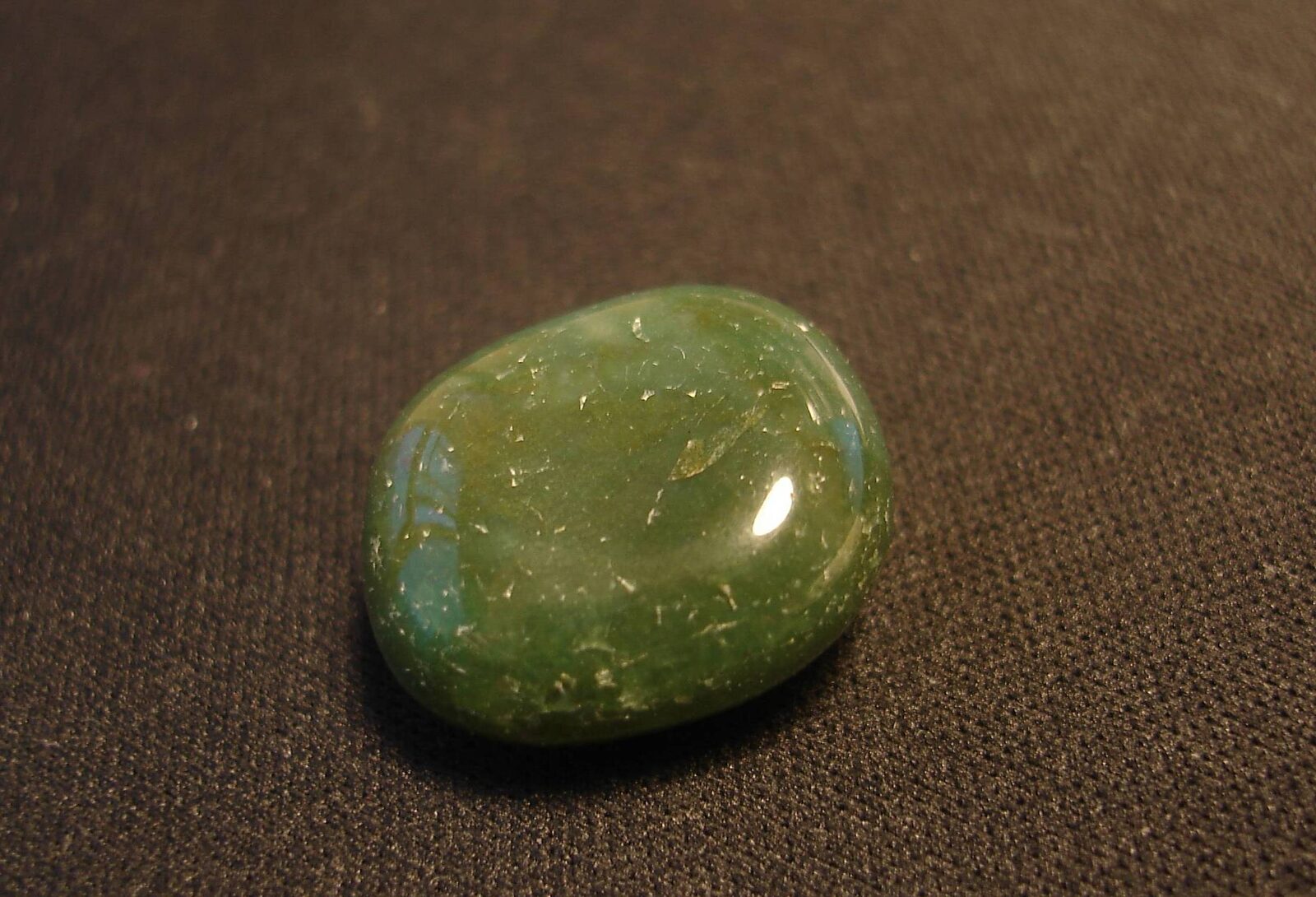
Green Aventurine
Stone of Opportunity
heart chakra, green
The green heart stone, a quartz with tiny sparkling inclusions. It's more often associated with openness and growth than with comfort.
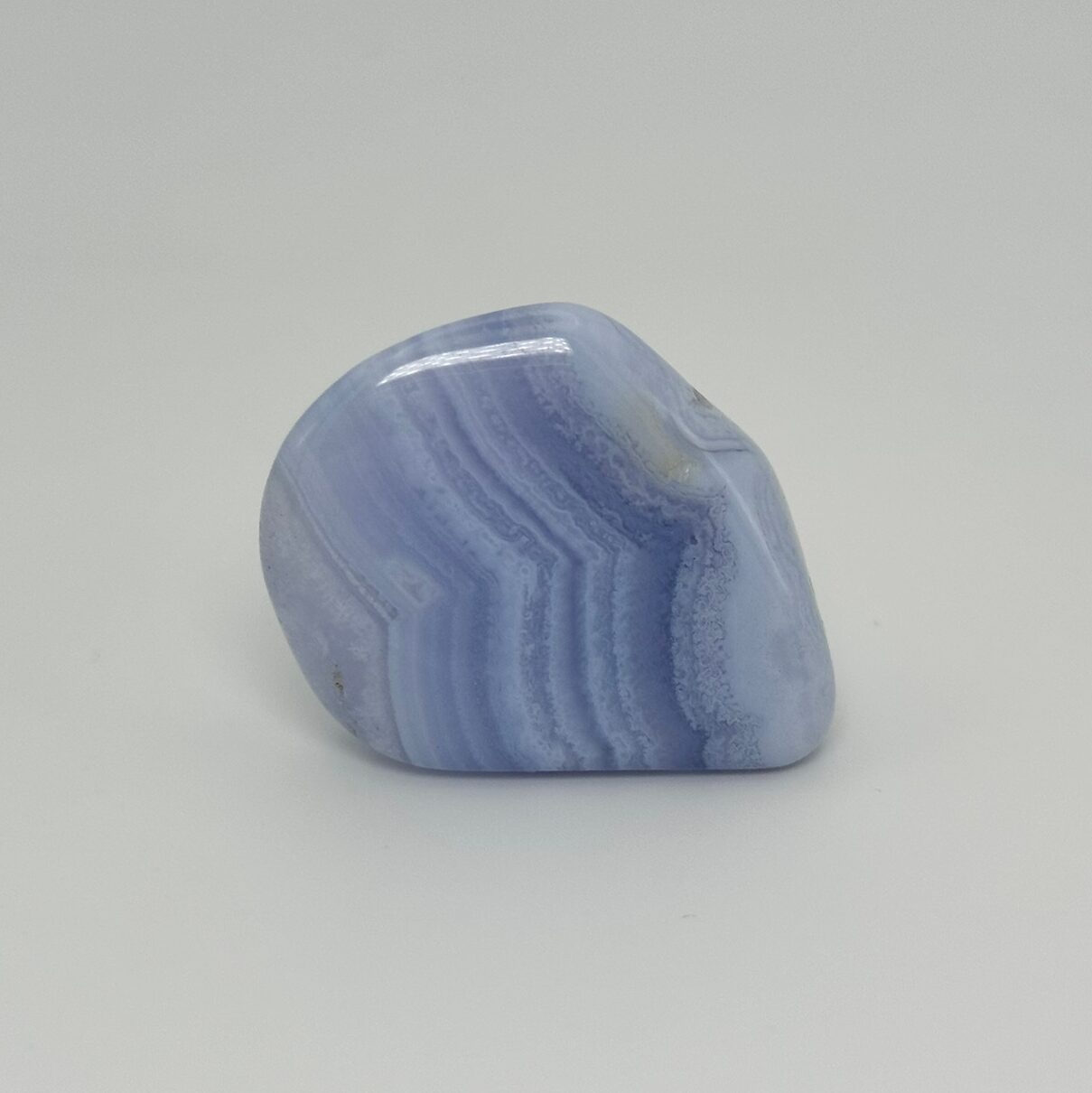
Blue Lace Agate
Stone of Calm Communication
throat chakra (Vishuddha)
A pale blue banded chalcedony whose soft color is traditionally associated with calm, honest speech. It's often carried before a hard conversation.
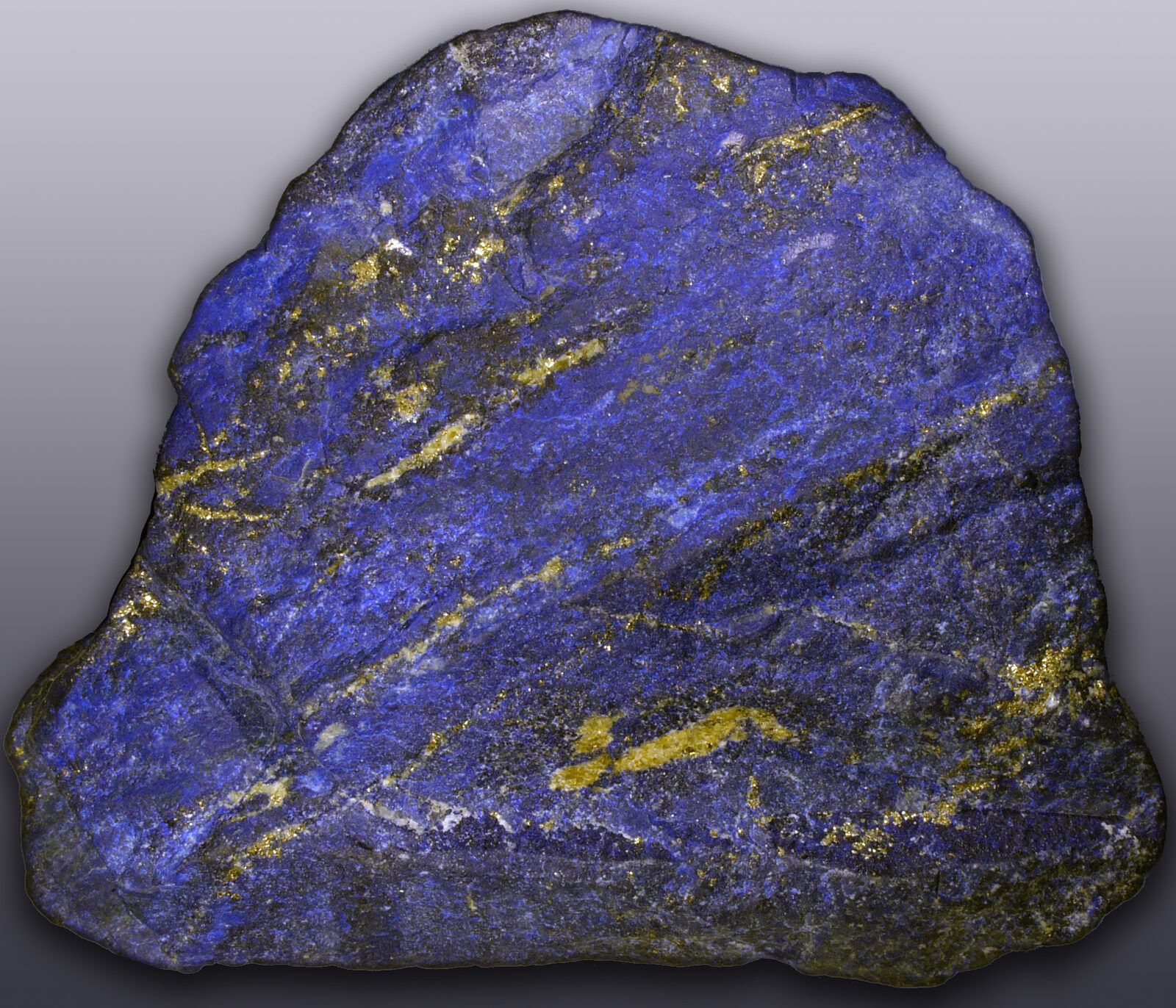
Lapis Lazuli
Stone of Wisdom
third eye chakra (Ajna)
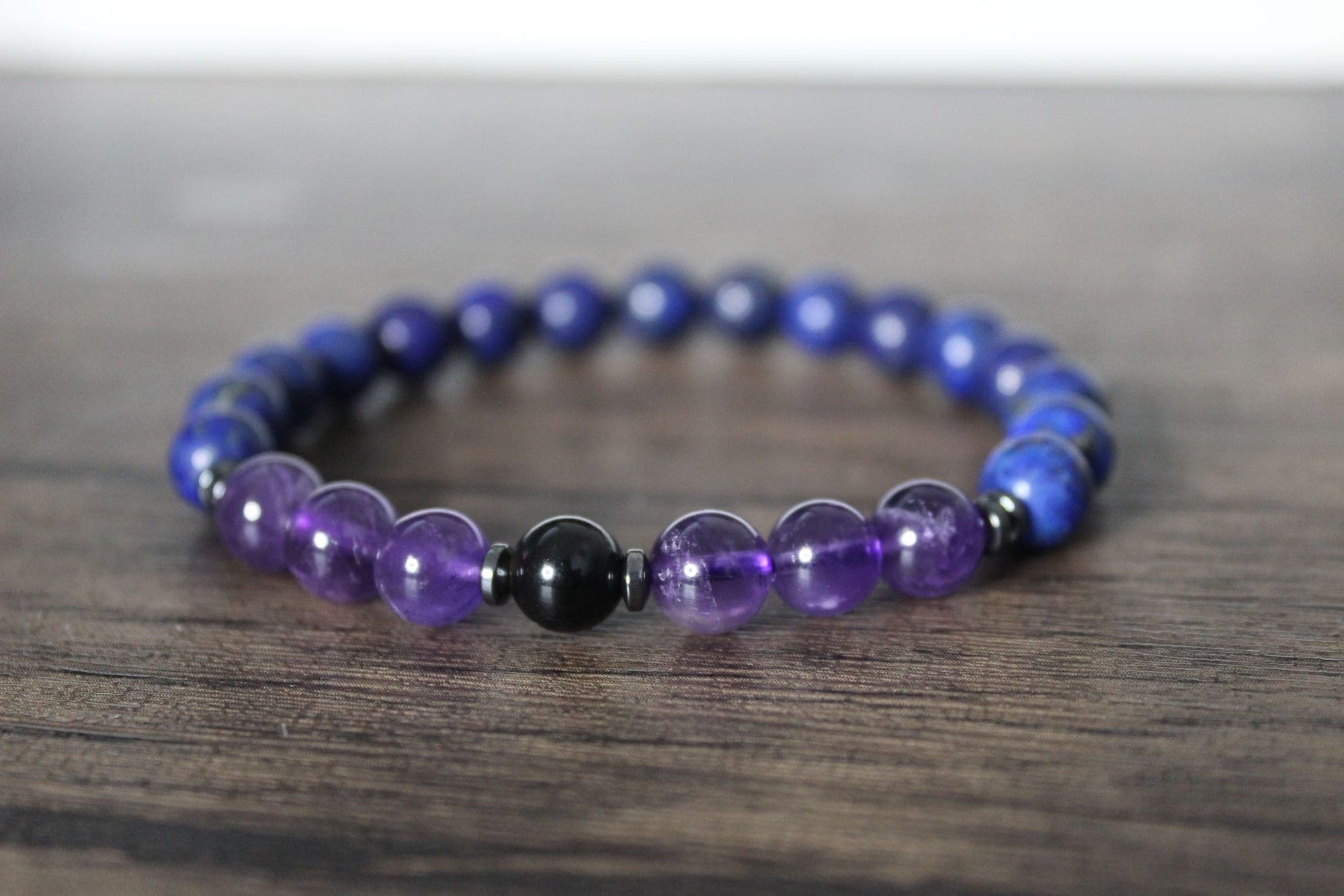
A deep blue rock rather than a single mineral, often flecked with golden pyrite. Prized for thousands of years, it's traditionally seen as a stone of wisdom and insight.
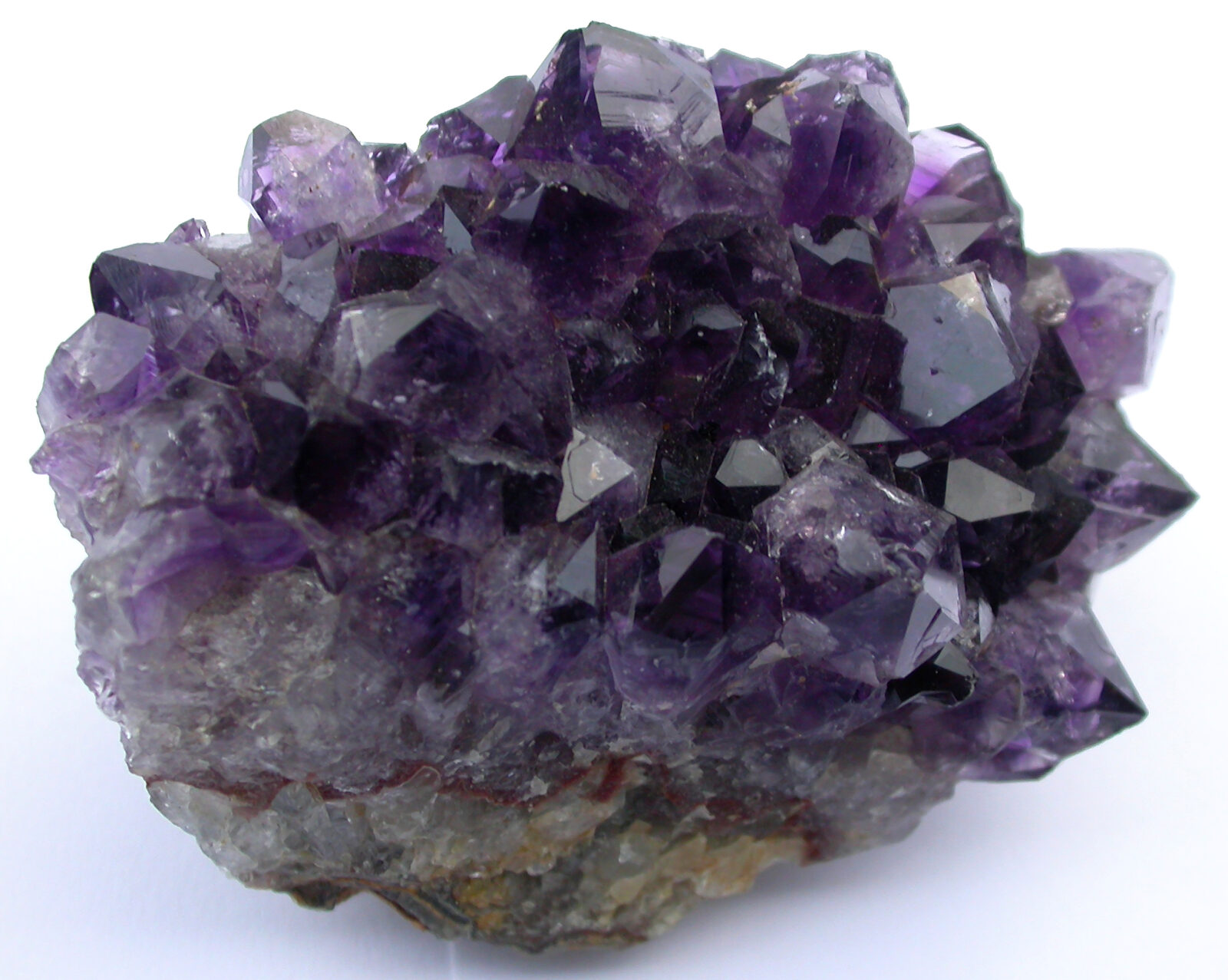
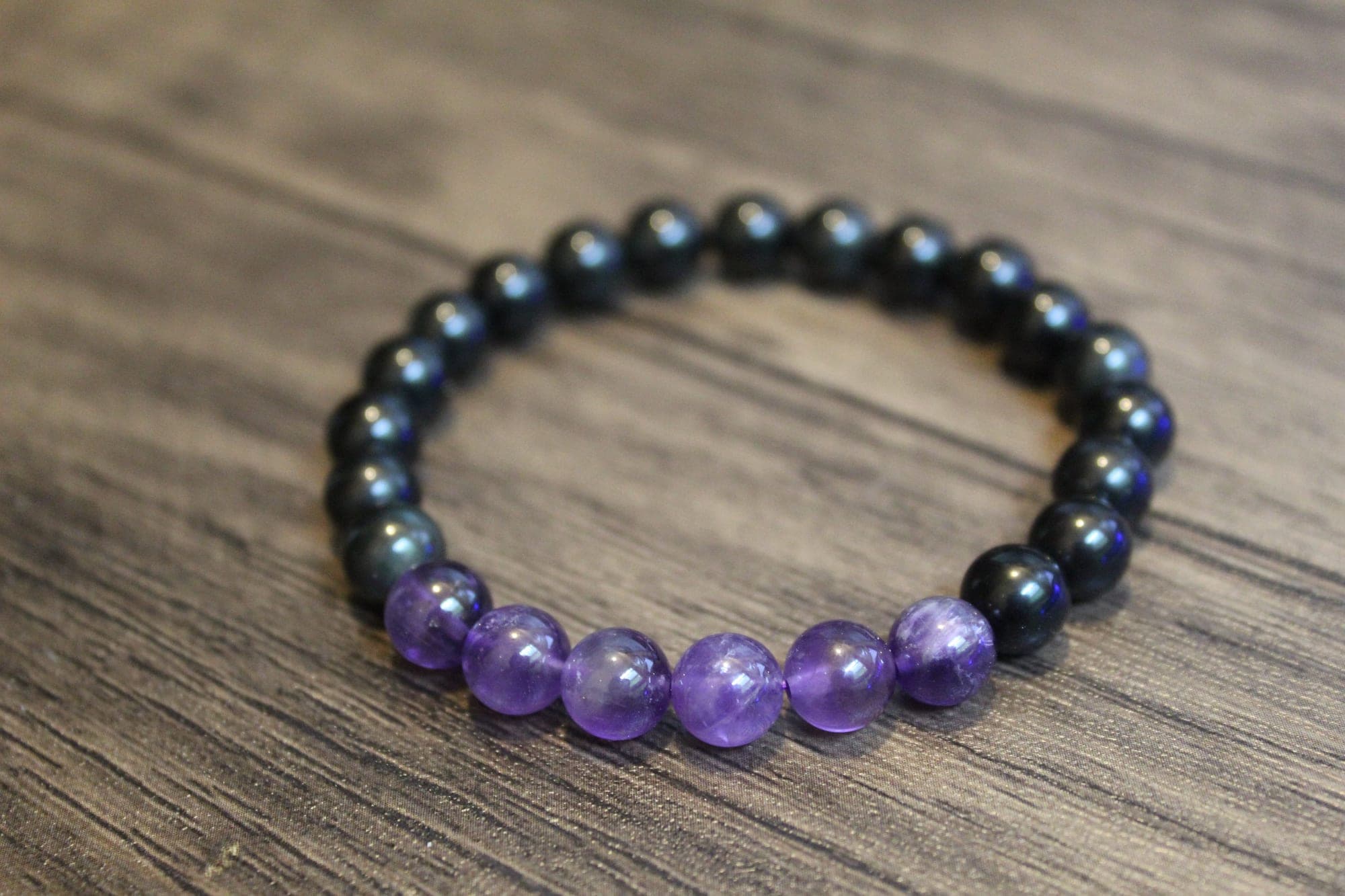
Amethyst
Stone of Calm and Clarity
crown chakra (Sahasrara)
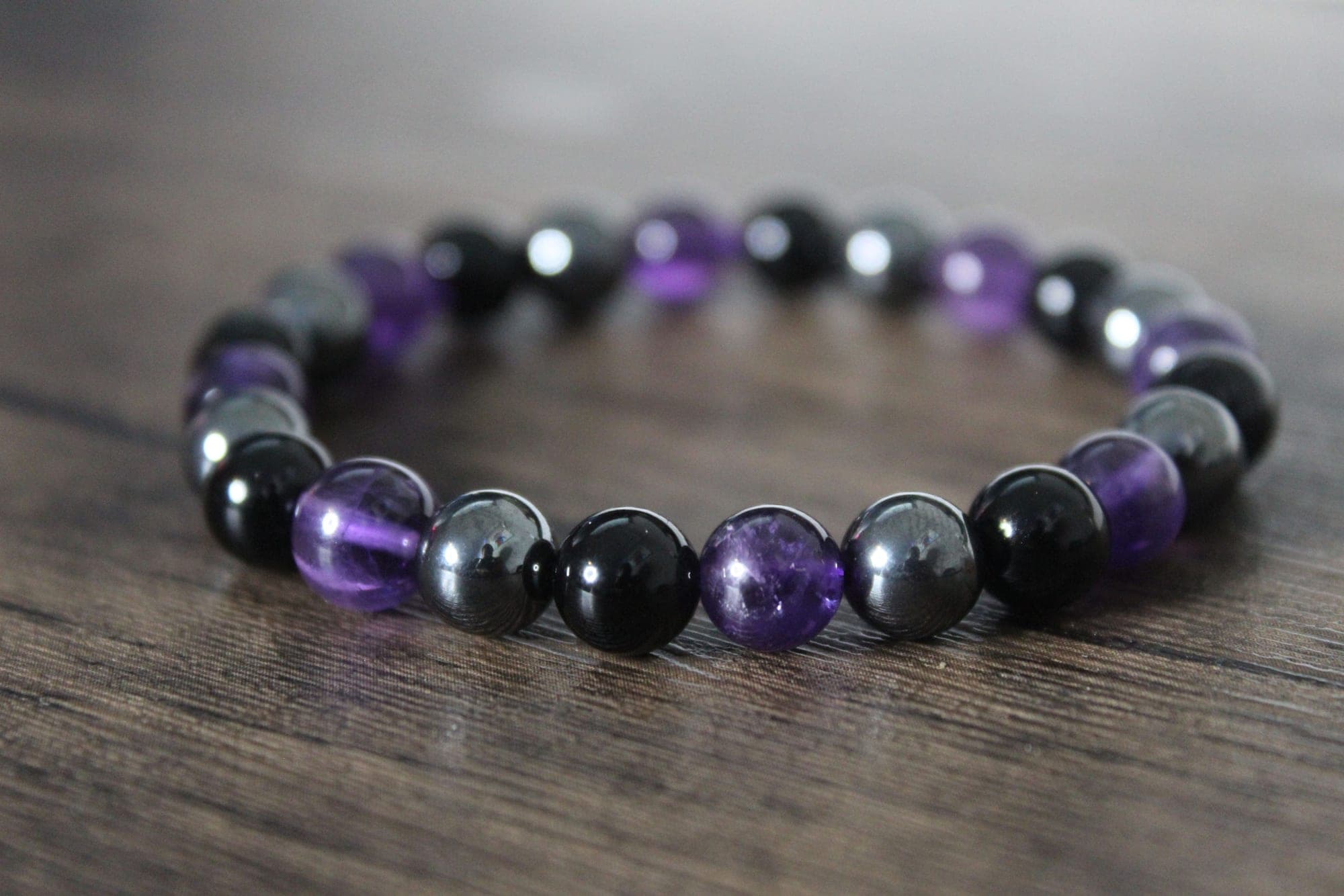
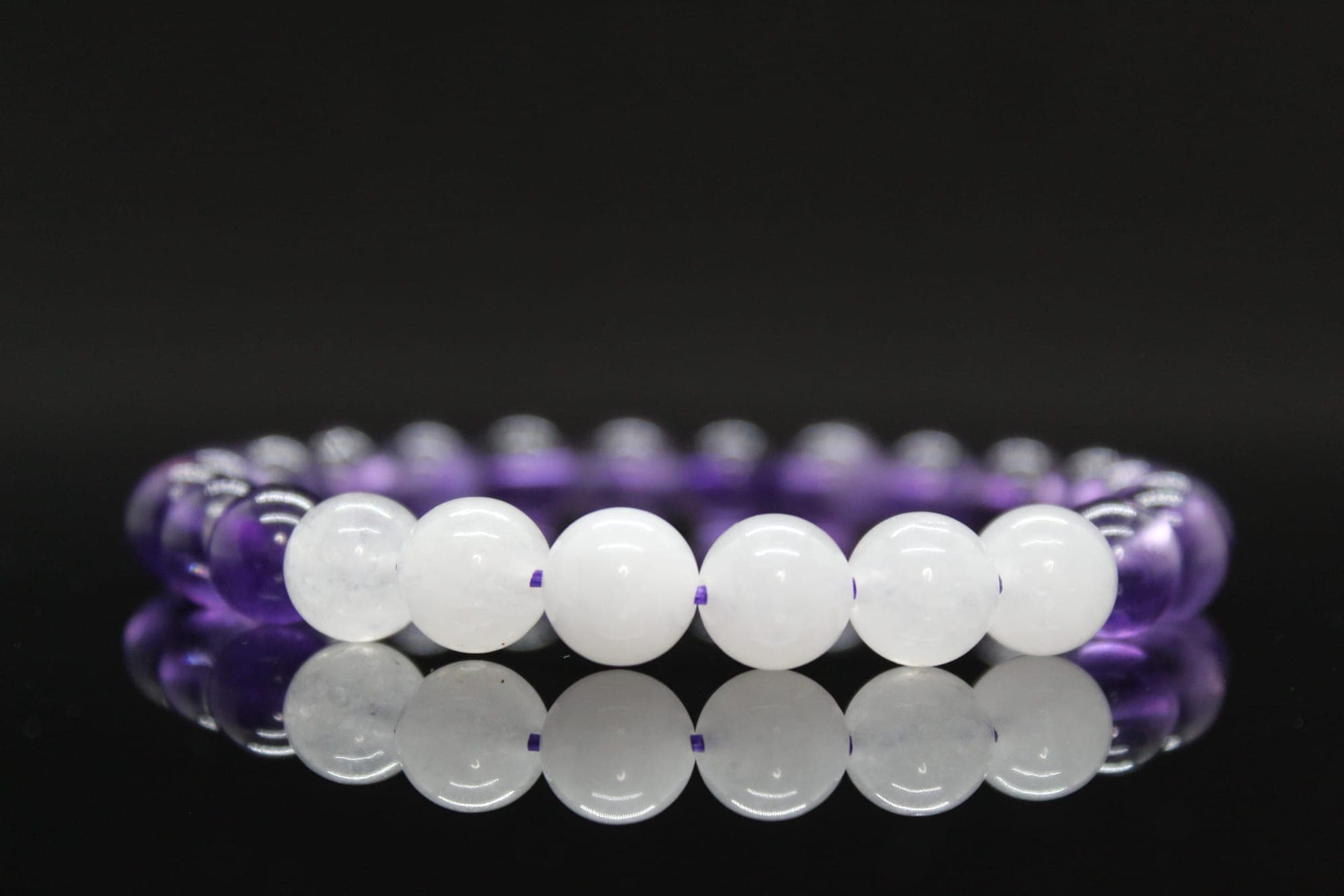
Purple quartz and the classic crown stone, traditionally used in meditation and quiet reflection. The crown stands for connection to something larger than yourself.
Put it into practice
How to choose and use a chakra stone
Step 1
Pick one theme, not seven
Choose the chakra whose theme matches what you're working on. If the goal is speaking up at work, start with a throat stone. If two themes fit, our crystal combinations guide shows which stones are traditionally paired.
Step 2
Keep it where the theme comes up
Wear or place the stone where you'll see it at the right moment. A tumbled stone on the desk suits a task; a bracelet works as an all-day reminder. If you'd like a wearable version, our energy bracelets are grouped by intention.
Step 3
Give it a job
Hold the stone for a minute of slow breathing and name what it stands for. A plain phrase such as "say the honest thing" is enough. The stone is the cue; the practice is the part that does the work.
Step 4
Try a lying-down layout
Lie down and place each stone on or beside its chakra point for five to ten minutes. This is the traditional full-set practice. Breathe slowly and move your attention from the root upward, one stone at a time.
The honest version
What's tradition and what's evidence
Tradition
Supported
Not supported
Watch out for
Mistakes and quality warnings
- Dyed sets. Cheap seven-chakra sets often use dyed stones to hit bright rainbow colors. Color that pools in cracks or rubs off on a damp cloth is a warning sign.
- Undisclosed heat-treated Citrine. Much of the Citrine on the market is Amethyst heated until it turns orange-yellow. It's still real quartz, but sellers should say so.
- Soaking Lapis Lazuli. The quartz and chalcedony stones tolerate a quick rinse; Lapis doesn't. Our guide to crystals that should never get wet covers the rest.
- Sunny windowsills. Amethyst and Rose Quartz can fade with long exposure to direct sun.
- Loose small stones. Tumbled stones are small enough to swallow. Keep them away from young children and pets.
Keep exploring
When to pick something else
If no single chakra theme fits, a two-stone pairing is often more practical than a full set. Amethyst + Citrine joins the crown and solar plexus, Rhodonite + Rose Quartz doubles up on the heart, and Lapis Lazuli + Sodalite leans into insight and clear thinking.
And if you're drawn to a stone outside its "correct" chakra color, choose it anyway. A stone you like is the one you'll keep using.
Amethyst + Citrine
The ametrine exception
These two occur fused together naturally as ametrine, which is the one clean exception to the usual calming-plus-energizing rule — amethyst caps the intensity while citrine keeps the energy from going flat.
Read more →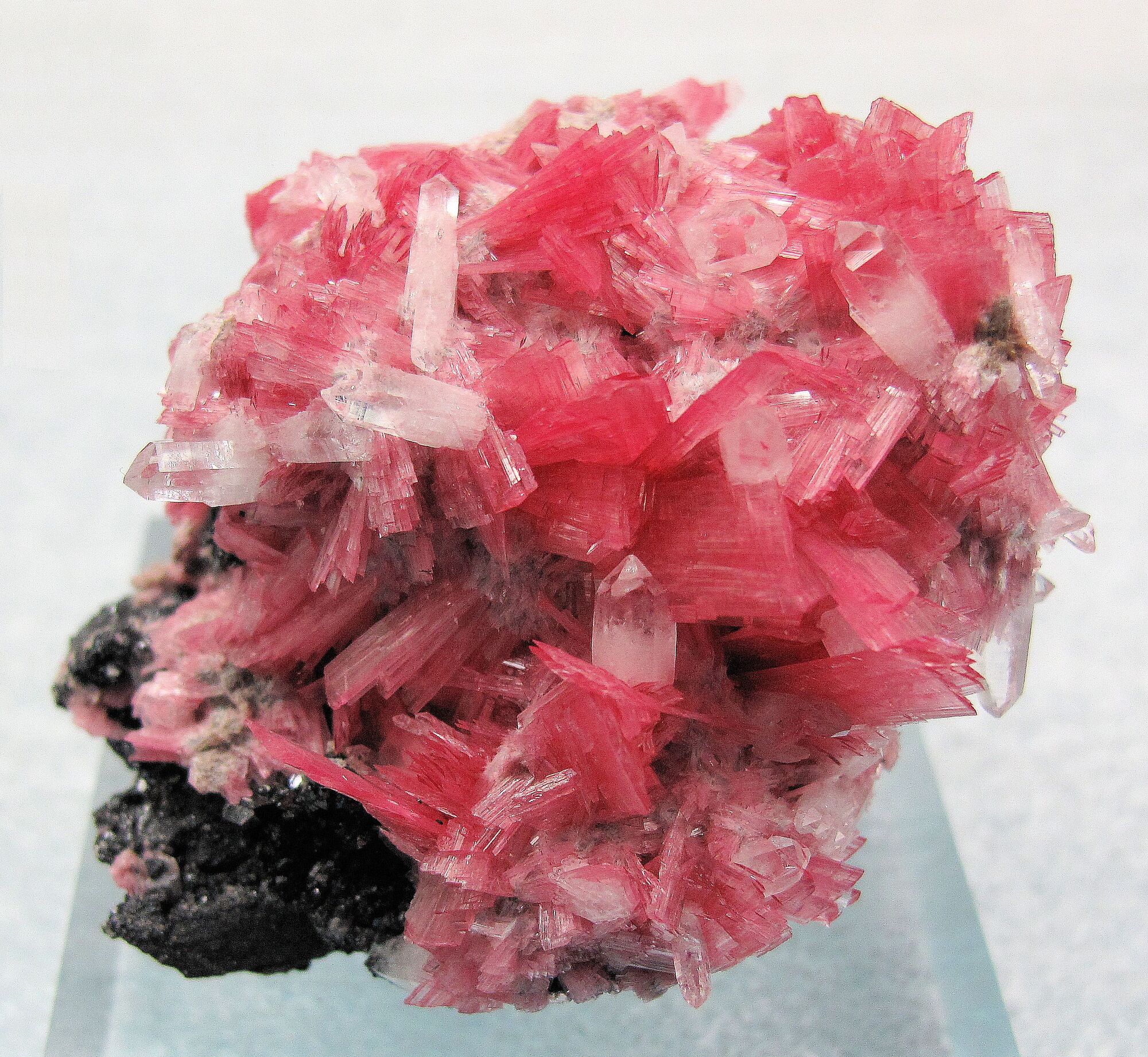
Rhodonite + Rose Quartz
Emotional rescue after heartbreak
Rhodonite is reached for specifically in the acute aftermath of a breakup or loss, rose quartz for the softer, ongoing self-love work — paired, they cover both the sharp moment and the slower healing after it.
Read more →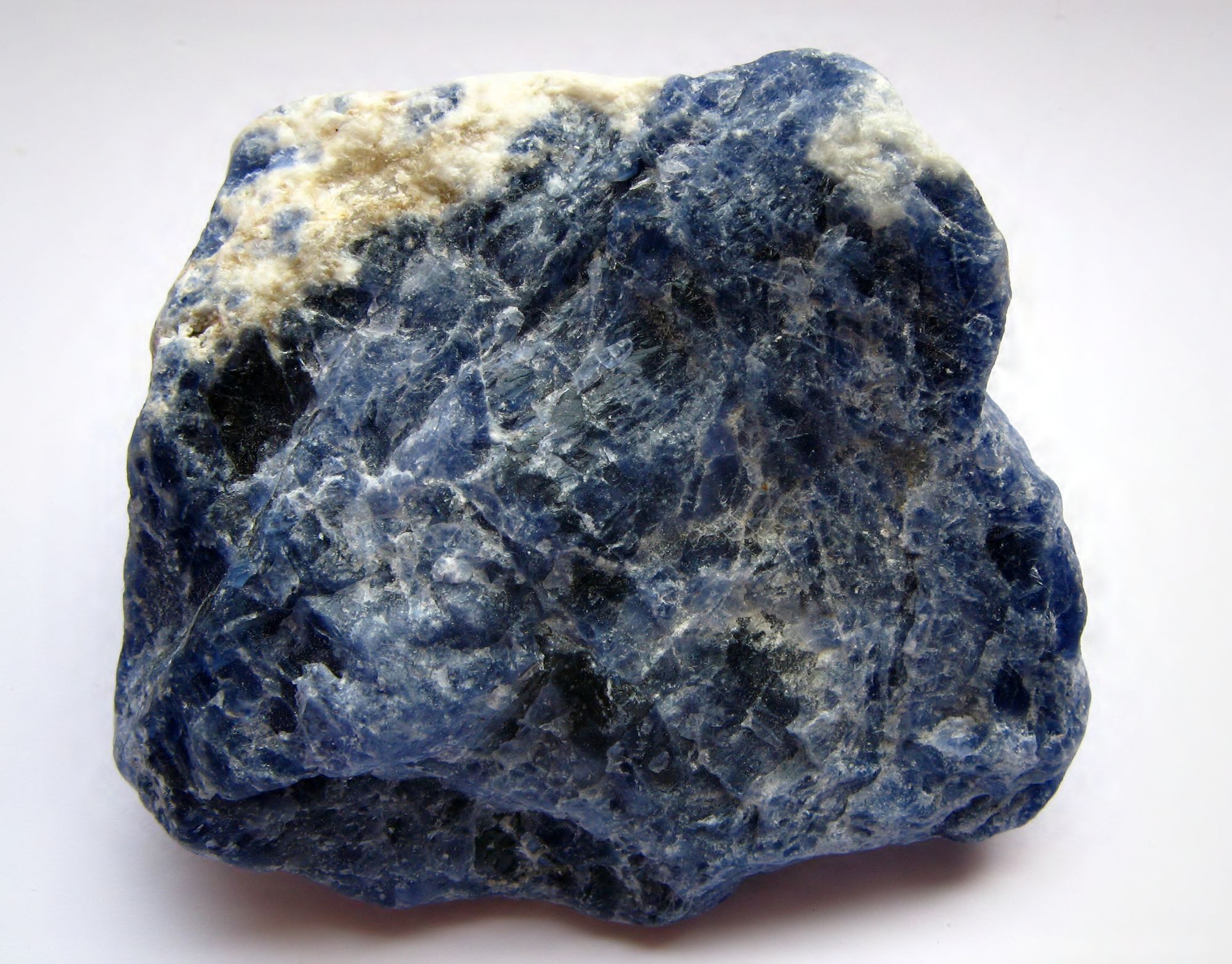
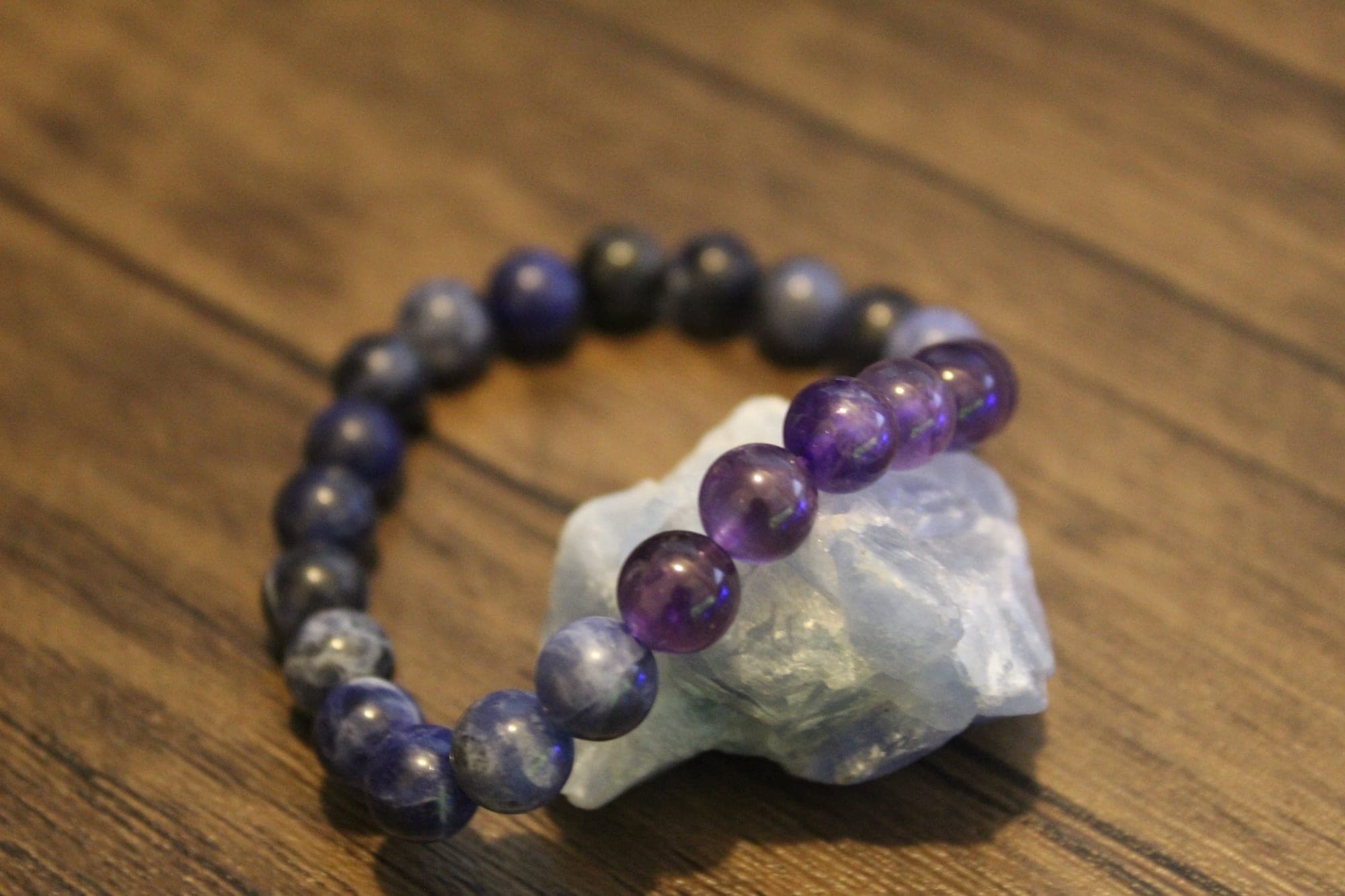
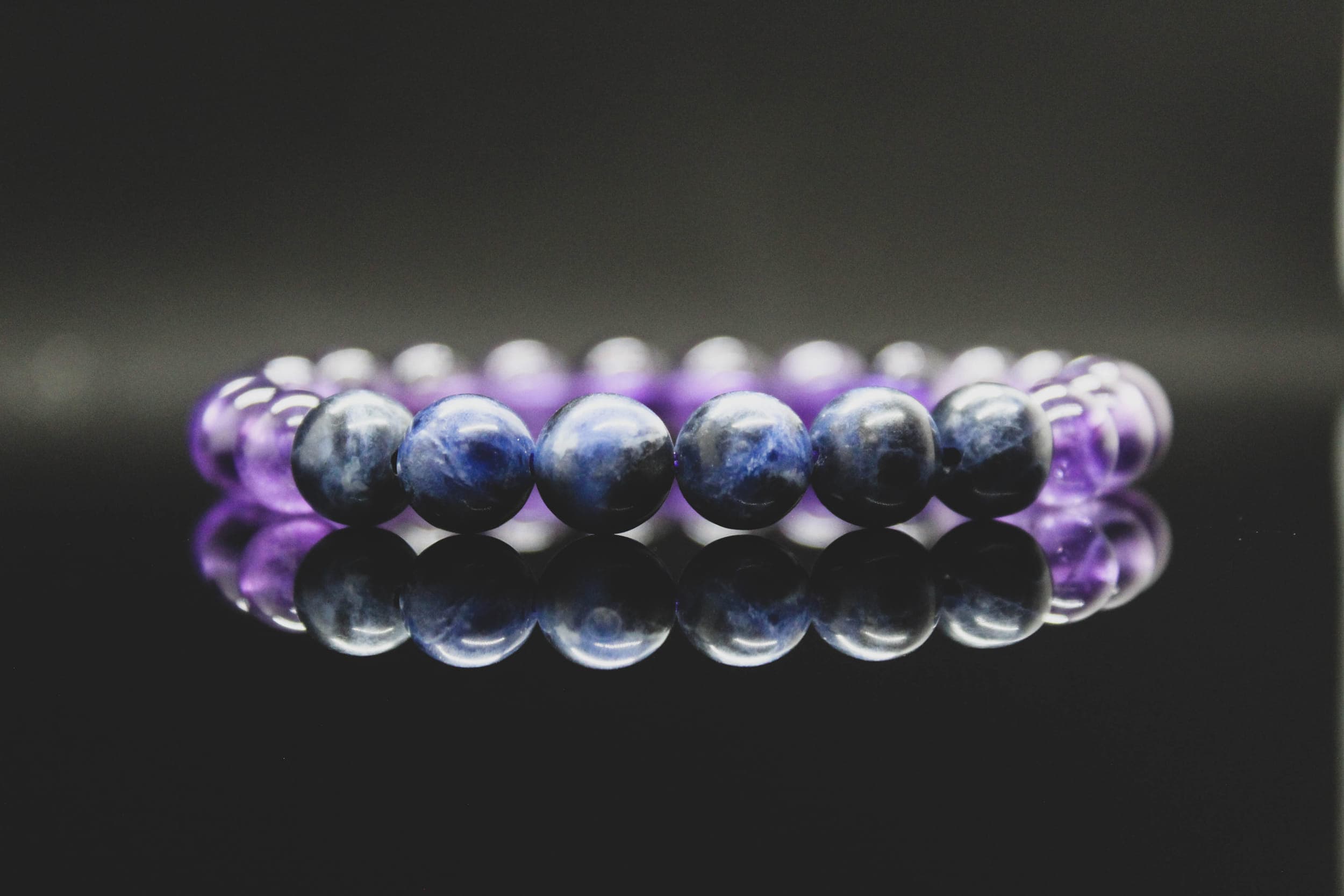
Lapis Lazuli + Sodalite
Communication, truth-telling
Both throat-adjacent stones, but lapis leans intuitive while sodalite leans logical — together they help you say the true thing in a way that actually lands.
Read more →Good to know
Frequently asked questions
What are the 7 chakra stones?
The most common set is Red Jasper (root), Carnelian (sacral), Citrine (solar plexus), Rose Quartz or Green Aventurine (heart), Blue Lace Agate (throat), Lapis Lazuli (third eye) and Amethyst (crown). Sets vary, because any stone of the right color can stand in.
Do chakra stones have to match the chakra colors?
No. Color matching is a modern convention that makes the system easy to remember. Some traditional choices break it, such as pink Rose Quartz for a chakra whose chart color is green.
Can I wear all seven chakra stones at once?
Yes. Seven-stone bracelets are a common way to wear the full set, and tradition has no rule against it. Wearing one or two stones just makes it easier to keep a single intention in mind.
Do chakra stones actually work?
There's no scientific evidence that stones affect chakras or the body. They work the way any symbol does: as a visible cue for an intention you've set.
Seven stones, seven themes, and one simple idea behind them: a color you can hold as a reminder of what you want to pay attention to.
Crystals are traditional comfort objects, not medical treatment; if anxiety or low mood persists, talk to a doctor.