Photo: Mr. Pugo · Pexels License · Pexels
Meaning & uses
Citrine Meaning
Named for its citrus hue, Citrine carries a sunny, energizing charge said to sit in the solar plexus — the seat of confidence and personal power. It's one of the few crystals believed to never need cleansing, constantly generating and radiating its own bright energy.
What Is Citrine?
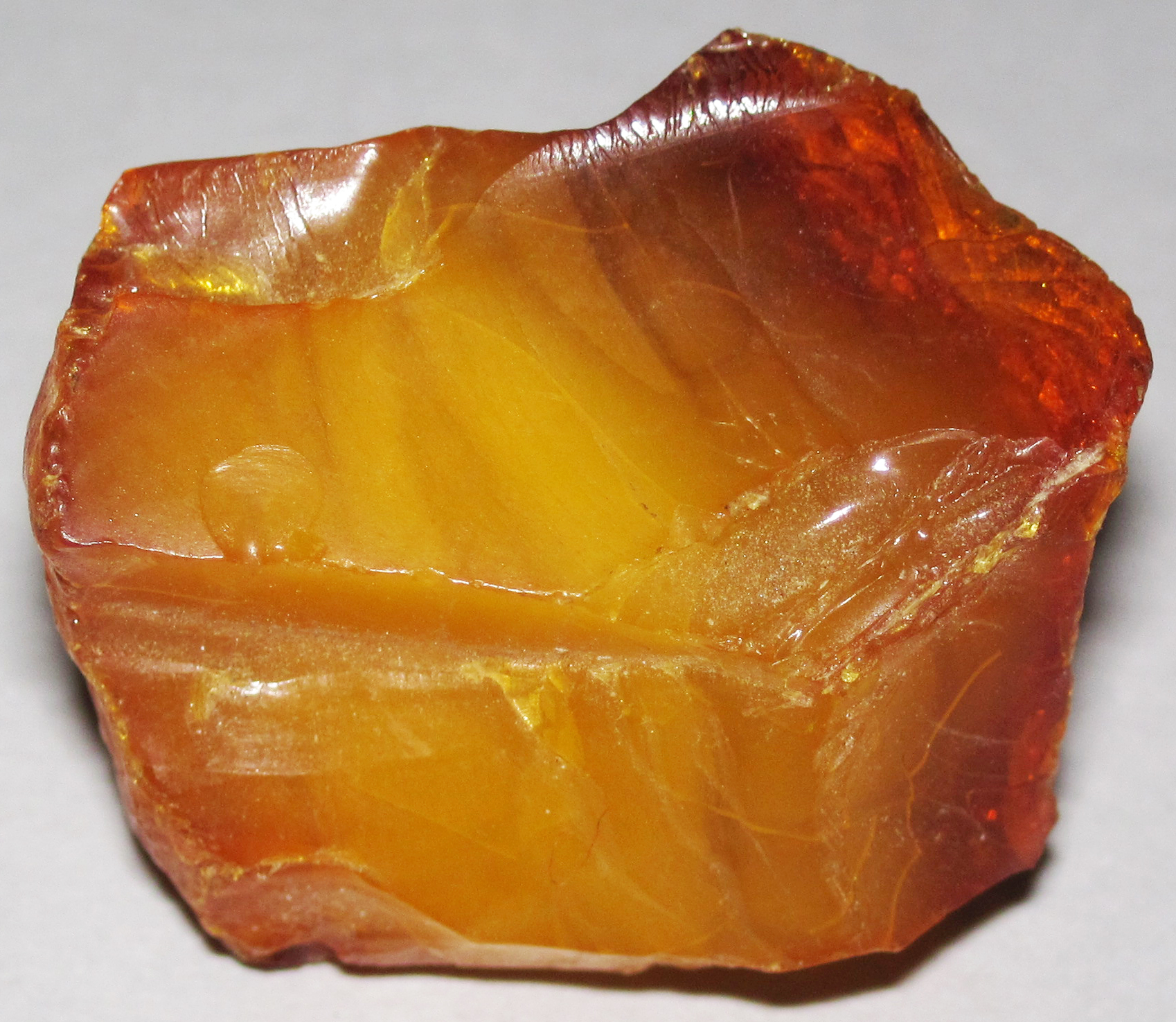
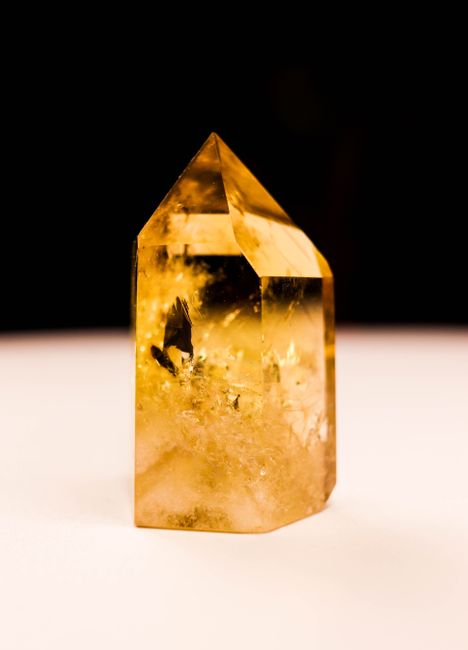
Citrine is a yellow-to-amber variety of quartz, its name coming from the Old French citrin, itself rooted in citron — the same word behind the lemon-like fruit. Its color comes from trace iron within the quartz lattice, a different oxidation state of the same element responsible for Amethyst's violet.
Here's the part worth knowing before buying: natural Citrine is genuinely rare, and its true color is a pale, gentle yellow. The deep orange "Madeira" Citrine seen everywhere in jewelry is almost always heat-treated Amethyst or Smoky Quartz — heating shifts the iron's color center, turning purple or brown quartz orange rather than the pale yellow real, untreated Citrine actually shows. It isn't a lesser stone for it; it's simply the industry standard.
Genuine, naturally colored Citrine is mined in smaller quantities in Brazil, Madagascar, and Zambia, typically alongside Amethyst deposits — the two often occur in the same geological environment, which is part of why heat-treating one into the other became such a practical, long-established substitute.

A Stone With a History
Citrine has been carved and worn since antiquity, valued by ancient Greeks and Romans as an intaglio material for signet rings. Its more recent nickname, "the Merchant's Stone," comes from a specific and long-lived commercial tradition: shopkeepers kept a piece in their cash drawer or till, believing it would draw wealth into the business. Citrine also had a genuine fashion moment in the 1930s, when large citrine cocktail rings became a defining piece of Art Deco jewelry, worn heavily in Hollywood glamour photography of the era.
Meaning and Symbolism
Citrine's meaning follows its color directly: warmth, confidence, and abundance, with none of the intensity of a stone like Garnet or Carnelian. It's associated less with raw drive and more with the steady self-assurance that lets you actually enjoy what you've built.
Carried or worn to
- Fuel confidence, motivation, and creativity
- Attract abundance, prosperity, and success
- Shake off self-doubt and step into personal power
- Bring warmth and optimism to a heavy day
Chakra, Zodiac & Element
Citrine is tied to the Solar Plexus Chakra, the seat of confidence and personal power — a direct match for its warm golden color. Its Fire element reinforces that same energized, outward-facing territory.
Astrologically it spans four signs — Aries, Gemini, Leo, and Libra — a wide reach reflecting a stone valued broadly for confidence and optimism rather than one narrow personality type.

How to Use and Care for Citrine
At 7 on the Mohs scale, Citrine is durable enough for daily wear in rings, bracelets, or pendants, and it's water-safe for routine cleansing.
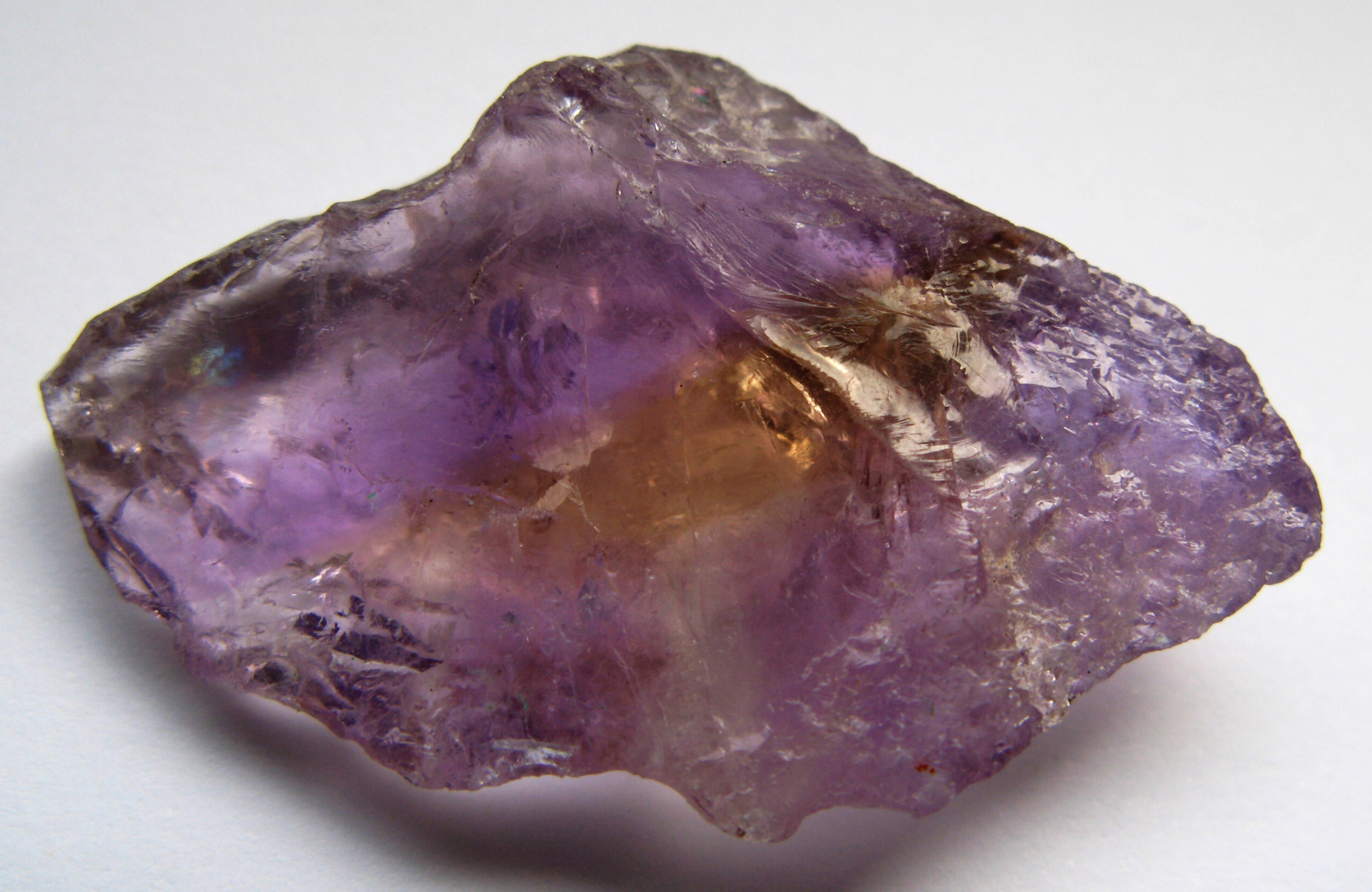
It's often paired with Amethyst in the same piece for a grounding-yet-uplifting effect, and appears naturally fused with it as Ametrine. It also pairs beautifully with Carnelian for sacral-and-solar-plexus energy, or with Pyrite and Green Aventurine for abundance-focused combinations — see our Crystal Combinations guide for the full breakdown.
Frequently Asked Questions
Is most Citrine natural or treated?
Why is Citrine called "the Merchant's Stone"?
Is Citrine a birthstone?
What's the difference between Citrine and Topaz?
Is Citrine safe to wear every day?
Where does natural Citrine come from?
Often paired with Amethyst in the same piece for a grounding-yet-uplifting effect.
Shop this stone
Bracelets with Citrine
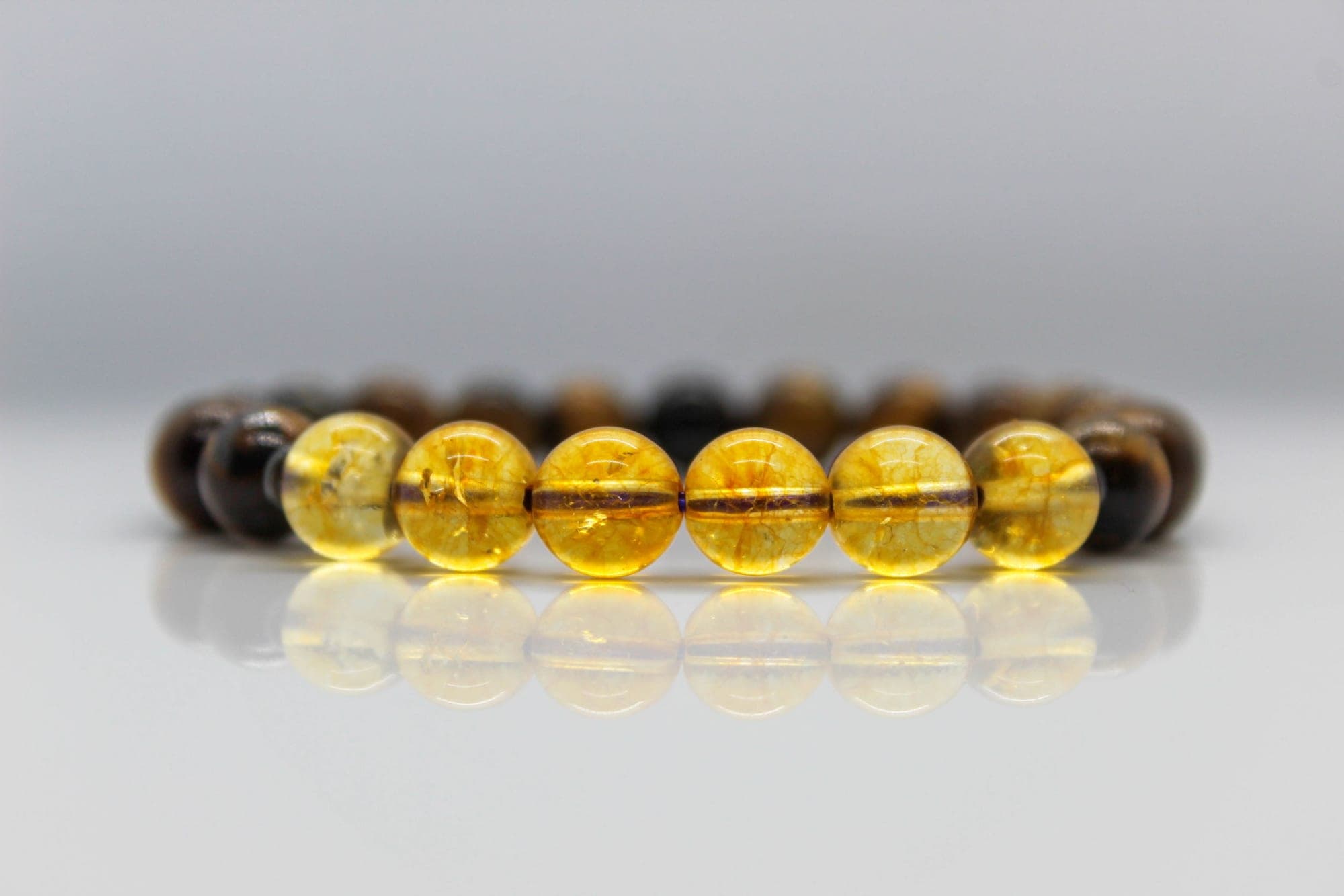
The Symba Energy Bracelet
$33.00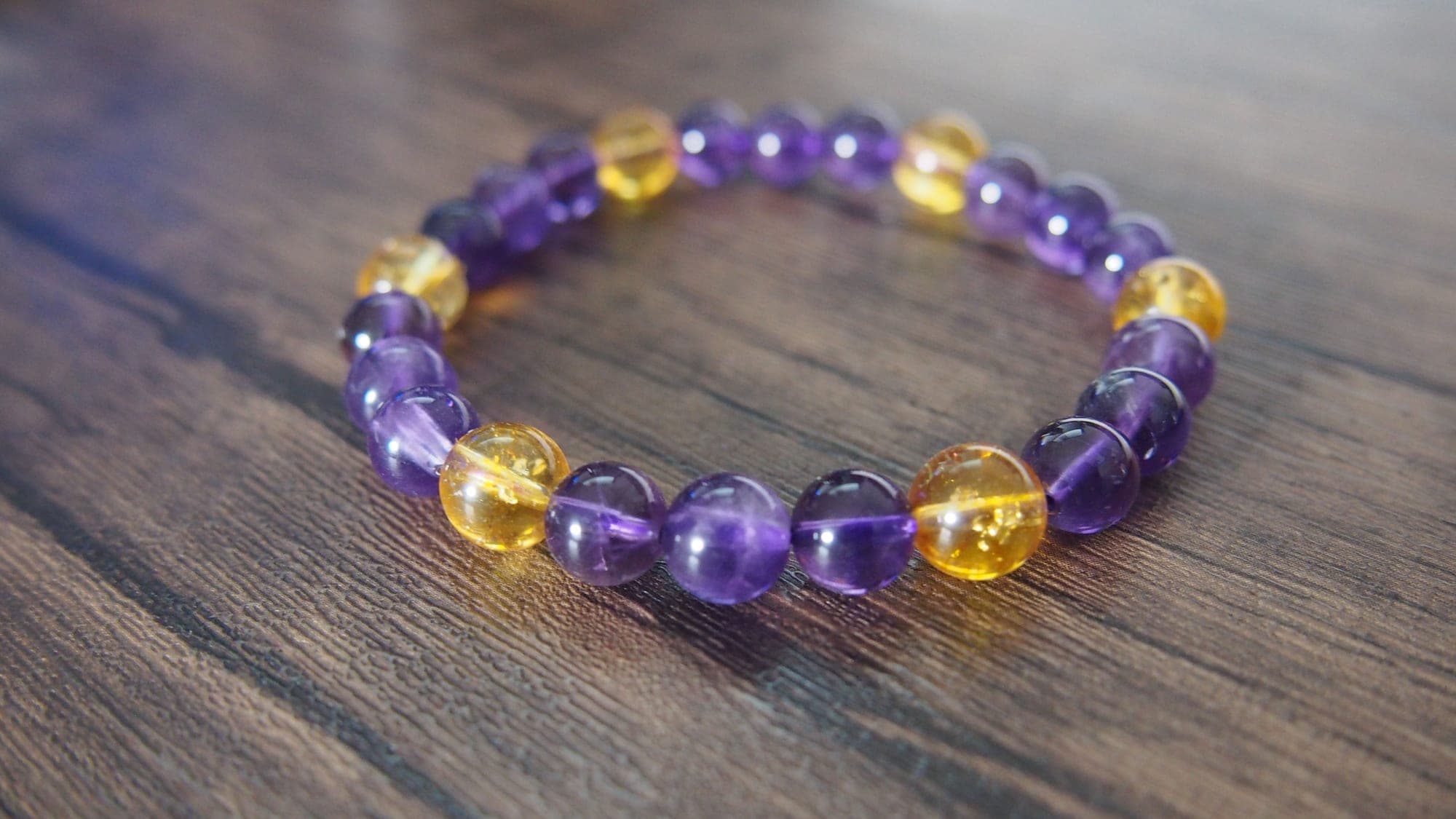
The Kobe Energy Bracelet
$33.00
Protective Manifestation Energy Bracelet
$33.00
The Dinero Energy Bracelet
$33.00
The Opulence Energy Bracelet
$33.00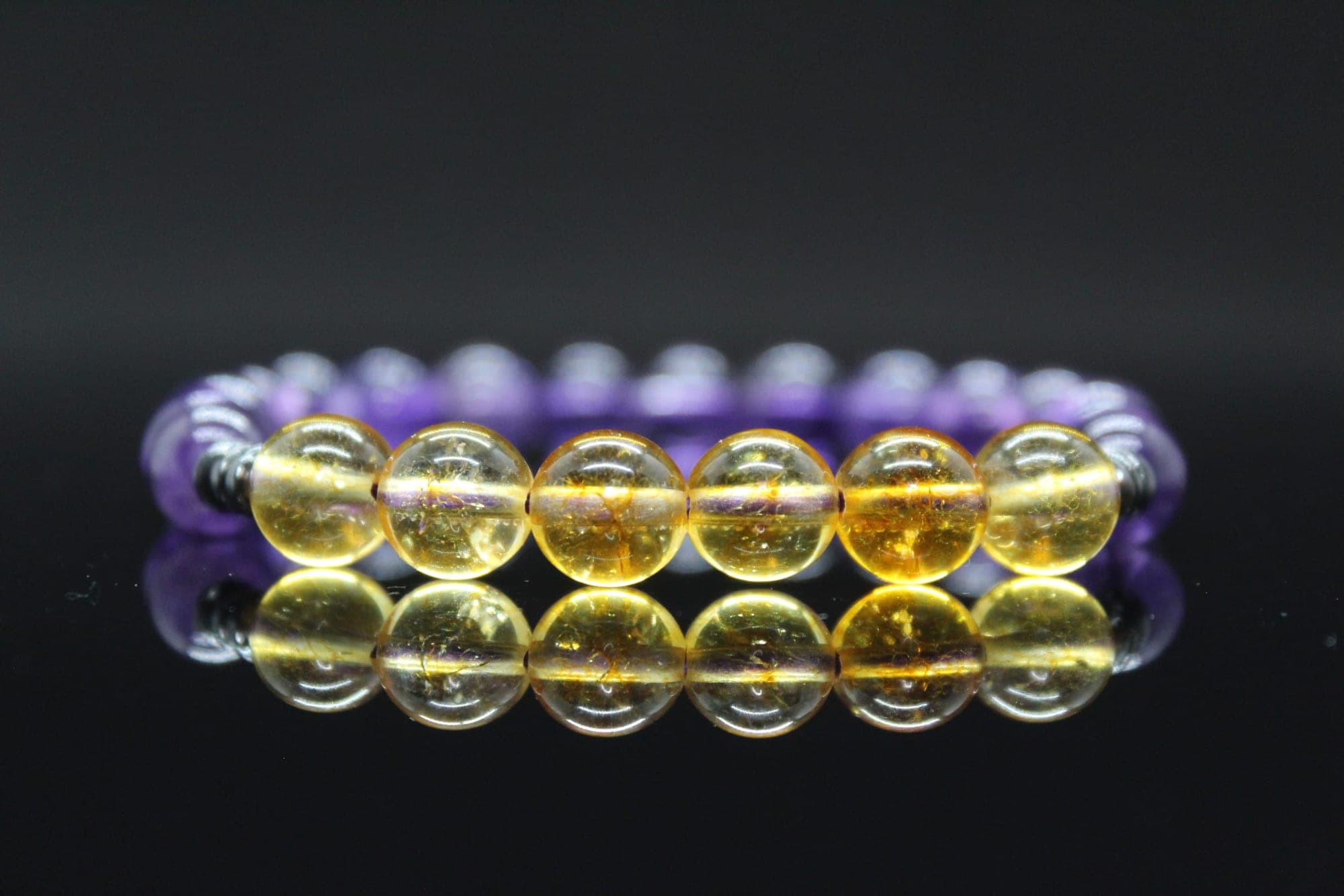
Clear Thoughts Energy Bracelet
$33.00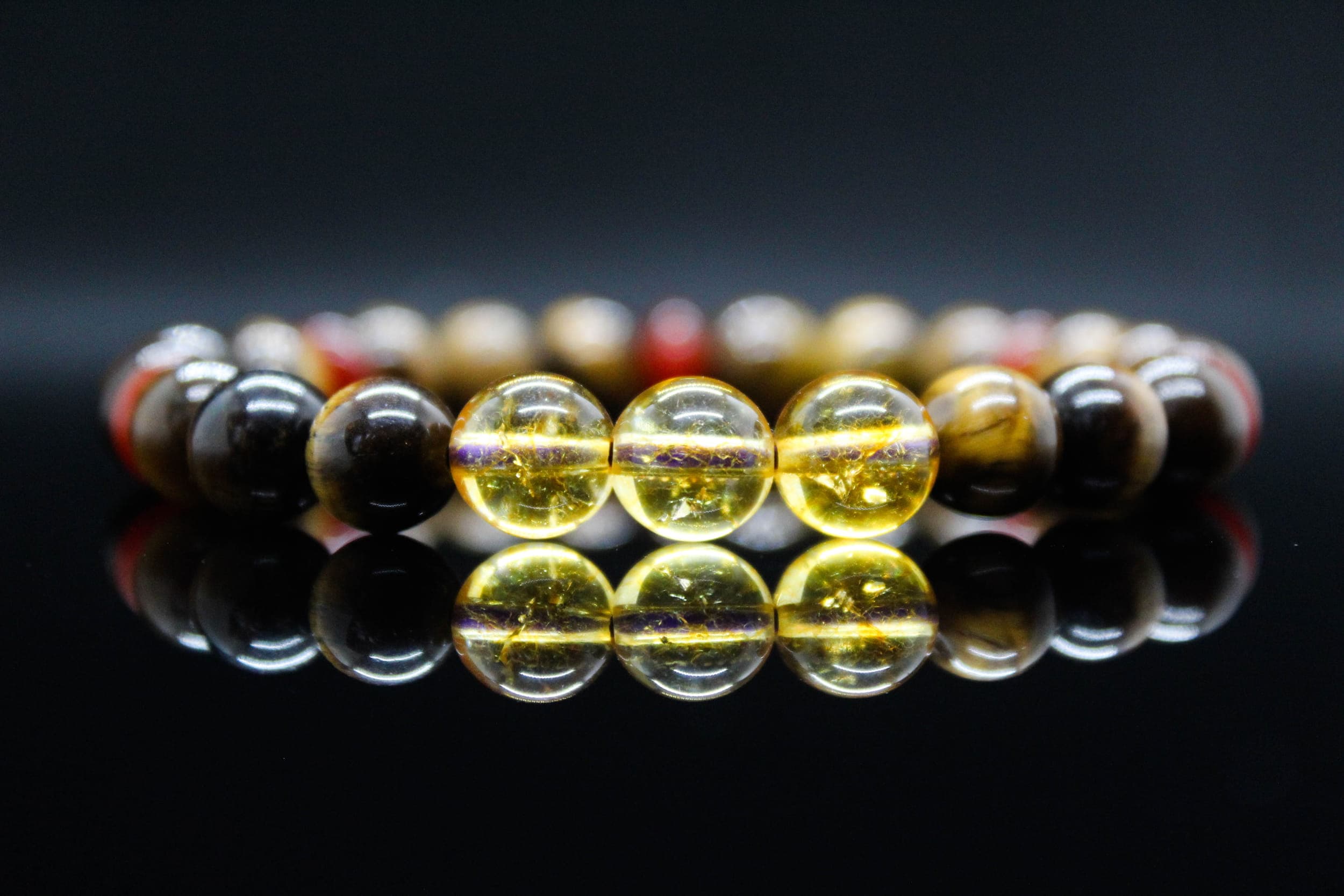
Focus Manifest Energy Bracelet
$24.00Pairings
Citrine Pairs Well With
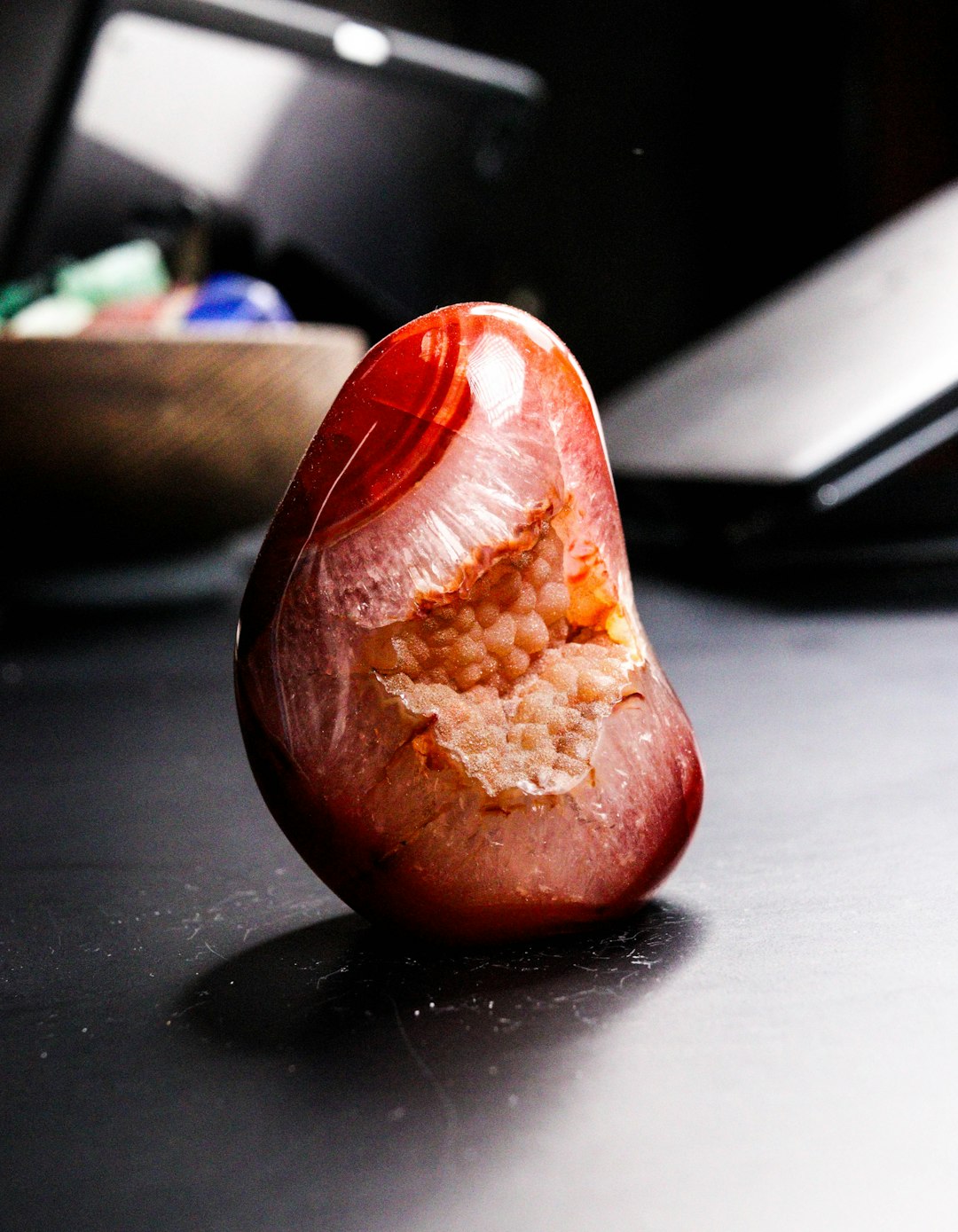
Citrine + Carnelian
Energy, creativity, drive
These sit on neighboring energy centers — carnelian at the sacral, citrine at the solar plexus — so instead of competing they hand off: carnelian gets you moving, citrine keeps you moving once you've started. A rare case of two energizing stones that genuinely work as a team rather than fighting for the same job.
Read more →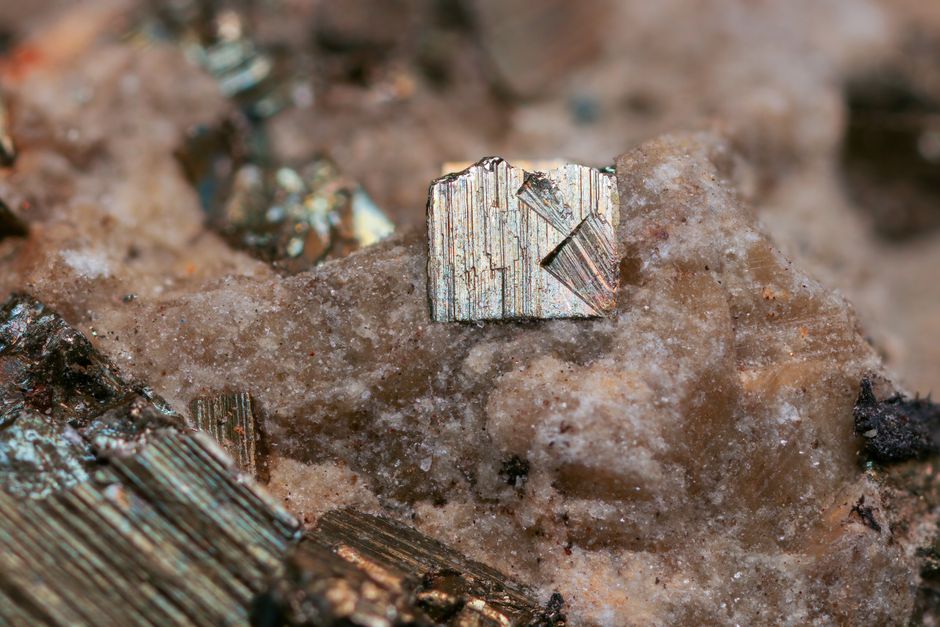
Citrine + Pyrite
Wealth, manifestation
Citrine is traditionally said to draw opportunity toward you; pyrite supplies the nerve to actually act once that opportunity shows up.
Read more →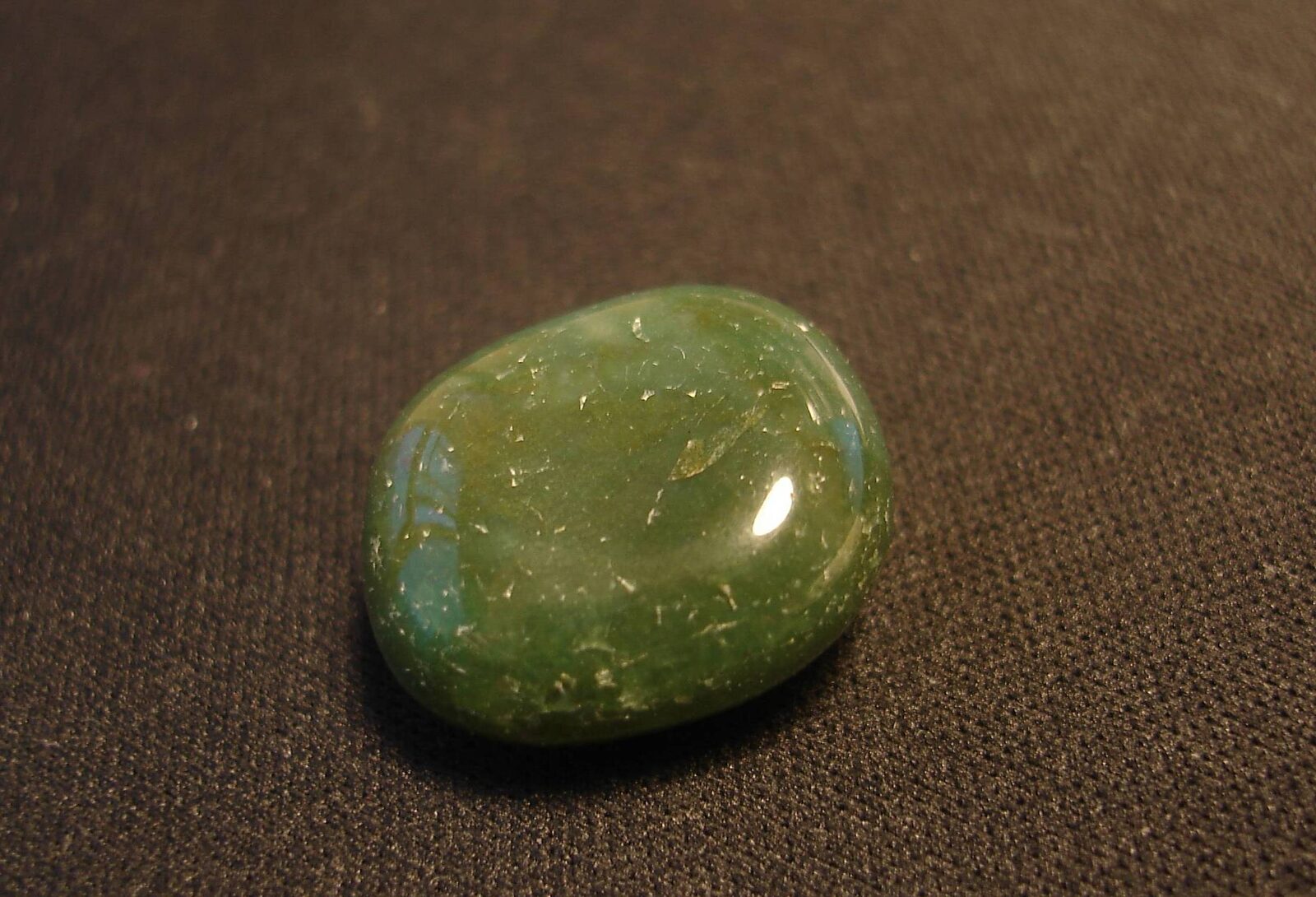
Citrine + Green Aventurine
Luck, opportunity
Aventurine is the traditional luck stone, citrine the pull toward abundance — one opens the door, the other pushes you through it.
Read more →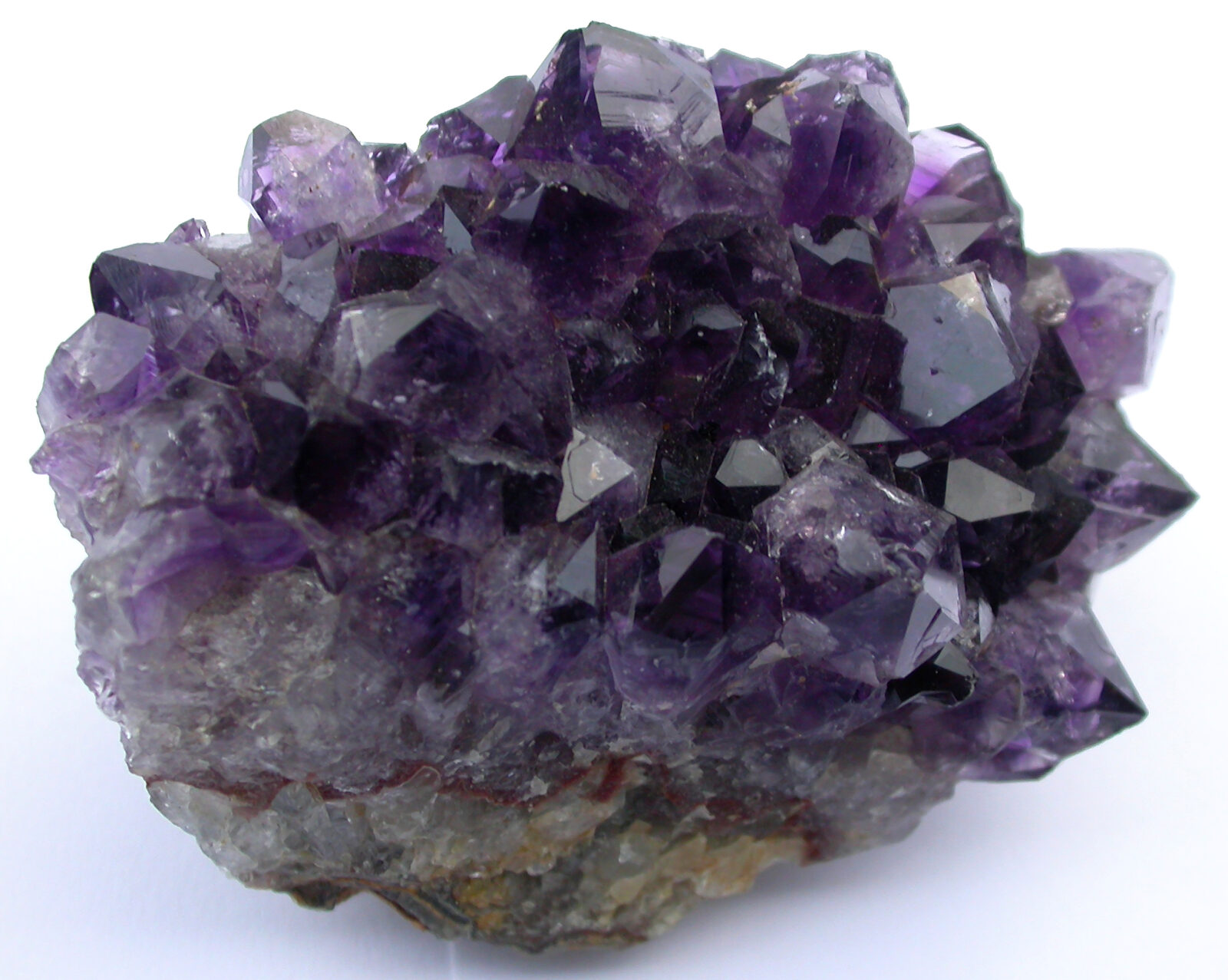
Amethyst + Citrine
The ametrine exception
These two occur fused together naturally as ametrine, which is the one clean exception to the usual calming-plus-energizing rule — amethyst caps the intensity while citrine keeps the energy from going flat.
Read more →