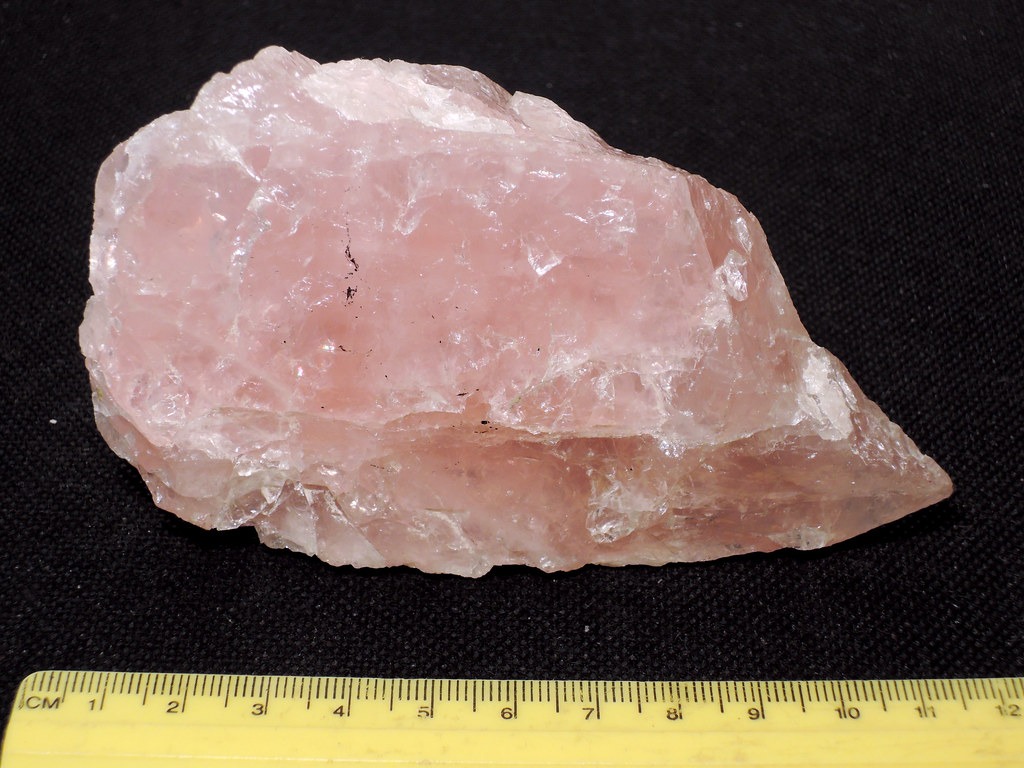
Photo: Juhele_CZ · CC BY-SA 2.0 · Flickr
Meaning & uses
Rose Quartz Meaning
If this directory has a default heart stone, it's this one. Where Rhodochrosite reaches into old wounds and Prehnite offers a quieter, unshowy tenderness, Rose Quartz is love in its most direct, universally recognized form.
What Is Rose Quartz?
Rose Quartz is the same mineral species as Amethyst, Citrine, and Smoky Quartz — all are macrocrystalline quartz, silicon dioxide — but its color comes from an unusual mechanism among quartz varieties. Where Amethyst and Smoky Quartz get their color from trace elements altered by natural irradiation, most Rose Quartz owes its soft pink to microscopic, fibrous inclusions of a separate mineral called dumortierite, distributed through the quartz in quantities far too small to see as individual crystals.
That inclusion structure explains something else distinctive about Rose Quartz: unlike Amethyst or Smoky Quartz, which commonly form clean, pointed crystal clusters, most Rose Quartz grows as a shapeless, massive material with no natural crystal faces at all. The polished points and towers sold commercially are almost always cut and shaped by lapidaries rather than naturally terminated — genuinely well-formed Rose Quartz crystal points exist, but they're a rare exception rather than the norm.

A Stone With a History
Rose Quartz is genuinely ancient in human use, worked into beads and small objects in Mesopotamia as far back as roughly 7,000 years ago, among the oldest worked gem materials in this directory. Egyptian and Roman jewelry made consistent use of it as well, with a persistent trade tradition holding that ancient Egyptians used it in facial treatments believed to preserve youthful skin — a claim more folklore than documented archaeology, but a long-lived one.

Its most enduring origin story, though, is mythological. Greek and Roman legend ties Rose Quartz's color directly to Aphrodite, or Venus: as the story goes, rushing to the side of her dying lover Adonis, the goddess cut herself on a thorn bush, and her blood mingling with clear quartz stained them pink — an origin myth that made Rose Quartz's association with love feel less assigned than inherited.
Meaning and Symbolism
Rose Quartz's "Stone of Unconditional Love" reputation is arguably the most widely and consistently recognized meaning attached to any single stone in the crystal trade. Where other pink and heart-associated stones in this directory carve out more specific territory — Rhodochrosite for old, often childhood-rooted wounds, Unakite for balanced growth, Prehnite for a quieter, unshowy tenderness — Rose Quartz remains the simple, direct baseline: present-day love and self-compassion, without a more complicated emotional backstory attached.
Carried or worn to
- Open the heart to love, given and received
- Support self-compassion and self-forgiveness
- Ease grief and emotional overwhelm gently
- Deepen existing relationships and friendships
Chakra, Zodiac & Element
Rose Quartz is tied to the Heart Chakra, about as direct and uncomplicated a match as this directory offers. Its Water element reflects the emotional openness at the center of its meaning.
Astrologically it's linked to Taurus and Libra, the zodiac's two Venus-ruled signs — a clean, direct connection, given Venus's own long association with love and beauty across the same classical tradition that gave Rose Quartz its Aphrodite myth in the first place.
How to Use and Care for Rose Quartz
At 7 on the Mohs scale, Rose Quartz is one of the more durable stones in this directory, holding up to daily wear as well as any quartz-family stone. It's water-safe for routine cleansing, though like other pale stones, prolonged direct sunlight is worth avoiding, since it can gradually fade the color over a very long time.
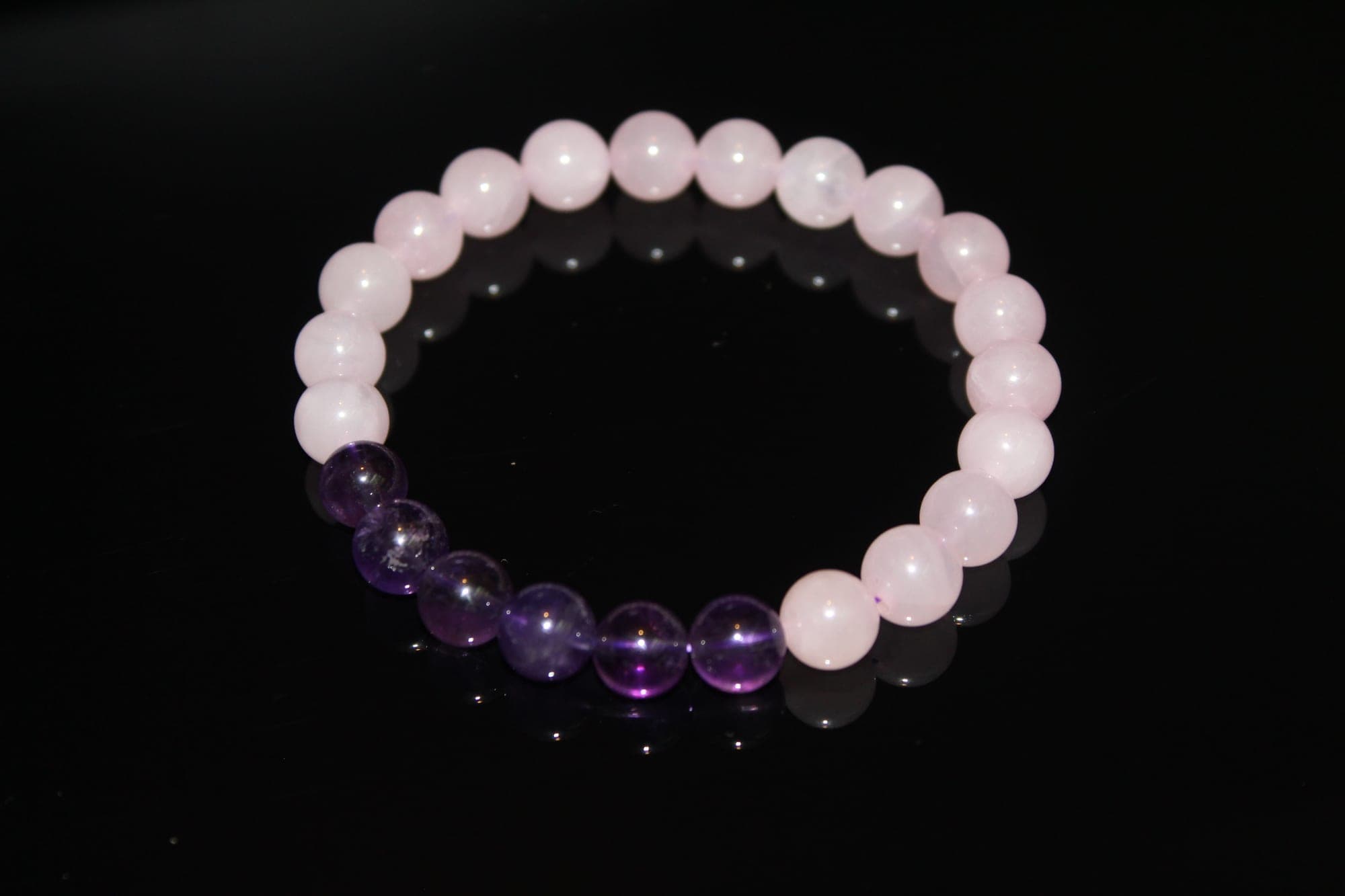
Rose Quartz pairs especially well with Amethyst — widely considered one of the most dependable combinations in the whole practice, with no tension between the two and enough range together to cover both grief and anxiety; see our Crystal Combinations guide for more on why the pairing works.
Frequently Asked Questions
What causes Rose Quartz's pink color?
Does Rose Quartz naturally form pointed crystals?
What is the myth behind Rose Quartz's color?
Is Rose Quartz safe to wear every day?
Can Rose Quartz get wet?
What chakra is Rose Quartz associated with?
The stone every other heart stone in this directory gets measured against.
Shop this stone
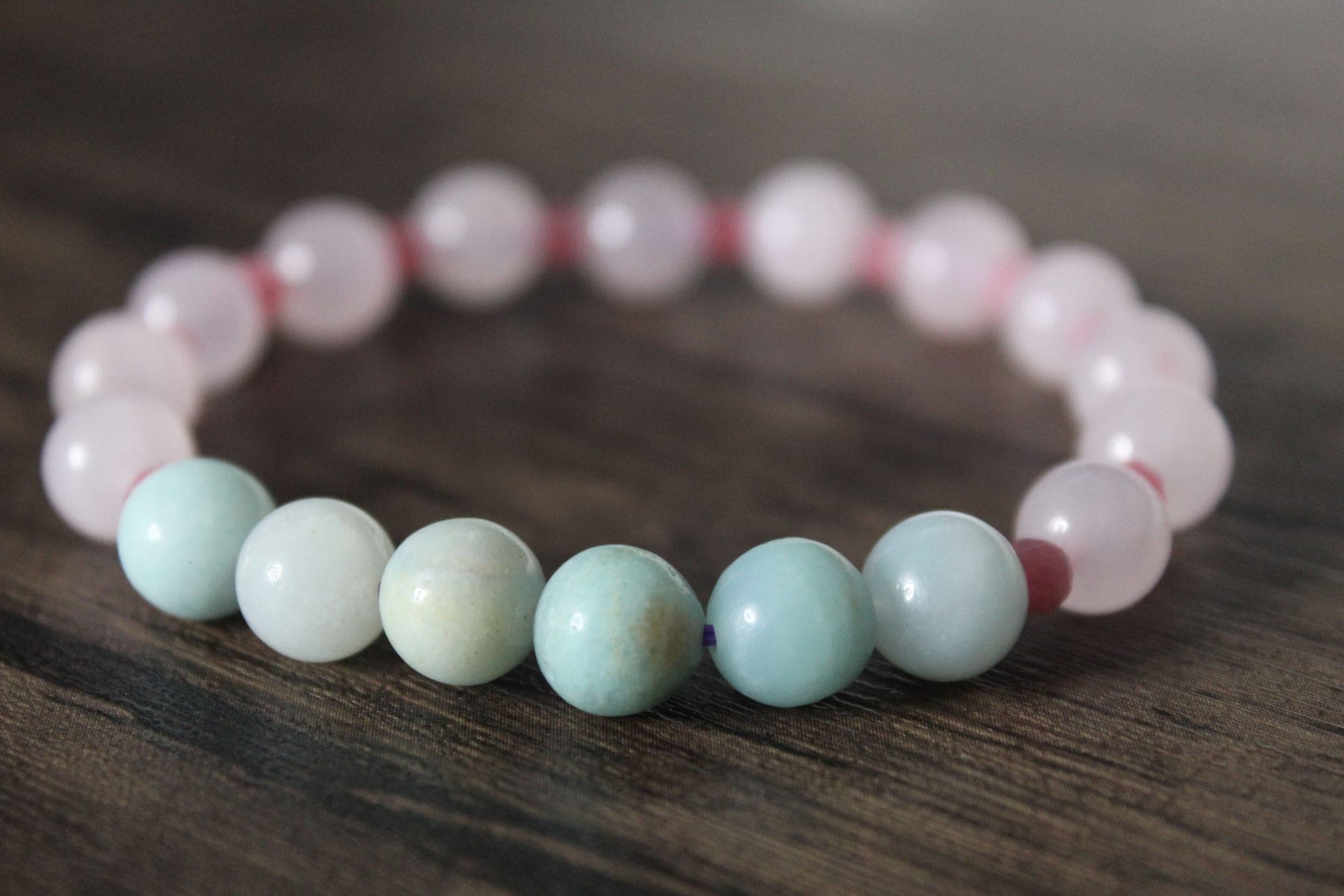
Bracelets with Rose Quartz
Pairings
Rose Quartz Pairs Well With

Rose Quartz + Malachite
Love, heart work
Rose quartz softens; malachite does the harder, deeper work underneath.
Read more →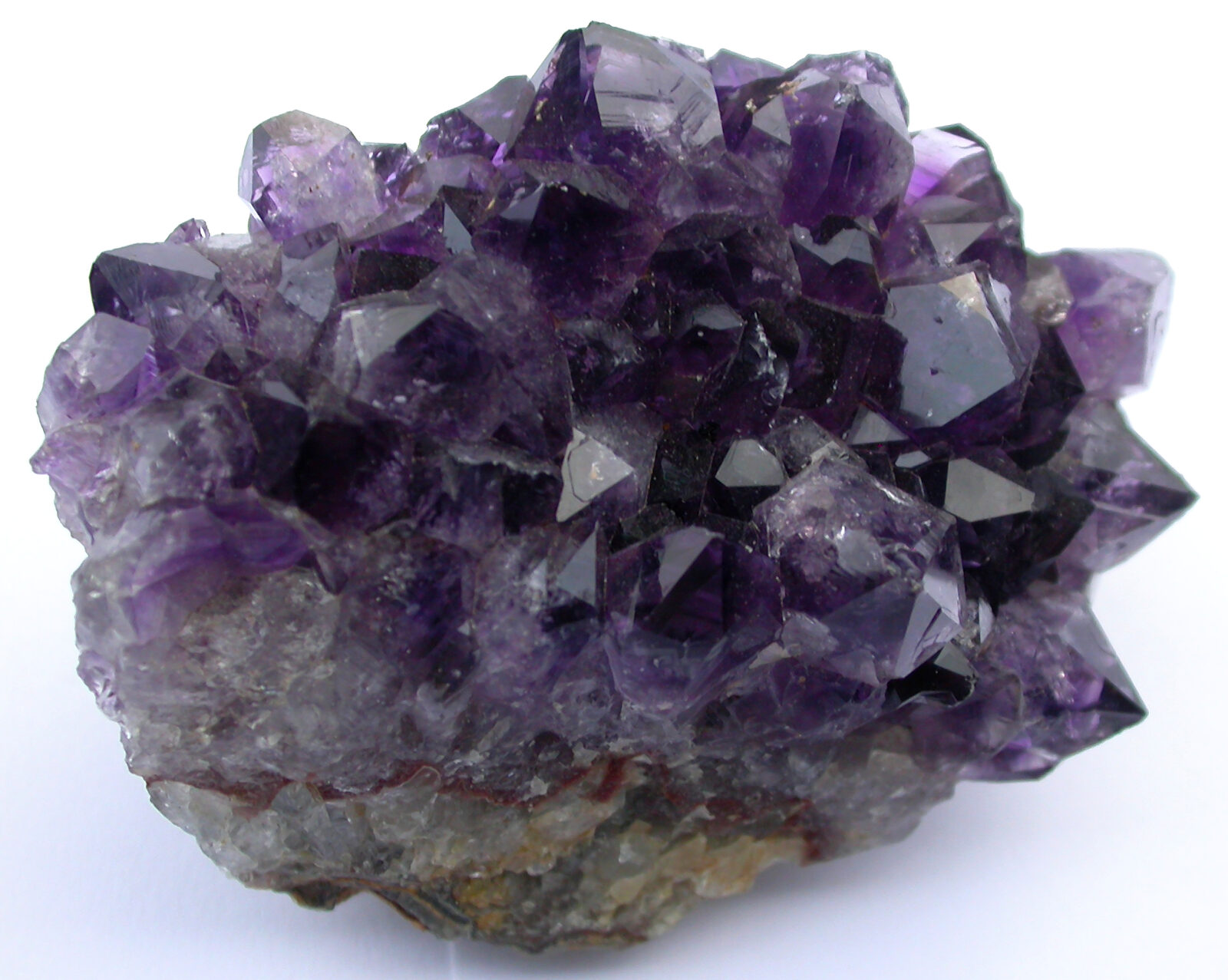
Rose Quartz + Amethyst
Emotional healing, self-love
Widely considered the most dependable pairing in the whole practice — there's no tension between the two, and together they cover both of the places grief and anxiety tend to settle.
Read more →
Rhodonite + Rose Quartz
Emotional rescue after heartbreak
Rhodonite is reached for specifically in the acute aftermath of a breakup or loss, rose quartz for the softer, ongoing self-love work — paired, they cover both the sharp moment and the slower healing after it.
Read more →
Clear Quartz + Rose Quartz
Amplified self-compassion
Clear quartz magnifies whatever it's paired with, and rose quartz — being nothing but gentle — has nothing sharp for it to amplify. A safe way to turn up self-compassion work without turning up anything harder alongside it.
Read more →
Rose Quartz + Rhodochrosite
Inner-child, self-love work
Rhodochrosite reaches further back than rose quartz does, into older and often childhood-rooted wounds, while rose quartz holds the gentler, present-day self-love work alongside it.
Read more →