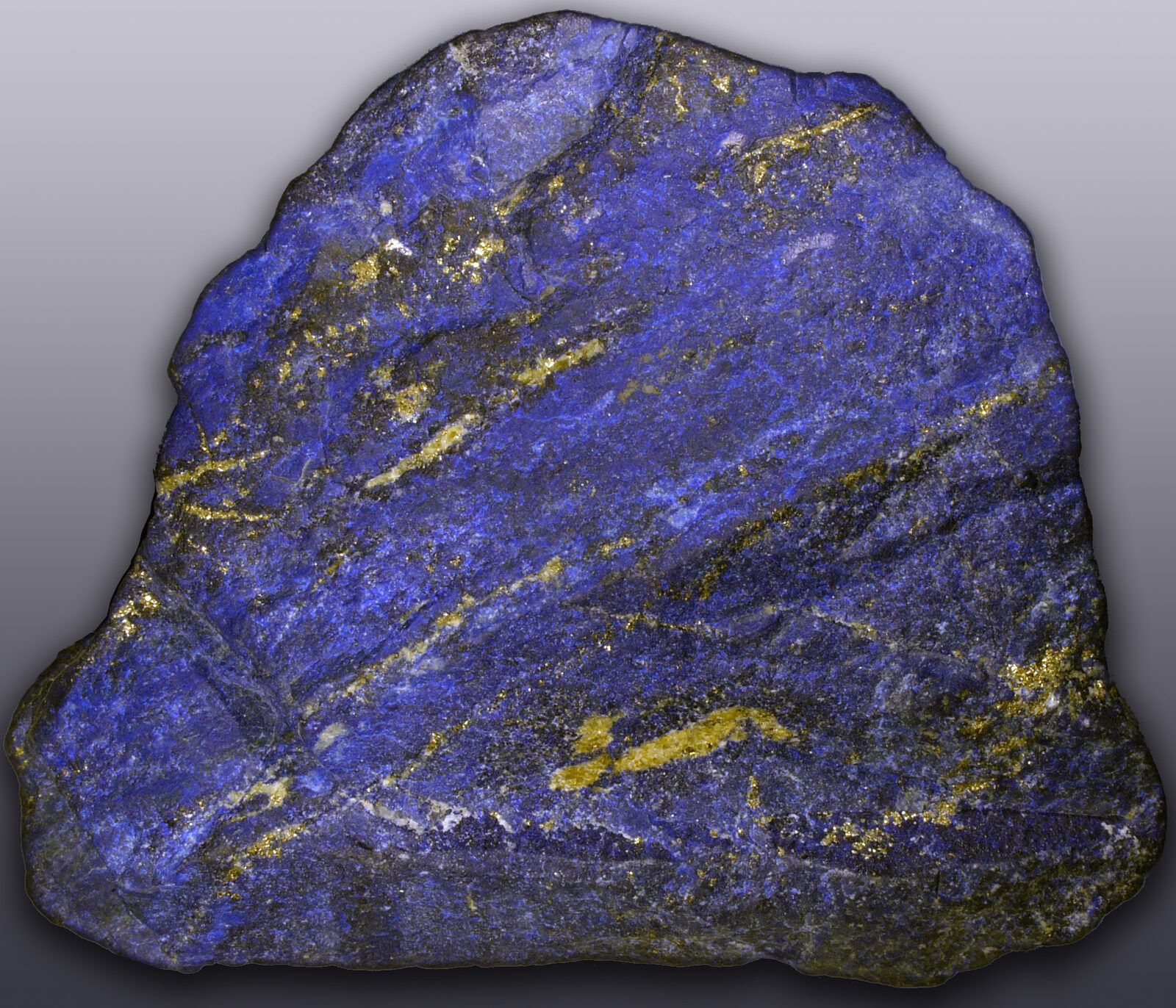
Photo: Hannes Grobe · CC BY-SA 2.5 · Wikimedia Commons
Meaning & uses
Lapis Lazuli Meaning
Ground into the most prized blue pigment in art history and worn by pharaohs long before that, Lapis Lazuli's deep blue and gold has stood for wisdom and truth for about as long as any stone has stood for anything.
What Is Lapis Lazuli?
Lapis Lazuli isn't a single mineral — it's a rock, mostly made of lazurite, a blue silicate mineral, intergrown with white calcite and metallic flecks of pyrite. That combination is exactly what gives Lapis its look: the more lazurite and the less calcite a piece contains, the deeper and more uniform its blue, while the pyrite supplies the gold flecking that made ancient writers compare polished Lapis to a night sky full of stars.
Nearly all of the finest Lapis Lazuli, historically and today, comes from a single mining district: Sar-e-Sang, in the Hindu Kush mountains of Afghanistan's Badakhshan province. It's one of the oldest continuously worked gem deposits on Earth, mined since at least the seventh millennium BCE — older than written language, older than the wheel, and still producing material today. Smaller deposits exist in Chile and Russia, though neither has matched Afghanistan's reputation for color.

A Stone With a History
Lapis Lazuli's trade history is almost as remarkable as its color. Ancient Egypt had no domestic source of the stone at all, yet Lapis appears throughout Egyptian jewelry and funerary art from at least 3000 BCE onward, imported across thousands of miles of ancient trade routes from Afghanistan — one of the longest-distance luxury goods trades of the ancient world. Tutankhamun's burial mask uses inlaid Lapis for the eyebrows and eye outlines, and Egyptians ground the stone for cosmetic use as well as jewelry. Further east, Sumerian artisans used it extensively in royal tombs and temple objects, including the inlay work on the famous Standard of Ur.
Its most consequential afterlife came centuries later, in European painting. Ground Lapis Lazuli was the source of ultramarine, literally "beyond the sea" in Latin, the most expensive pigment available to Renaissance painters — at times worth more than gold by weight. Painters reserved it for their most important subjects; the Virgin Mary's robes in countless Renaissance paintings owe their vivid blue specifically to crushed Afghan Lapis.

Meaning and Symbolism
Lapis Lazuli's "Stone of Wisdom" reputation follows directly from who reached for it throughout that history: priests, pharaohs, and scholars, not soldiers or merchants. Across multiple unconnected civilizations, Lapis became a stone associated specifically with truth, insight, and communication with the divine — less about raw power, more about the kind of authority that comes from actually knowing something.
That reputation has held remarkably steady into its modern use. Lapis is still reached for less as a protective or energizing stone and more as one for clear, honest self-expression — speaking a truth that's actually been thought through.
Carried or worn to
- Speak difficult truths with clarity and confidence
- Deepen insight and inner wisdom
- Support honest, thoughtful self-expression
- Strengthen a sense of purpose and direction
Chakra, Zodiac & Element
Lapis Lazuli is tied to both the Throat and Third Eye Chakras — Throat for honest self-expression, Third Eye for the inner insight that's supposed to come before it. The pairing captures Lapis's specific reputation well: not communication for its own sake, but communication backed by real understanding.
Its Water and Air elements reflect intuition and clarity respectively, and astrologically it's linked to Sagittarius, a sign ruled by Jupiter and long associated with philosophy, higher learning, and the pursuit of truth — a close match for a stone whose entire reputation is wisdom.
How to Use and Care for Lapis Lazuli
At 5–5.5 on the Mohs scale, Lapis Lazuli is noticeably softer than most stones in this directory, and because it's a composite rock rather than a single crystal, it can be more prone to chipping along the internal boundaries between lazurite, calcite, and pyrite. A protective setting is worth choosing for rings, and it's better suited to pendants and earrings for regular wear.
Because its calcite content is sensitive to acids and prolonged moisture, avoid soaking Lapis or cleaning it ultrasonically — a quick wipe with a soft, dry cloth is the safer routine choice. Lapis pairs well with Selenite for meditation, the two balancing inward reflection with a clearing, open feel; see our Crystal Combinations guide for more on why it works.
Frequently Asked Questions
Is Lapis Lazuli one mineral or several?
What is ultramarine?
Where does Lapis Lazuli come from?
Is Lapis Lazuli safe to wear every day?
Can Lapis Lazuli get wet?
Is Lapis Lazuli a birthstone?
A stone reached for by anyone who'd rather understand something first and speak second.
Shop this stone
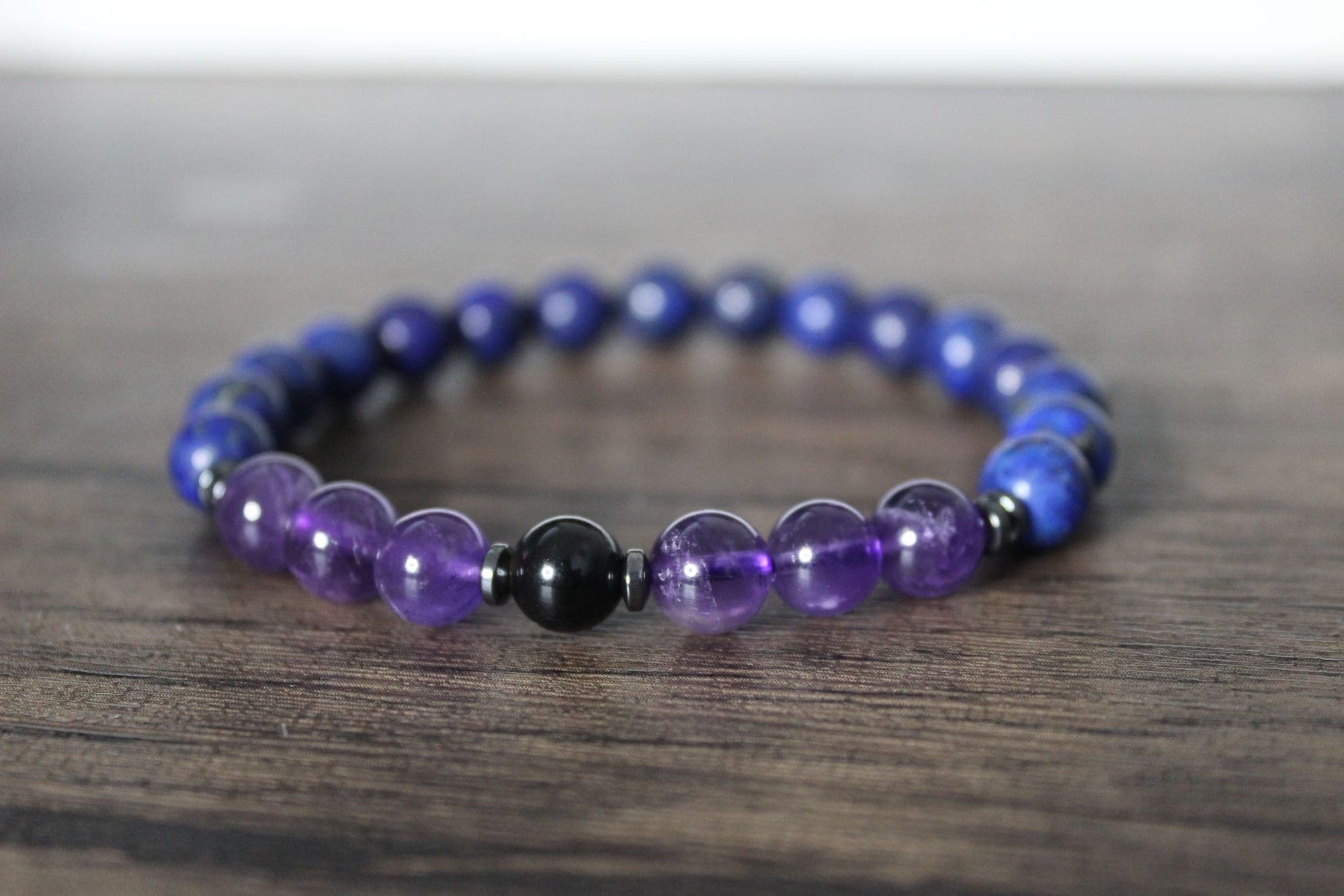
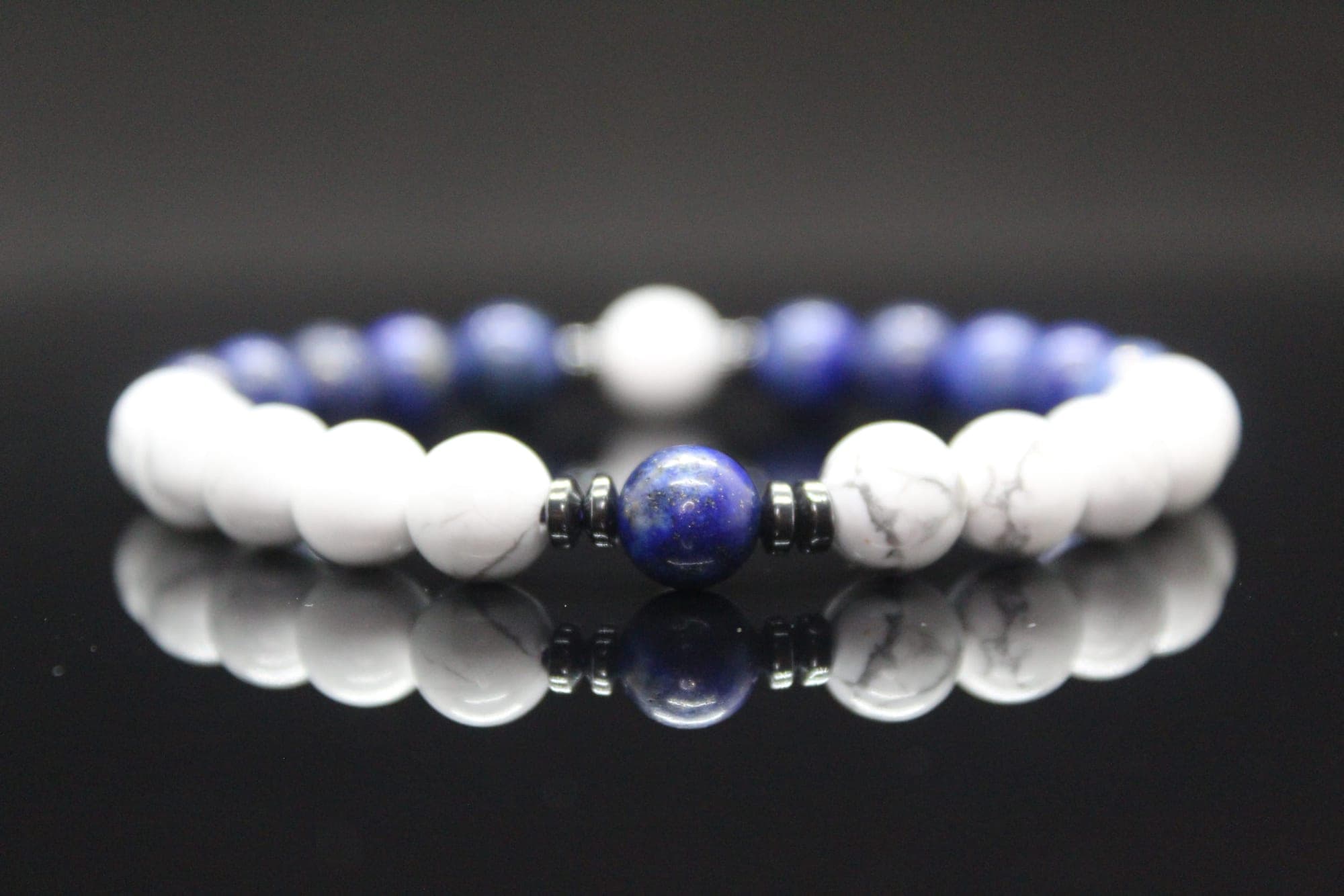
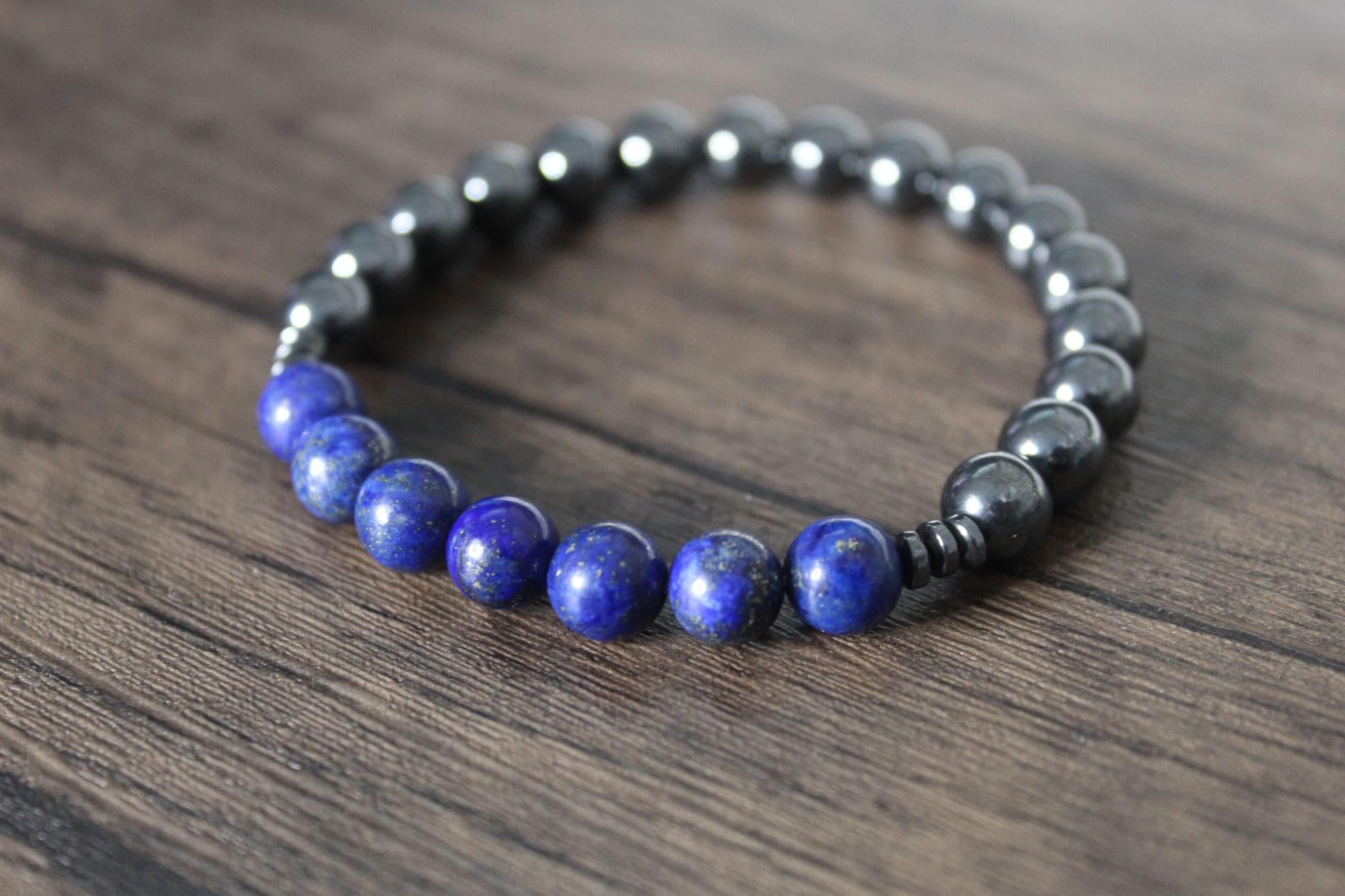
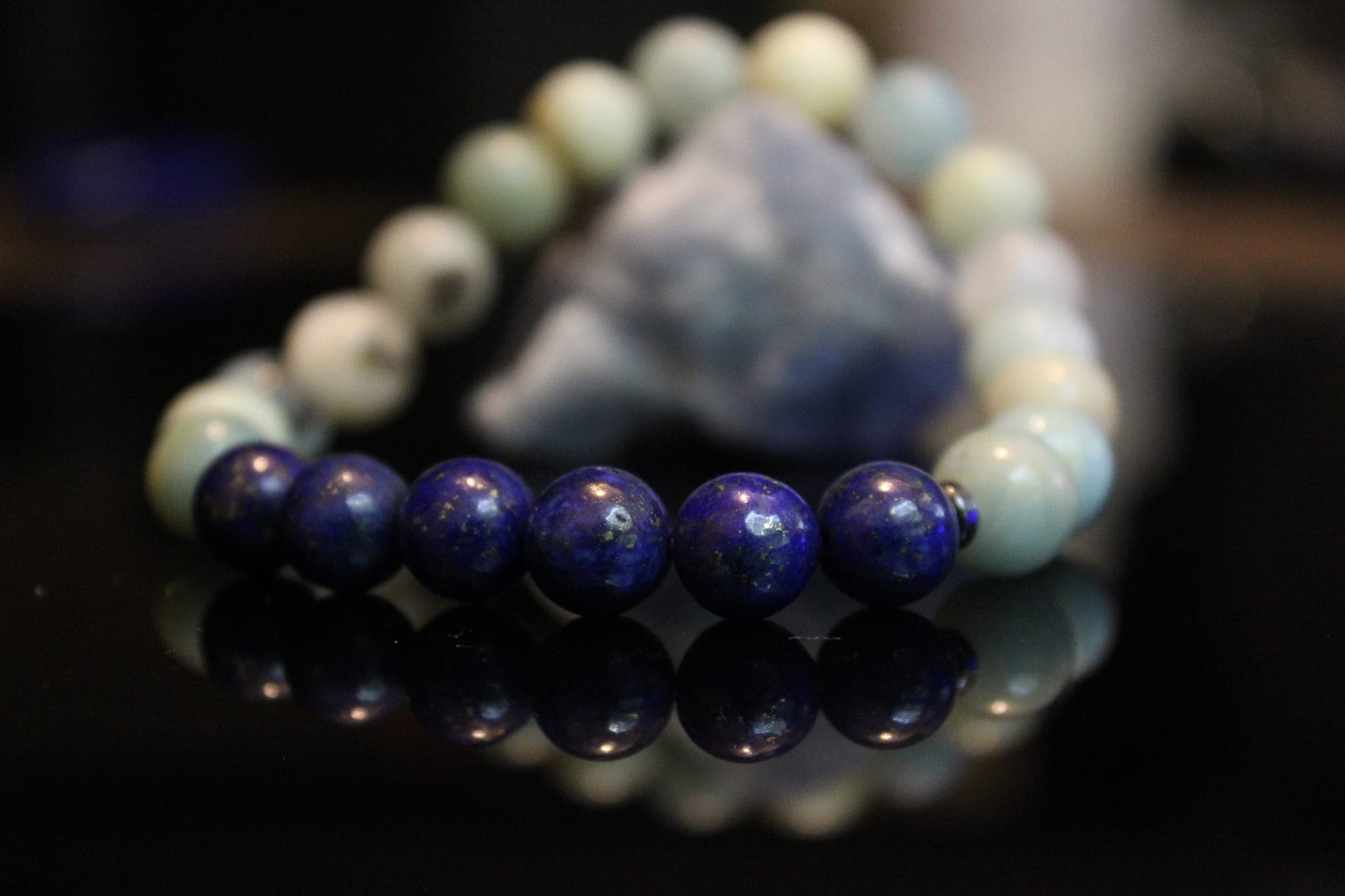
Bracelets with Lapis Lazuli
Pairings
Lapis Lazuli Pairs Well With

Lapis Lazuli + Selenite
Meditation, inner truth
Lapis opens inward reflection; selenite lifts and clears the space around it — a natural fit for meditation practice.
Read more →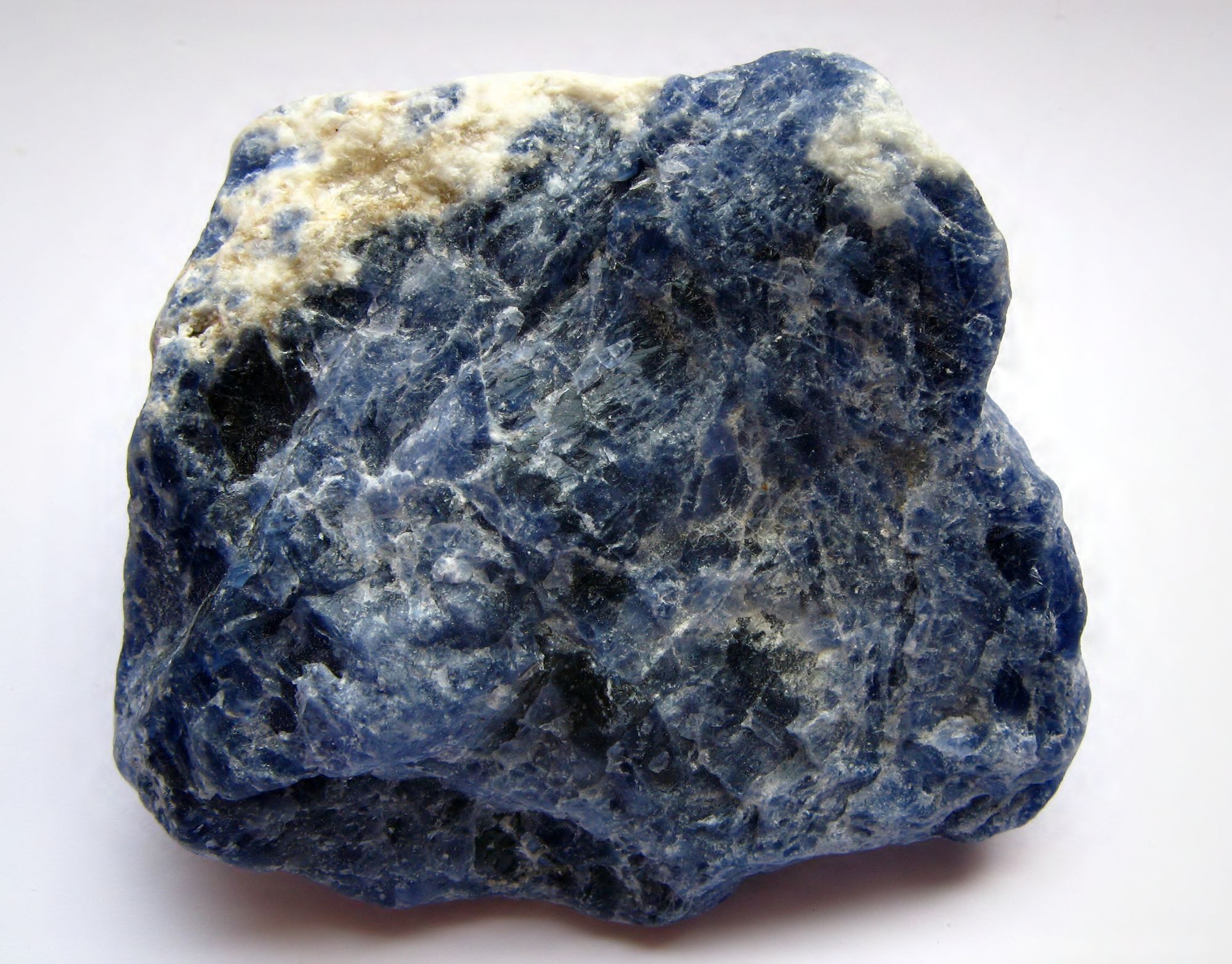
Lapis Lazuli + Sodalite
Communication, truth-telling
Both throat-adjacent stones, but lapis leans intuitive while sodalite leans logical — together they help you say the true thing in a way that actually lands.
Read more →
Clear Quartz + Lapis Lazuli
Clear, truthful communication
Quartz clarifies and amplifies, lapis lazuli connects to intuition and deeper truth — worn together to help you speak plainly and mean it.
Read more →