Meaning & uses
Amethyst Meaning
Amethyst is the stone most reached for when the mind won't settle. Its violet ray is traditionally linked to the crown and third eye chakras, thought to quiet mental chatter, ease tension, and open a clearer line to intuition.
What Is Amethyst?
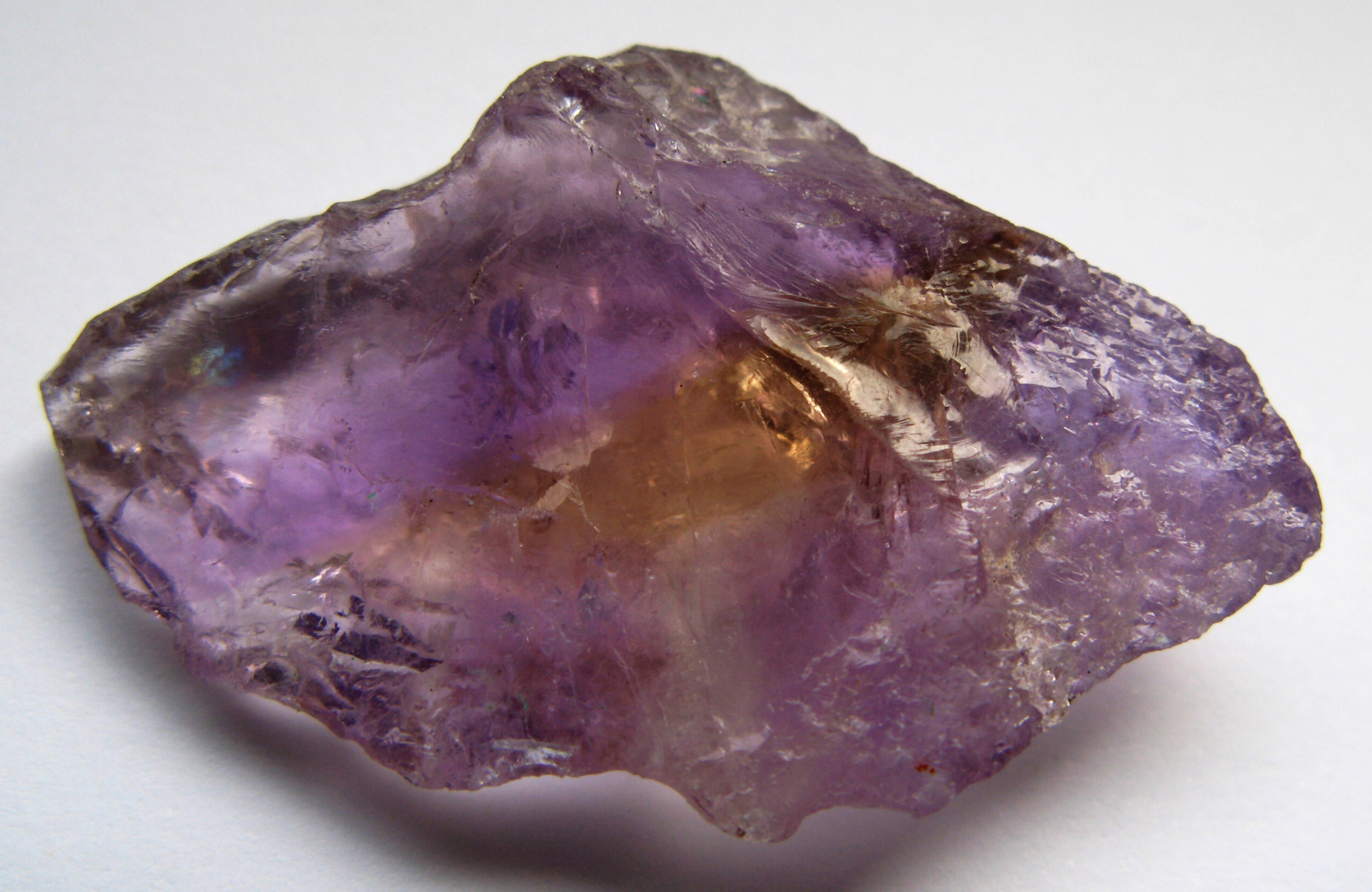
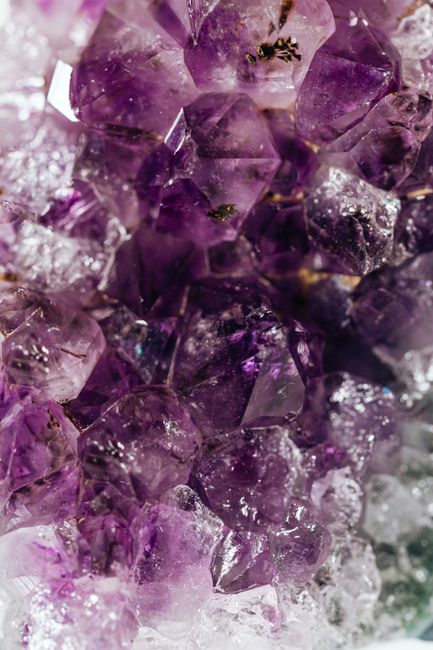
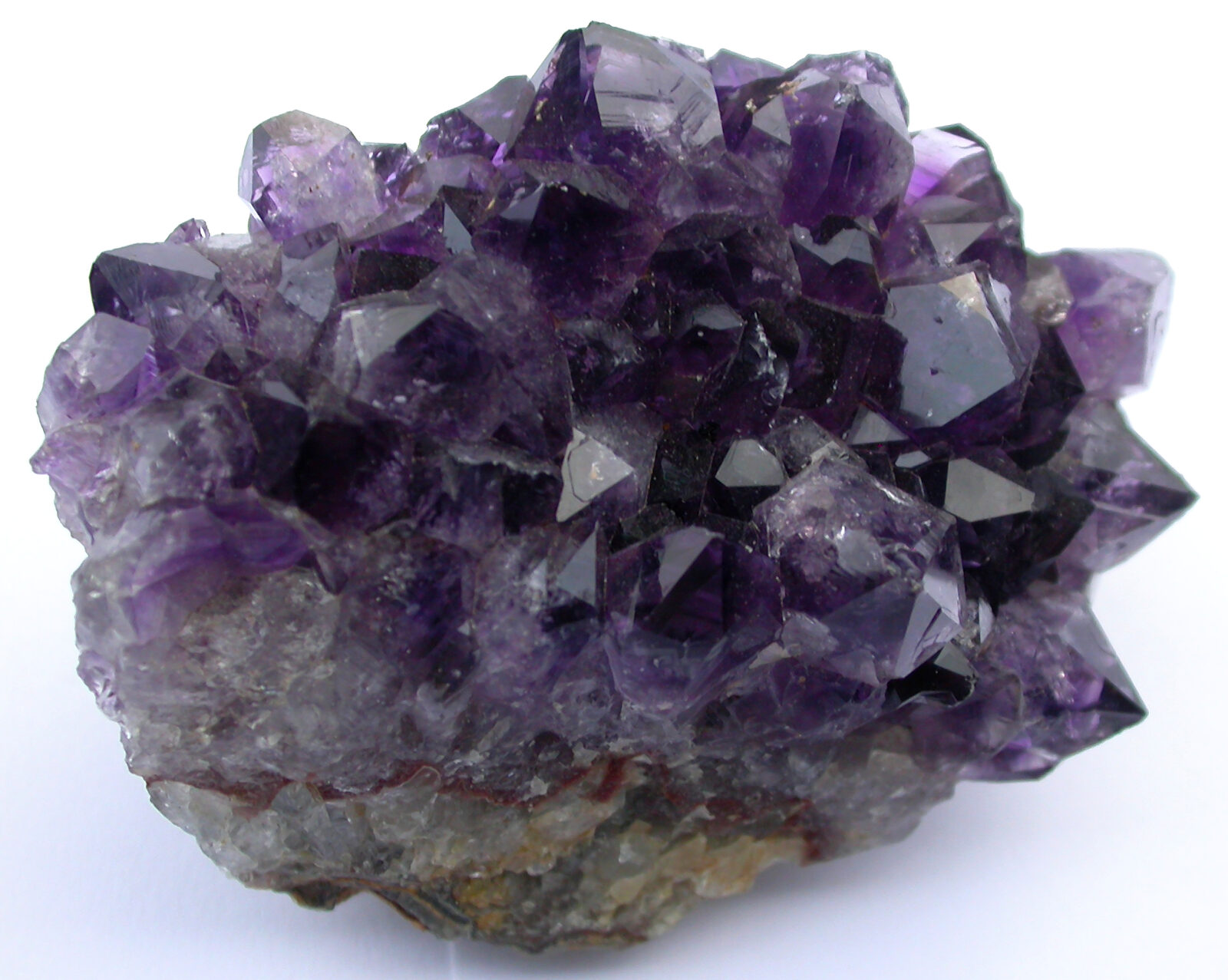
Amethyst is a violet variety of quartz — the same silicon dioxide structure as Clear Quartz or Citrine, colored by trace iron locked into the crystal lattice. On its own, that iron wouldn't produce much color; Amethyst's deep violet actually comes from those iron impurities being altered by natural background irradiation in the rock over millions of years, shifting them into a light-absorbing form that reads as purple. Heat that same stone past a certain temperature and the color changes again — turning yellow as Citrine, or, when the heating is incomplete, leaving a single crystal banded in both colors as Ametrine.
The name comes from the Greek amethystos, meaning "not intoxicated." Ancient Greeks believed the stone warded off drunkenness, and wine goblets were carved from it for exactly that reason — a belief that gave the whole gem family its name centuries before anyone understood what actually caused its color.
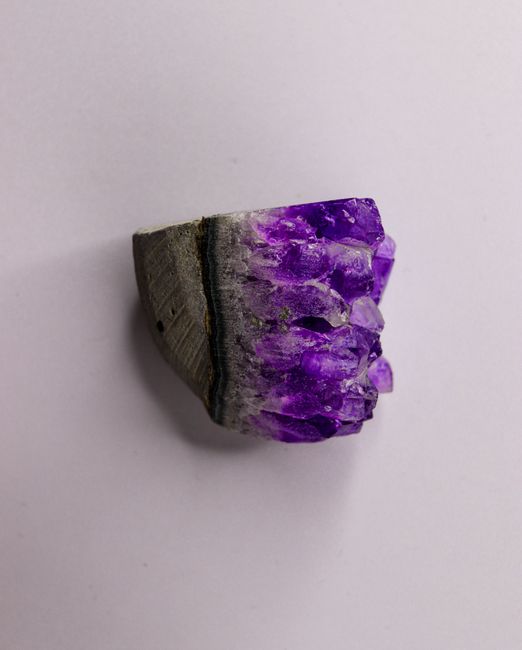
Most Amethyst forms the same way a geode does: silica-rich fluid seeping into a hollow volcanic cavity over thousands of years. But where Agate fills that space with microscopic, banded layers of chalcedony, Amethyst crystallizes as true macrocrystalline quartz — large, well-formed, pointed crystals growing inward from the cavity wall. That's why an Amethyst geode looks so different from a banded Agate one, even though both start from an almost identical hollow volcanic pocket.
A Stone With a History
Amethyst has been carved into jewelry and seals since antiquity — Egyptian amulets, Roman intaglio rings, and beads found across the ancient Mediterranean all used it, prized as one of the "cardinal gems" alongside diamond, sapphire, ruby, and emerald. For most of that history it was as rare and valuable as any of them.
That changed in the 19th century, when massive deposits were discovered in Brazil and Uruguay, and Amethyst shifted almost overnight from a royal-treasury gem to one anyone could own. One tradition survived the shift intact: Catholic bishops and cardinals have worn Amethyst rings for centuries, a custom tied directly back to the stone's old reputation for sobriety and clear-headed devotion — and one that's still followed today.
Meaning and Symbolism
Amethyst's meaning has stayed close to its origins: clarity over confusion, calm over compulsion. Where a stone like Agate is about steady strength, Amethyst is about settling — quieting a mind that's spinning, whether from anxiety, overstimulation, or an old habit that's hard to put down.
Carried or worn for
- Calming an overactive mind and easing anxious energy
- Deepening meditation and dream recall
- Supporting sobriety and breaking unwanted habits
- Sharpening intuitive and spiritual insight
Chakra, Zodiac & Element
Amethyst is tied to both the Crown and Third Eye Chakras — violet sits at the top of the traditional chakra color spectrum, and both centers govern insight, intuition, and connection beyond the purely physical. Its Air element reflects the same territory: thought, clarity, and mental space rather than anything grounded or physical.
Astrologically it spans three signs — Pisces, for its intuitive, dreamy quality; Virgo, for the calm, detail-oriented clarity it supports; and Aquarius, for the independent, slightly unconventional spirituality the stone has long been associated with.
How to Use and Care for Amethyst
At 7 on the Mohs scale, Amethyst is durable enough for daily wear in rings, bracelets, or pendants, and — like other quartz-family stones — it's safe to rinse under running water. The one real caution is light, not water: prolonged direct sunlight can gradually fade Amethyst's violet color, the same irradiation-sensitive iron that creates the color working in reverse over time. Recharge it in moonlight rather than on a sunny windowsill if you want the color to last.
Amethyst is also one of the most combined stones in the whole directory. It pairs with Lepidolite for sleep and anxiety, with Rose Quartz for emotional healing, with Hematite when it leaves you feeling floaty and ungrounded, and — in its natural fused form — with Citrine as Ametrine. See our Crystal Combinations guide for the full breakdown of what works and why.
Frequently Asked Questions
Why is Amethyst called Amethyst?
What chakra is Amethyst associated with?
Is Amethyst a birthstone?
Can Amethyst fade in sunlight?
What's the difference between Amethyst and Citrine?
A quiet stone for a busy mind — reached for more than almost any other when things need to settle.
Shop this stone
Bracelets with Amethyst
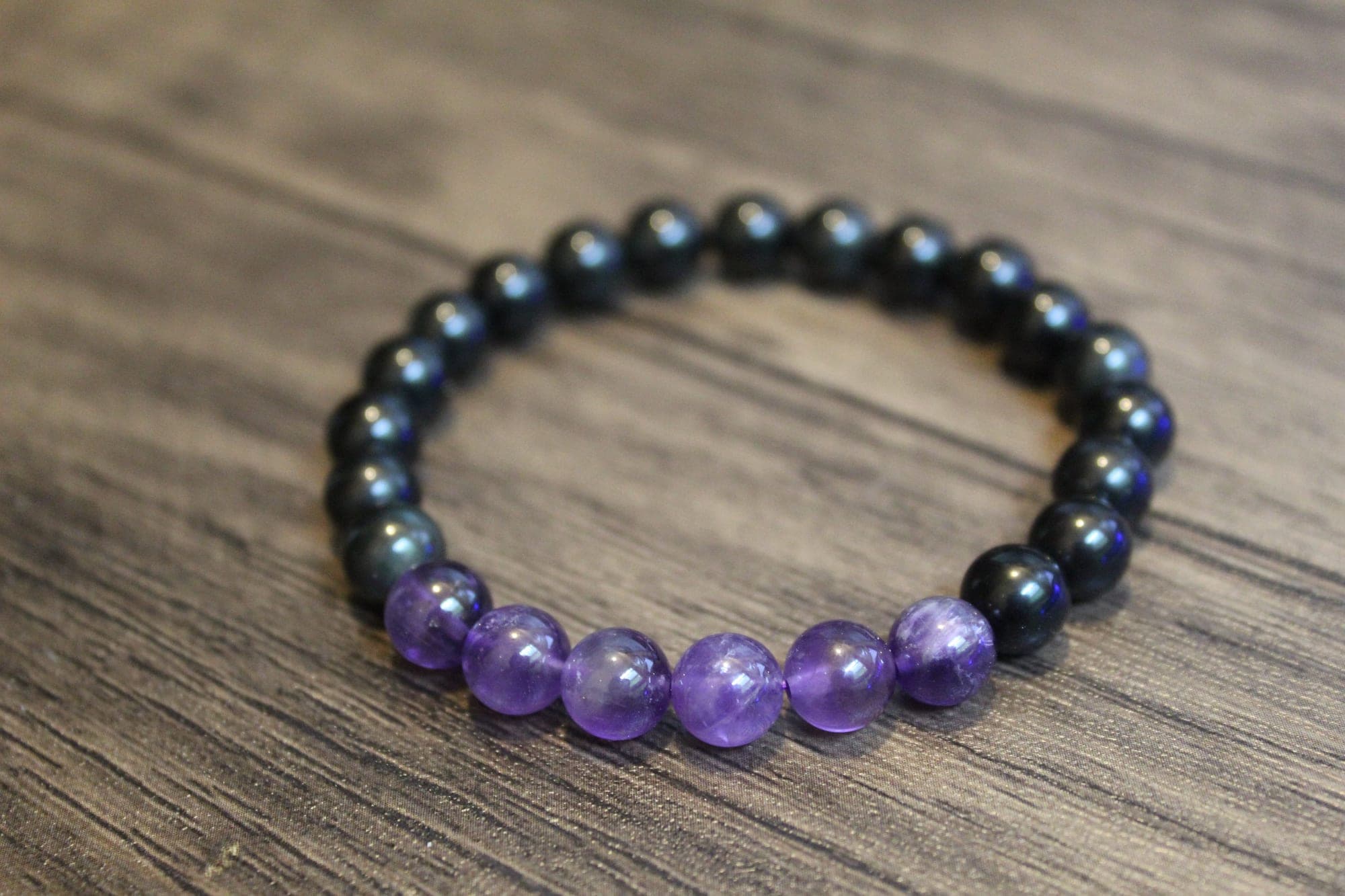
Grounding Insight Energy Bracelet
$33.00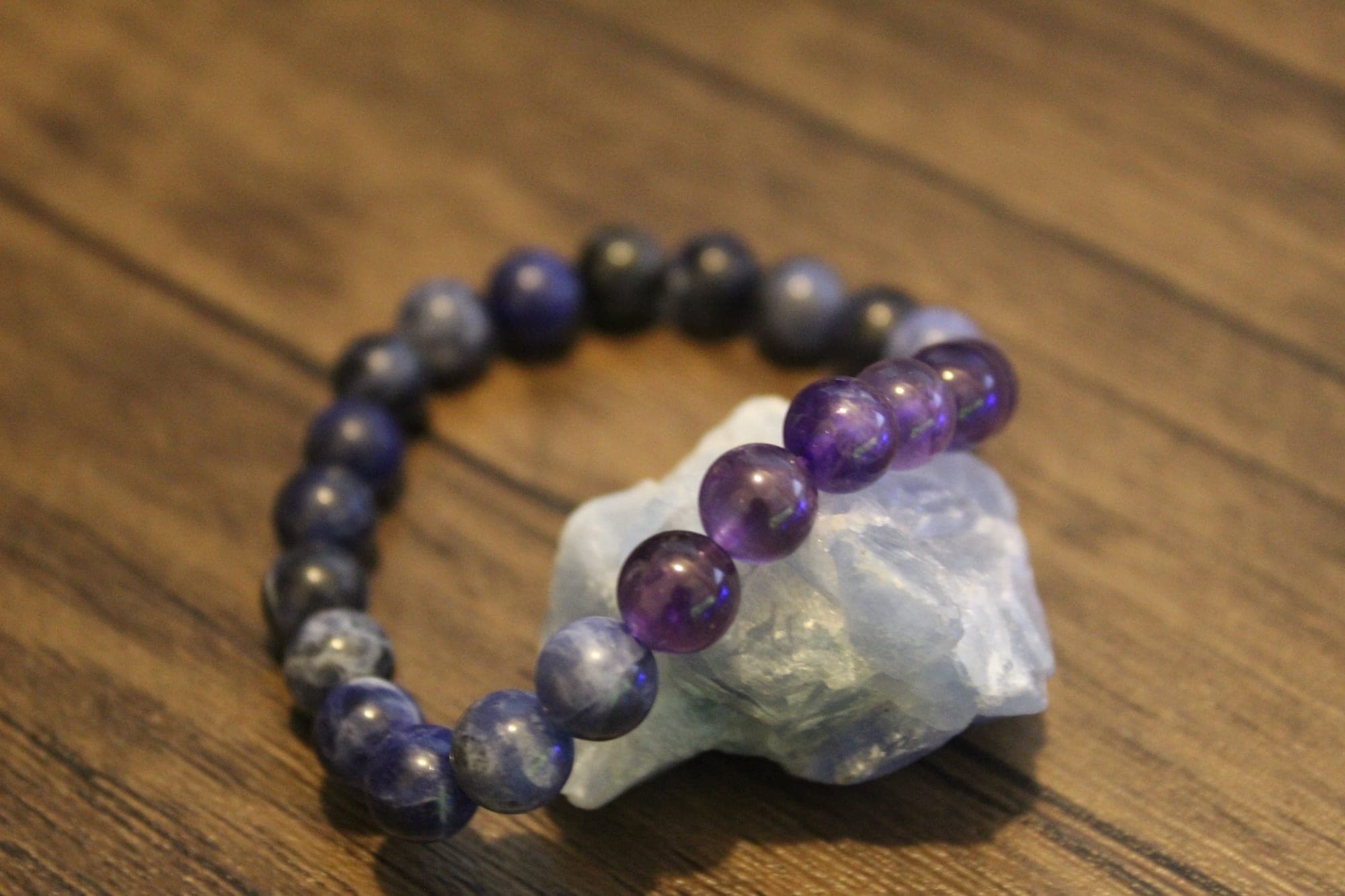
Spiritual Balance Energy Bracelet
$33.00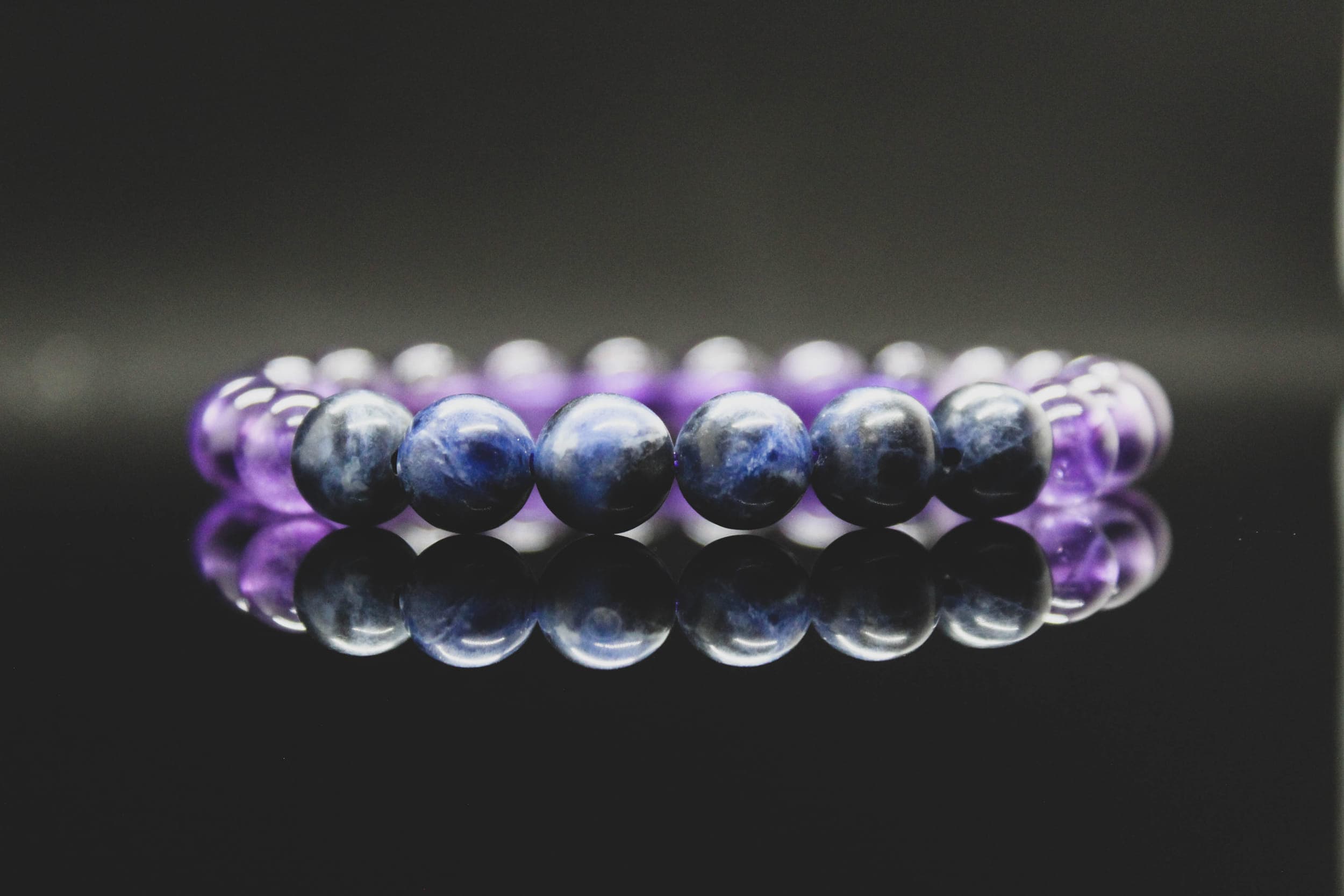
Creative Balance Energy Bracelet
$24.00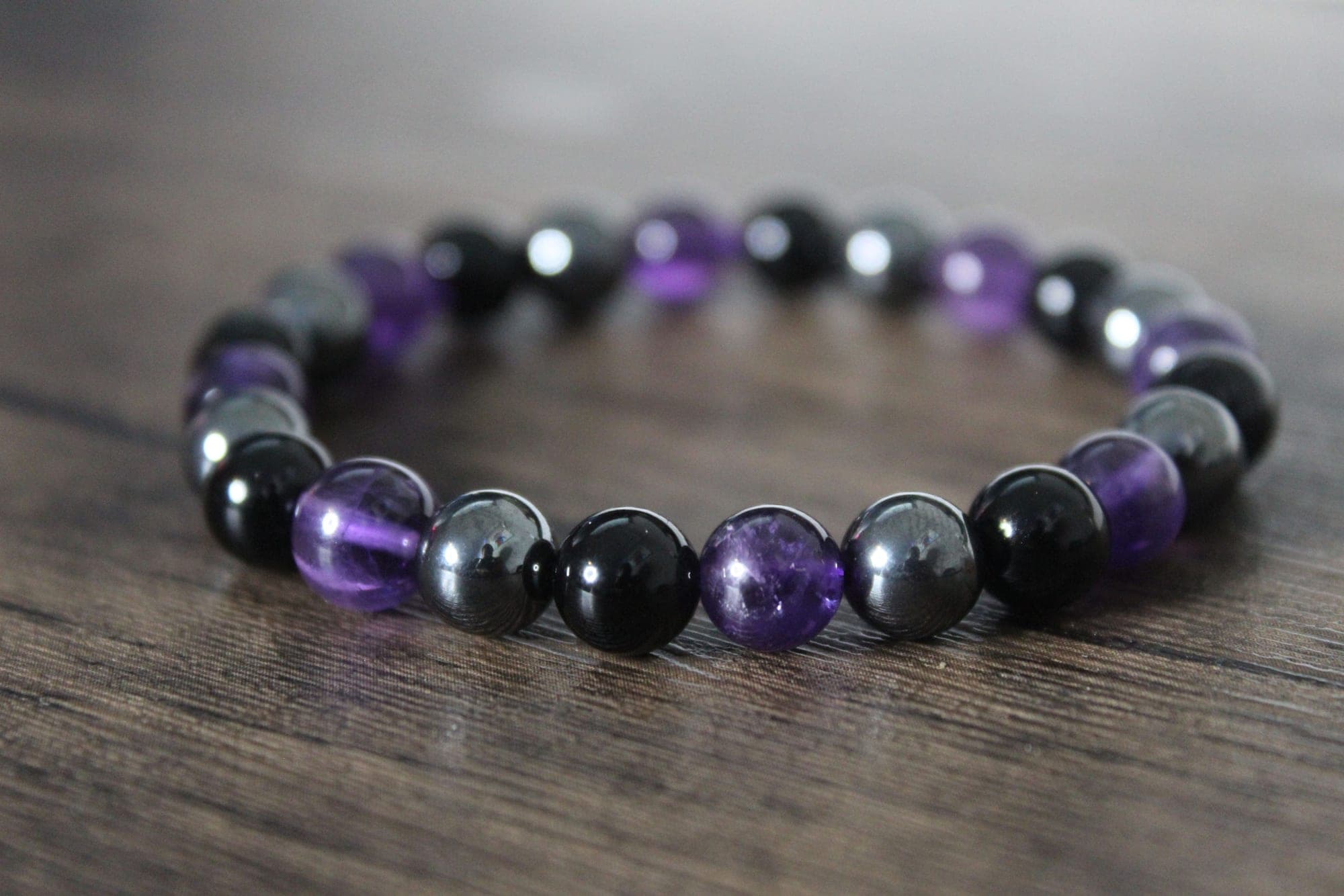
The Raven Energy Bracelet
$33.00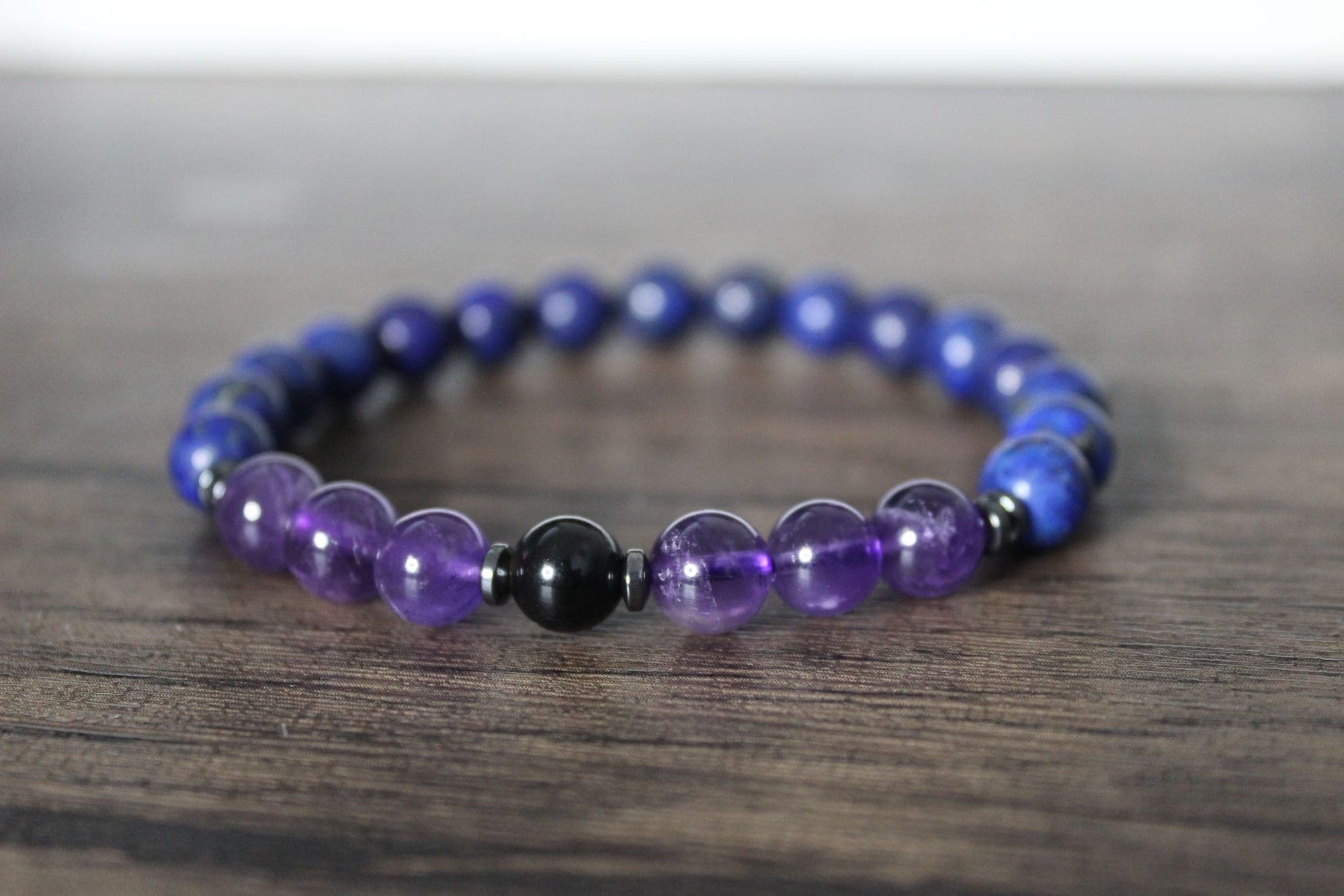
The Dreamer Energy Bracelet
$33.00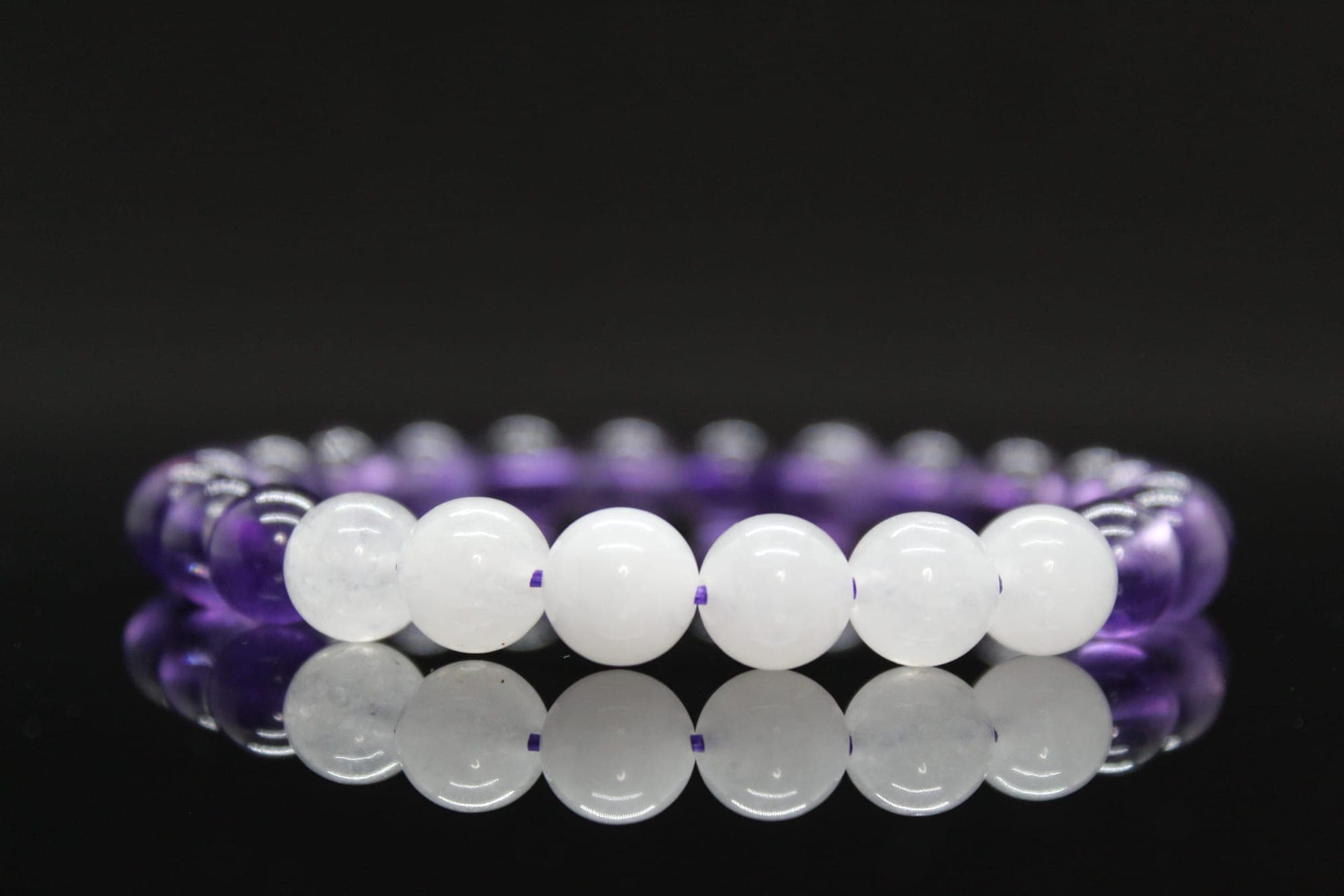
Divine Calming Energy Bracelet
$24.00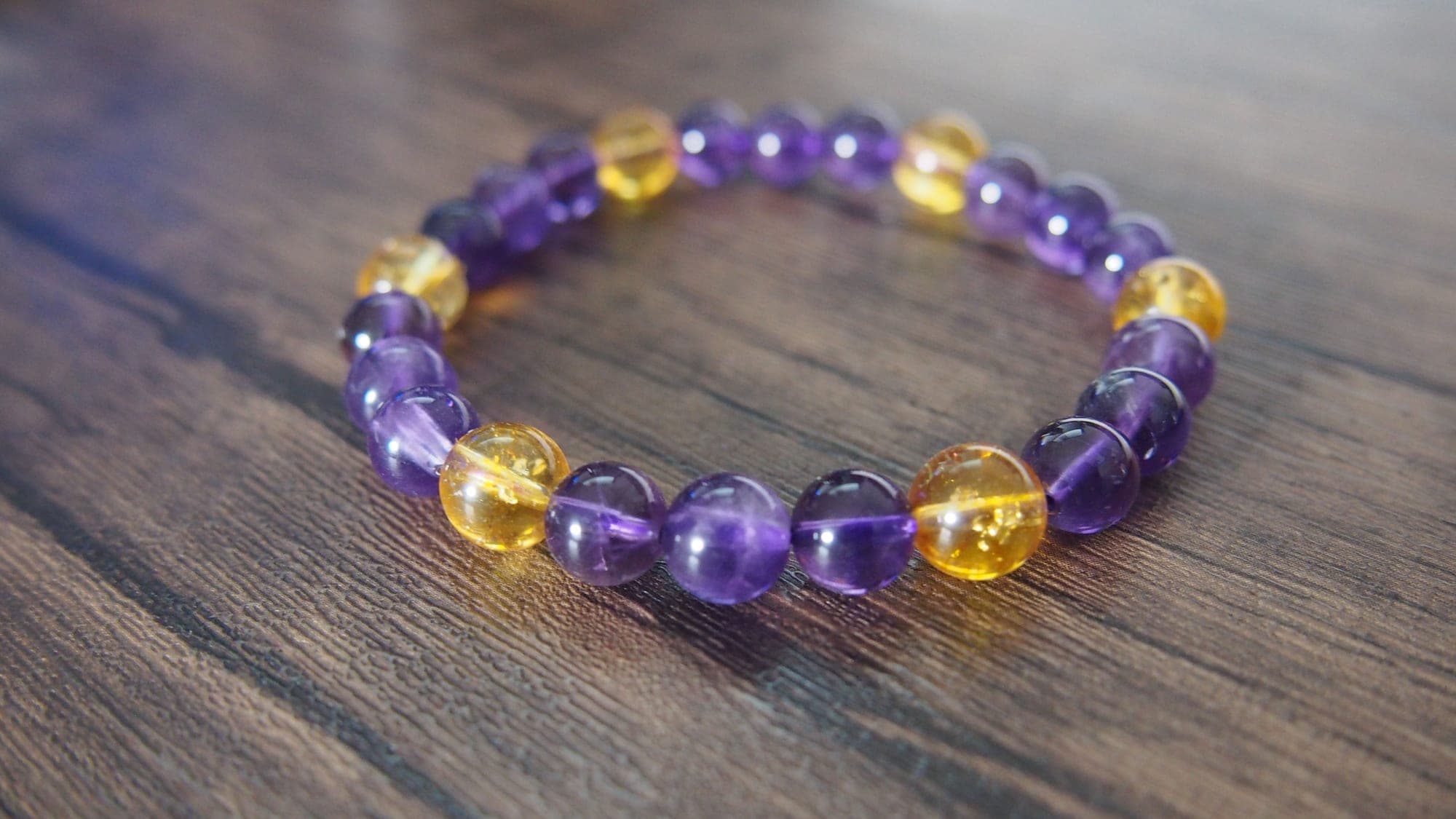
The Kobe Energy Bracelet
$33.00
Creative Flow Energy Bracelet
$33.00
The Crown Energy Bracelet
$24.00
Spiritual Love Energy Bracelet
$24.00
Clear Thoughts Energy Bracelet
$33.00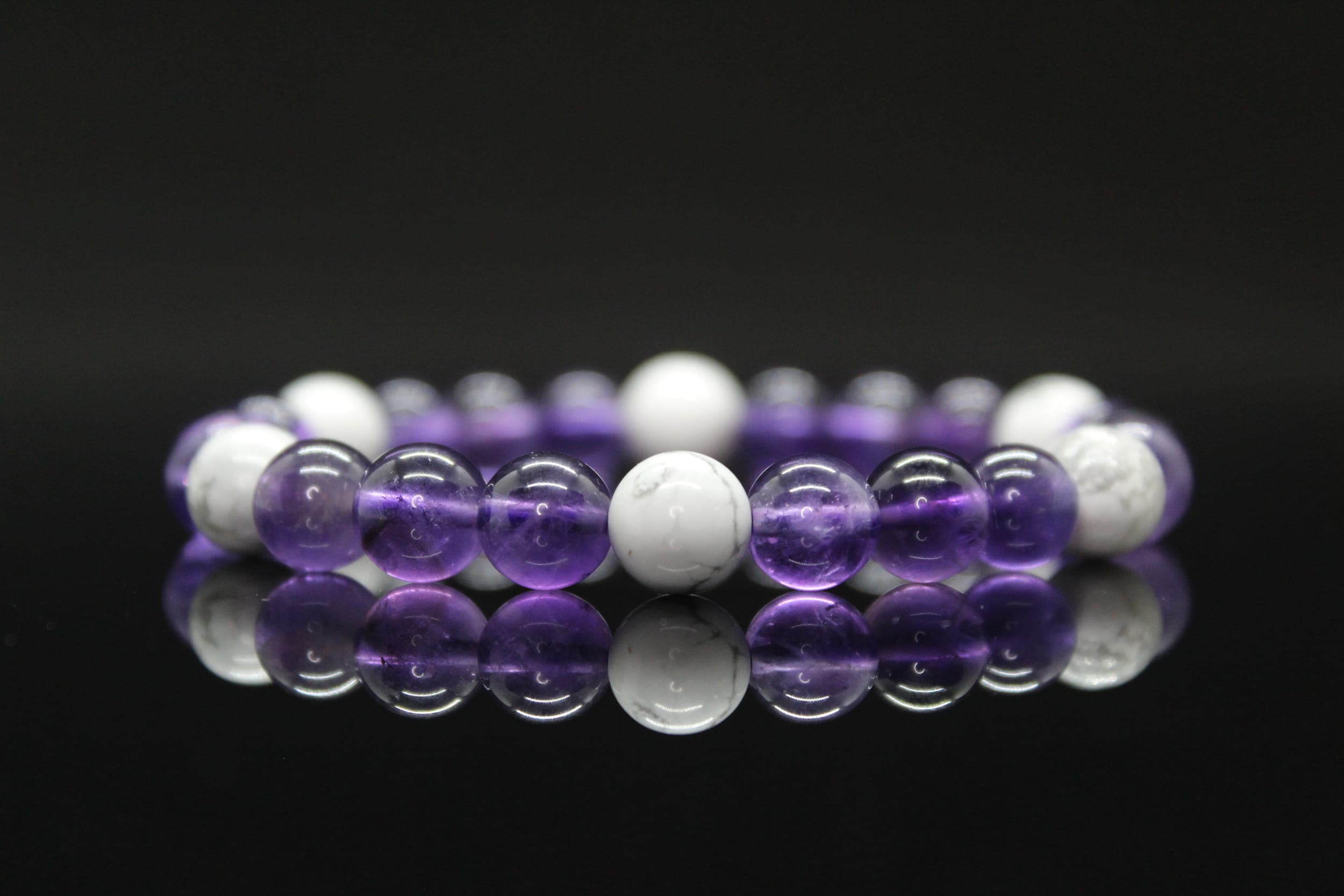
Higher Self Energy Bracelet
$24.00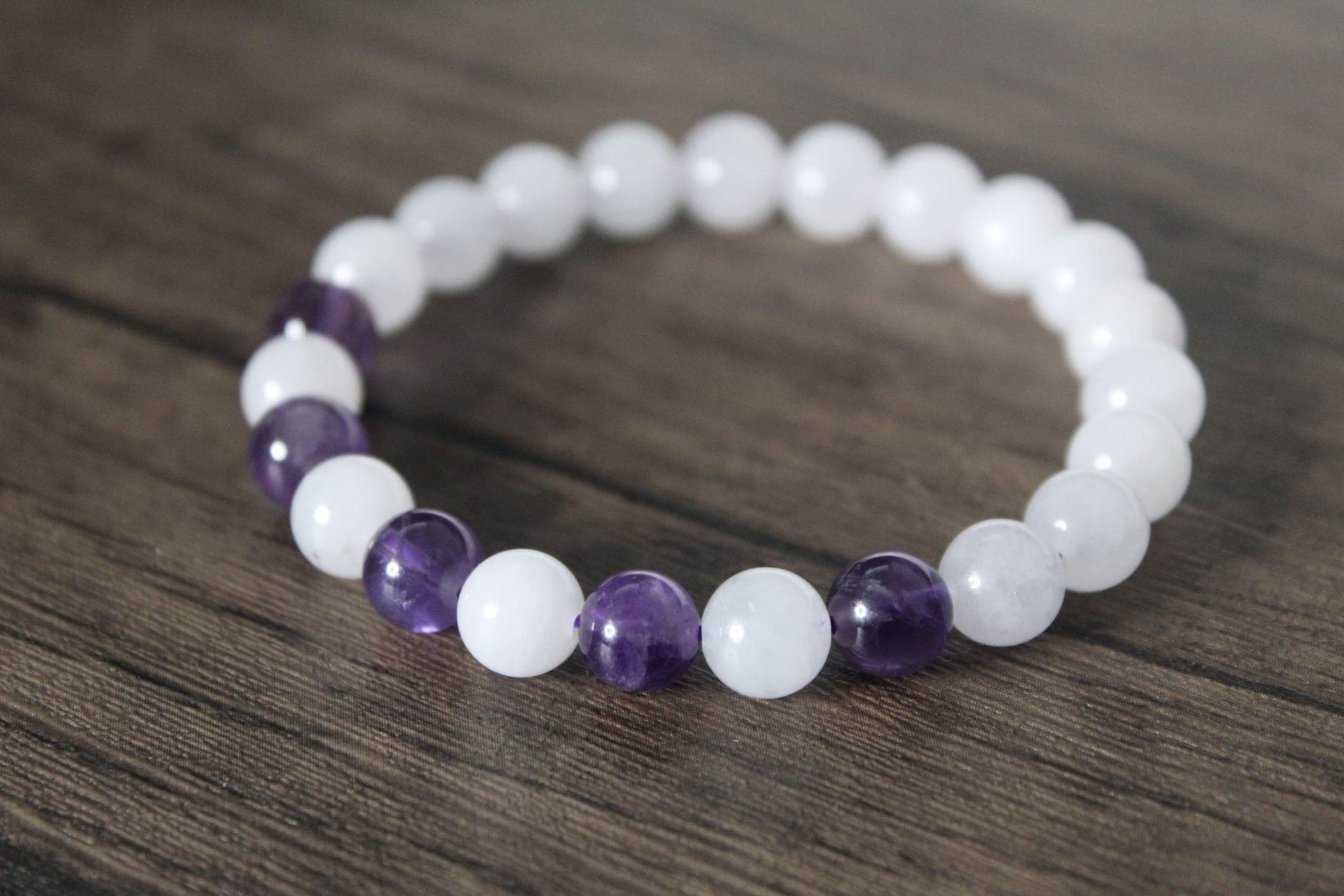
Divine Thoughts Energy Bracelet
$33.00Pairings
Amethyst Pairs Well With

Amethyst + Lepidolite
Calm, sleep, anxiety
Amethyst switches off a racing mind; lepidolite, naturally rich in lithium, settles the body underneath it so the calm actually holds. It's the pairing most often reached for when anxiety is what's keeping sleep away.
Read more →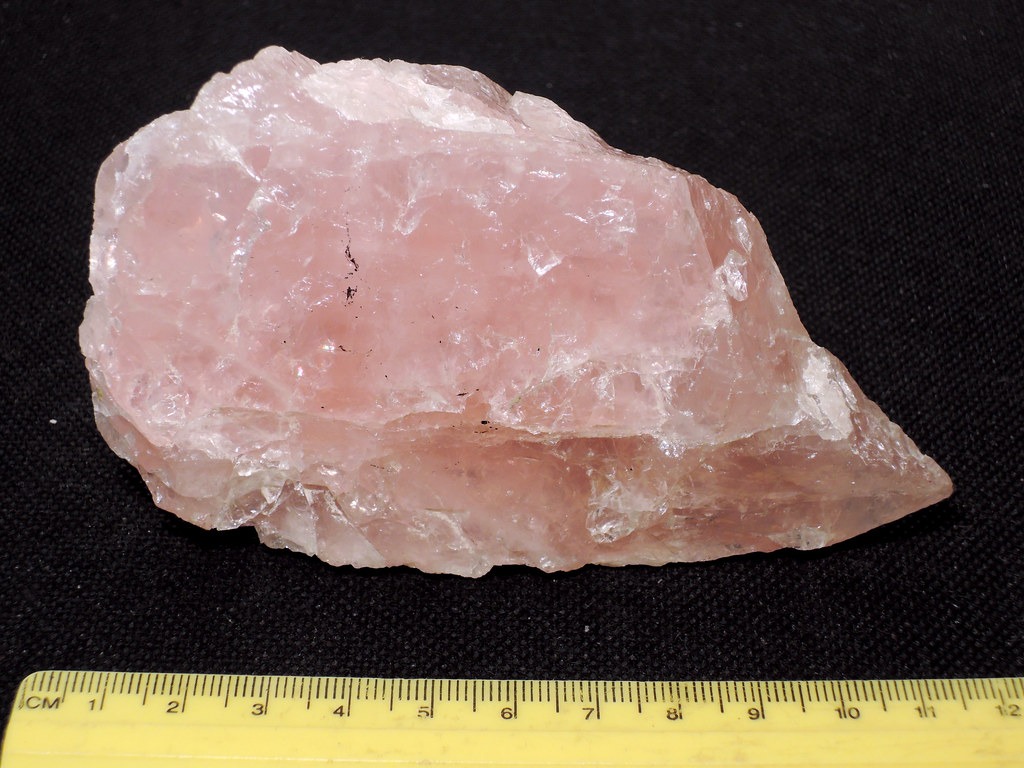
Rose Quartz + Amethyst
Emotional healing, self-love
Widely considered the most dependable pairing in the whole practice — there's no tension between the two, and together they cover both of the places grief and anxiety tend to settle.
Read more →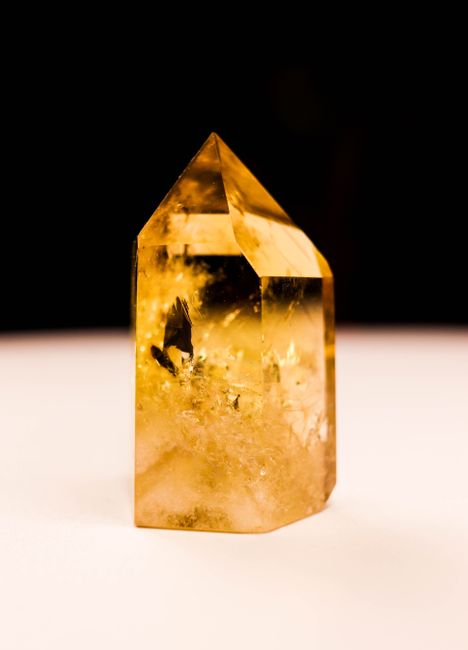
Amethyst + Citrine
The ametrine exception
These two occur fused together naturally as ametrine, which is the one clean exception to the usual calming-plus-energizing rule — amethyst caps the intensity while citrine keeps the energy from going flat.
Read more →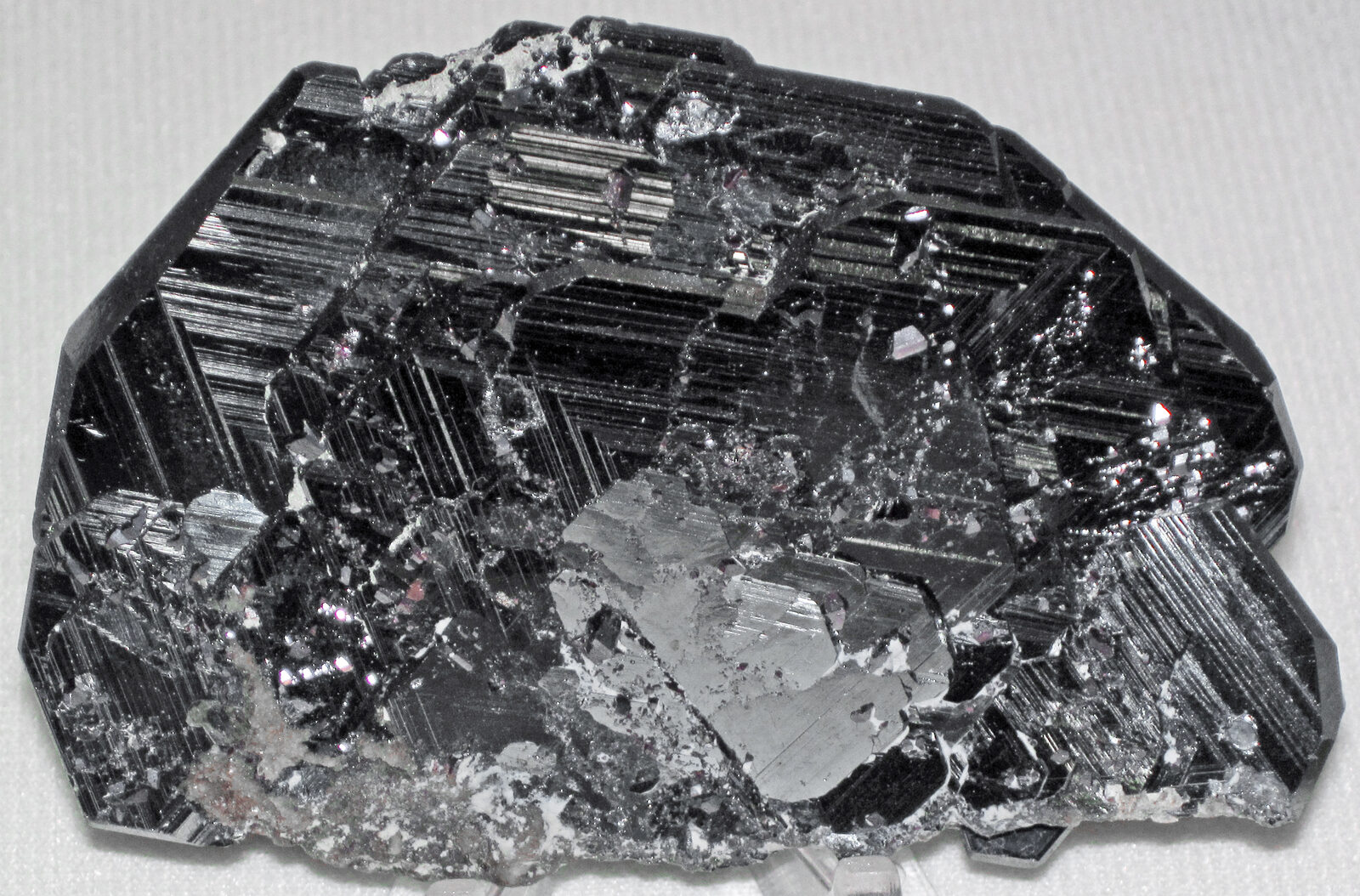
Amethyst + Hematite
Grounding for a floaty amethyst
Amethyst can leave some people a little spacey on its own; hematite's density pulls that back down to earth.
Read more →
Amethyst + Aquamarine
Gentle throat & intuition blend
A soft pairing rather than an intense one — aquamarine opens honest communication, amethyst keeps the whole thing calm instead of confrontational.
Read more →