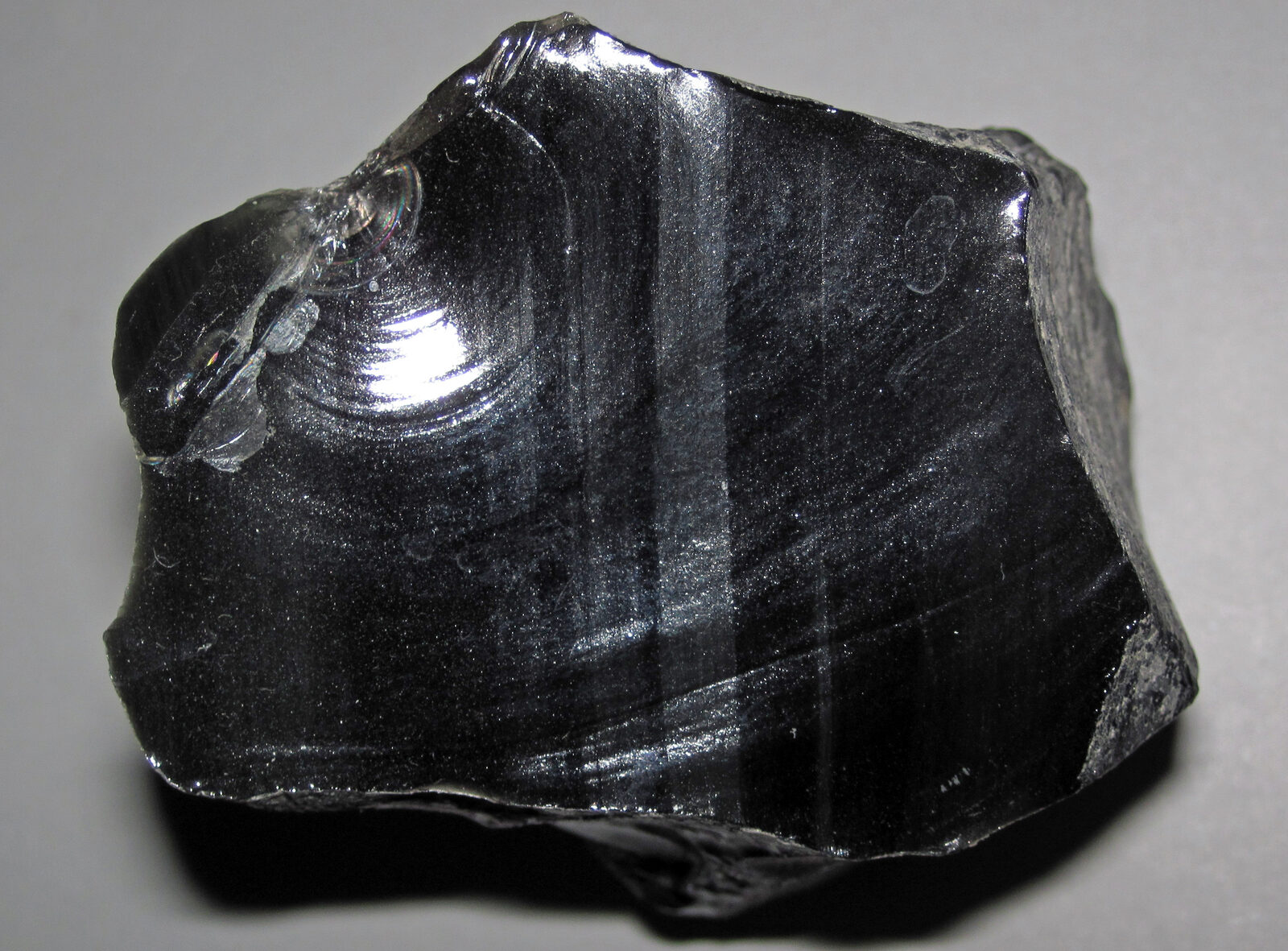
Photo: James St. John · CC BY 2.0 · Wikimedia Commons
Meaning & uses
Black Obsidian Meaning
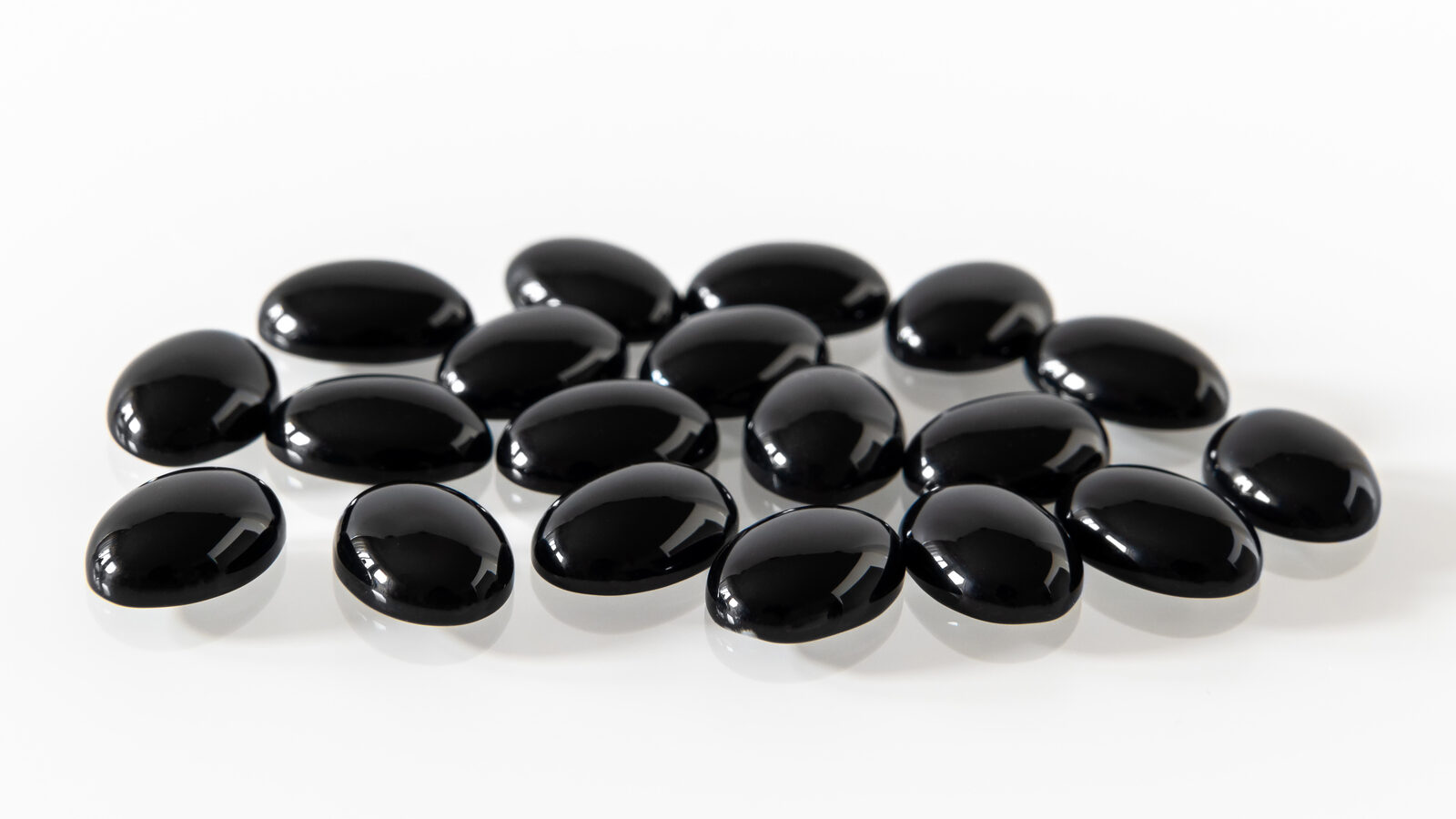
Formed from rapidly cooled volcanic glass, Black Obsidian is prized as a protective, grounding stone that's said to act like a mirror — surfacing what's hidden so it can be released. It's a favorite for clearing stagnant or negative energy.
What Is Black Obsidian?
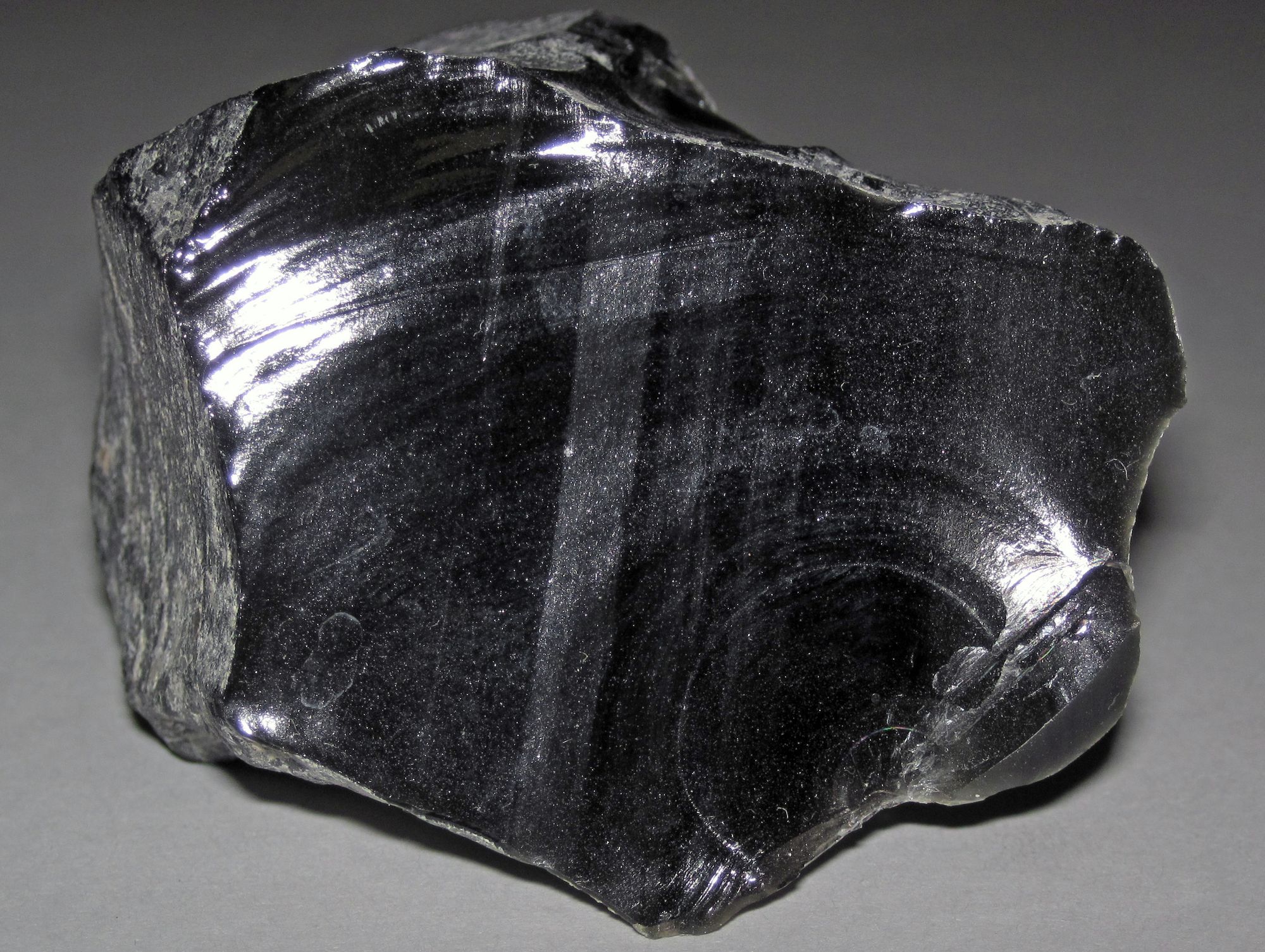
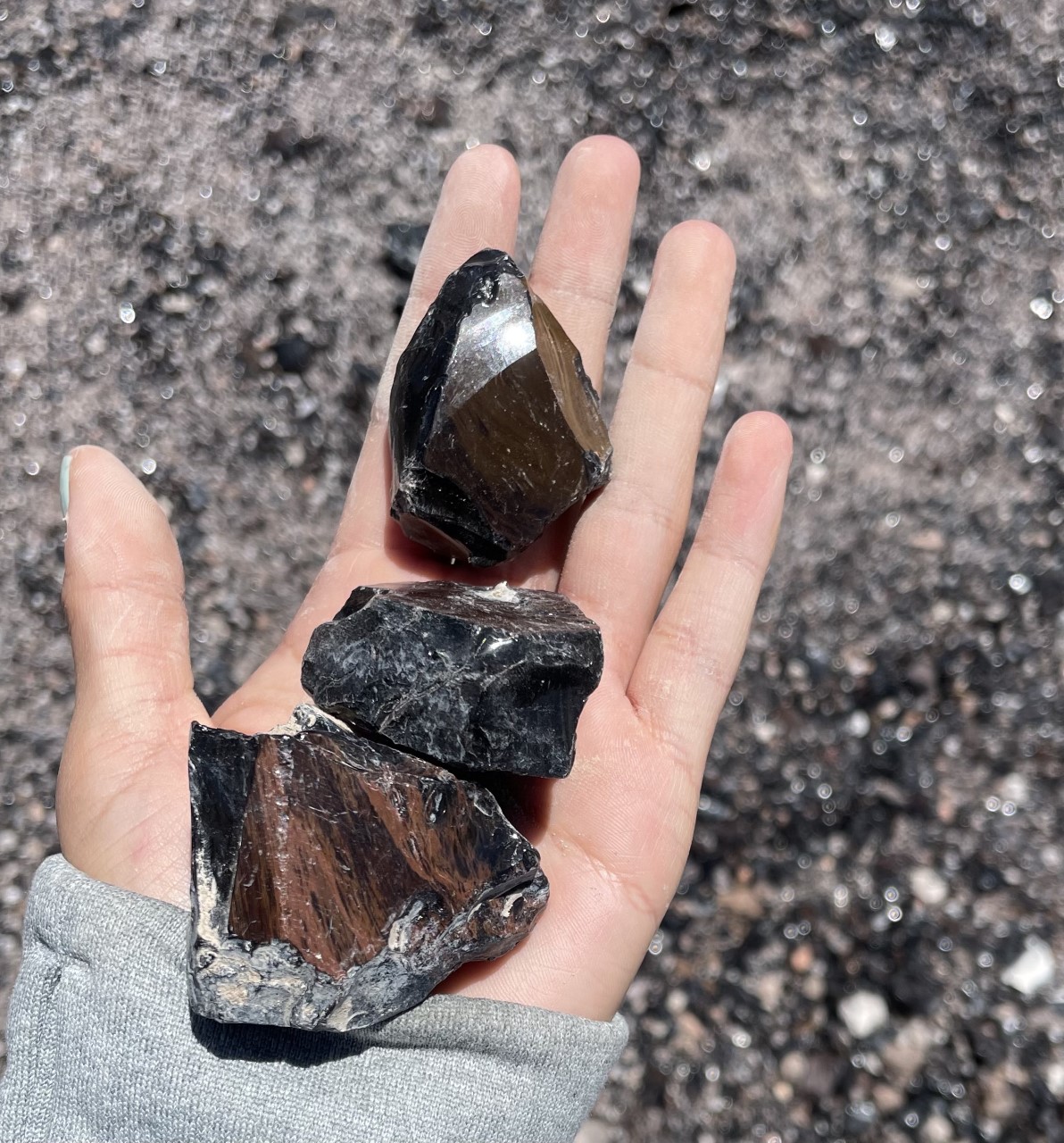
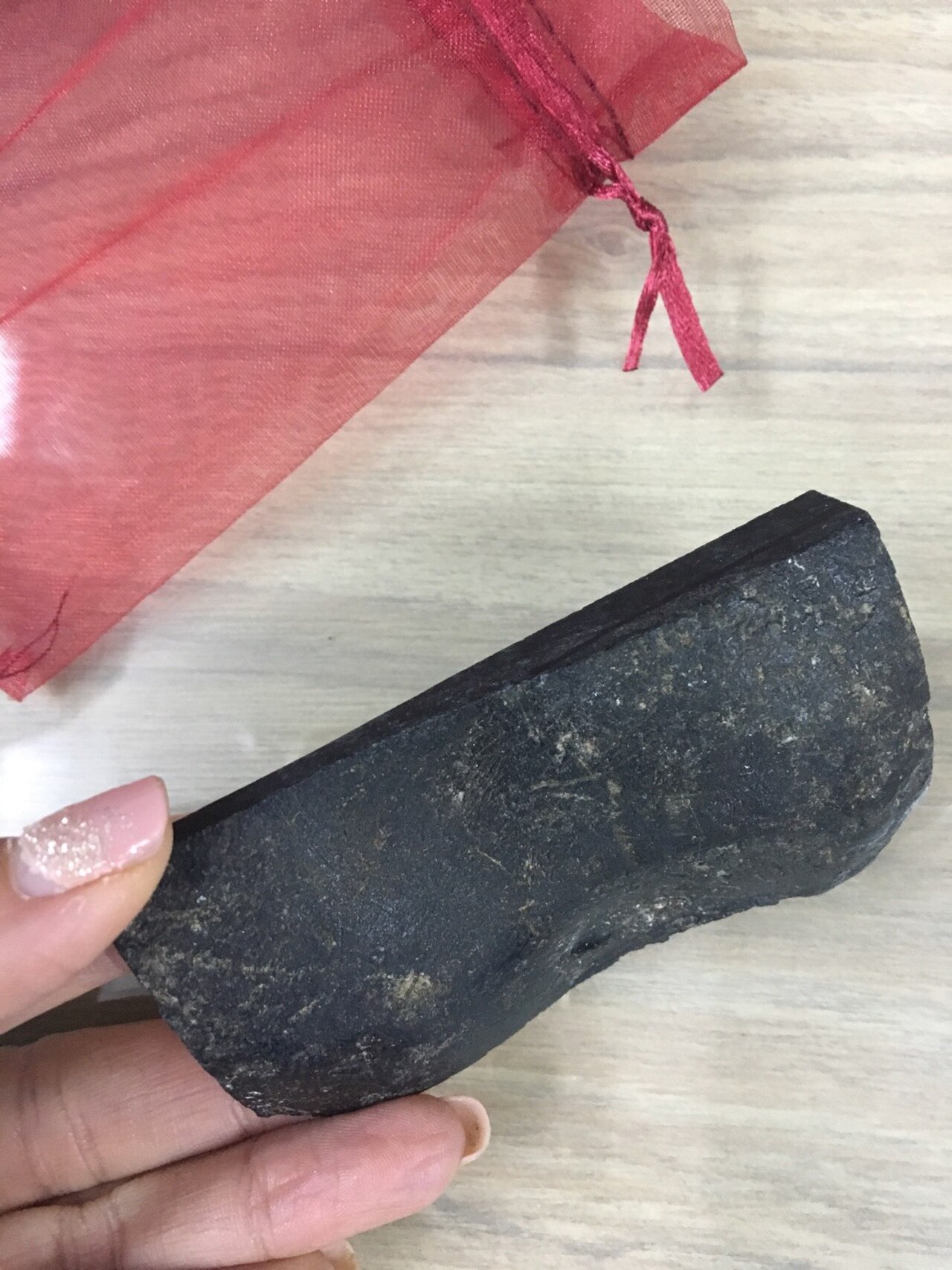
Black Obsidian is volcanic glass — lava cooled so quickly that its atoms never arranged into a crystal structure, the same basic process behind every color in the wider Obsidian family. Its deep, uniform black comes from microscopic magnetite crystals, an iron-titanium oxide, dispersed evenly throughout the glass as it hardened. Because it lacks any internal crystal structure, it breaks along smooth, curved surfaces called conchoidal fracture rather than flat crystal faces, producing edges sharp enough that ancient cultures shaped it into cutting tools long before metal was available anywhere nearby.

A Stone With a History
Black Obsidian's most distinctive historical use wasn't as a blade at all — it was as a mirror. Mesoamerican civilizations, especially the Aztec, polished flat pieces of Obsidian into genuinely reflective surfaces used for scrying and divination, closely associated with Tezcatlipoca, a major Aztec deity whose name translates to "Smoking Mirror." The tradition proved durable enough to cross both an ocean and several centuries: a 16th-century Aztec Obsidian mirror, once owned by the English scholar and royal astrologer John Dee, survives today in the British Museum.
That combination — a tool sharp enough to cut and smooth enough to reflect — is unusual, and it's exactly what gave Black Obsidian its lasting reputation as "the Mirror Stone."
Meaning and Symbolism
Black Obsidian's meaning follows directly from its scrying-mirror history: a stone associated with seeing clearly, including the parts of yourself that are easier to avoid. It doesn't soften what it shows the way gentler stones do — its reputation is for blunt, unflinching honesty rather than comfort.
That directness is also why it's so consistently reached for during real transitions rather than everyday stress. Black Obsidian isn't a stone people typically describe as soothing; they describe it as clarifying, which is a different kind of useful.

Carried or worn for
- Grounding scattered or anxious energy back into the body
- Shielding against negativity and psychic drain
- Encouraging honest self-reflection and release of old patterns
- Anchoring during big transitions
Chakra, Zodiac & Element
Black Obsidian is tied to the Root Chakra, its dense volcanic origin and dark color matching a stone associated above all with physical grounding and safety. Its Fire and Earth elements reflect that same origin — Fire for the heat that created it, Earth for the protective, grounded role it plays afterward.
Astrologically it's linked to Scorpio and Sagittarius — Scorpio for its association with shadow work and honest self-examination, Sagittarius for the nerve to act on what that honesty reveals.
Part of the Obsidian Family
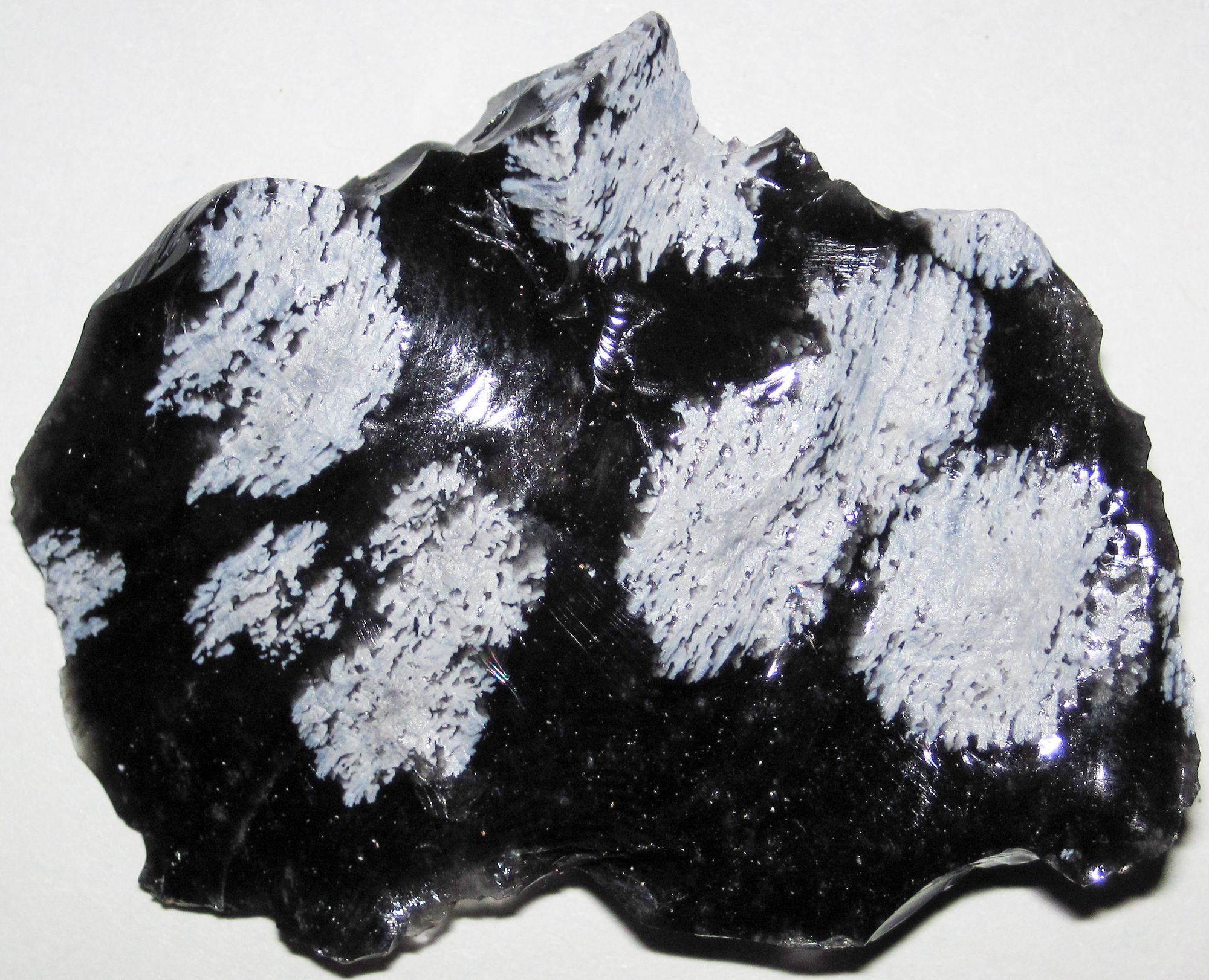
Black Obsidian is the most classic, widely recognized member of the wider Obsidian family — the deep, uniform color the rest of the family's more visually striking varieties are compared against. Where Snowflake Obsidian softens the family's intensity and Gold Sheen sharpens it into confidence, Black Obsidian is the family's most direct, unfiltered mirror.
How to Use and Care for Black Obsidian
At 5–5.5 on the Mohs scale, Black Obsidian resists everyday wear reasonably well in polished jewelry, though its glass structure makes it more prone to chipping under a sharp, direct knock than its hardness number alone suggests. It's water-safe for routine cleansing.
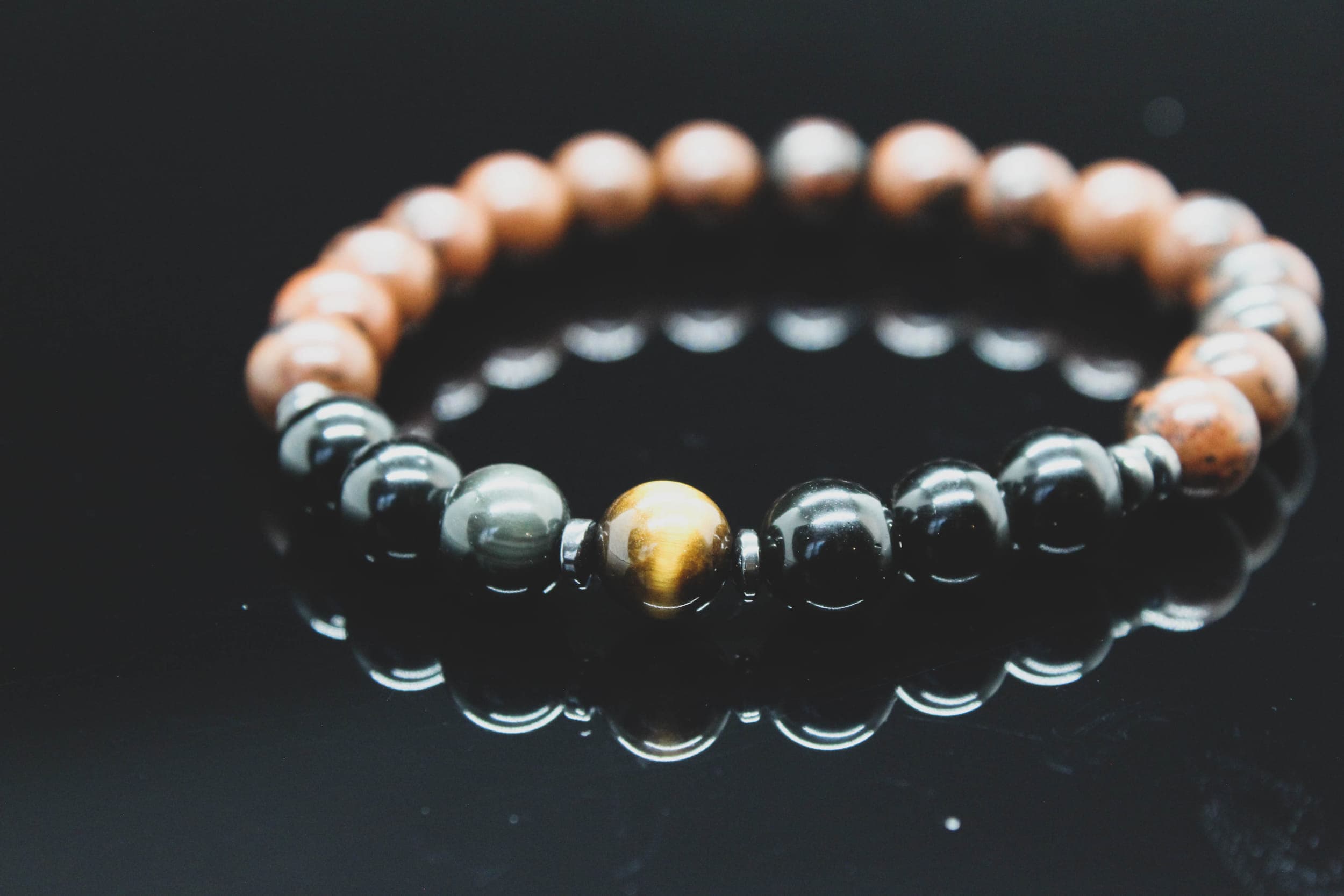
Black Obsidian anchors a well-known three-stone combination with Tiger's Eye and Hematite — Obsidian blocks, Tiger's Eye steadies the nerve, Hematite keeps the whole stack grounded. It's popular enough to be sold pre-strung as a single bracelet; see our Crystal Combinations guide for more on why the pairing works.
Frequently Asked Questions
Why is Black Obsidian called "the Mirror Stone"?
What gives Black Obsidian its color?
Is Black Obsidian safe to wear every day?
Can Black Obsidian get wet?
What chakra is Black Obsidian associated with?
Best worn on the wrist for an all-day grounding anchor.
Shop this stone
Bracelets with Black Obsidian

Part of a family