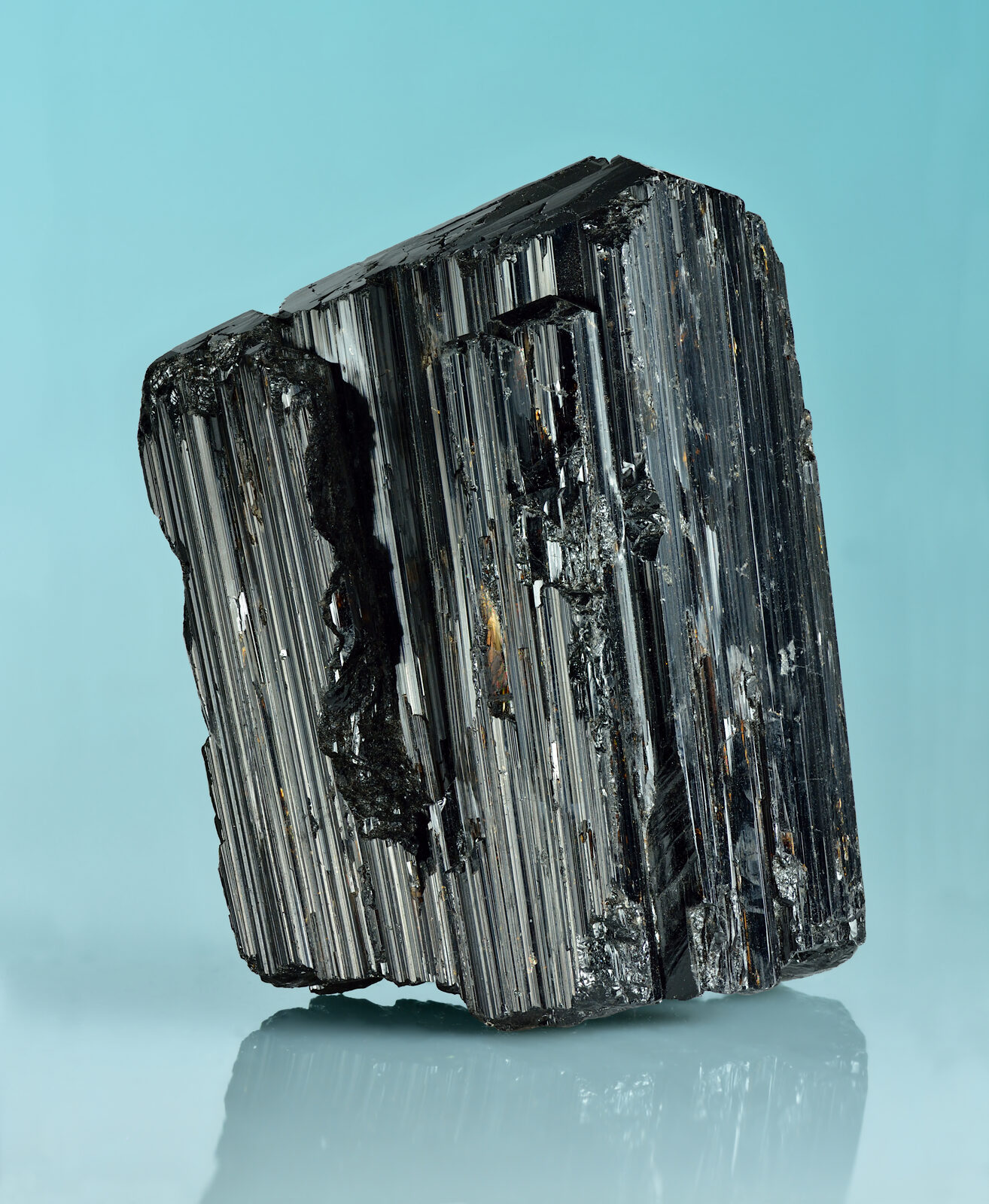
Meaning & uses
Black Onyx Meaning
Onyx has been carried as an amulet of strength and self-mastery for millennia. Its dense, quiet energy is associated with discipline, resilience, and holding steady under pressure.
What Is Black Onyx?
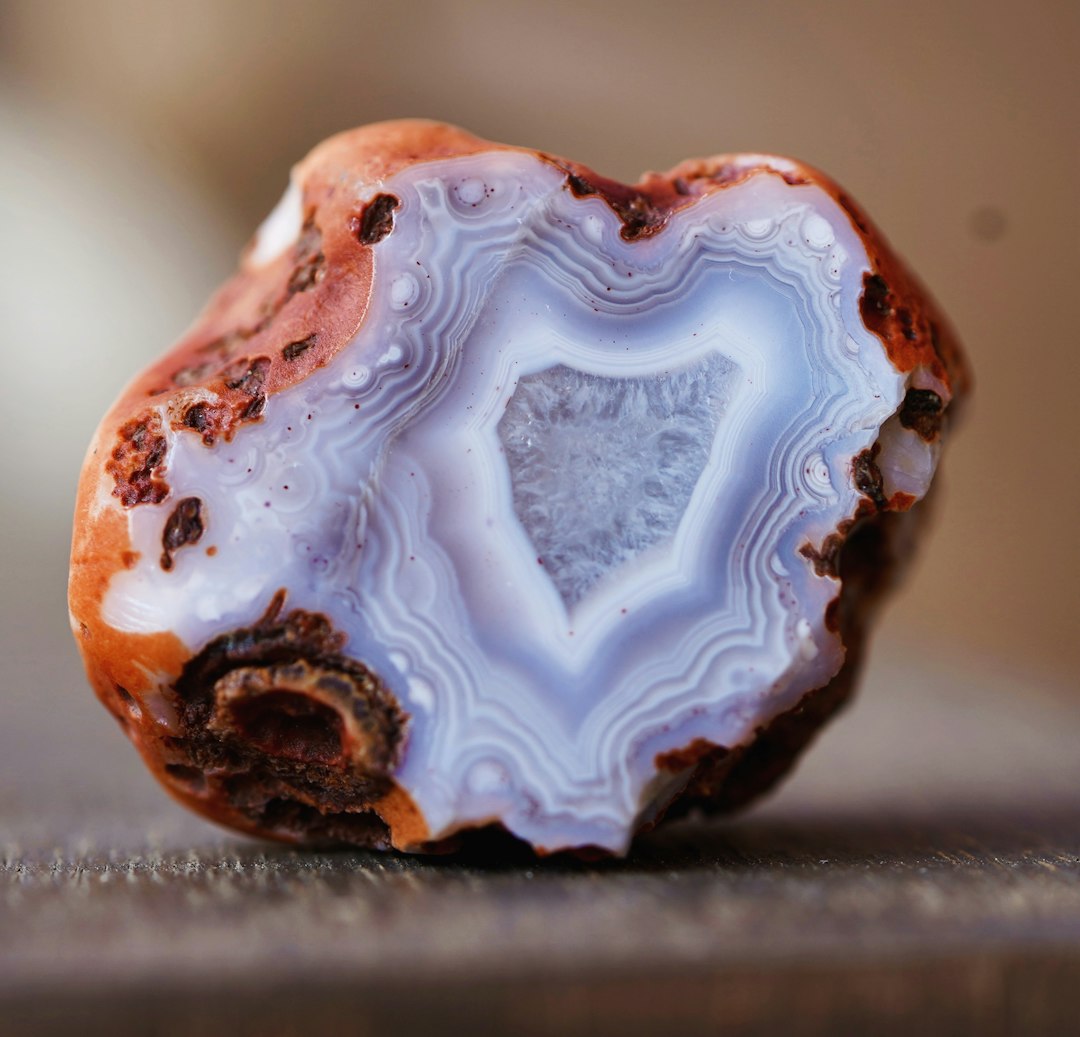
Onyx is a banded variety of chalcedony — the same microcrystalline quartz family as Agate, and chemically identical to it. The real difference is in the bands: Agate's layers form in curved, wavy patterns, while Onyx's run in flat, parallel lines. Black Onyx takes that a step further into a single, uniform color with no visible banding at all.
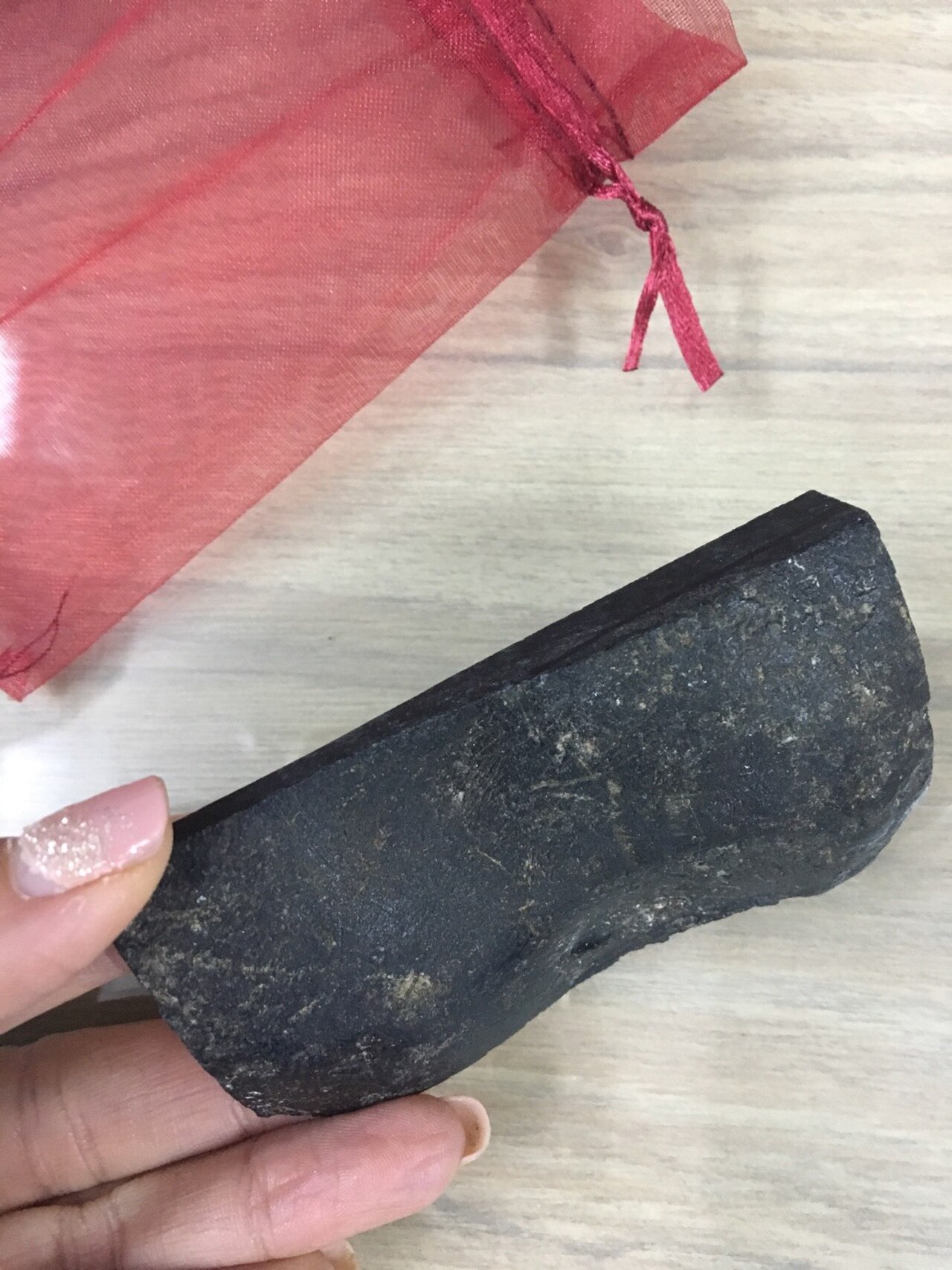
That solid black is worth being honest about: it's genuinely rare in nature. Most Black Onyx on the market today is chalcedony that's been dyed — a treatment so old it isn't even a modern shortcut. Ancient Romans already knew how to soak porous chalcedony in a sugar solution, then treat it with heat or acid to carbonize the sugar trapped inside, turning naturally grey or brown banded stone a deep, even black. The technique has barely changed in two thousand years.
It's also worth separating gemstone Onyx from "Mexican onyx" or "onyx marble," names often used in the decor world for carved lamps, coasters, and countertops. That material is banded calcite or travertine — a completely different mineral, much softer than true chalcedony Onyx, and unrelated to it beyond a shared name and a superficially similar banded look.

A Stone With a History
The name Onyx comes from the Greek onyx, meaning "fingernail" or "claw" — tied to a myth in which Cupid trimmed a sleeping Venus's nails, and the gods, unwilling to let anything belonging to her perish, turned the clippings to stone. It's a fitting origin story for a mineral whose pale, banded varieties can genuinely resemble a fingernail's translucent layers.
Beyond mythology, Onyx had real practical value in the ancient world: its flat, contrasting bands made it ideal for carving cameos and intaglios, where a design cut into one layer reveals a different color underneath. Roman and Greek signet rings, seals, and jewelry relied on exactly this technique, and Onyx carvings from antiquity remain some of the most recognizable ancient gemwork still in museum collections today.
Meaning and Symbolism
Where a stone like Black Tourmaline is prized mainly for shielding against outside negativity, Black Onyx's reputation leans inward — less a shield, more a spine. It's traditionally associated with willpower, self-discipline, and the kind of steadiness that holds up under real pressure rather than avoiding it.
Carried or worn to
- Build willpower and emotional discipline
- Absorb and transform negative energy
- Steady the nerves before a big decision or event
- Reinforce boundaries with people and situations that drain you
Chakra, Zodiac & Element
Black Onyx is tied to the Root Chakra, the seat of stability and physical grounding — a natural match for a dense, solid-colored stone associated with holding steady. Its Earth element reinforces the same idea: solid, unhurried, resistant to being moved.
Astrologically it's linked to Leo, for the confidence and strength it supports, and Capricorn, for the discipline and endurance both the sign and the stone are known for.

How to Use and Care for Black Onyx
At 7 on the Mohs scale, Black Onyx is durable enough for daily wear in rings, bracelets, or pendants, and it's water-safe for routine cleansing. If your piece is dyed — which most Black Onyx is — the color is typically stable and permanent, since the treatment penetrates the stone's structure rather than sitting on the surface, but it's still worth avoiding harsh chemicals and prolonged solvent exposure just to be safe.
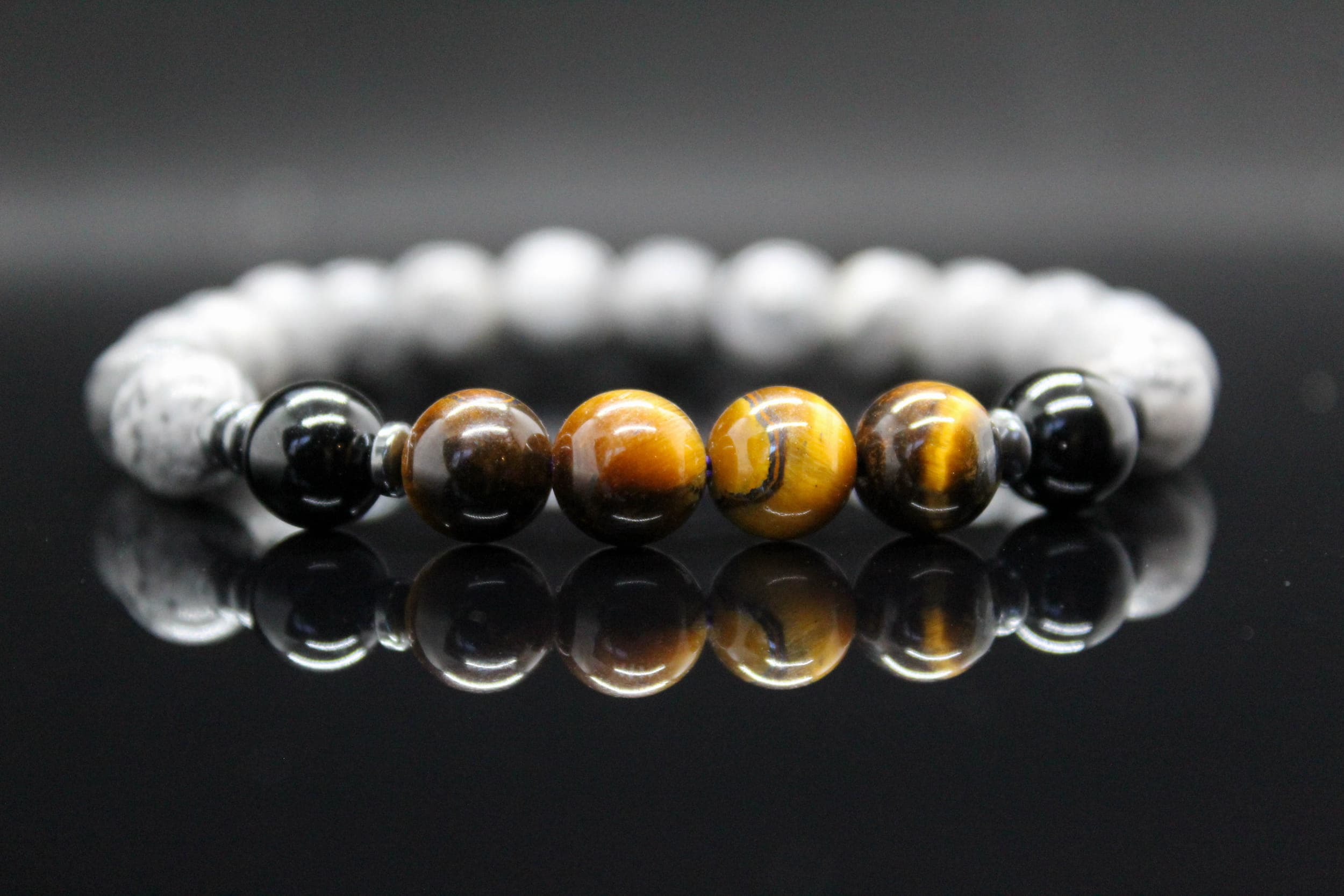
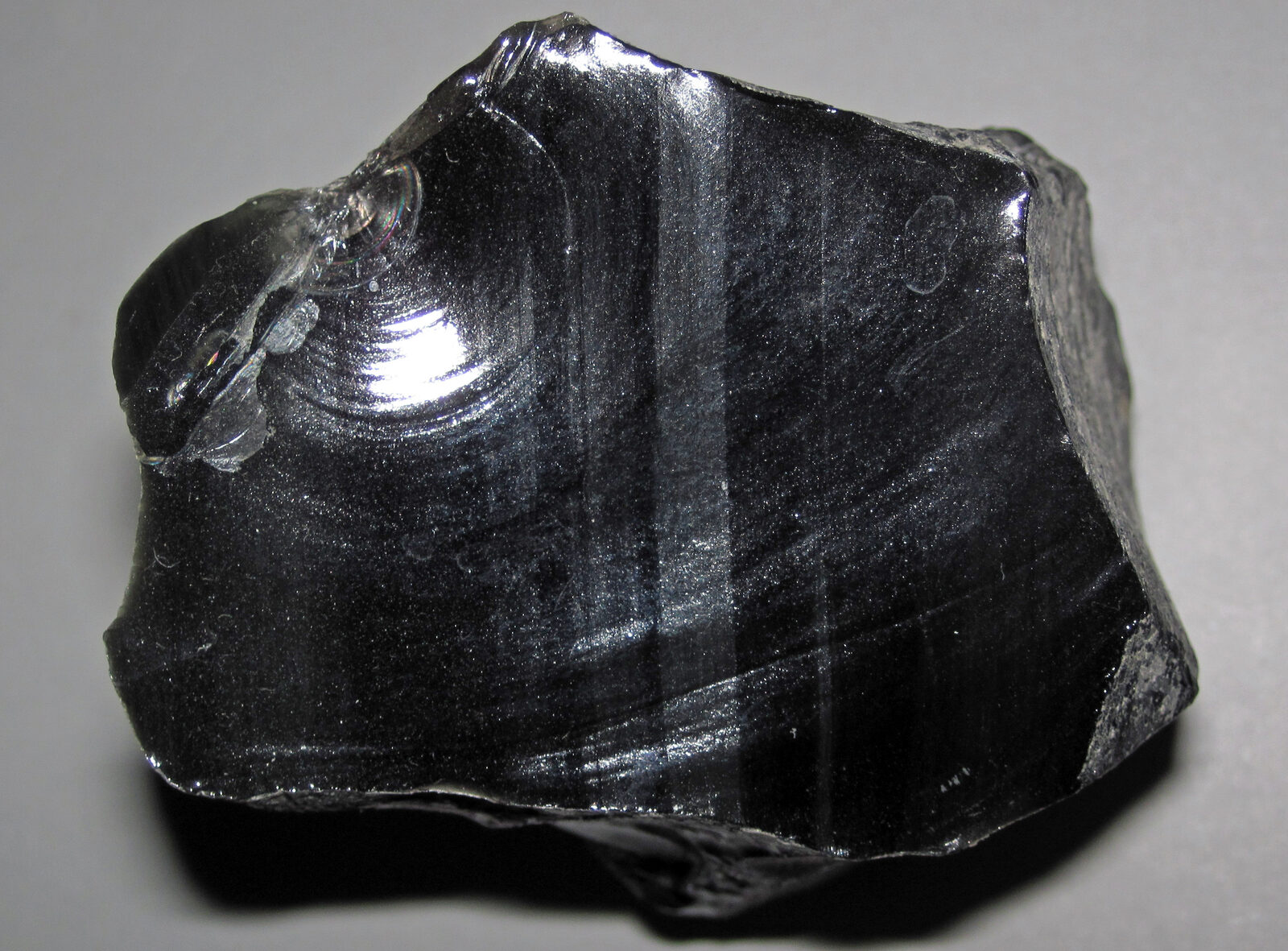
It's traditionally combined with Hematite or Black Obsidian in grounding, protective pieces — three dense, dark stones that lean into strength and shielding from different angles rather than duplicating each other.
Frequently Asked Questions
Why is it called Onyx?
Is all Black Onyx dyed?
What's the difference between Onyx and Agate?
Is Black Onyx safe to wear every day?
What chakra is Black Onyx associated with?
Is "onyx marble" the same as Black Onyx?
A quiet stone for holding your ground.
Shop this stone
Bracelets with Black Onyx
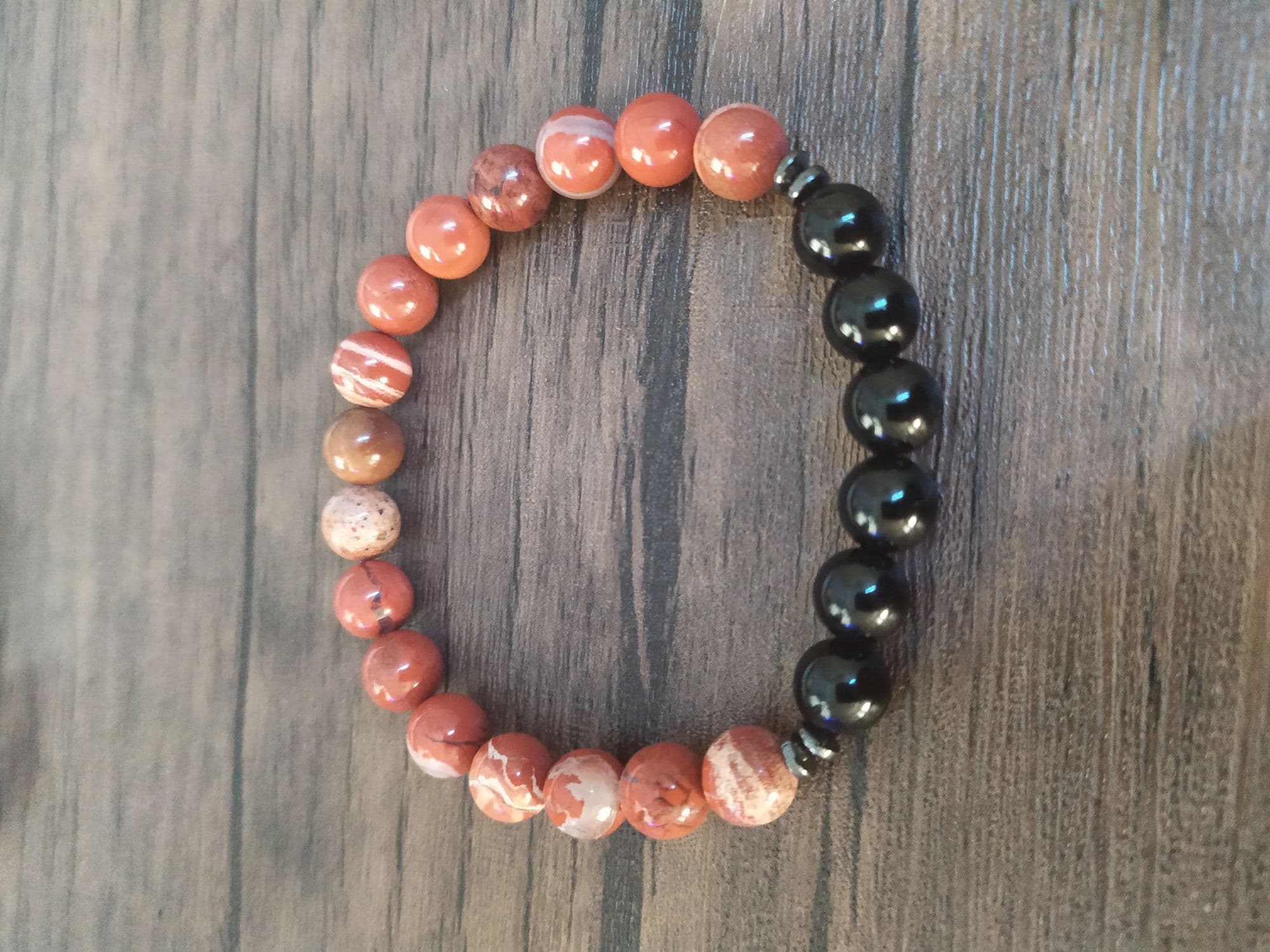
Root Chakra Rejuvenation Energy Bracelet
$24.00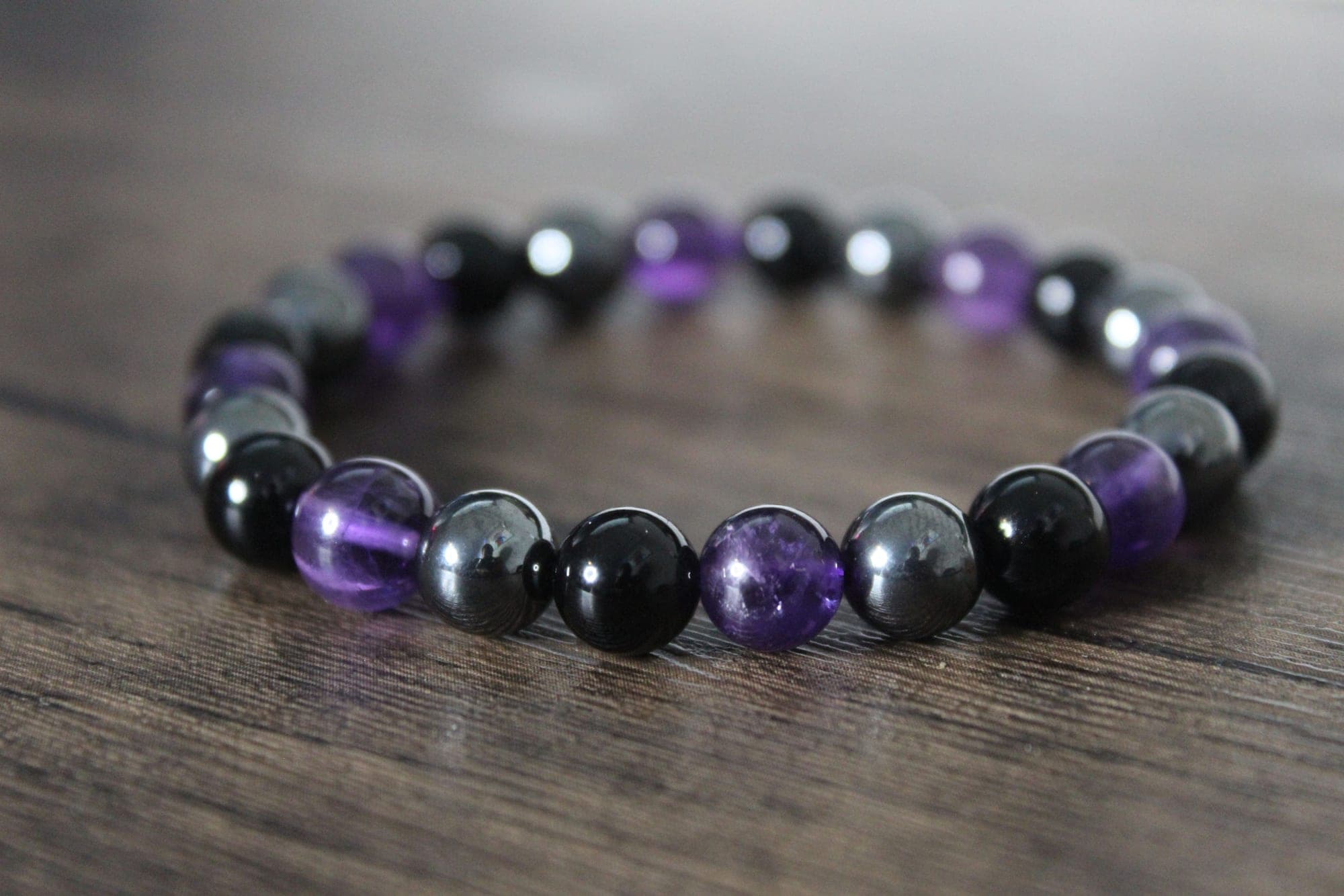
The Raven Energy Bracelet
$33.00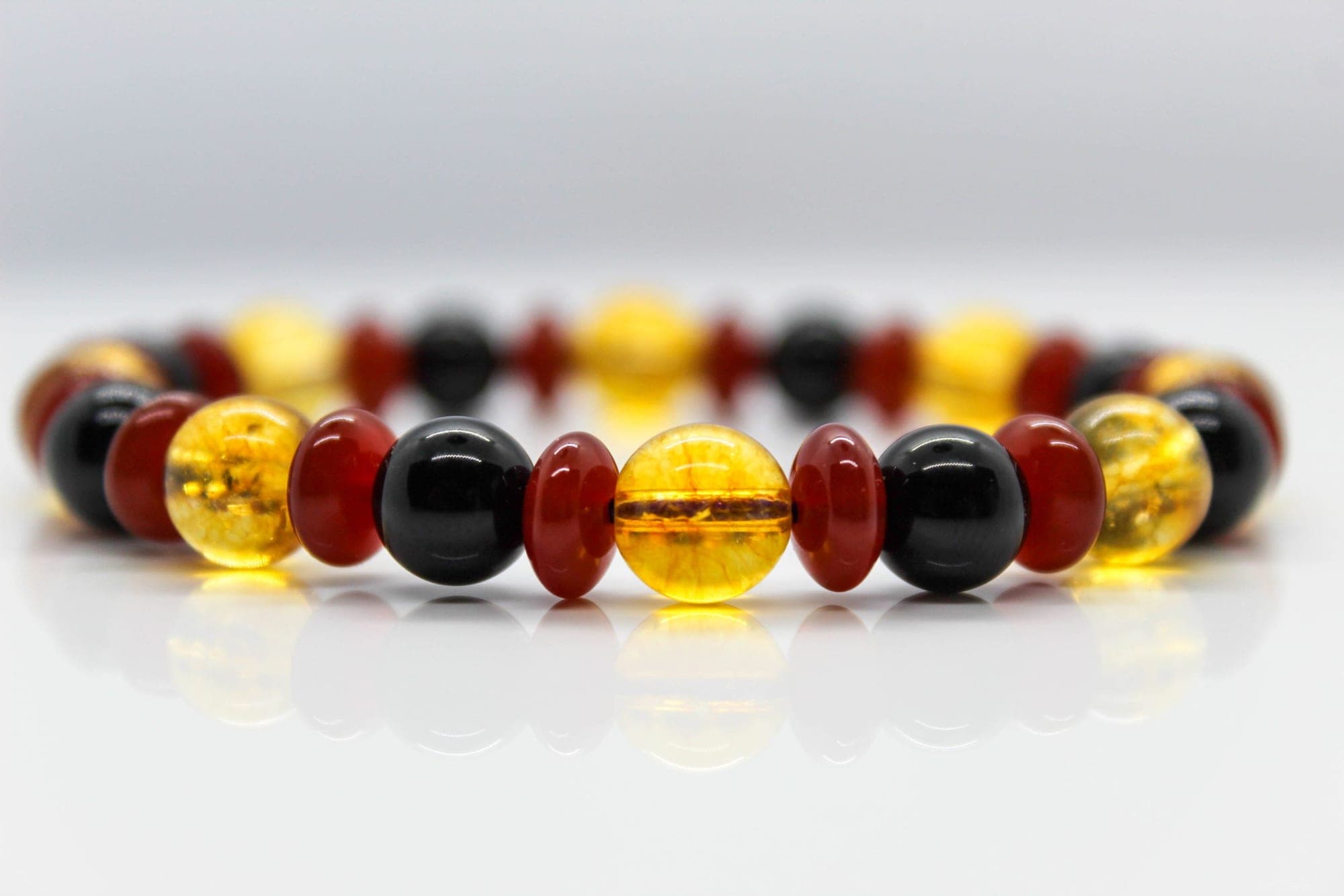
Protective Manifestation Energy Bracelet
$33.00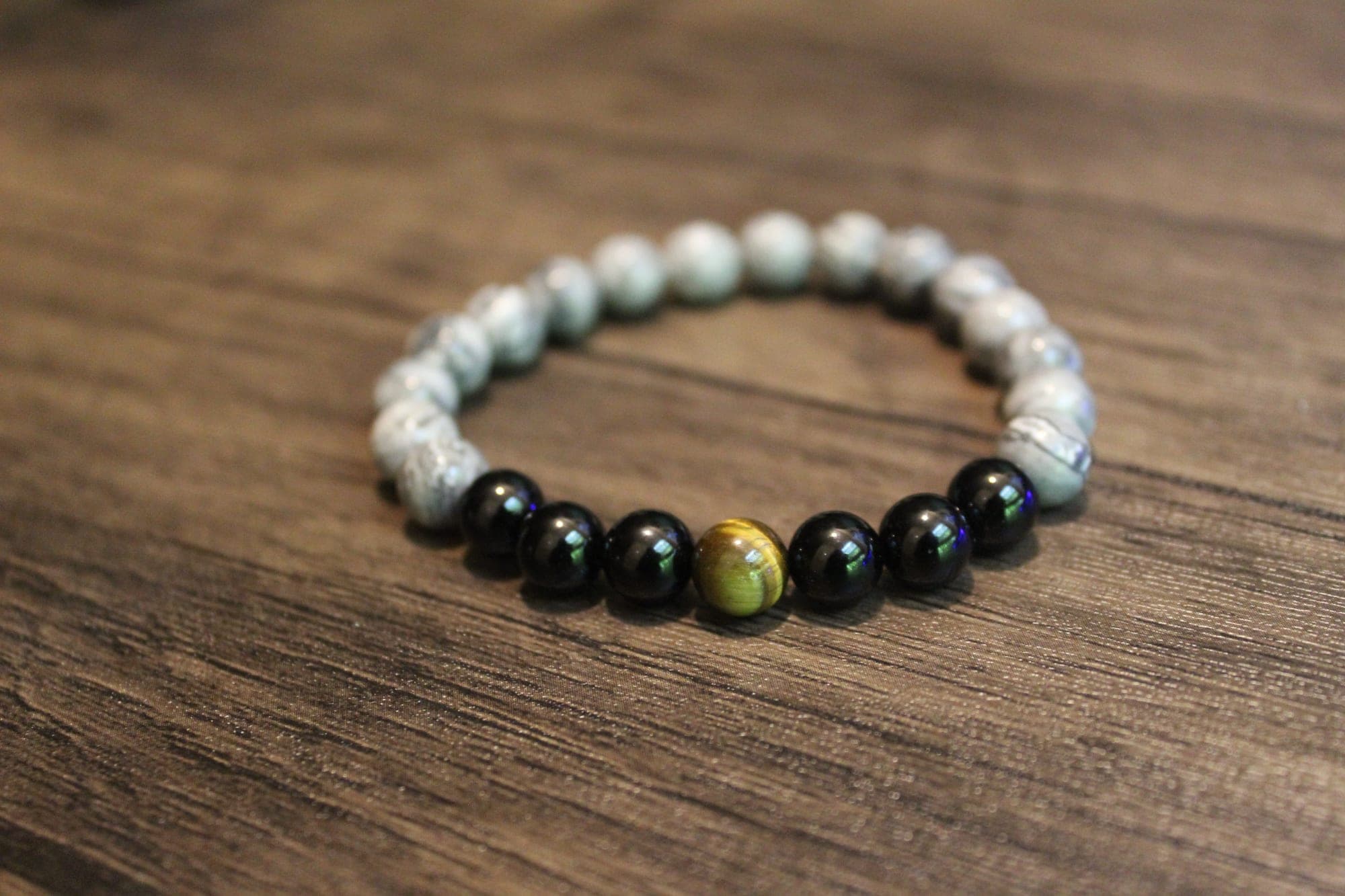
Grounding Manifestation Energy Bracelet
$24.00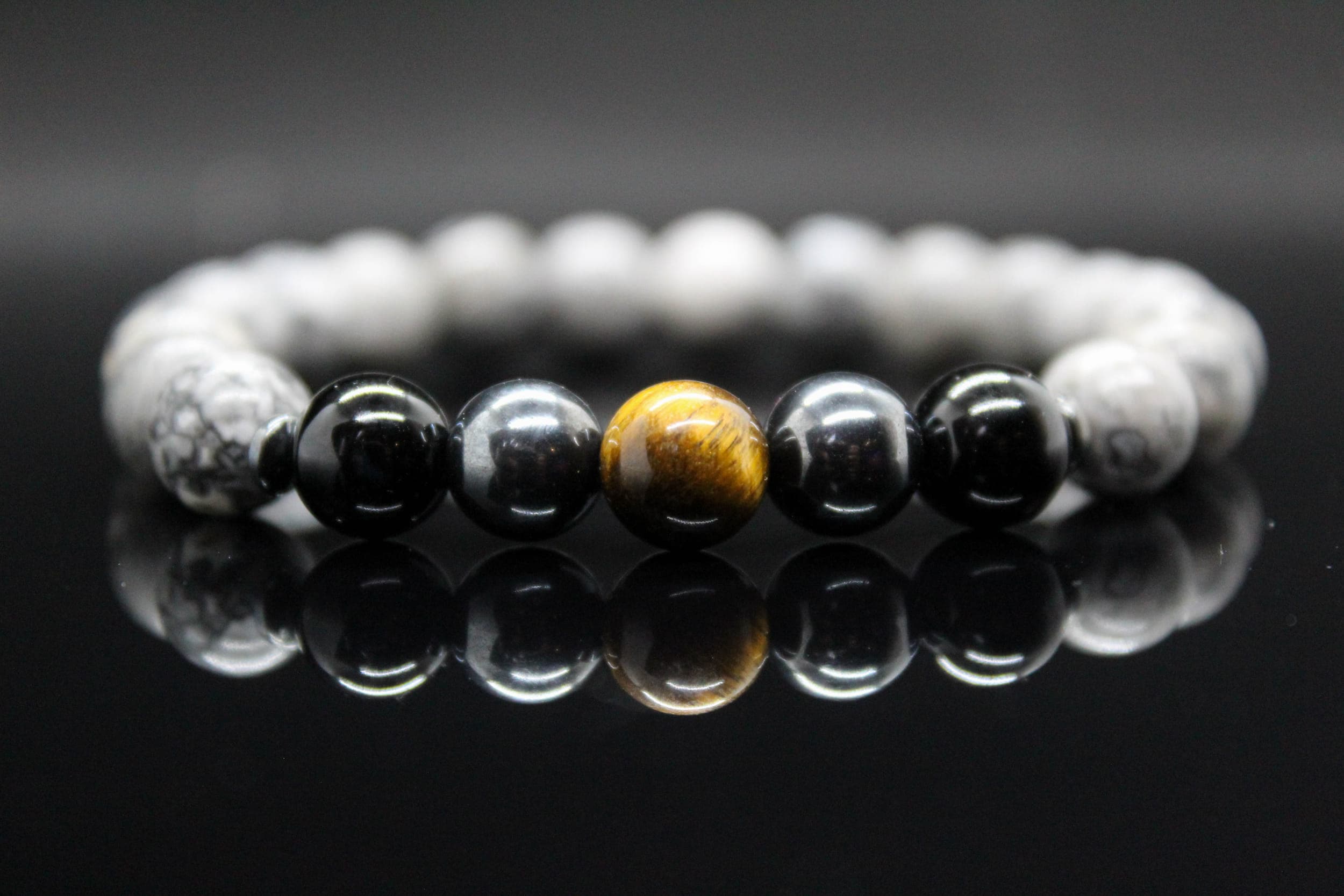
Energetic Balance Energy Bracelet
$24.00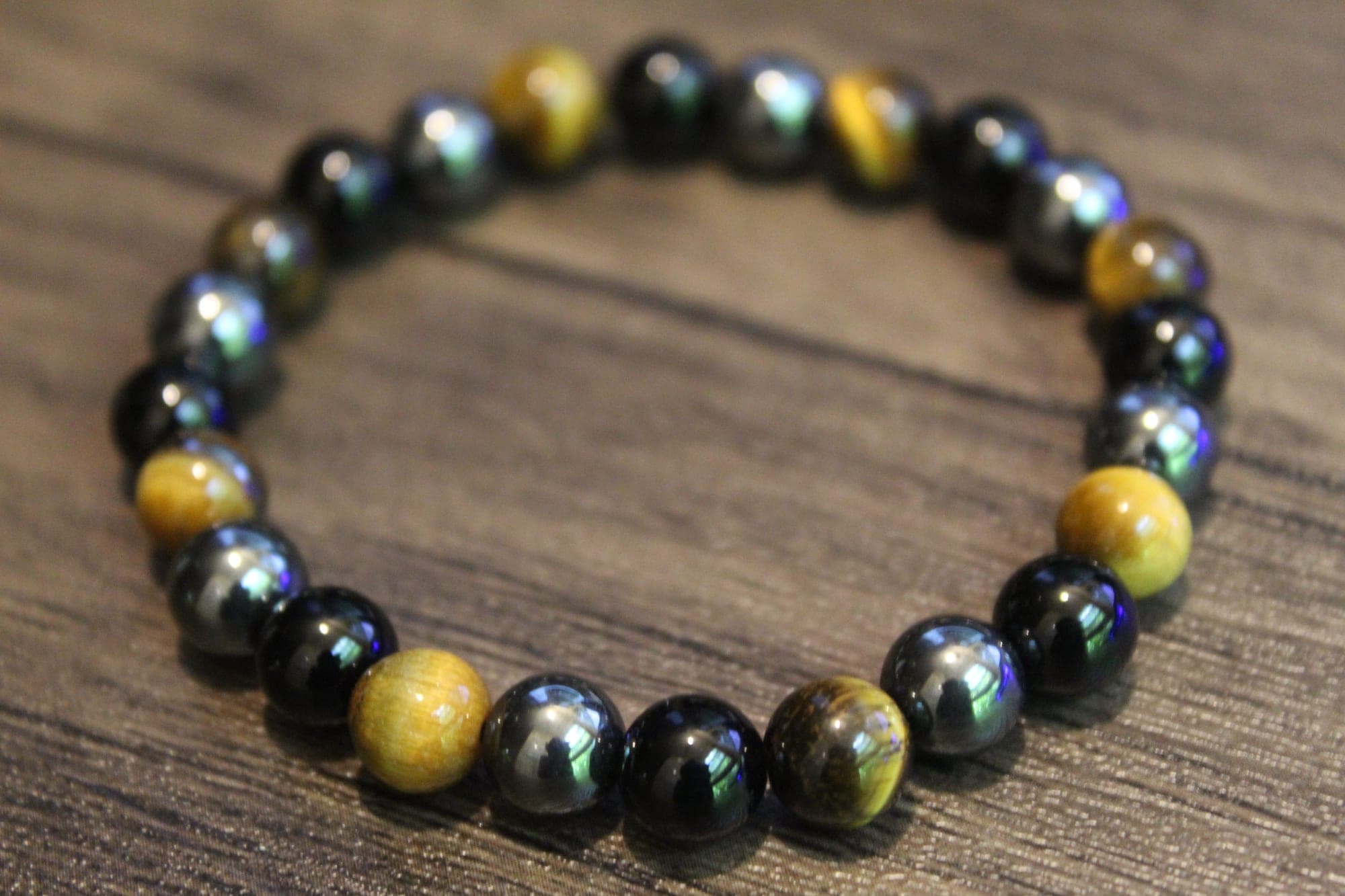
Ground Balance Manifest Energy Bracelet
$33.00