Obsidian
Nature's Volcanic Glass
Shop 3 Obsidian bracelets · from $24.00Energy Focus
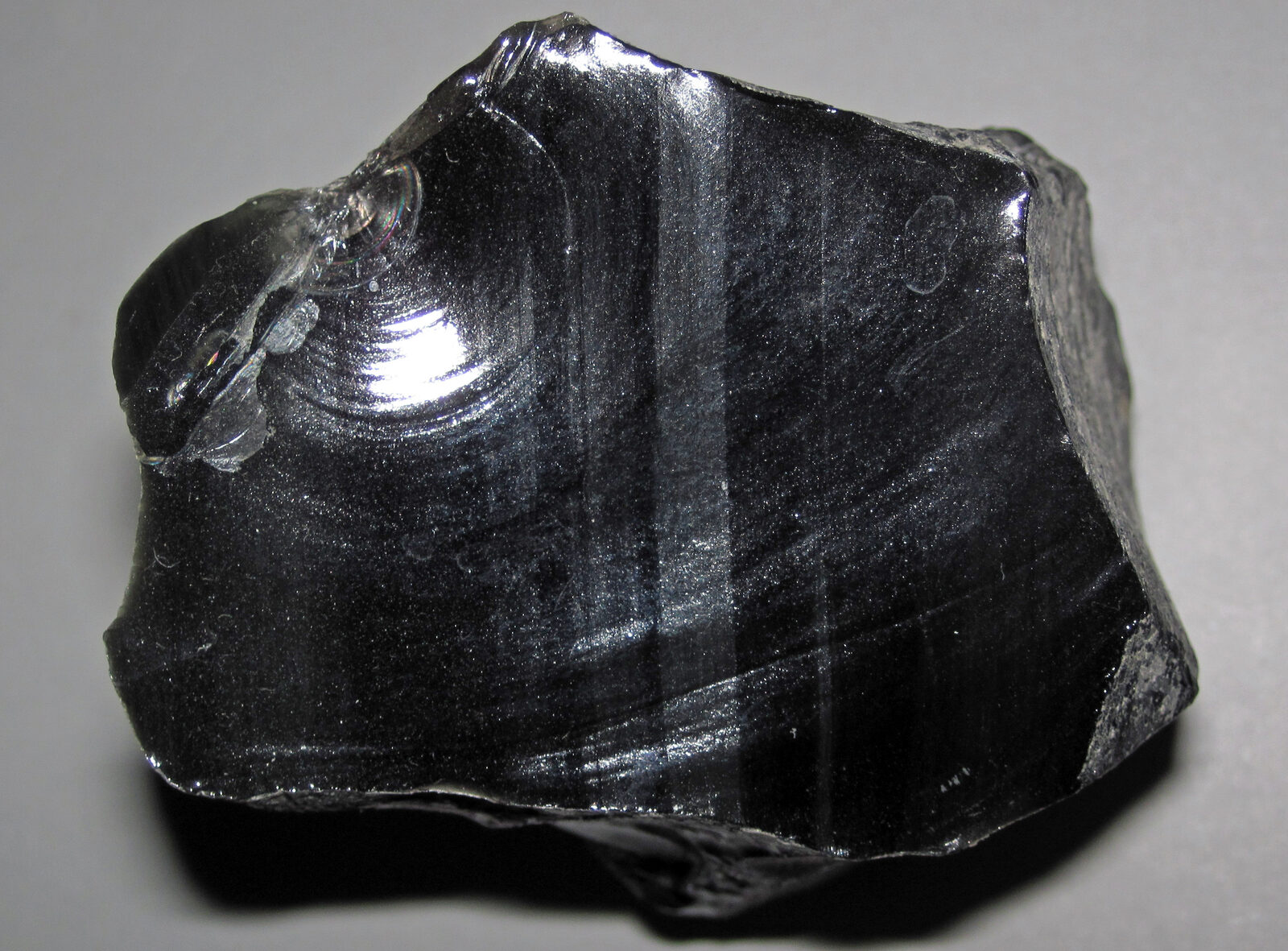
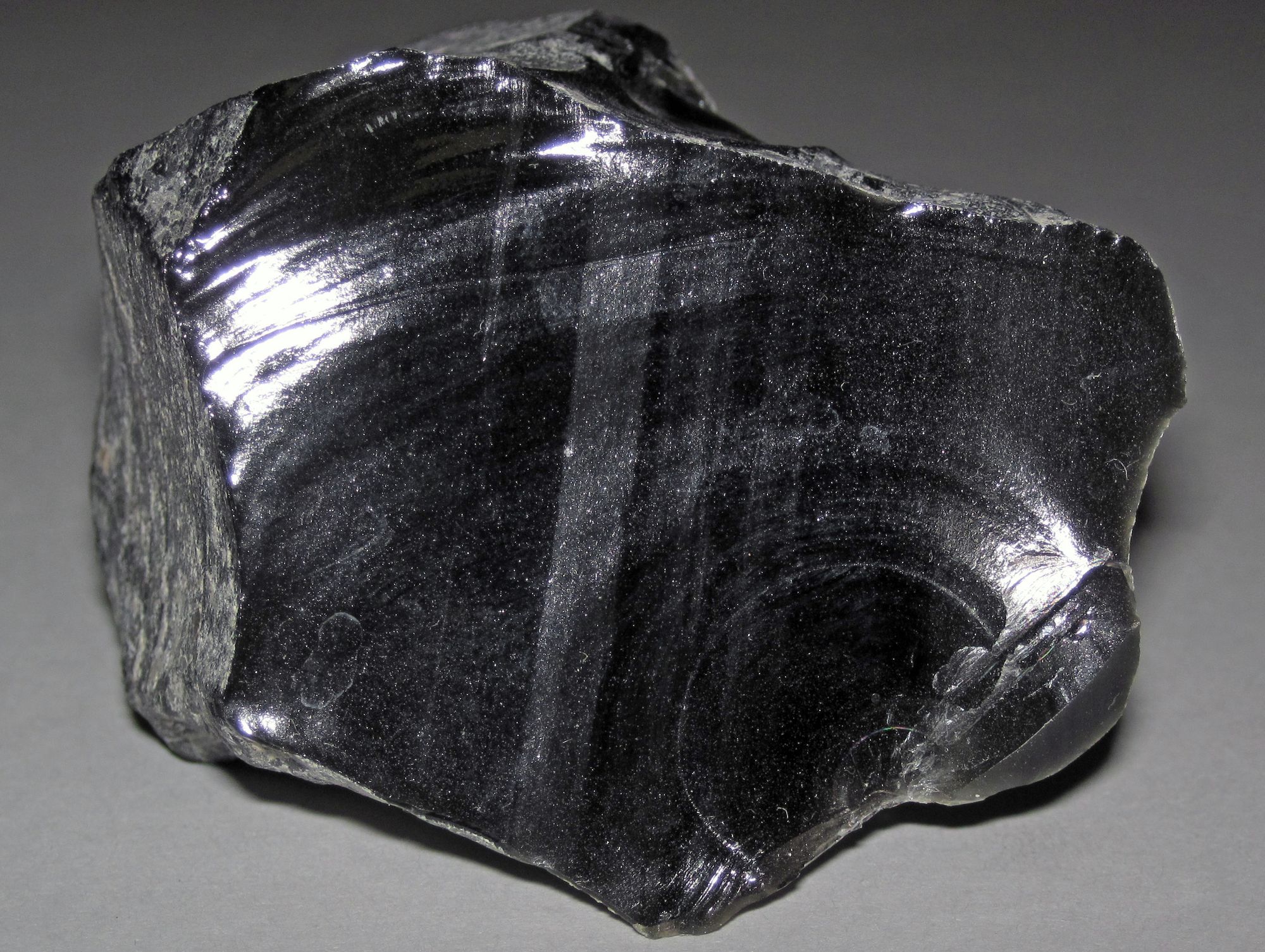
Photo: James St. John, CC BY 2.0 via Wikimedia Commons
Meaning & uses
Obsidian Meaning
Not a true crystal at all but volcanic glass, cooled too quickly to form a mineral lattice — which is exactly why Obsidian in every color form shares the same sharp-edged, protective, deeply grounding signature.
What Is Obsidian?
Obsidian forms when silica-rich lava cools so fast that its atoms never get the chance to arrange into an ordered crystal structure — the same basic process that makes ordinary window glass, just triggered by a volcano instead of a furnace. That amorphous structure is why Obsidian is technically classified as a mineraloid rather than a true mineral, and it's also what gives Obsidian its most distinctive physical trait: when it breaks, it fractures along smooth, curved surfaces called conchoidal fracture, producing edges that can be thinner, and sharper, than a surgical steel scalpel.
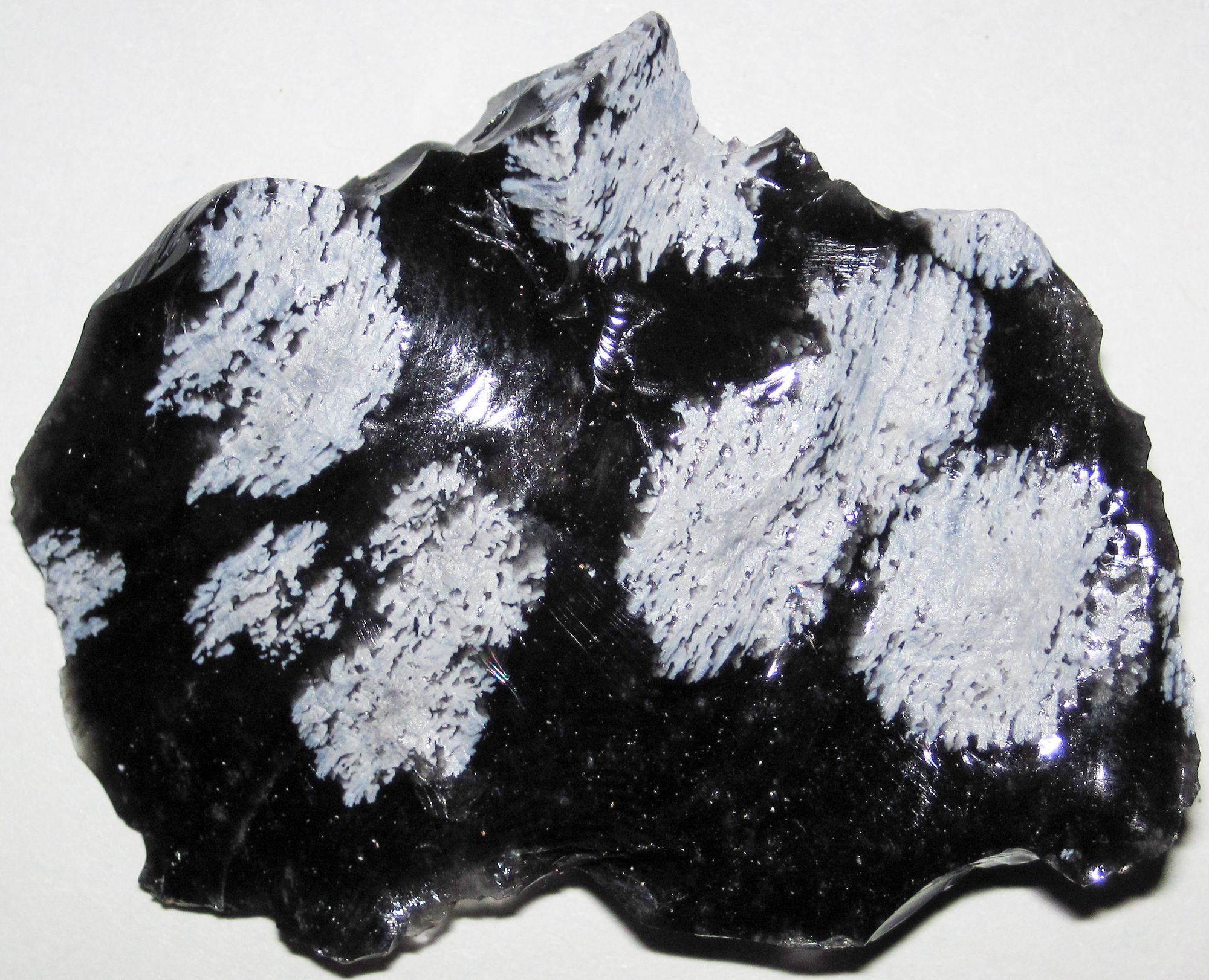
Most Obsidian is black, colored by microscopic magnetite crystals dispersed evenly through the glass, but trace minerals and inclusions produce a surprising range of other looks — pale cristobalite bursts, reddish iron-oxide swirls, or aligned gas bubbles that catch light as a metallic or iridescent sheen. Major deposits are found wherever felsic volcanic activity has occurred, notably Mexico, the western United States, and Iceland.
A Stone With a History
Obsidian's sharp fracture made it one of the single most important tool-making materials in prehistoric history, used across multiple continents for blades, arrowheads, and spear points long before metal tools existed. Because each volcanic source produces Obsidian with its own distinct trace-element signature, archaeologists today can trace individual prehistoric artifacts back to the specific volcano they came from — a technique that's revealed surprisingly long-distance trade networks moving Obsidian hundreds of miles from its source.
Mesoamerican civilizations took Obsidian further than almost anyone else, working it into ceremonial knives, ritual blades, and, notably, polished mirrors used for divination. The Aztec god Tezcatlipoca — whose name translates to "Smoking Mirror" — was specifically associated with Obsidian scrying mirrors, and the tradition outlasted the civilization that built it: a 16th-century Aztec Obsidian mirror once owned by the English scholar and astrologer John Dee survives today in the British Museum, a direct link between Aztec ritual practice and Elizabethan England.
Meaning and Symbolism
Obsidian's meaning grows out of both halves of its nature — sharp enough to cut, smooth enough to reflect. Across the traditions that used it for scrying mirrors, Obsidian became associated with unflinching self-examination, the kind of honest reflection that doesn't soften what it shows. That reputation has carried directly into its modern use: Obsidian is reached for less as a gentle, comforting stone and more as one for looking squarely at something that's been avoided.
Carried or worn for
- Grounding scattered or anxious energy back into the body
- Shielding against negativity and psychic drain
- Encouraging honest self-reflection
- Anchoring during big transitions
Chakra, Zodiac & Element
Obsidian is tied to the Root Chakra, its dense, grounded volcanic origin matching a stone associated above all with physical stability and safety. Its Fire and Earth elements reflect that same origin directly — Fire for the volcanic heat that created it, Earth for the grounded, protective role it plays once cooled.
Astrologically it's linked to Scorpio and Sagittarius — Scorpio for its association with shadow work and unflinching honesty, Sagittarius for the courage to act on what that honesty reveals.
The Many Varieties of Obsidian
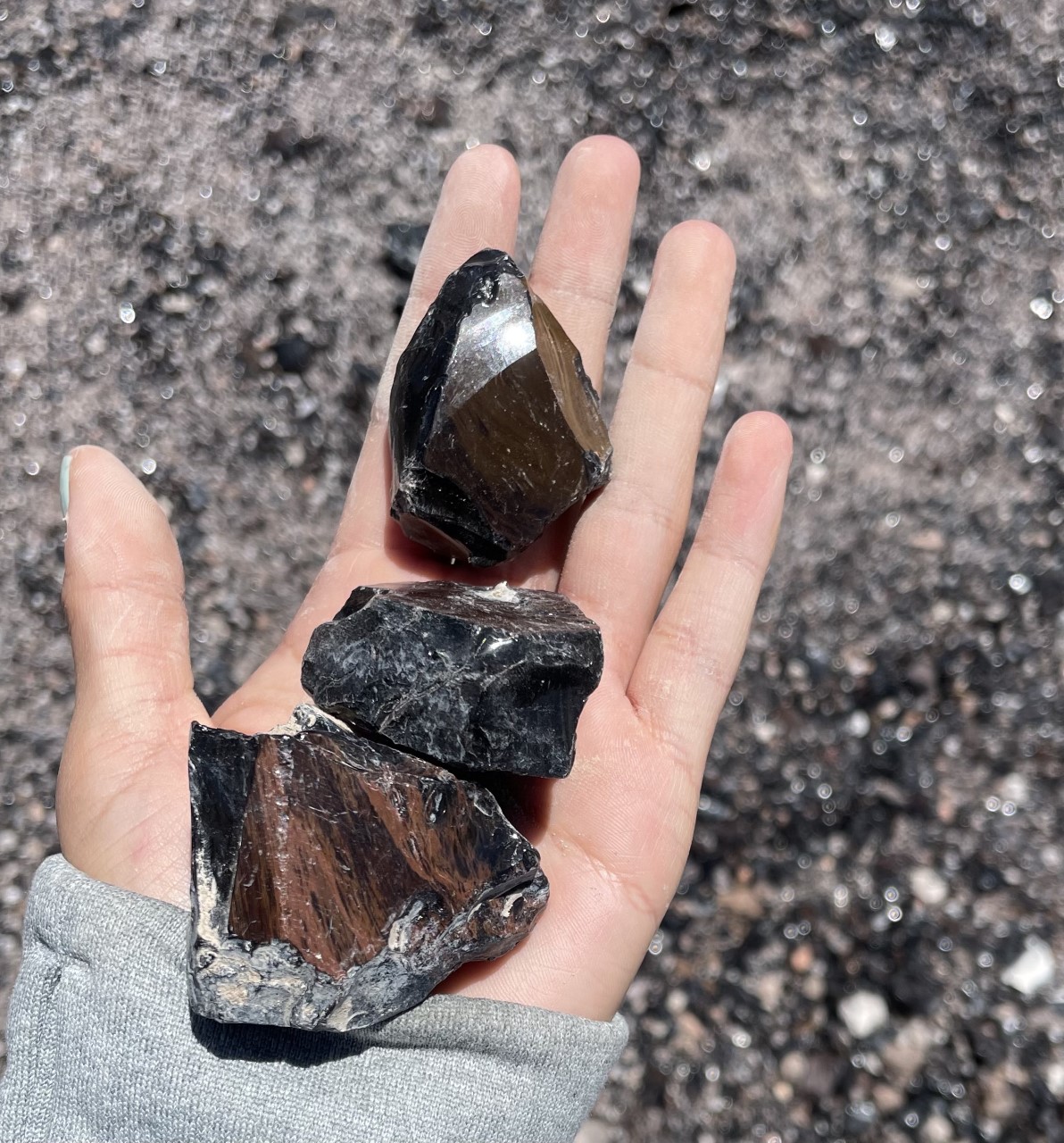
Because Obsidian's appearance depends entirely on what was trapped inside the glass as it cooled, the family covers more visual ground than its plain black reputation suggests. Microscopic gas bubbles aligned in parallel layers produce Gold Sheen and Rainbow Obsidian's metallic or iridescent shimmer; pockets of a separate mineral, cristobalite, crystallize into pale radiating clusters in Snowflake Obsidian; iron oxide streaked unevenly through the glass produces Mahogany Obsidian's reddish swirls. You'll find the family's best-known named varieties, each carrying its own particular emphasis within Obsidian's broader theme of grounded, unflinching protection, just below.
How to Use and Care for Obsidian
At 5–5.5 on the Mohs scale, Obsidian resists everyday scratching reasonably well, but its glass structure means a sharp, direct knock can chip or fracture it more easily than its hardness number alone suggests — the same conchoidal fracture that made it valuable for ancient blades also means broken edges can be genuinely sharp, so handle a chipped or raw piece with care. Polished jewelry is generally safe for regular wear.
It's water-safe for routine cleansing, and its dense, grounding reputation makes it a natural stone to keep on the body continuously rather than reserve for occasional use.
Frequently Asked Questions
Is Obsidian a crystal?
Why is Obsidian associated with mirrors?
Is Obsidian safe to wear every day?
Can Obsidian get wet?
What chakra is Obsidian associated with?
How do I pick the right Obsidian variety?
A family of stones best known for looking inward — different colors, same mirror.
Shop this stone
Bracelets with Obsidian
Varieties