Photo: KaySea Greene · Unsplash License · Unsplash
Meaning & uses
Agate Meaning
Agate's slow-forming bands of color have made it a symbol of gradual strength and balance for thousands of years — one of the oldest gemstones known to have been shaped into jewelry, seals, and amulets.
What Is Agate?
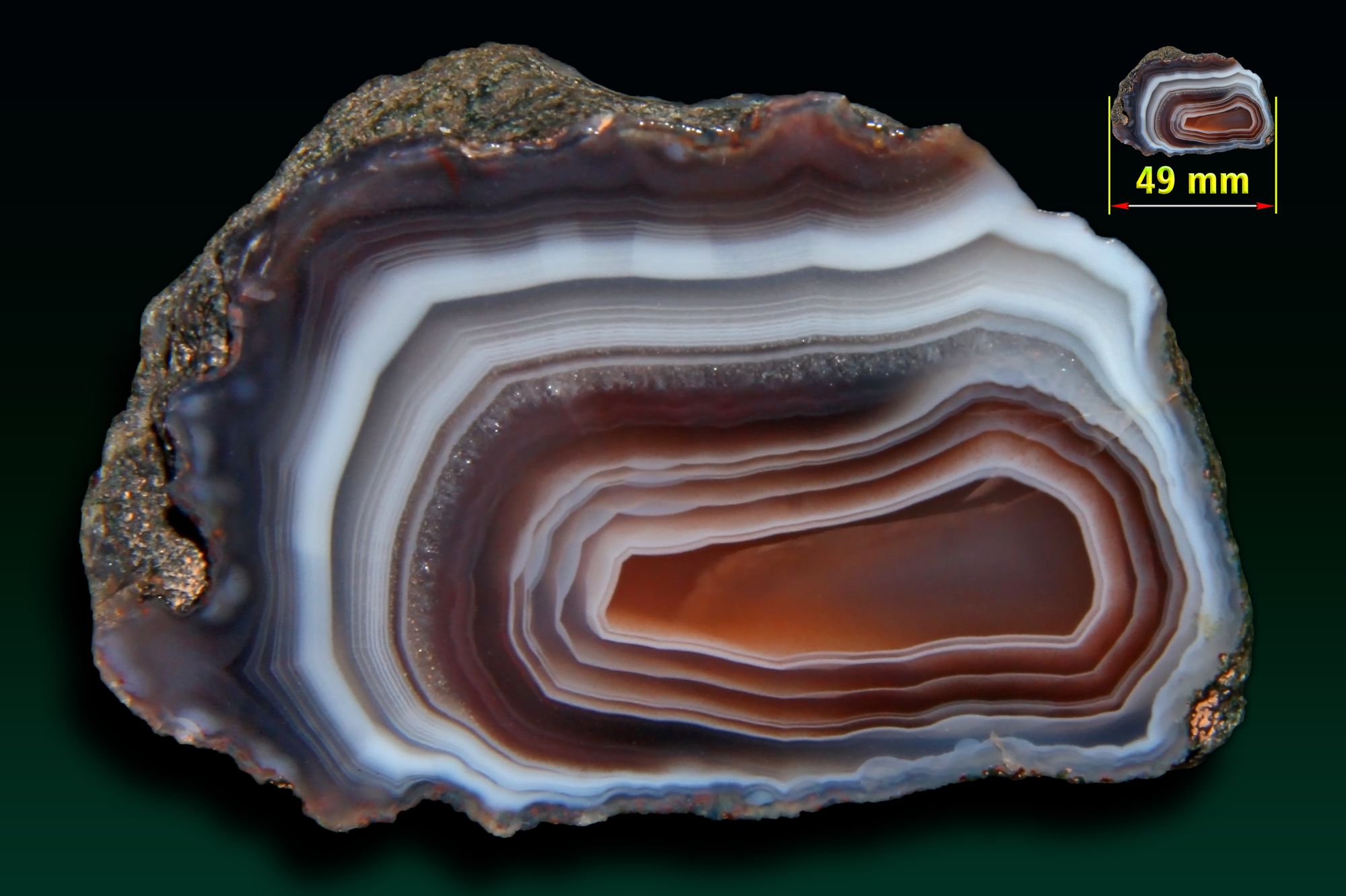
Agate is a banded variety of chalcedony, a microcrystalline form of quartz built from silica fibers too fine to see without a microscope. Its signature stripes form as mineral-rich groundwater seeps slowly into gas pockets and cracks inside volcanic rock, depositing a new layer of silica each time the chemistry or flow shifts — a process that can take millions of years. That patience is written into the stone itself: no two bands, and no two Agates, ever come out quite the same.
The name comes from the Achates River in Sicily (known today as the Dirillo), where the Greek philosopher Theophrastus first documented the stone around 300 BCE. The largest deposits now come from Brazil, Uruguay, and India, where Agate typically forms as a geode — a hollow, banded shell often lined with a crystal-quartz center.

A Stone With a History
Agate is one of the oldest gemstones in continuous human use. Carved Agate seals and amulets have turned up in Mesopotamian graves dating back more than 5,000 years, and the stone appears just as consistently in Egyptian jewelry, Greek and Roman signet rings, and Chinese carvings across the centuries between. The Roman naturalist Pliny the Elder wrote of Agate as a protective stone, worn by travelers and athletes for safety and quiet endurance.
That reputation has barely shifted in five millennia. What's changed is the occasion — it's no longer soldiers reaching for Agate before battle, but anyone looking for the same steady, weather-resistant strength the stone spent millions of years quietly growing.
Meaning and Symbolism
Agate's meaning grows directly out of how it forms. A stone built in patient, concentric layers has long stood for balance — between its own light and dark bands, and by extension between the different, sometimes conflicting parts of a person's inner life. It isn't associated with sudden transformation or a jolt of energy; it's associated with steadiness, the kind of strength that comes from staying the course rather than pushing hard.
That's also why Agate is rarely the centerpiece of a dramatic intention. It's the stone reached for underneath everything else — a quiet, reliable base other, showier work gets built on top of.
Carried or worn to
- Restore balance between mind, body, and spirit
- Build quiet, grounded inner strength
- Ease tension and self-doubt
- Encourage acceptance of oneself and one's circumstances
Chakra, Zodiac & Element
Agate is most often tied to the Root Chakra, the energy center governing safety, stability, and a sense of belonging in the body — a natural match for a stone whose entire identity is steadiness. Its Earth element association follows the same logic: Agate is slow, dense, and unhurried, about as far from flighty or reactive as a stone gets.
Astrologically, Agate is linked with Gemini and Virgo — Gemini for the way its layered bands echo that sign's many-sided nature, Virgo for the stone's grounded, detail-oriented patience. Neither link is exclusive: because Agate's meaning is so broadly about balance, it's commonly worn across every sign as an everyday stabilizer rather than a sign-specific stone.

The Many Varieties of Agate
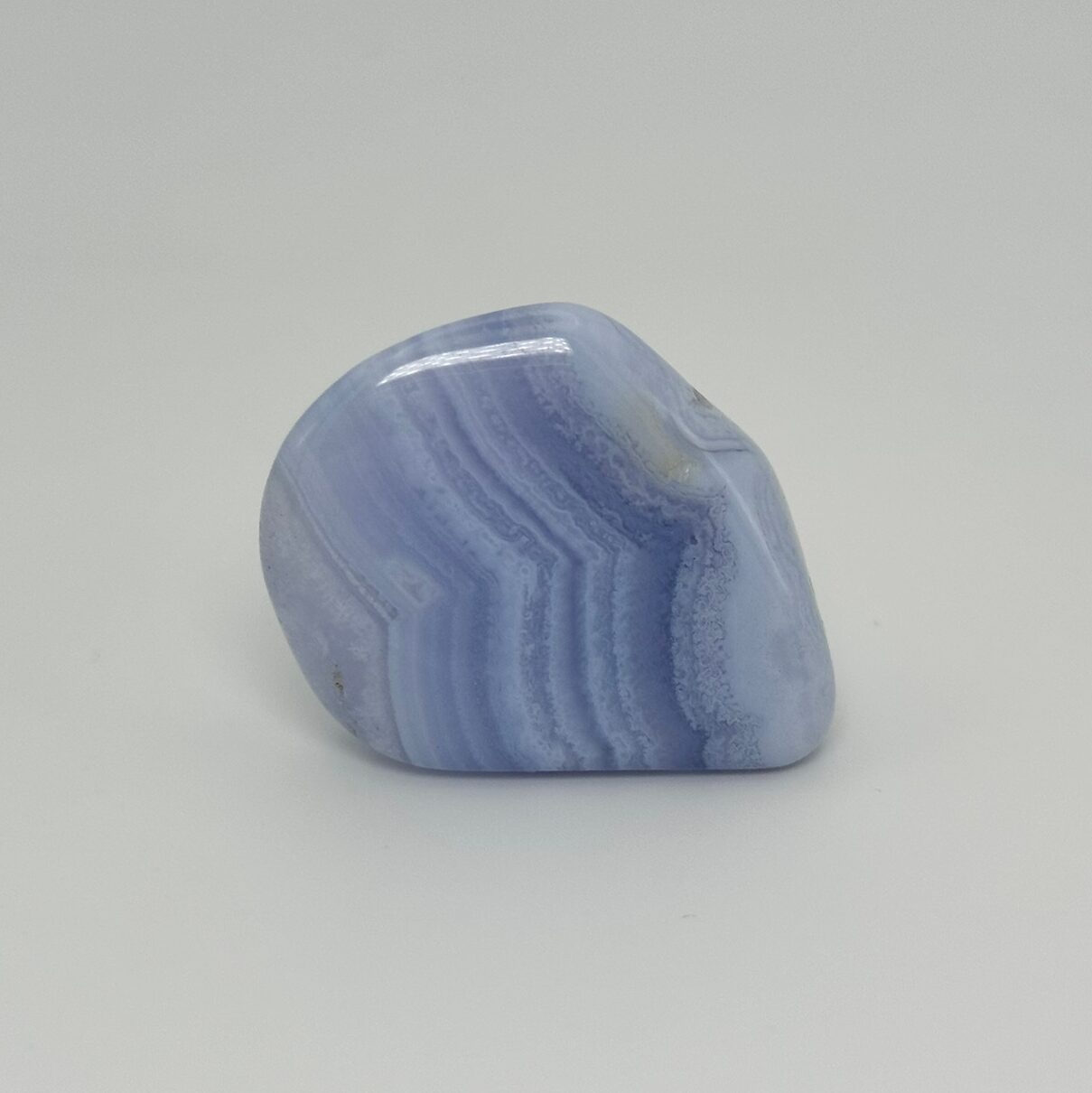
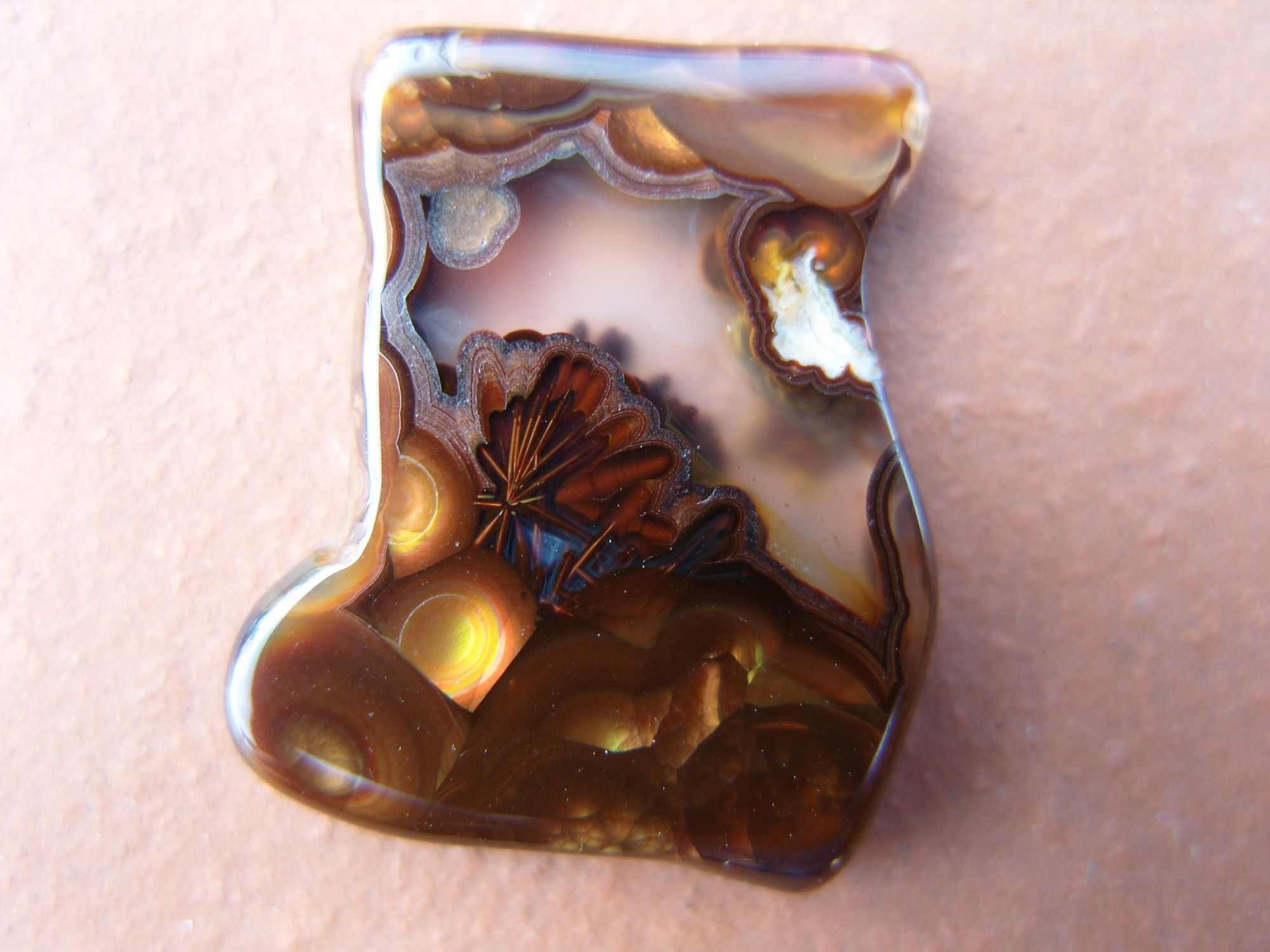
Few stones vary as much from specimen to specimen as Agate. Depending on the trace minerals and conditions present while it formed, Agate can turn up milky white, deep blue, moss-flecked green, or ringed in concentric bands of orange and brown — and several of these looks are distinctive enough to have earned their own names, from the sky-blue calm of Blue Lace Agate to the fern-like inclusions of Moss Agate. You'll find the family's best-known members, each with its own particular meaning, just below.
How to Use and Care for Agate
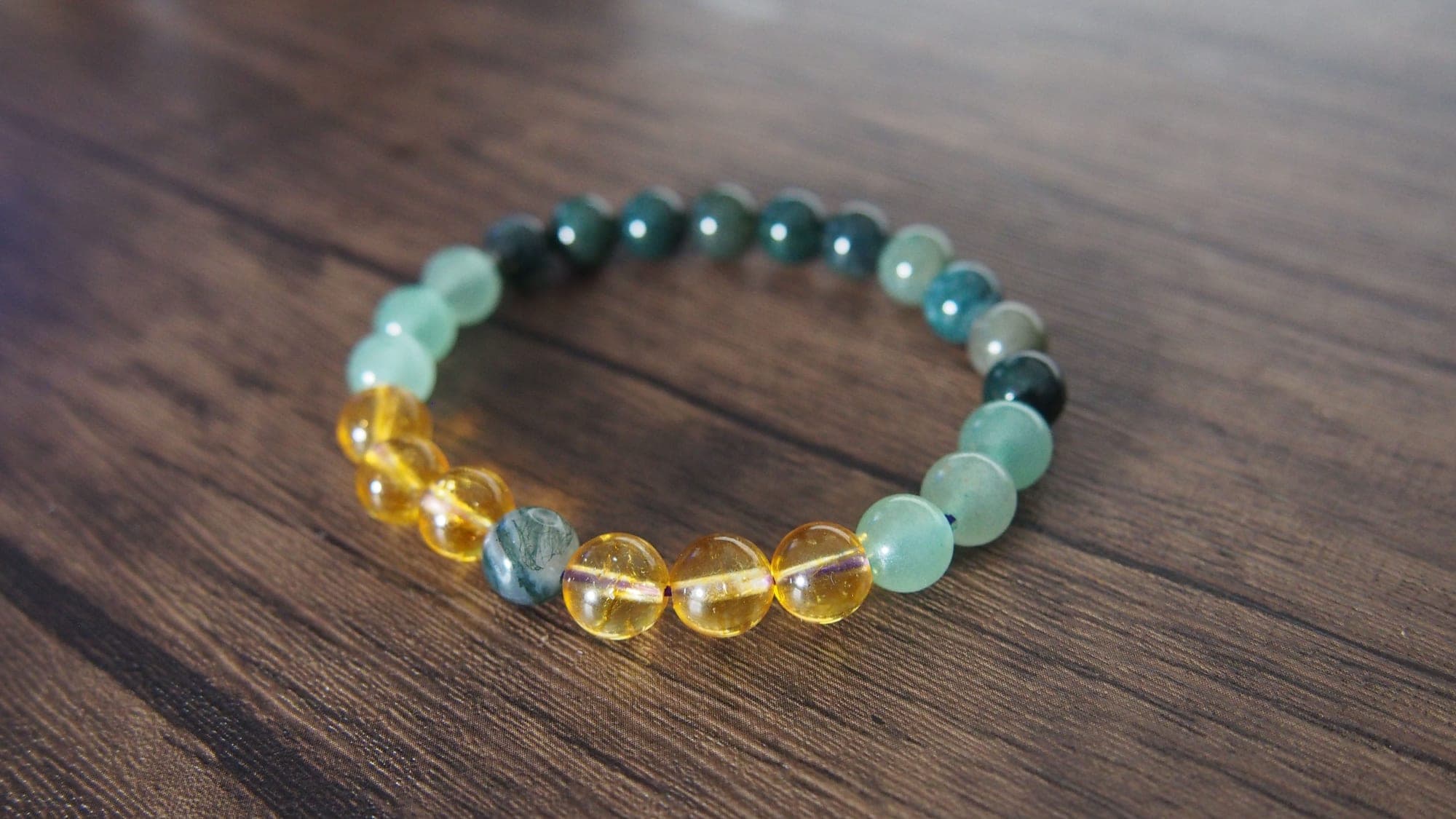
Agate's practical reputation matches its symbolic one: it's an easy, low-maintenance stone to live with. At 6.5–7 on the Mohs hardness scale, it holds up well to daily wear as a ring, bracelet, or pendant, and — unlike softer, water-sensitive stones — it can be safely rinsed under running water to clear accumulated energy. A few hours in sunlight or moonlight is the traditional way to recharge it afterward.
Agate's steady, background nature also makes it a natural stone to pair rather than wear alone — it tends to support other crystals' intentions instead of competing with them. For guidance on which combinations work well and why, see our Crystal Combinations guide.
Frequently Asked Questions
What chakra is Agate associated with?
Is Agate safe to wear every day?
Can Agate get wet?
Is Agate a birthstone?
How do I pick the right Agate variety?
A steady, dependable stone — never flashy, always stabilizing.
Shop this stone
Bracelets with Agate
Varieties