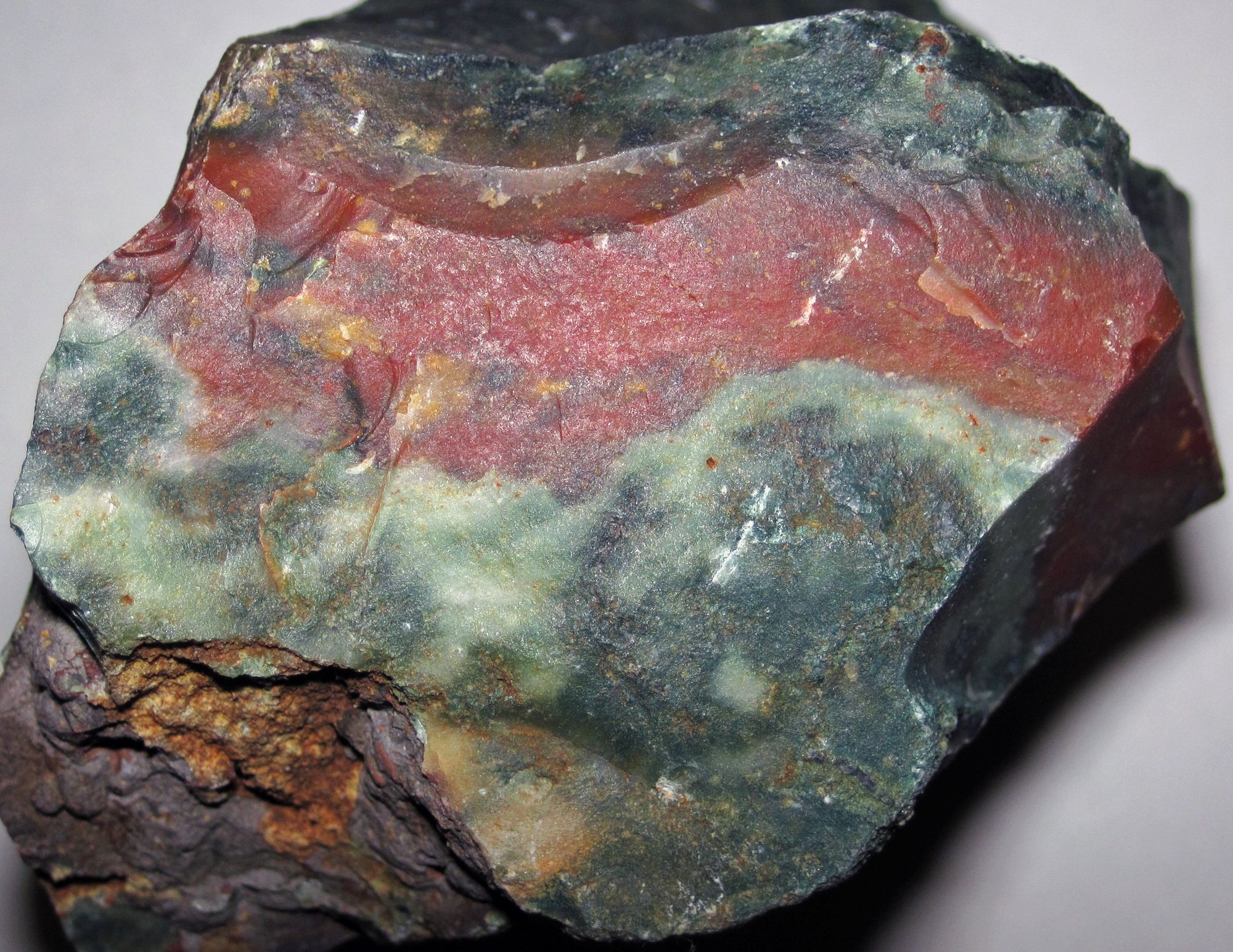
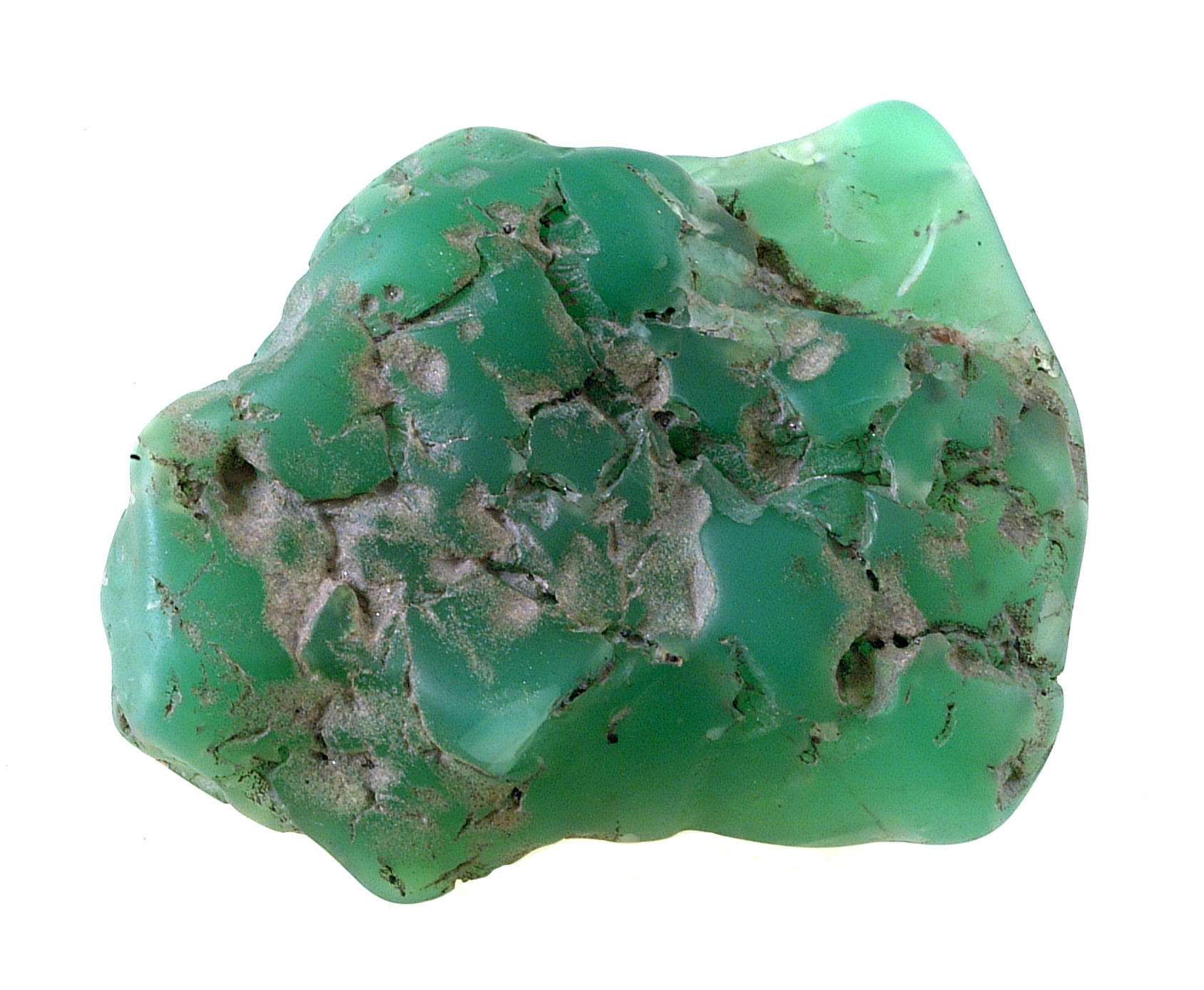
Photo: Judy Gallagher · CC BY 2.0 · Flickr
Watermelon Tourmaline
Stone of Heartfelt Balance
Energy Focus
Meaning & uses
Watermelon Tourmaline Meaning
Watermelon tourmaline is a crystal that grows in two colors at once, a pink-to-red heart wrapped in a green rind, and modern crystal traditions treat it as a stone of balanced, open-hearted feeling.
What Is Watermelon Tourmaline?
Watermelon tourmaline is not a separate mineral. It is a color-zoned form of elbaite, the lithium-rich member of the tourmaline group, which is a complex boron silicate. Elbaite is named for the island of Elba, Italy.
The two colors come from the way the crystal grows. As elbaite forms inside a pegmatite, the chemistry of the surrounding fluid changes, and each change lays down a new band of color. Traces of manganese tend to give pink and red, while iron and other elements give green. Slice the crystal across and the bands appear as rings, a pink core inside a green rind like a slice of melon. Some crystals run the other way, with a green core and a pink rind, and these are sold as "reverse" watermelon.
At 7–7.5 on the Mohs scale it is a hard, durable stone. Fine material is mined in Brazil's Minas Gerais, in Mozambique and Afghanistan, and in smaller amounts in Nigeria, Namibia, and the United States.

A Stone With a History
Tourmaline's name is usually traced to a Sinhalese word applied to the colorful stones that Dutch traders carried out of Sri Lanka in the early 1700s. For a long time, tourmalines of every color were mistaken for rubies, emeralds, and sapphires, and the group was only separated into its own family later.
The American chapter began in Maine. Around 1820, two students, Elijah Hamlin and Ezekiel Holmes, are said to have found green crystals under an uprooted tree on Mount Mica in Paris, Maine, and the hill went on to become one of the most famous tourmaline localities in the world. In 1972, a single pocket on Plumbago Mountain in Newry, Maine, produced about a ton of gem tourmaline, much of it pink, green, and watermelon.
Tourmaline also has an odd physical habit that made it a curiosity. When warmed, a crystal builds up a faint electric charge and pulls in dust and ash, and Dutch lapidaries are said to have used the crystals to draw ash out of their pipes.
Meaning and Symbolism
Watermelon tourmaline's meaning follows its colors. Pink is the traditional color of tenderness and affection, green the color of growth and the heart center, and the stone holds both in one piece, with neither crowding the other.
For that reason it is traditionally carried as a stone of balance in matters of the heart: giving and receiving in equal measure, softness without losing a sense of self, and hope that does not ignore how things really are. Its layered structure also makes it a natural symbol for the idea that tender feelings and steady growth can live in the same place.

Carried or worn to
- Balance giving and receiving in a close relationship
- Keep an open heart after a difficult season
- Practice kinder, more patient self-talk
- Bring a lighter, more hopeful mood to the day
- Mark a new chapter in a friendship or partnership
Chakra, Zodiac & Element
Watermelon tourmaline is tied to the Heart Chakra, the energy center for love and compassion. Both of its colors point there: pink for love, and green, the classic heart-chakra color, for growth and renewal. It is not a stone for pushing outward or for speaking up, and that quiet focus is why it sits so squarely at the heart.
In astrology it is linked with Libra and Gemini. Libra, the sign of balance and partnership, fits the stone's even split of colors, and tourmaline is one of the modern birthstones for October, which falls mostly under Libra. Gemini, the twins, suits a crystal that is two things at once. Its Water element association reflects the emotional, flowing quality people describe in it.
Varieties of Watermelon Tourmaline
Watermelon tourmaline sits inside a very wide family. The classic form has a pink or red core and a green rind, while reverse watermelon swaps them, and bi-color and tri-color crystals show two or three bands along their length instead of in rings. It is sold as thin polished slices, rough crystals, tumbled stones, and beads, with the pink and green zones appearing in different proportions bead to bead.
It is also a close relative of the stones in our Black Tourmaline entry. Both belong to the tourmaline group, but black tourmaline is a different species, an iron-rich schorl, and its traditional role is protection rather than the heart-centered balance described here.
How to Use and Care for Watermelon Tourmaline
With a hardness of 7–7.5 on the Mohs scale, watermelon tourmaline is durable enough for everyday jewelry such as bracelets. Thin slices are more fragile than crystals or beads, since they can snap along an internal crack, so store them flat and avoid knocks.
It is water-safe, and a quick rinse in lukewarm water with a drop of mild soap is fine. Avoid ultrasonic cleaners, steam, and sudden heat, which can crack a tourmaline that already has small fractures inside. Traditionally it is cleansed in moonlight or with sound, and it is often paired with other soft heart stones such as Rose Quartz. Our Crystal Combinations guide covers pairings for an open, steady heart.
Because the pink-and-green look is so popular, check what you are buying. Natural watermelon tourmaline has irregular, slightly uneven color bands. Perfectly uniform, neon pink-and-green beads are often dyed quartz or glass.
Frequently Asked Questions
What is watermelon tourmaline used for?
What chakra is watermelon tourmaline associated with?
Is watermelon tourmaline a real mineral?
How can I tell real watermelon tourmaline from dyed stone?
Is watermelon tourmaline the same as black tourmaline?
Can watermelon tourmaline get wet?
A stone that holds two colors in balance, and shows that tenderness and growth can share the same heart.
Shop by energy
Bracelets for Heart Chakra energy
We don't have a Watermelon Tourmaline bracelet right now. These pieces share its Heart Chakra focus.
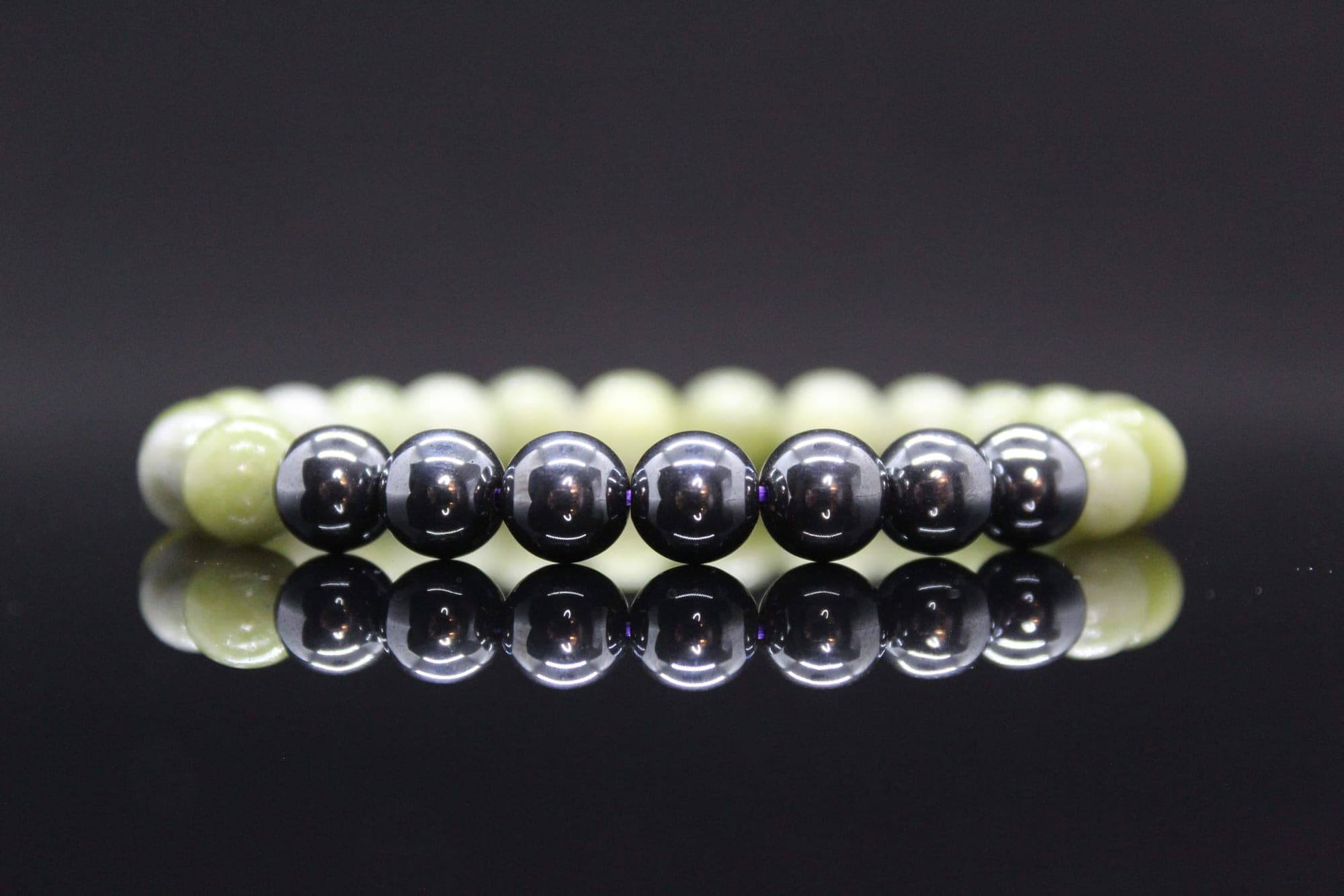
Life Force Energy Bracelet
$24.00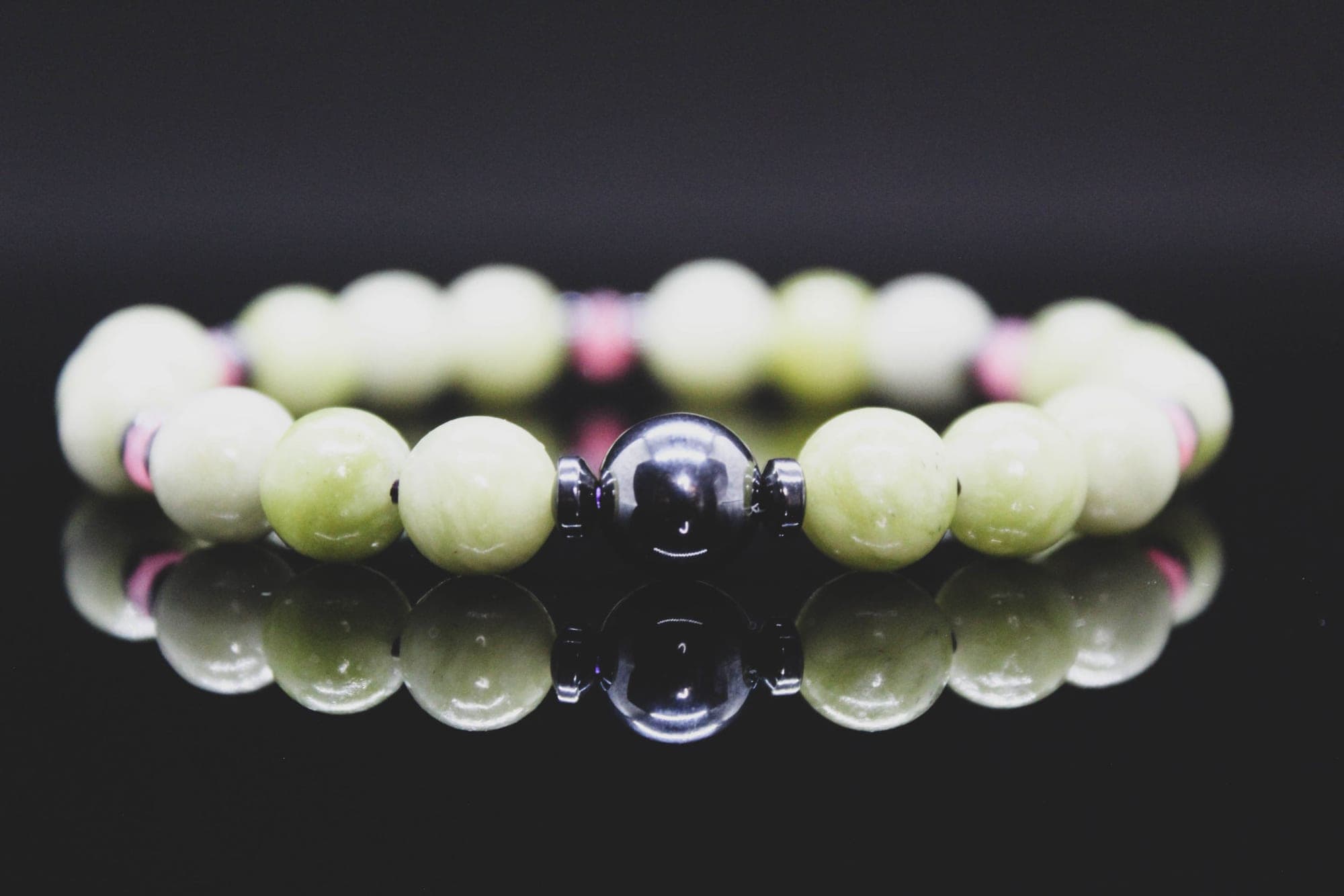
Grounding Love Energy Bracelet
$33.00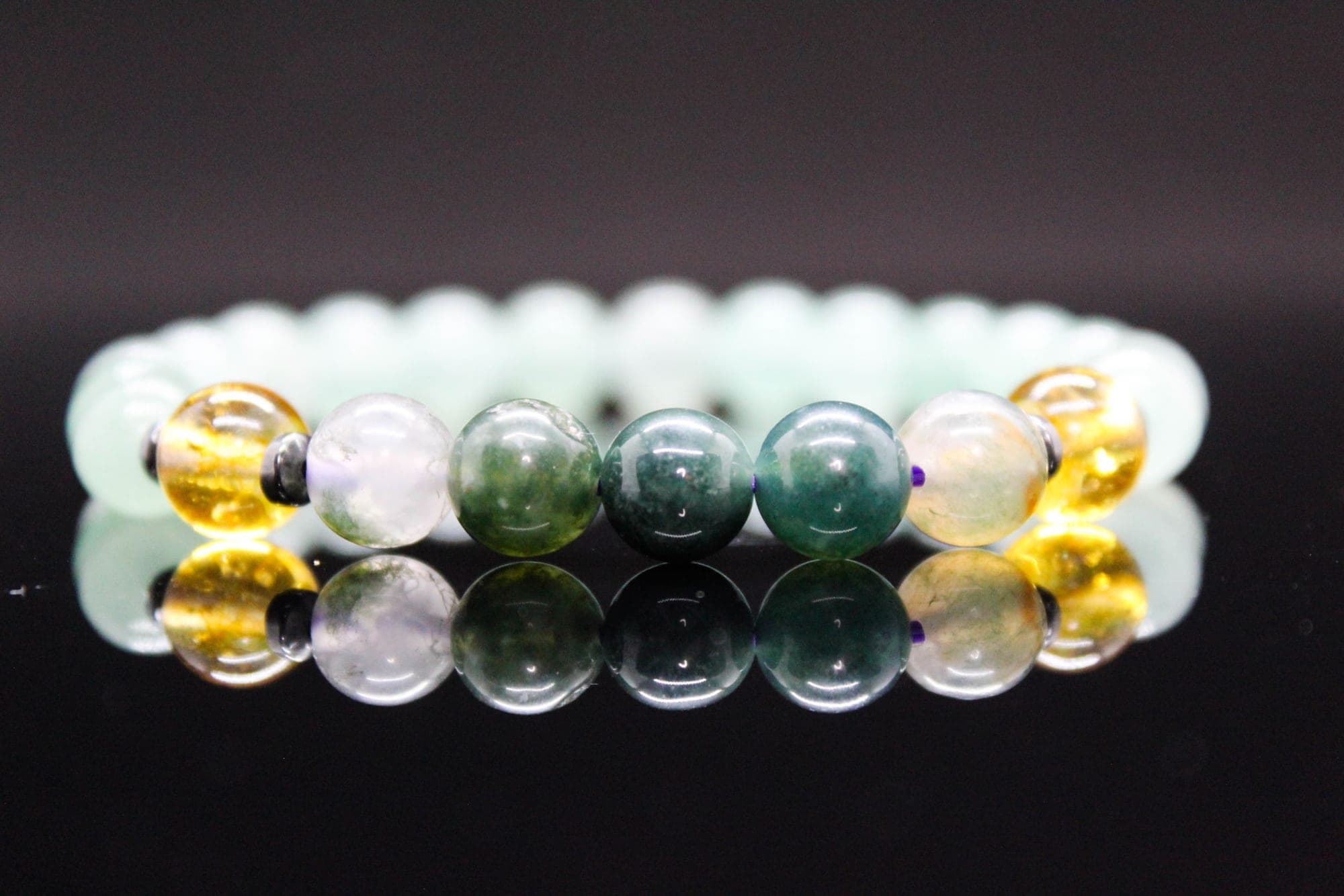
The Opulence Energy Bracelet
$33.00
Divine Calming Energy Bracelet
$24.00
Divine Thoughts Energy Bracelet
$33.00
More Love Energy Bracelet
$33.00
The Dinero Energy Bracelet
$33.00