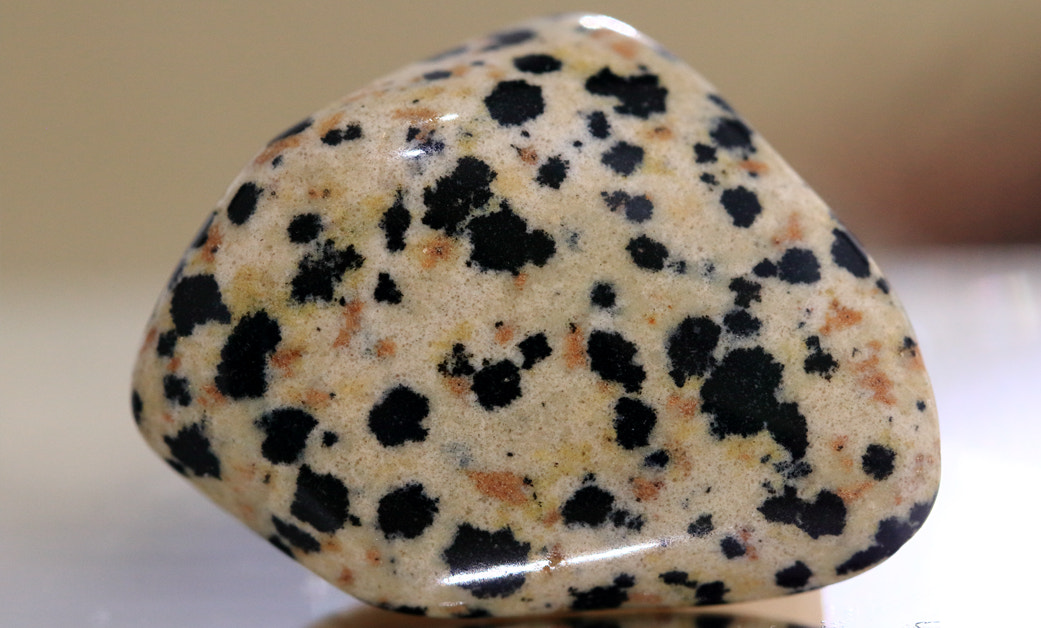
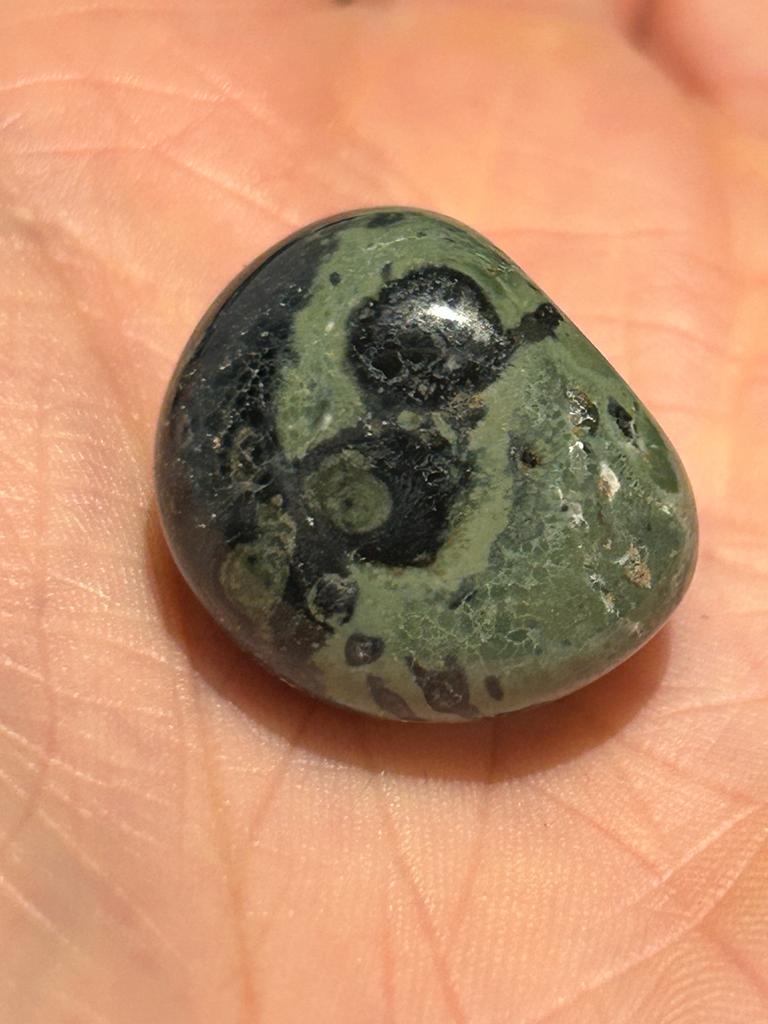
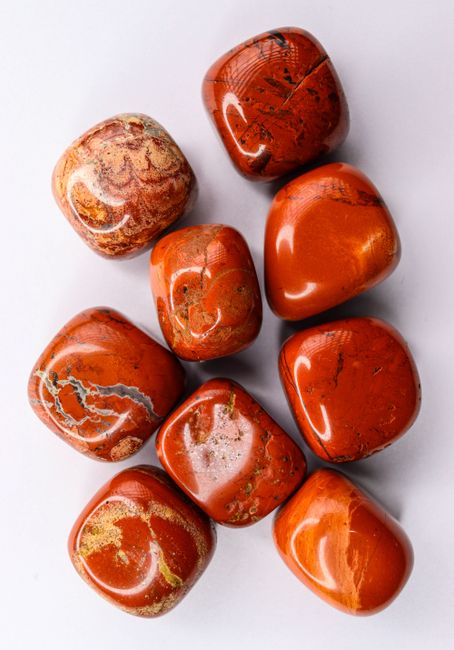
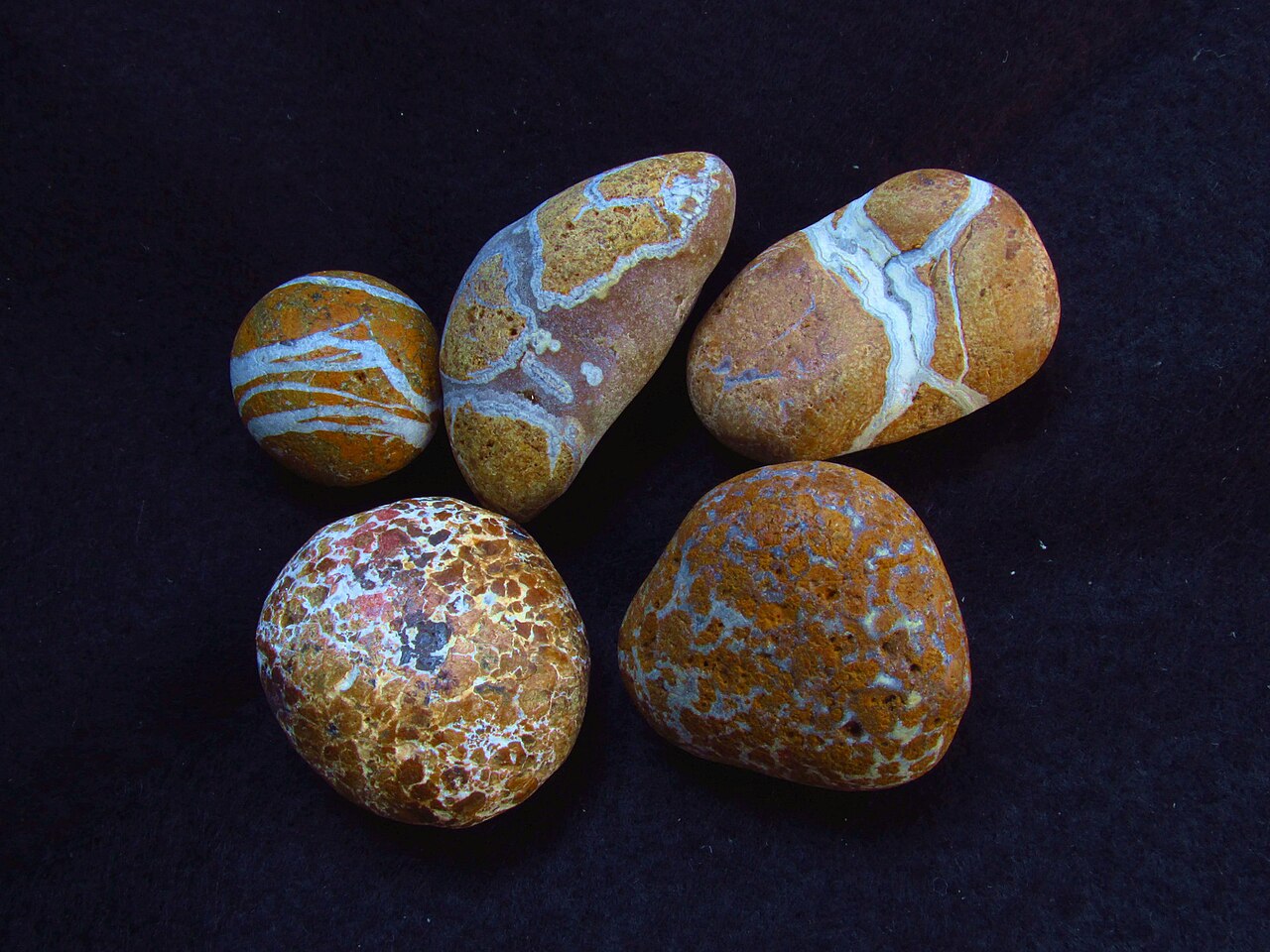
Photo: あおもりくま · CC BY-SA 4.0 · Wikimedia Commons
Meaning & uses
Jasper Meaning
An opaque, patterned form of chalcedony, Jasper comes in more colors and patterns than almost any other stone family — yet nearly every variety shares the same quiet, grounding, nurturing signature underneath.
What Is Jasper?
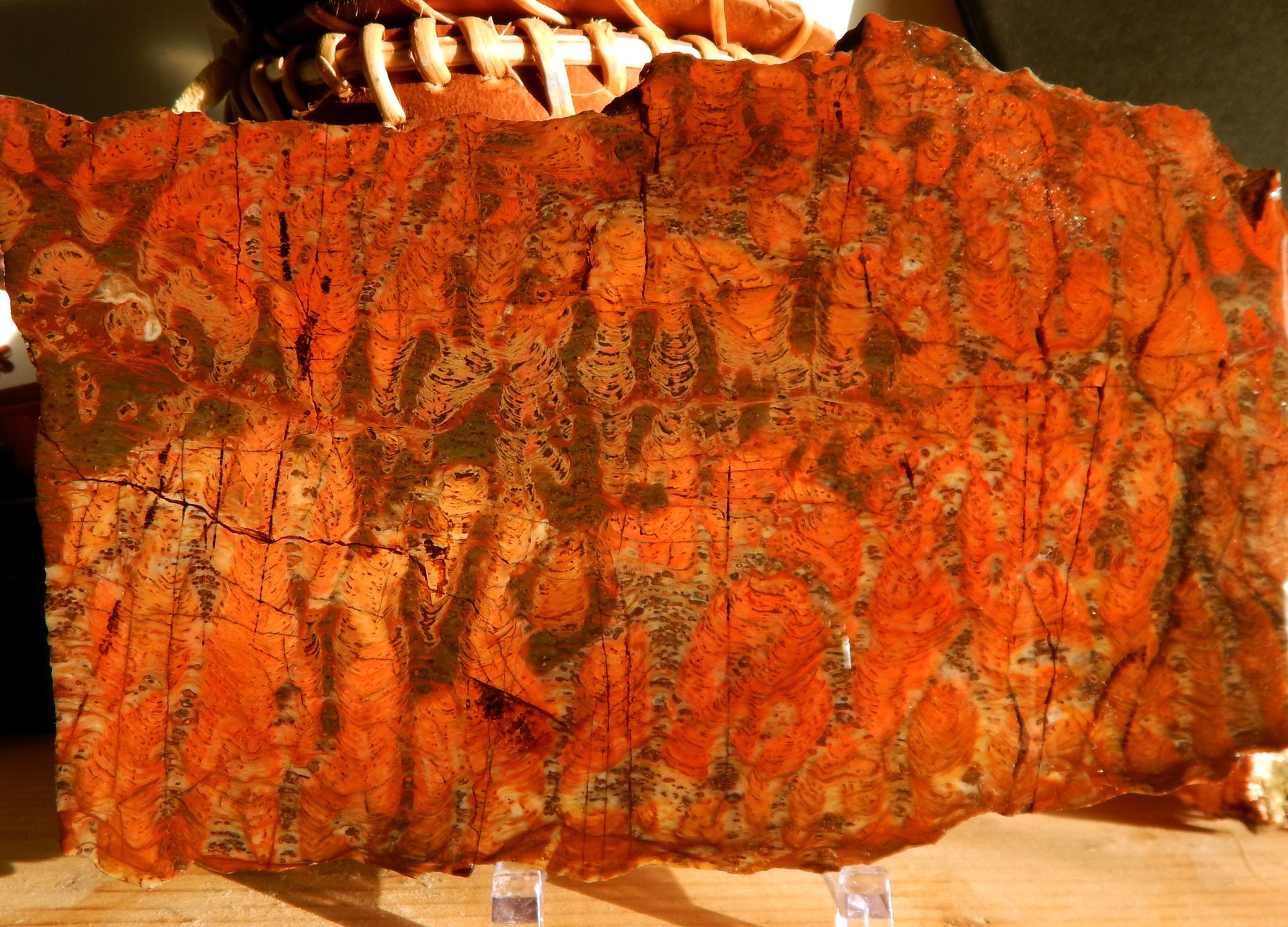
Jasper is an opaque, microcrystalline variety of quartz — the same silica family as Agate, but dense and cloudy rather than translucent and banded, because it typically forms from fine volcanic ash or sediment that gets cemented together by silica-rich groundwater rather than growing as clean, layered deposits. That impure, sediment-heavy origin is exactly what gives Jasper its huge range of color and pattern: whatever minerals, ash, or even fossil material were mixed into the original sediment get locked into the stone as it hardens, and iron oxide alone can produce anything from Red Jasper's brick tones to Yellow Jasper's ochre.
The name traces back through Old French jaspre and Latin iaspis to a much older root shared across Greek, Persian, and Semitic languages, all converging on a word simply meaning "spotted stone" — a name given by people who noticed the same thing modern buyers do first: Jasper rarely comes in one solid color. It's mined on every continent except Antarctica, with major sources in India, Brazil, Madagascar, and the United States.
A Stone With a History
Red Jasper carries Jasper's best-documented ancient use: Egyptian priests carved it into the tyet, or "Isis knot," an amulet shaped like a stylized knot and described in the Book of the Dead as channeling the protective blood of the goddess Isis. Spell 156 specifically instructs that the amulet be made of red jasper, then placed on the body of the deceased for protection — one of the clearest cases in the ancient world of a color choice being written directly into religious instruction rather than left to taste.
Beyond Egypt, Jasper's toughness and easy availability made it a working stone as much as a decorative one: prehistoric peoples across multiple continents knapped local Jasper into tools and arrowheads for the same conchoidal fracture that made flint useful, and Roman and Mesopotamian carvers both used it for engraved seals and intaglios, prized for holding fine detail without cracking.
Meaning and Symbolism
Jasper's meaning follows directly from how it forms: a stone built slowly from compacted sediment, cemented rather than crystallized, reads as patient and unhurried rather than dramatic. Across nearly every color variety, that translates into the same core reputation — nurturing, steady, supportive presence rather than sudden transformation.
That consistency across such a visually varied family is unusual. Most stone families split their meanings sharply by color; Jasper's colors mostly just tune the same grounding theme toward a slightly different focus.
Carried or worn for
- Grounding scattered or anxious energy
- Providing slow, steady emotional support through hard stretches
- Encouraging patience and a sense of wholeness
- Anchoring the body during stress or big change
Chakra, Zodiac & Element
Jasper's chakra association varies by color more than almost any other stone in this directory — Red Jasper toward the Root, Yellow Jasper toward the Solar Plexus, Ocean Jasper toward the Heart — but the Root Chakra is the family's most common anchor, matching its overall reputation for physical grounding. Its Earth element is consistent across every color, reflecting Jasper's sediment-and-ash origins.
Astrologically Jasper is linked to Leo, a sign associated with warmth and vitality — a pairing that reads less as a personality match and more as balance: Jasper's steadiness gives Leo's boldness a foundation to burn from without burning out.
The Many Varieties of Jasper
Few stone families vary as much from specimen to specimen as Jasper, because its pattern depends entirely on what was mixed into the sediment as it formed. Circular mineral growths inside ancient volcanic rock produce Ocean Jasper's orbicular "orbs"; banded iron-rich layers produce Picture Jasper's landscape-like scenes; fossilized colonies of ancient algae produce Kambaba Jasper's eye-like circles. You'll find the family's best-known named varieties, each with its own particular emphasis within Jasper's broader theme of grounding, just below.
How to Use and Care for Jasper
At 6.5–7 on the Mohs scale, Jasper is durable enough for daily wear in rings, bracelets, or pendants across nearly every variety, and it's water-safe for routine cleansing.
Because Jasper's whole reputation is steady, background support rather than an intense or occasional-use stone, it's traditionally worn continuously — a pocket stone or bracelet kept on through an ordinary week — rather than reserved for specific rituals.
Frequently Asked Questions
Is Jasper the same as Agate?
What chakra is Jasper associated with?
Is Jasper safe to wear every day?
Can Jasper get wet?
Is Jasper a birthstone?
How do I pick the right Jasper variety?
A dependable, everyday family of stones — supportive rather than showy.
Shop this stone
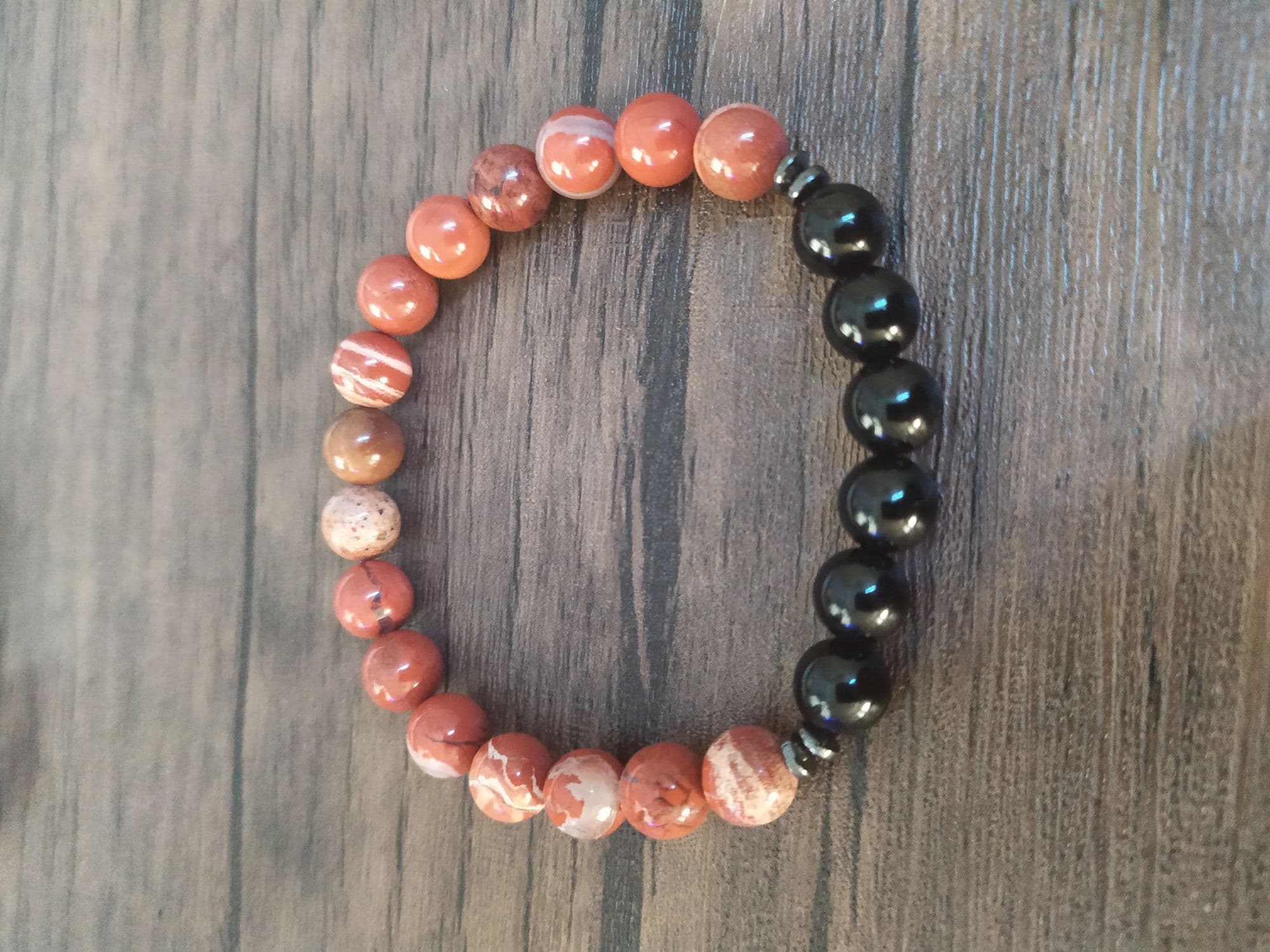
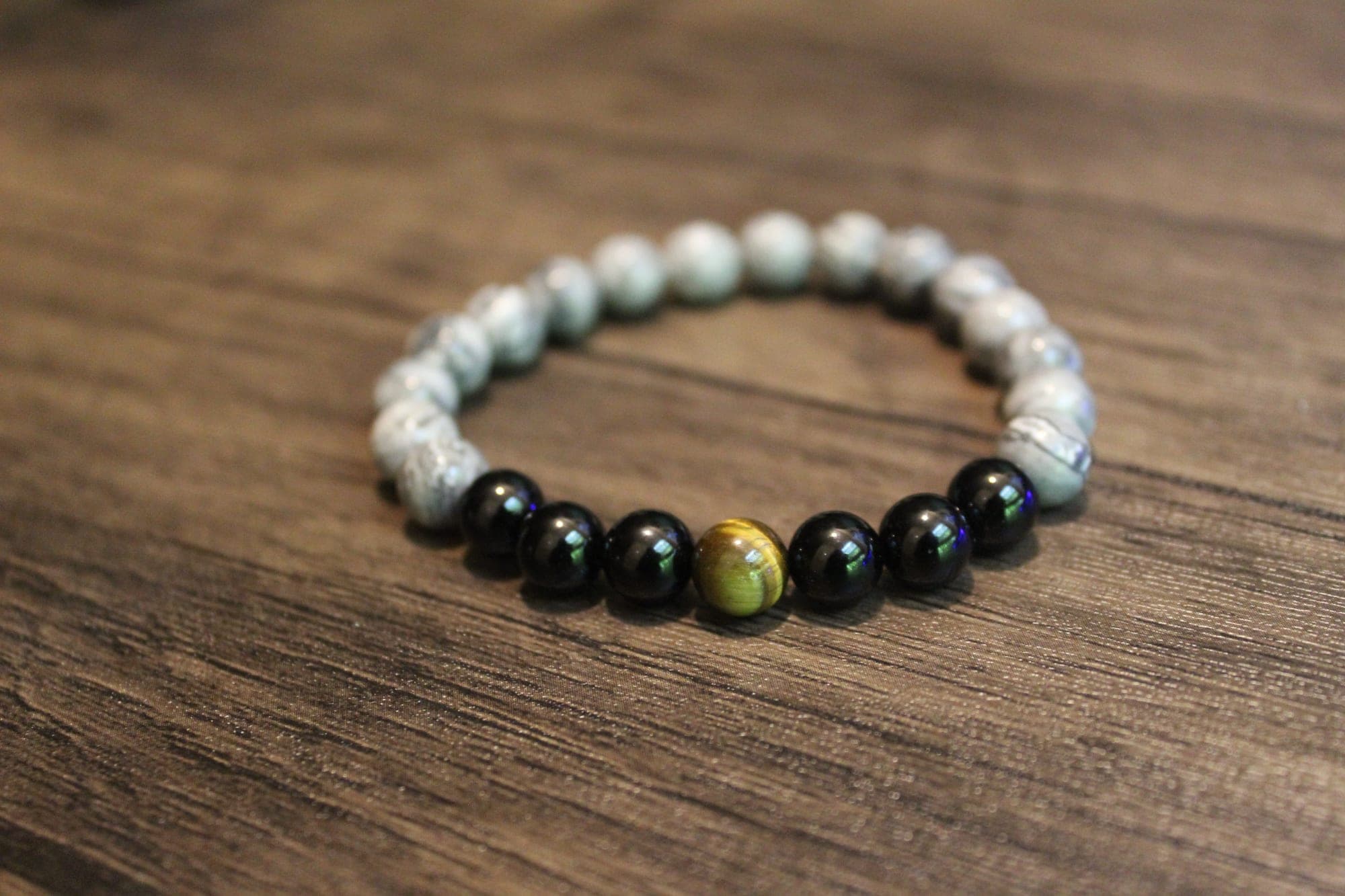
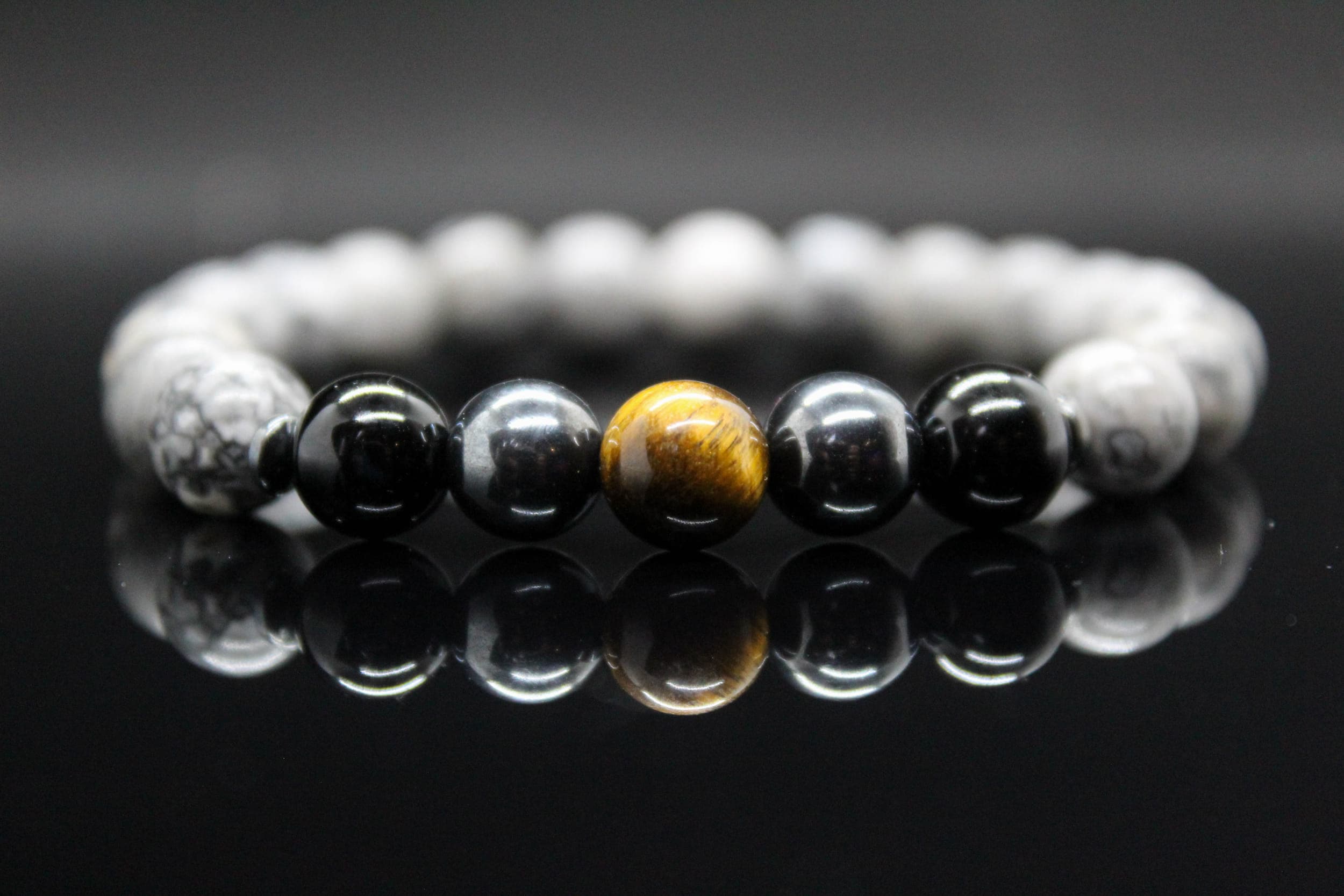
Bracelets with Jasper
Varieties