Photo: Ra'ike · CC BY-SA 3.0 · Wikimedia Commons
Meaning & uses
Sodalite Meaning
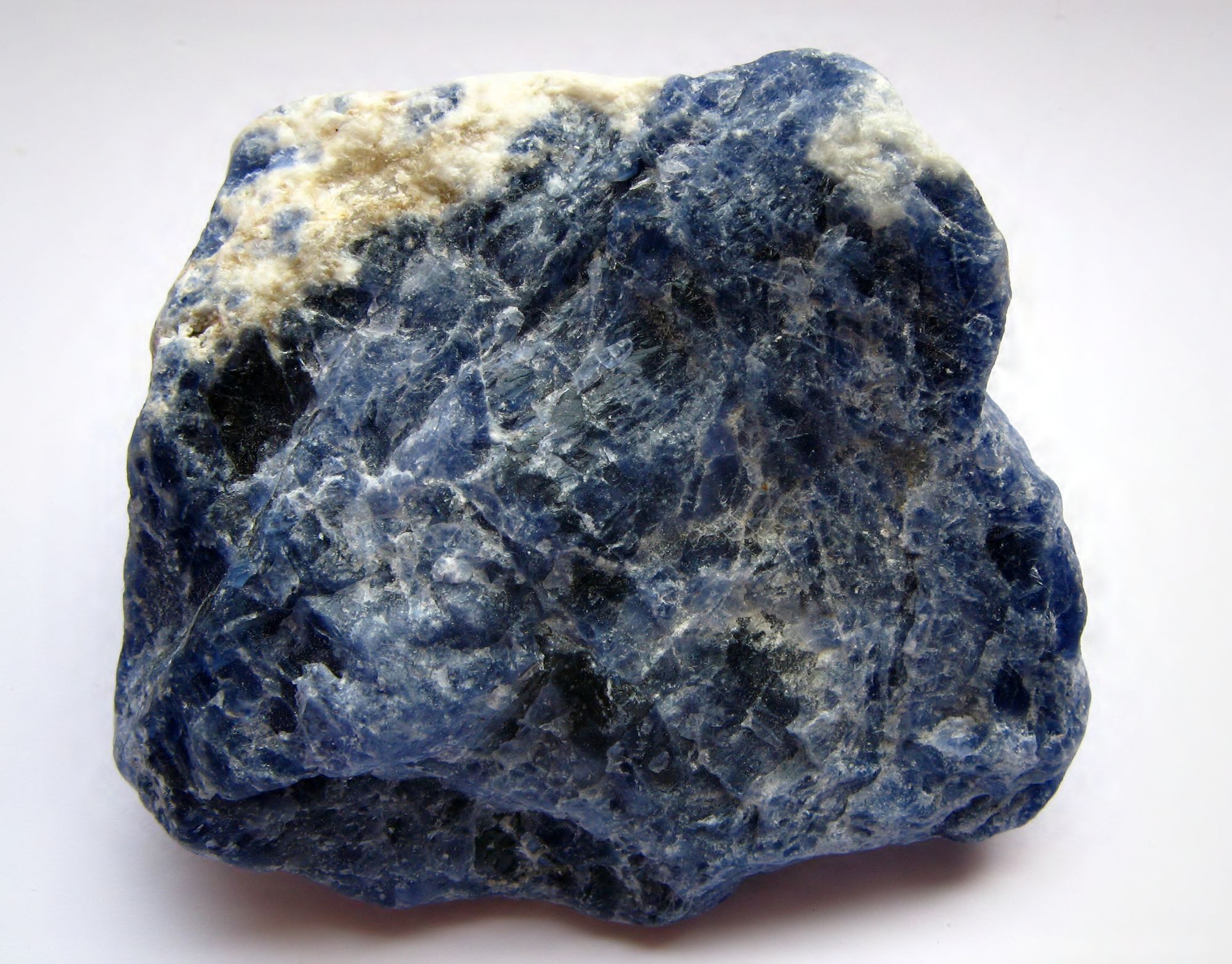
Deep royal blue veined with white, Sodalite is often mistaken for Lapis Lazuli at a glance — a fair mix-up, since the two are genuinely close mineral relatives, not just similar-looking strangers.
What Is Sodalite?
Sodalite is a sodium aluminum silicate belonging to the feldspathoid group, a family of minerals chemically similar to feldspar but that form in silica-poor igneous rock rather than the silica-rich rock feldspar needs. Its name is about as literal as mineral names get — "soda," for its sodium content, plus "-lite." Trace sulfur within its structure gives Sodalite its deep blue color, the same basic coloring mechanism responsible for the blue in lazurite, the primary blue mineral in Lapis Lazuli.
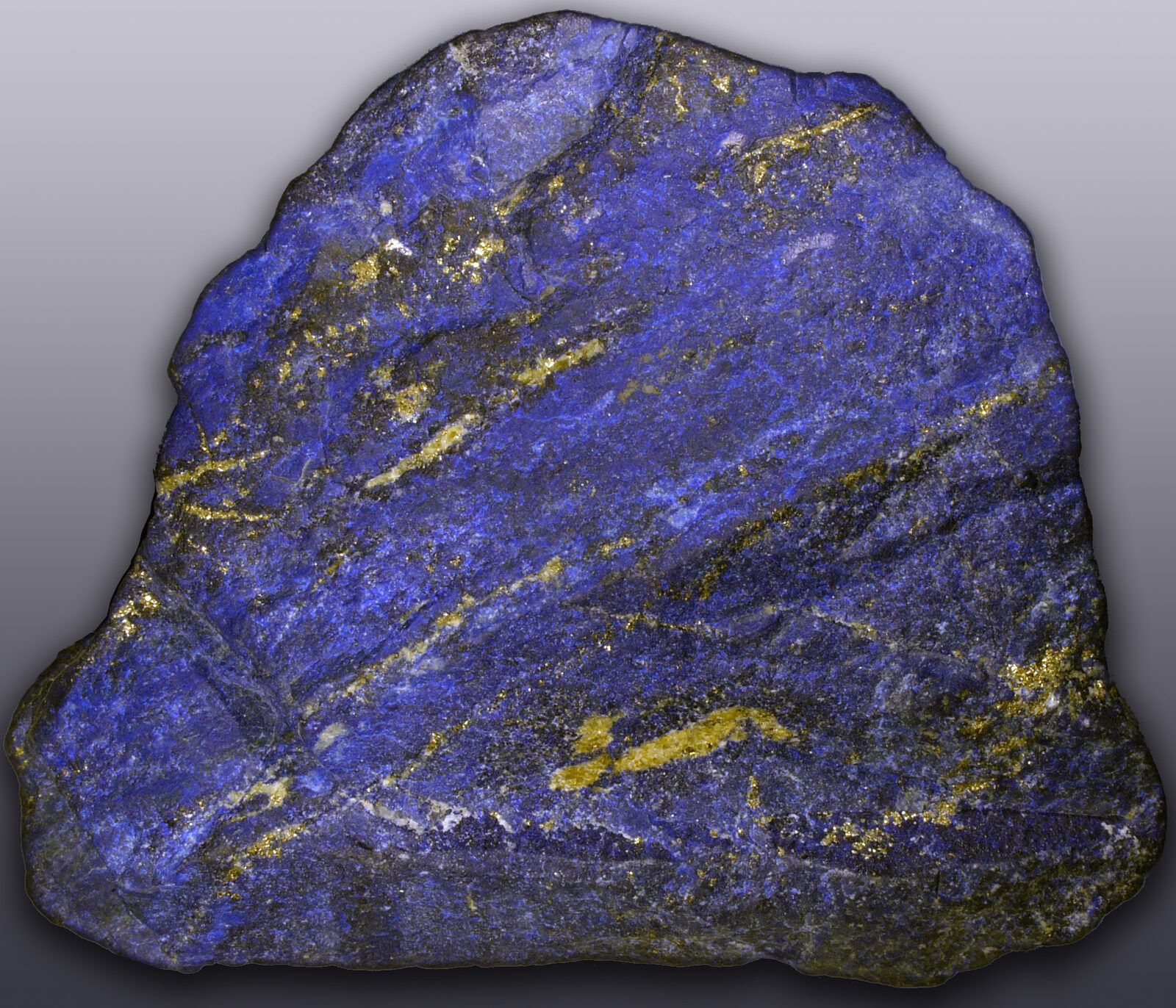
That connection isn't a coincidence: lazurite and Sodalite both belong to the same broader sodalite mineral group, closely related feldspathoids that share a similar cage-like structure. It's the real reason the two stones are so often confused — they're closer to cousins than to unrelated lookalikes, distinguished mainly by Lapis Lazuli's additional calcite and pyrite content, which Sodalite lacks.
Sodalite typically forms in silica-undersaturated igneous rocks like nepheline syenite, often growing alongside other feldspathoid minerals in the same slow-cooling intrusions. Its white veining usually comes from calcite or other associated minerals threading through the deep blue base, rather than from Sodalite itself changing color.

A Stone With a History
Sodalite was first formally described in 1811, based on material from Greenland, but it remained a minor mineralogical curiosity for decades afterward — gem-quality deposits large enough to actually work weren't discovered until 1891, near Bancroft, Ontario, in Canada. Even then, Sodalite stayed a niche stone until a specific, well-documented event turned it fashionable: in 1901, a substantial quantity of fine Canadian Sodalite was used decoratively in renovations at Marlborough House in London, home to the future King Edward VII and Queen Alexandra. The royal association was enough to make Sodalite suddenly desirable across Europe, and Canadian material picked up the trade nickname "Princess Blue" as a result.

Meaning and Symbolism
Sodalite's "Stone of Truth" reputation sits alongside Lapis Lazuli's similar association, but with a distinct emphasis. Where Lapis leans intuitive — truth arrived at through insight and inner reflection — Sodalite's meaning leans logical, tied to rational thought and objective clarity rather than mystical knowing. It's less about wisdom that arrives quietly and more about the kind of truth you can actually explain out loud.
That distinction makes Sodalite a specific choice within this directory's blue, throat-associated stones: reached for when the goal is clear, grounded communication rather than deep intuitive insight.
Carried or worn to
- Support clear, rational communication
- Encourage honest self-expression
- Deepen objective thinking and mental clarity
- Build quiet confidence in one's own perspective
Chakra, Zodiac & Element
Sodalite is tied to both the Throat and Third Eye Chakras — Throat for honest, grounded communication, Third Eye for the logical clarity behind it. Its Water element reflects the emotional undercurrent beneath even its most rational associations.
Astrologically it's linked to Sagittarius, a sign built around the direct pursuit of truth — the same sign associated with Lapis Lazuli, a fitting overlap given how closely related the two stones actually are.
How to Use and Care for Sodalite
At 5.5–6 on the Mohs scale, Sodalite is moderately durable, comparable to Moonstone and Labradorite, and suitable for regular wear in rings, bracelets, or pendants. It's generally water-safe for a brief rinse, with no unusual chemical sensitivities to plan around.
Sodalite pairs especially well with Lapis Lazuli — both throat-adjacent stones, but with Lapis leaning intuitive and Sodalite leaning logical, together helping the true thing actually land once it's spoken; see our Crystal Combinations guide for more on why the pairing works.
Frequently Asked Questions
What's the difference between Sodalite and Lapis Lazuli?
Why is Sodalite sometimes called "Princess Blue"?
When was Sodalite discovered?
Is Sodalite safe to wear every day?
Can Sodalite get wet?
What chakra is Sodalite associated with?
A stone for truth you can actually put into words.
Shop this stone