Photo: Dario Crespi · CC BY-SA 3.0 · Wikimedia Commons
Smoky Quartz
Stone of Grounded Calm
Energy Focus
Meaning & uses
Smoky Quartz Meaning
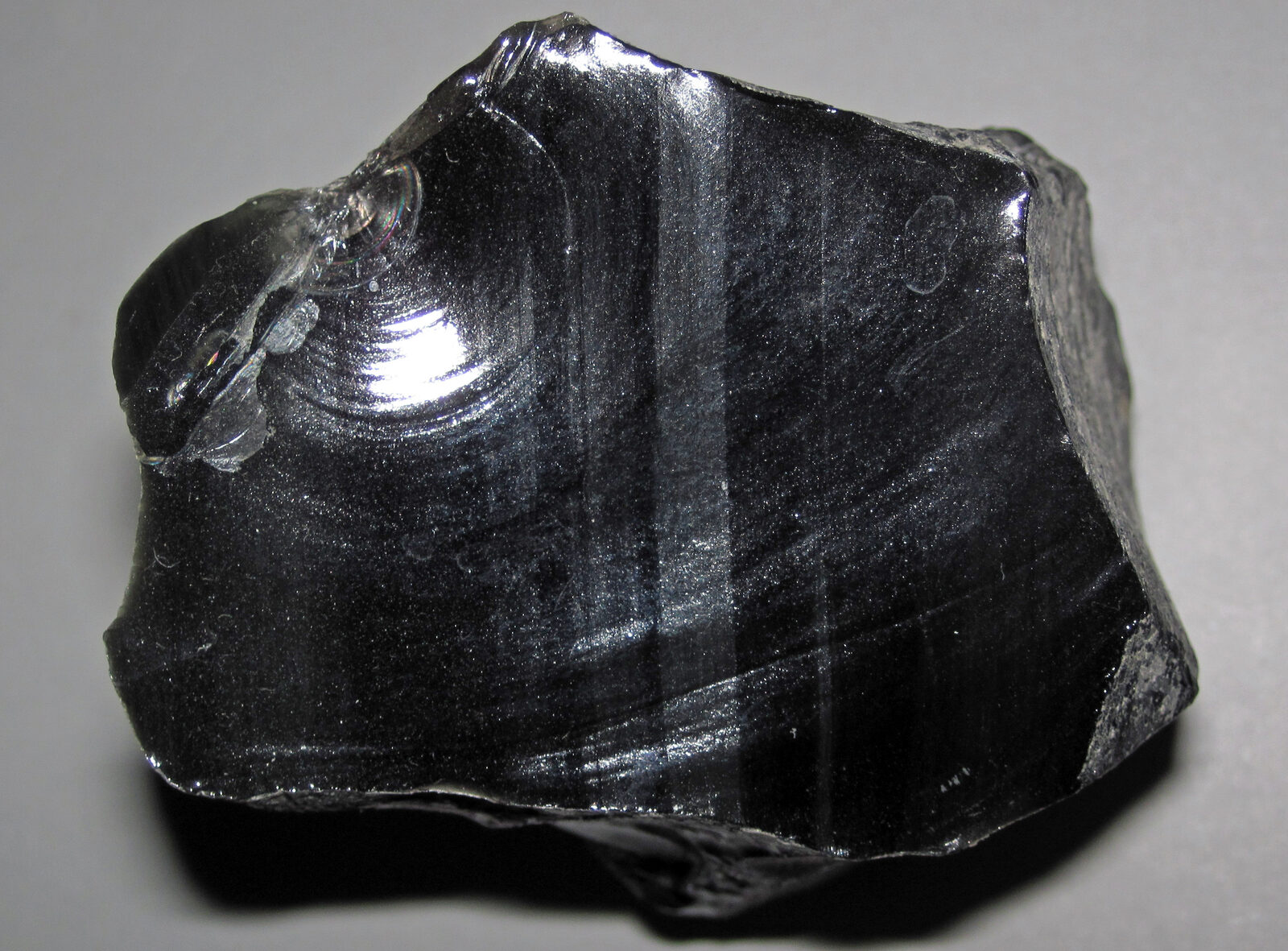
Where Clear Quartz amplifies and Amethyst calms through color alone, Smoky Quartz does its grounding work through a genuinely fitting origin story — its brown-to-black color comes from the stone absorbing and transforming natural radiation over geological time.
What Is Smoky Quartz?
Smoky Quartz is the same mineral species as Amethyst, Citrine, and Rose Quartz — all are macrocrystalline quartz, silicon dioxide, distinguished from one another only by trace impurities and how those impurities interact with their surroundings. In Smoky Quartz's case, trace aluminum substitutes for some of the silicon within the crystal lattice; natural background radiation from the surrounding rock, absorbed slowly over a very long span of time, knocks an electron loose from that aluminum site and creates what mineralogists call a color center — the actual physical structure responsible for the stone's smoky brown, grey, or black tone.

That same mechanism means Smoky Quartz's color can be reversed by heating, and colorless quartz can be turned smoky through artificial irradiation — a well-established, widely used commercial practice. Much of the very dark, uniformly colored Smoky Quartz sold today has been lab-irradiated rather than naturally darkened, a disclosed and generally accepted treatment in the trade rather than a deceptive one, similar to how Turquoise is commonly stabilized.
A Stone With a History
Smoky Quartz holds a specific, well-documented cultural position as Scotland's national gemstone, traditionally called Cairngorm after the Cairngorm Mountains where fine crystals were historically found. For centuries it's been the centerpiece of traditional Scottish dress — set into the pommel of ceremonial dirks, worn as the large faceted stone in kilt pins, and used throughout Highland brooches, a role no other stone in this directory holds for any specific national dress tradition.

Beyond Scotland, the Swiss Alps have long been a celebrated source of exceptionally large, well-formed Smoky Quartz crystals, found in mineral-rich alpine fissures and prized by collectors independently of the stone's Scottish cultural significance. Brazil and the United States round out its major modern sources.
Meaning and Symbolism
Smoky Quartz's "Stone of Grounded Calm" reputation fits its formation unusually well. A stone that got its color by slowly absorbing intense natural radiation and converting it into something stable and grounded is a fairly direct physical metaphor for processing something difficult rather than avoiding it — turning intensity into calm rather than simply blocking it out.
That distinction matters within this directory's family of protective, grounding stones: where Black Tourmaline is often described as blocking negative energy outright, Smoky Quartz is more often described as transmuting it, absorbing and neutralizing rather than repelling.
Carried or worn to
- Ground anxious or scattered energy
- Release stress and stuck emotional patterns
- Support calm through difficult transitions
- Ease anxiety without dulling clarity
Chakra, Zodiac & Element
Smoky Quartz is tied to the Root Chakra, its earthy brown-to-black color matching a stone associated above all with physical grounding and stability. Its Earth element follows the same logic directly.
Astrologically it's linked to Sagittarius, Capricorn, and Scorpio — Capricorn for grounded practicality, Scorpio for the transformation built into its very formation, and Sagittarius rounding out a trio spanning steadiness and depth.
How to Use and Care for Smoky Quartz
At 7 on the Mohs scale, Smoky Quartz is one of the more durable stones in this directory, holding up to daily wear as well as any quartz-family stone, including Tiger's Eye or Citrine. Rings, bracelets, and pendants all suit it well for everyday use, and it's water-safe for routine cleansing.
Smoky Quartz pairs especially well with Black Tourmaline — Smoky Quartz transmutes heavy energy rather than simply blocking it, while Tourmaline blocks whatever's left over, one converting and the other repelling; see our Crystal Combinations guide for more on why the pairing works.
Frequently Asked Questions
What causes Smoky Quartz's color?
Is Smoky Quartz treated?
Why is Smoky Quartz called Cairngorm?
Is Smoky Quartz related to Amethyst or Citrine?
Is Smoky Quartz safe to wear every day?
What chakra is Smoky Quartz associated with?
A stone that didn't avoid what hit it — it just learned to hold onto it differently.
Shop by energy
Bracelets for the Root chakra
We don't have a Smoky Quartz bracelet yet. These share its Root chakra energy.
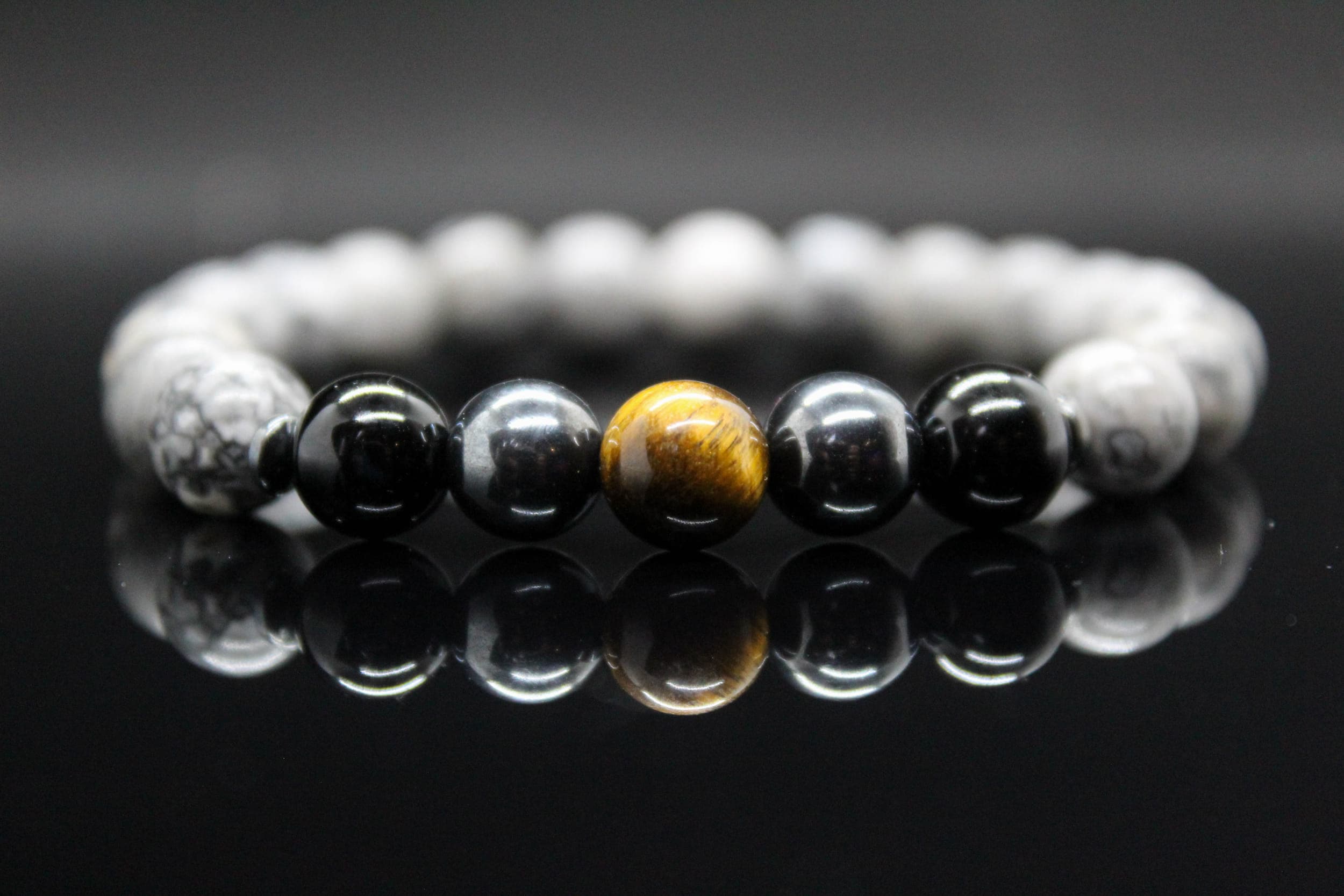
Energetic Balance Energy Bracelet
$24.00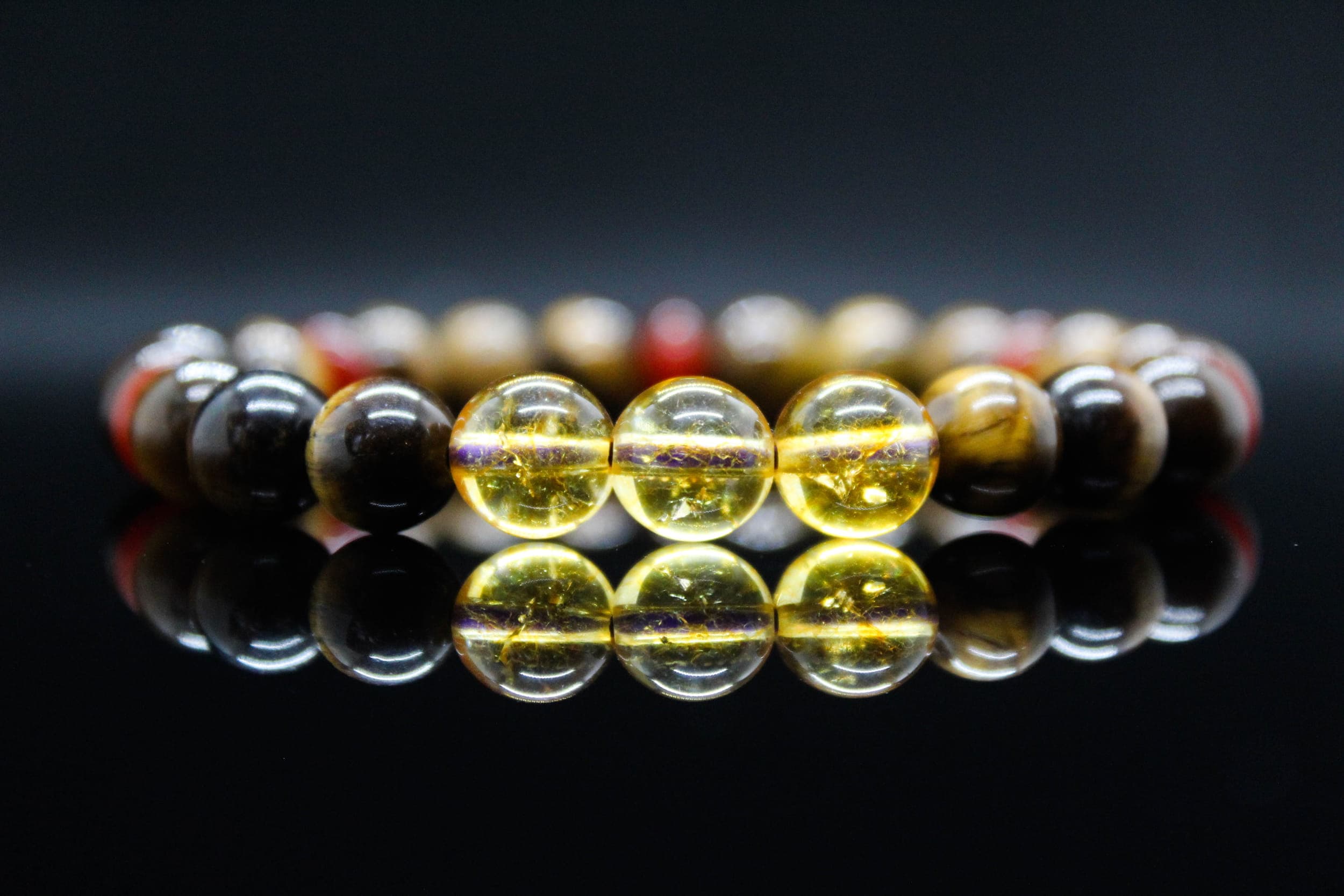
Focus Manifest Energy Bracelet
$24.00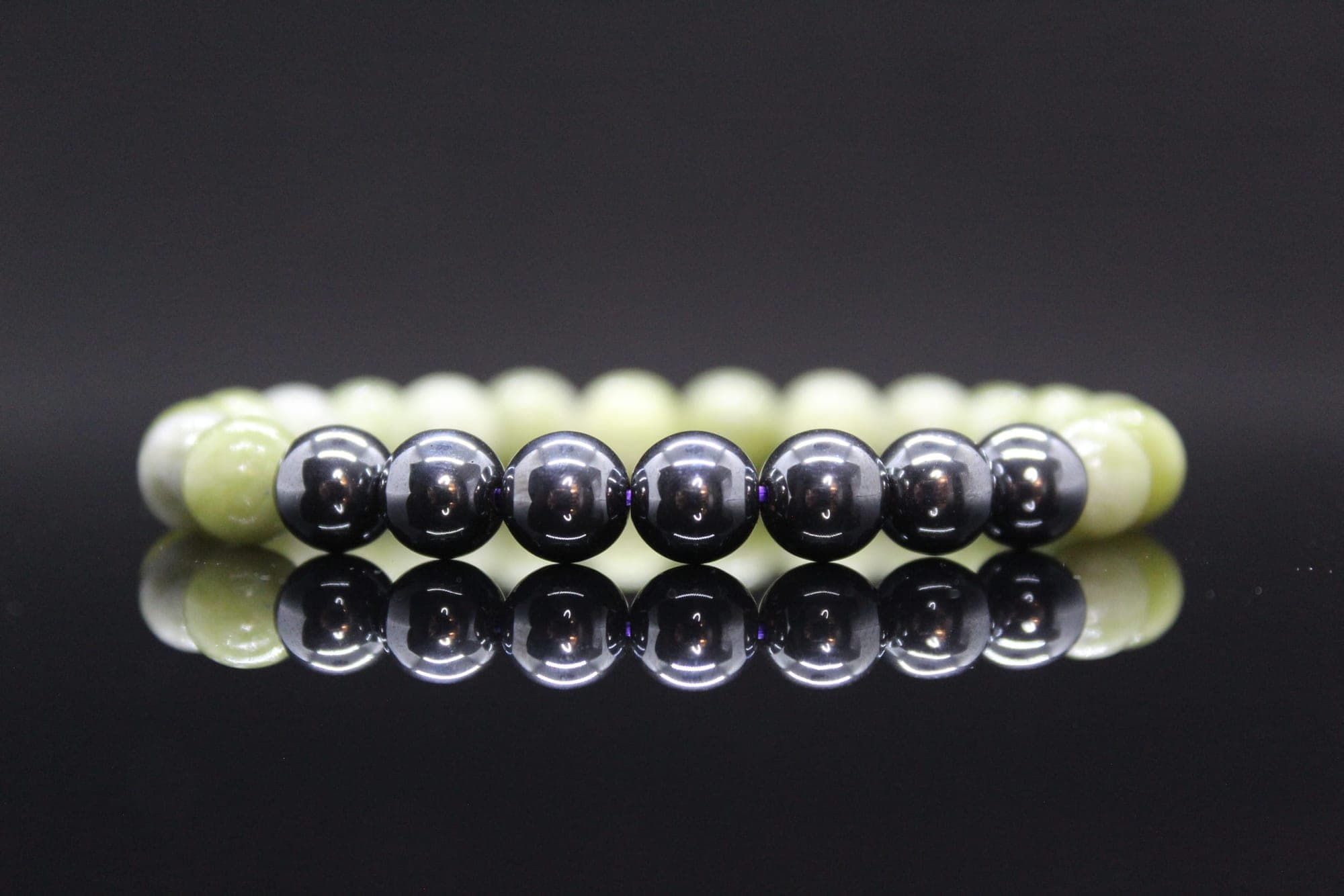
Life Force Energy Bracelet
$24.00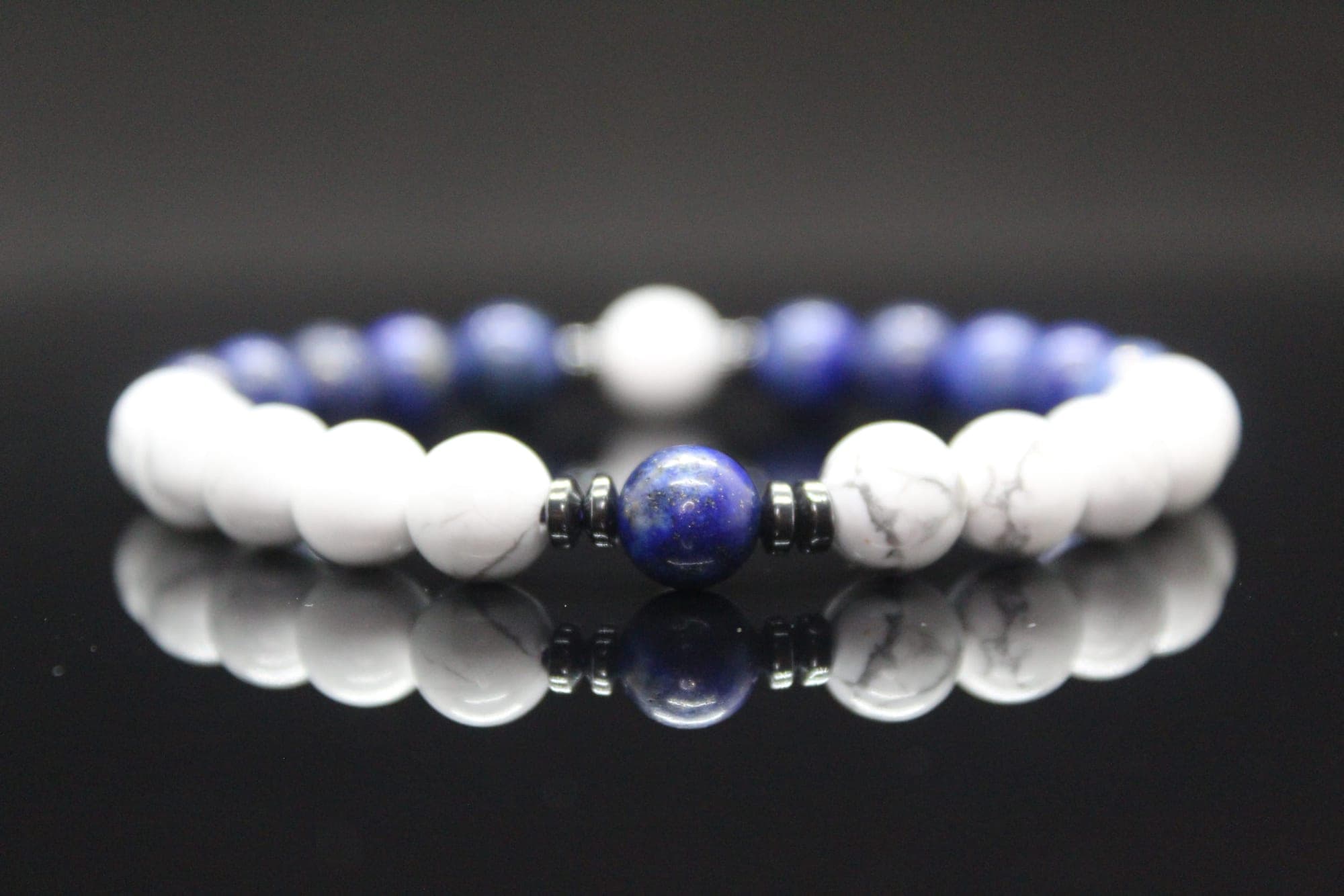
Divine Harmony Energy Bracelet
$24.00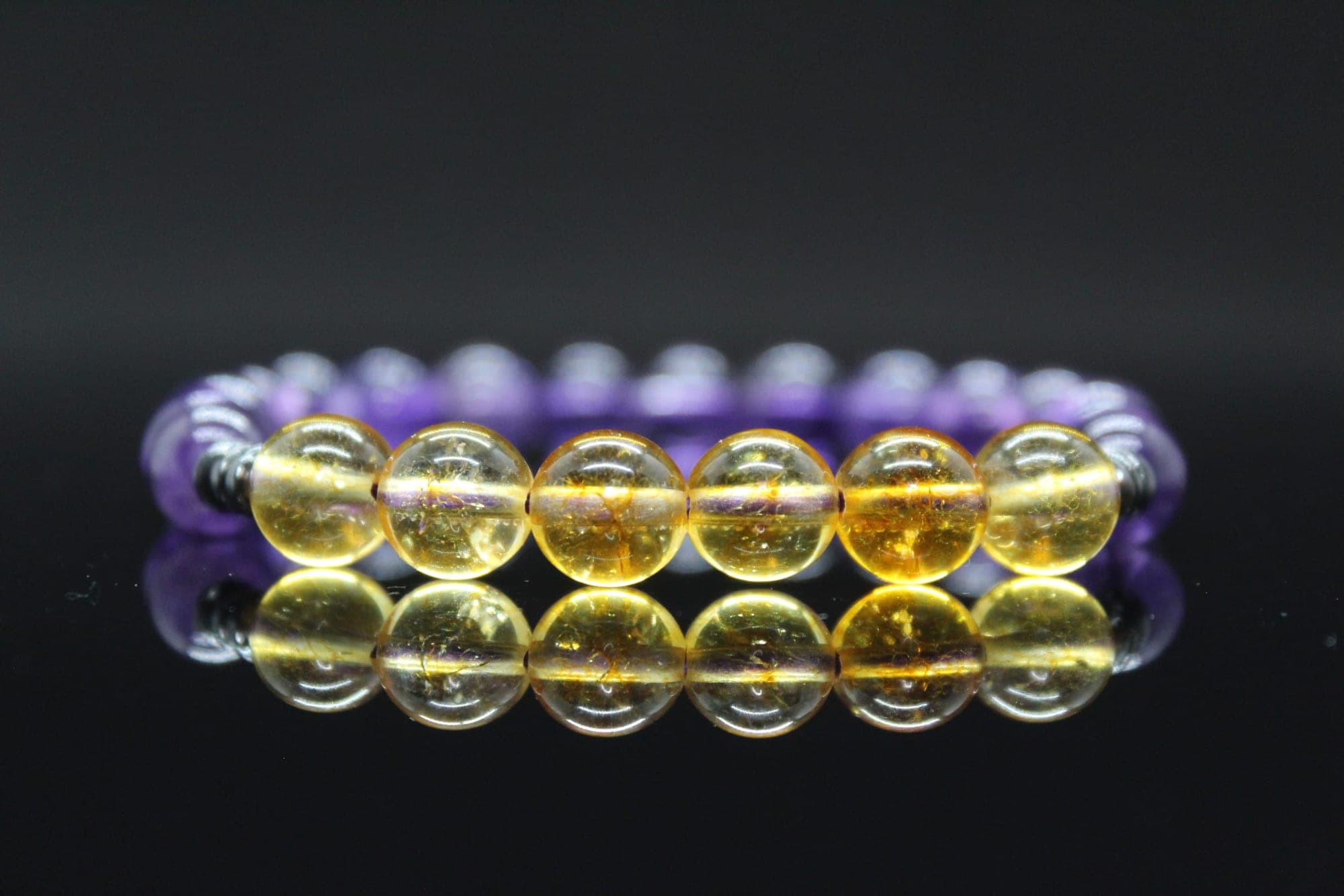
Clear Thoughts Energy Bracelet
$33.00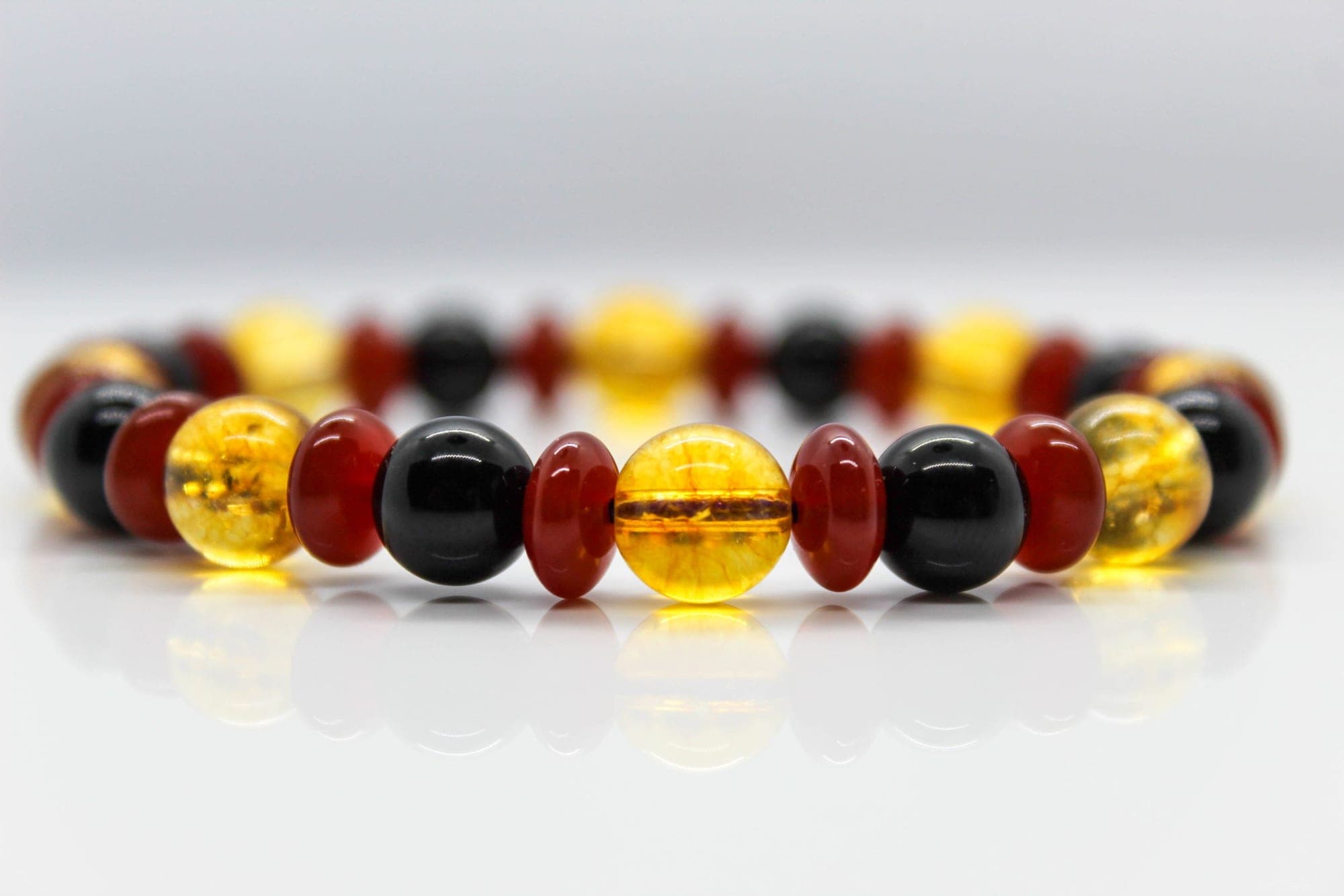
Protective Manifestation Energy Bracelet
$33.00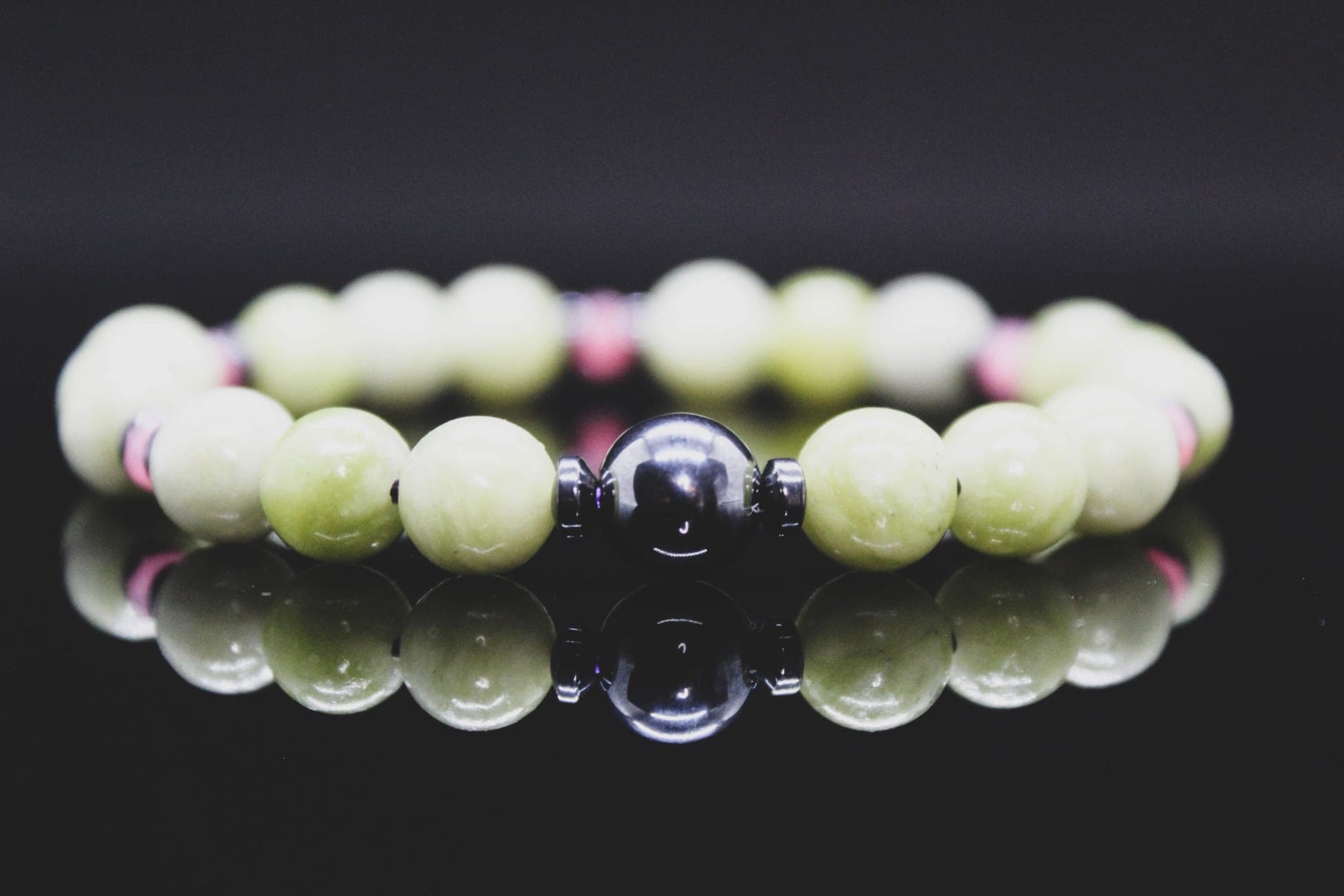
Grounding Love Energy Bracelet
$33.00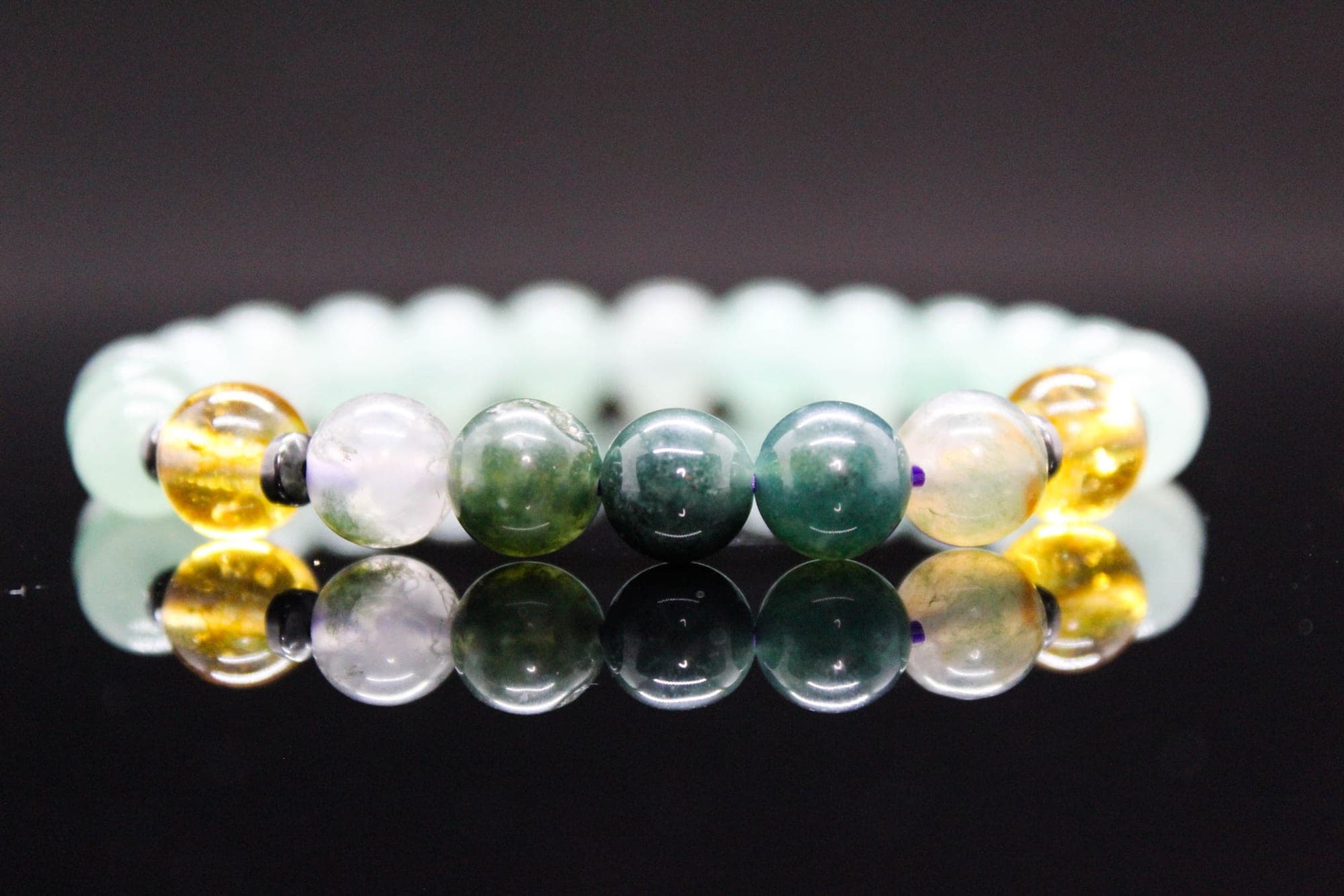
The Opulence Energy Bracelet
$33.00Pairings
Smoky Quartz Pairs Well With
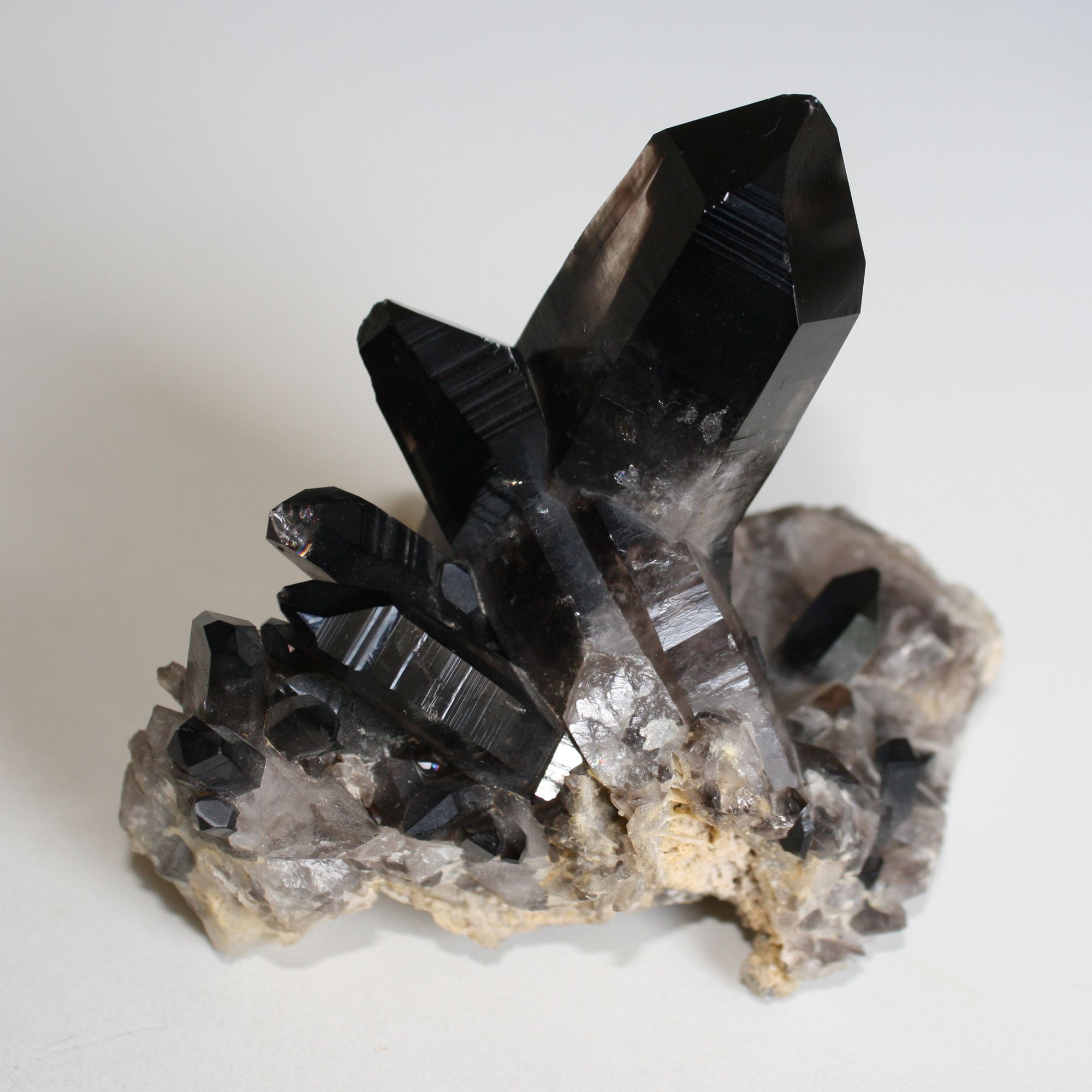
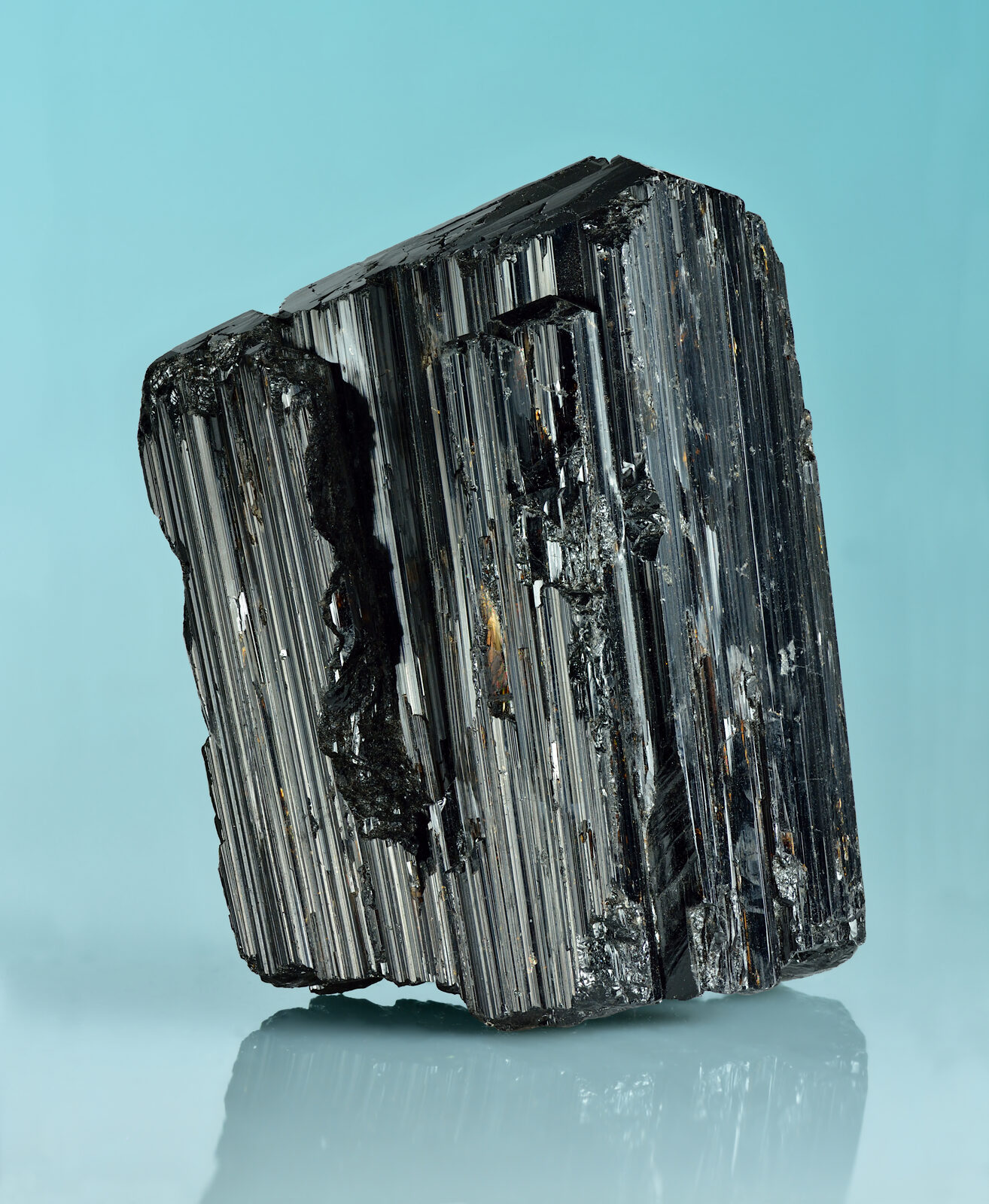
Smoky Quartz + Black Tourmaline
Nightmares, protection
Smoky quartz transmutes heavy energy rather than just blocking it; tourmaline blocks whatever's left over — one converts, the other repels.
Read more →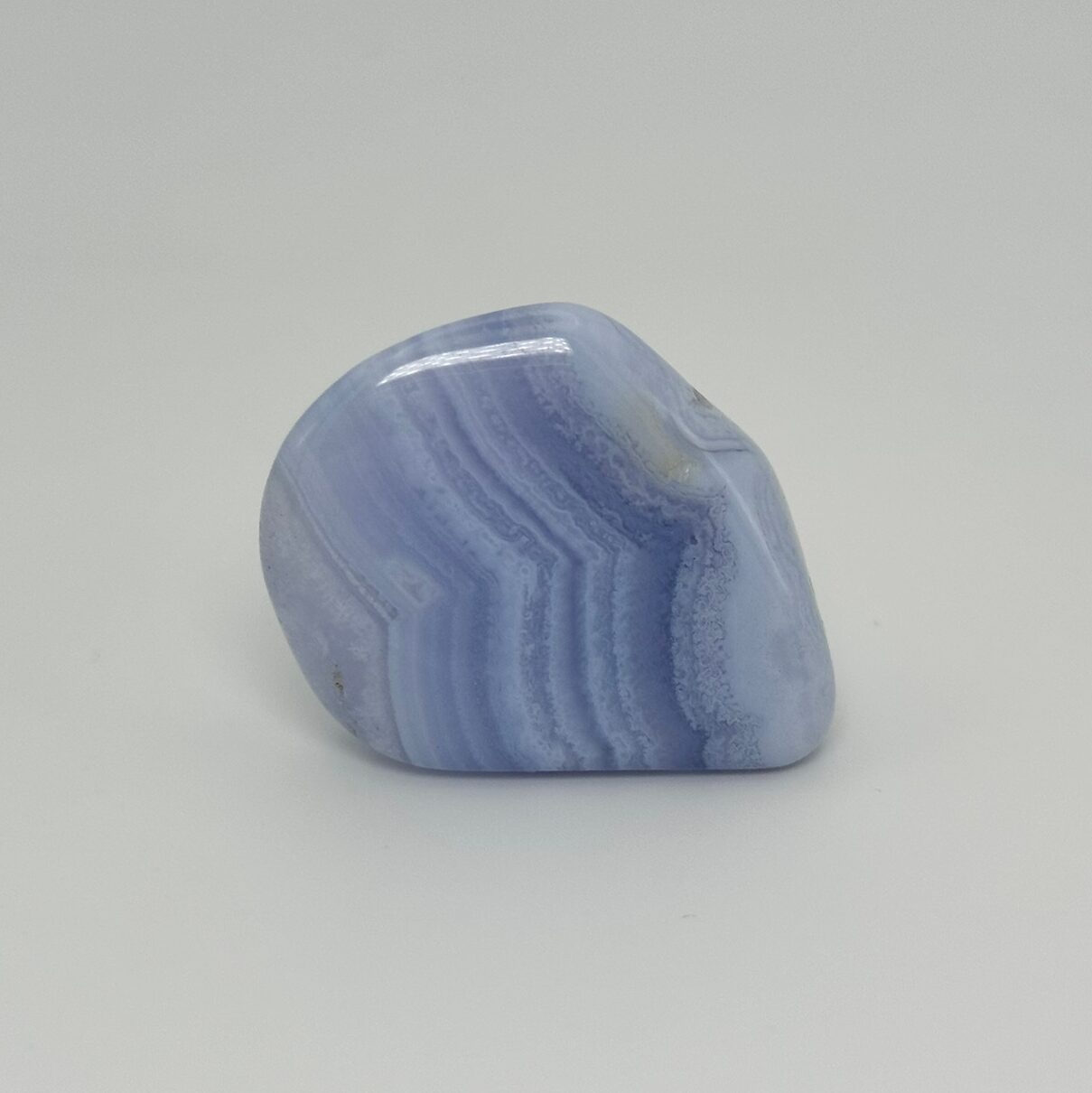
Blue Lace Agate + Smoky Quartz
Anxiety relief, breaking stuck patterns
Blue Lace Agate steadies the throat and the racing mind that comes with anxiety; smoky quartz draws out and releases whatever's kept you stuck. Breathe in the calm, exhale the release.
Read more →