Photo: Robert M. Lavinsky · CC BY-SA 3.0 · Wikimedia Commons
Lepidolite
Stone of Transition
Energy Focus
Meaning & uses
Lepidolite Meaning
Soft, flaky, and colored a gentle lilac-pink, Lepidolite has earned a reputation as one of the calmest stones in the directory — a reputation that, unusually, actually has a real mineral behind it.
What Is Lepidolite?
Lepidolite is a lithium-rich mica, part of the same mineral family as the more common muscovite and biotite mica, built from thin, stacked silicate sheets that split apart easily along flat planes — the same structural trait that makes all micas feel slightly flaky or scaly to the touch. Its name comes from the Greek lepidos, meaning "scale," given by German chemist Martin Heinrich Klaproth in 1792, decades before lithium itself was even identified as an element. Lepidolite's lilac-to-pink color comes from manganese worked into its structure as it formed, the same chromophore responsible for the pink in Rhodochrosite and Rhodonite.
That lithium content is real geology, not folklore: Lepidolite was one of the practical ore minerals mined for industrial lithium extraction through much of the 20th century, alongside spodumene and petalite (the mineral lithium was first isolated from, by Swedish chemist Johan August Arfwedson in 1817). It's found in lithium-rich granite pegmatites — notably in Brazil, Madagascar, California's Pala district, and Portugal's Alvarroes mine.

A Stone With a History
Lepidolite doesn't carry an ancient carving or amulet tradition — as a soft, flaky mica, it was never a practical material for jewelry or tools the way tougher stones were, and it wasn't formally identified as its own mineral until the late 18th century. Its real history is industrial and scientific rather than ceremonial: for much of the 1900s, Lepidolite deposits were mined specifically as a lithium source, feeding early 20th-century glass, ceramics, and eventually battery production before brine extraction and spodumene largely took over as lithium's primary commercial sources.

Meaning and Symbolism
Lepidolite's "Stone of Transition" reputation leans heavily on its lithium content, and it's worth being precise about what that actually means. Lithium is a genuine mood-stabilizing element used in pharmaceutical medicine, and crystal folklore has long drawn a line from that fact to Lepidolite's traditional reputation for calm. But carrying or wearing the mineral doesn't deliver a therapeutic dose the way medication does — the connection is traditional and symbolic, not medical, and it's worth treating it that way rather than as a substitute for care that actually needs it.
With that said, Lepidolite's traditional meaning is consistent and specific: less about sudden calm and more about steadying a mind moving through change, holding emotional ground during a transition rather than resisting it.
Carried or worn to
- Ease anxiety and settle a racing mind
- Support restful, uninterrupted sleep
- Provide steadiness during major life transitions
- Encourage emotional balance day to day
Chakra, Zodiac & Element
Lepidolite is tied to both the Heart and Third Eye Chakras — Heart for emotional steadiness, Third Eye for the clarity that's supposed to come with it, together framing calm as something achieved through insight rather than avoidance. Its Water element reflects that same emotional, flowing quality.
Astrologically it's linked to Libra, a sign defined by balance — a direct match for a stone whose whole reputation is finding equilibrium during change rather than before or after it.
How to Use and Care for Lepidolite
At just 2.5–3 on the Mohs scale, Lepidolite is one of the softest stones in this entire directory — barely harder than a fingernail, and its mica structure means it can flake or delaminate under pressure the way tougher stones simply won't. It's not a stone for rings or daily-wear bracelets; tumbled palm stones, protected pendants, or display specimens suit it far better.
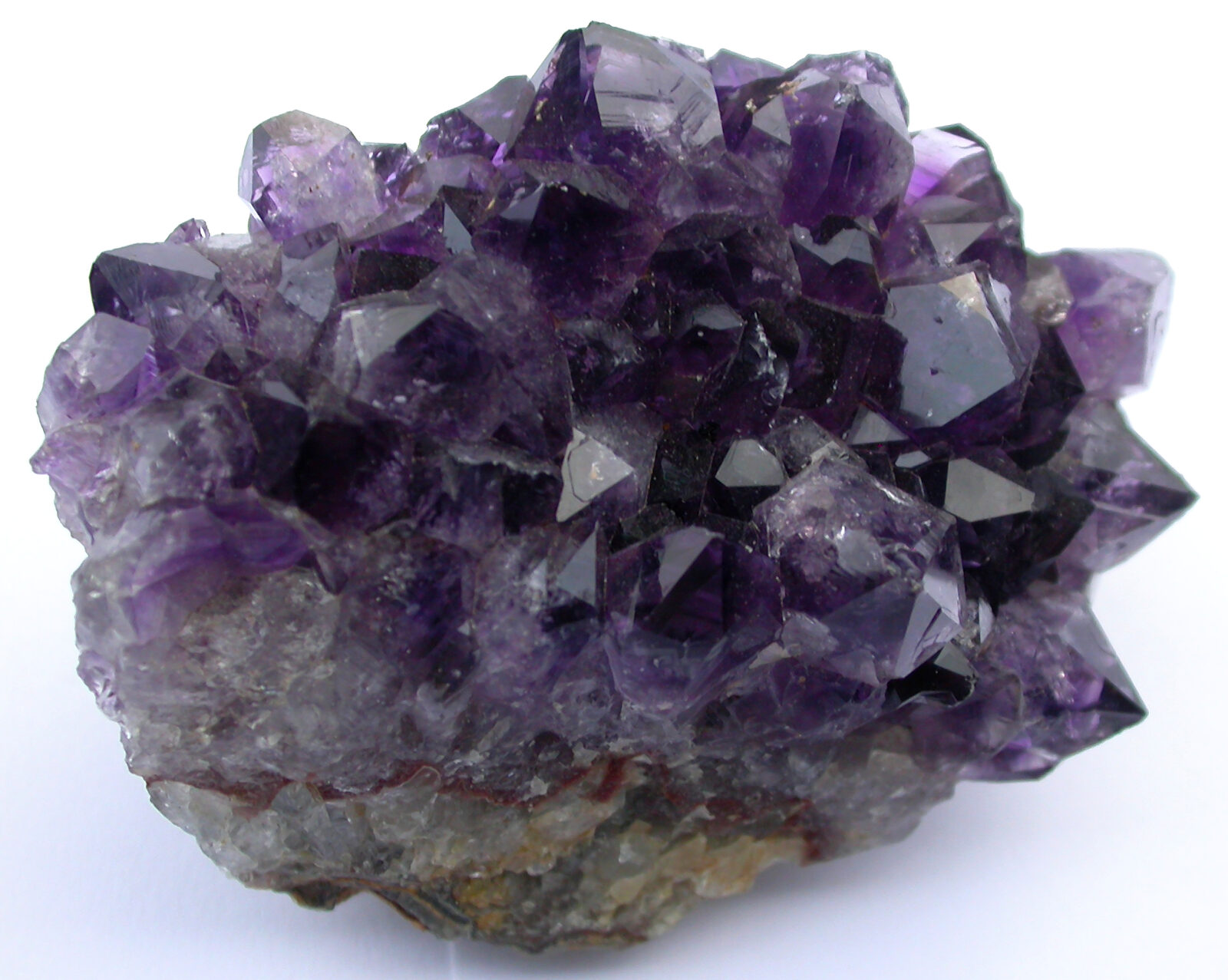
Water care needs the same caution: skip soaking entirely, since moisture can work its way between the mineral's thin layers over time. A soft, dry cloth is the safer way to keep it clean. Lepidolite pairs especially well with Amethyst for sleep and anxiety — Amethyst quiets a racing mind while Lepidolite settles the body underneath it; see our Crystal Combinations guide for more on why the pairing works.
Frequently Asked Questions
What gives Lepidolite its purple-pink color?
Is it true that Lepidolite contains lithium?
Is Lepidolite safe to wear every day?
Can Lepidolite get wet?
What chakra is Lepidolite associated with?
Does Lepidolite work like lithium medication?
A gentle, flaky stone that asks to be handled carefully — inside and out.
Shop by energy
Bracelets for the Heart and Third Eye chakras
We don't have a Lepidolite bracelet yet. These share its Heart or Third Eye chakra energy.
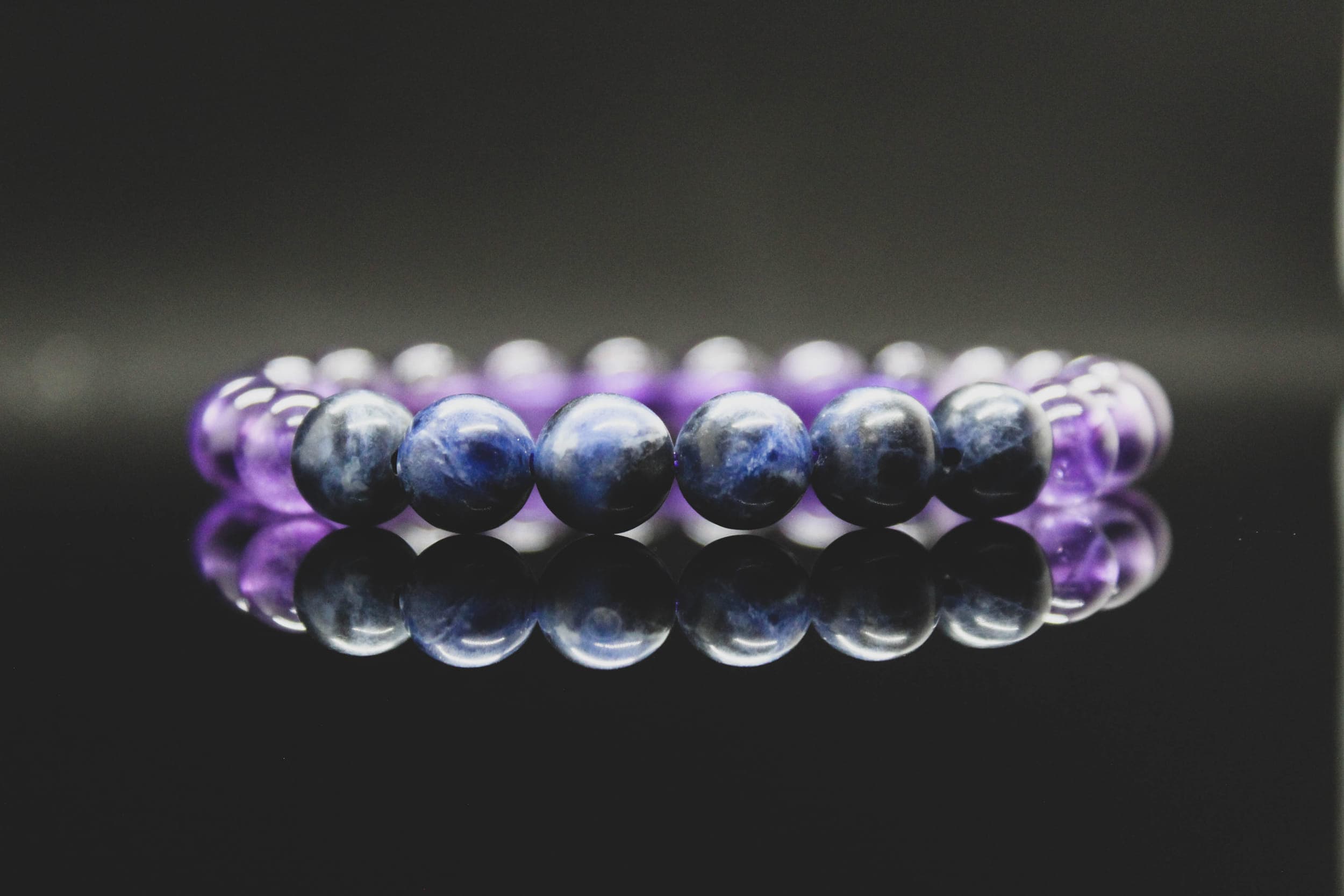
Creative Balance Energy Bracelet
$24.00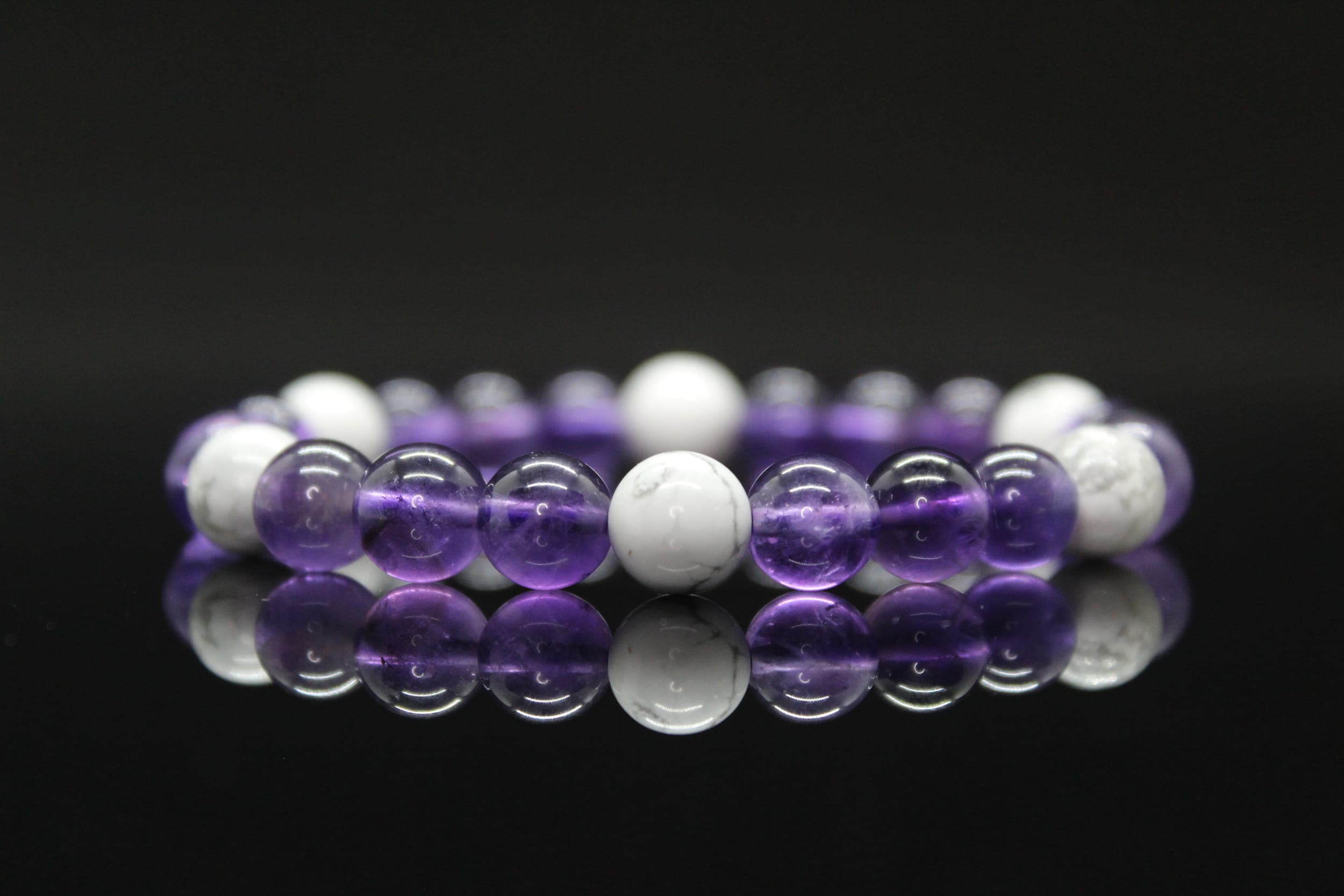
Higher Self Energy Bracelet
$24.00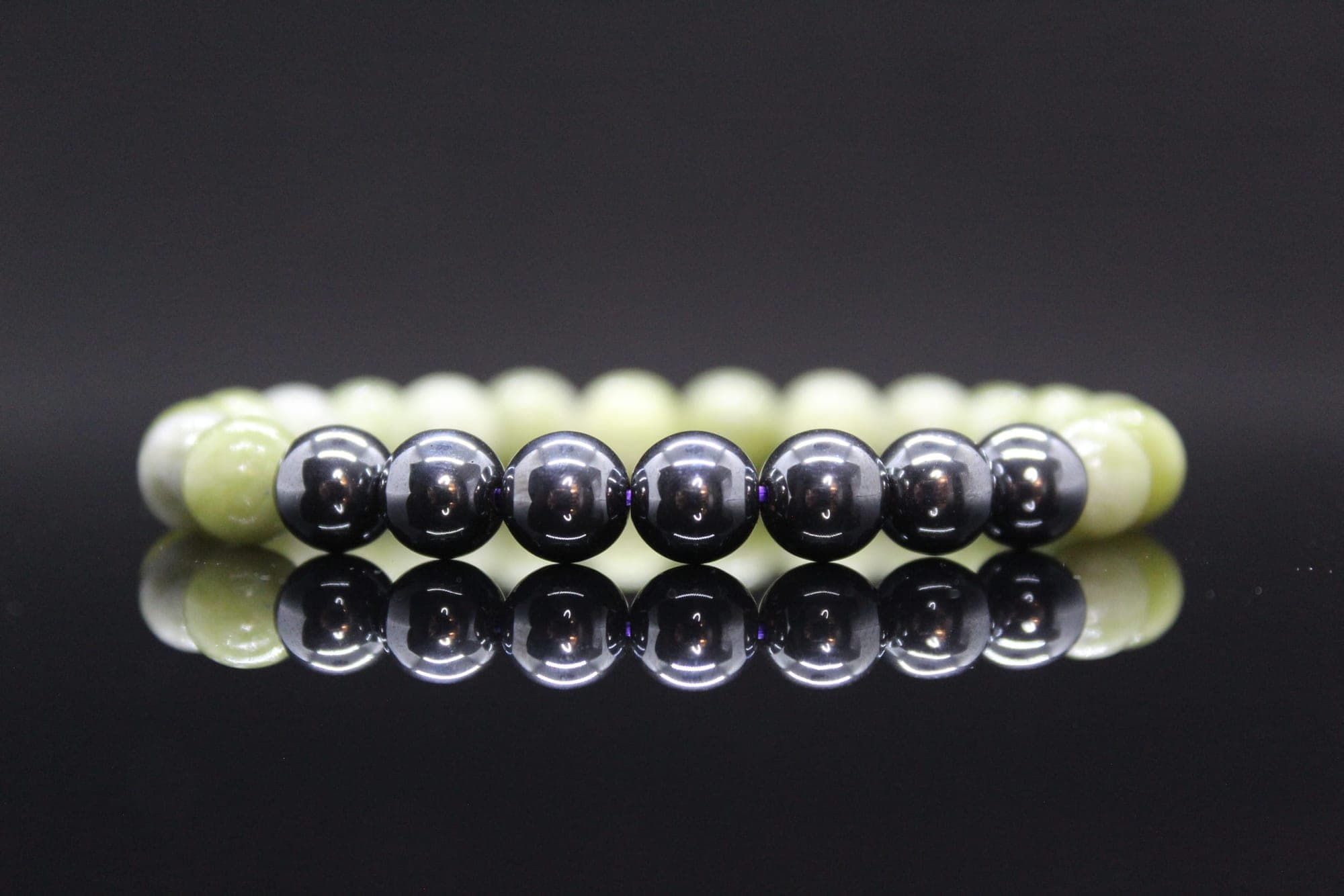
Life Force Energy Bracelet
$24.00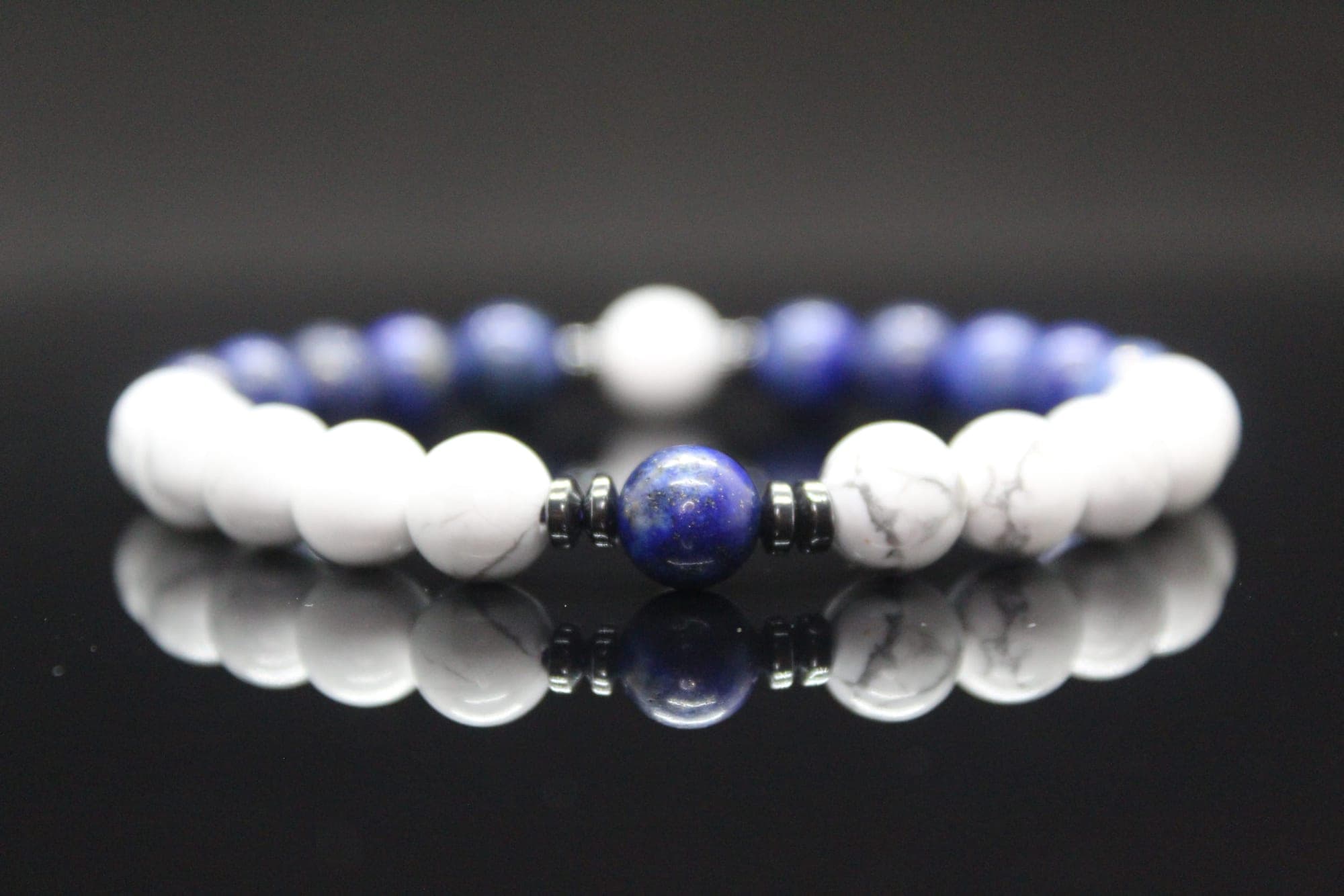
Divine Harmony Energy Bracelet
$24.00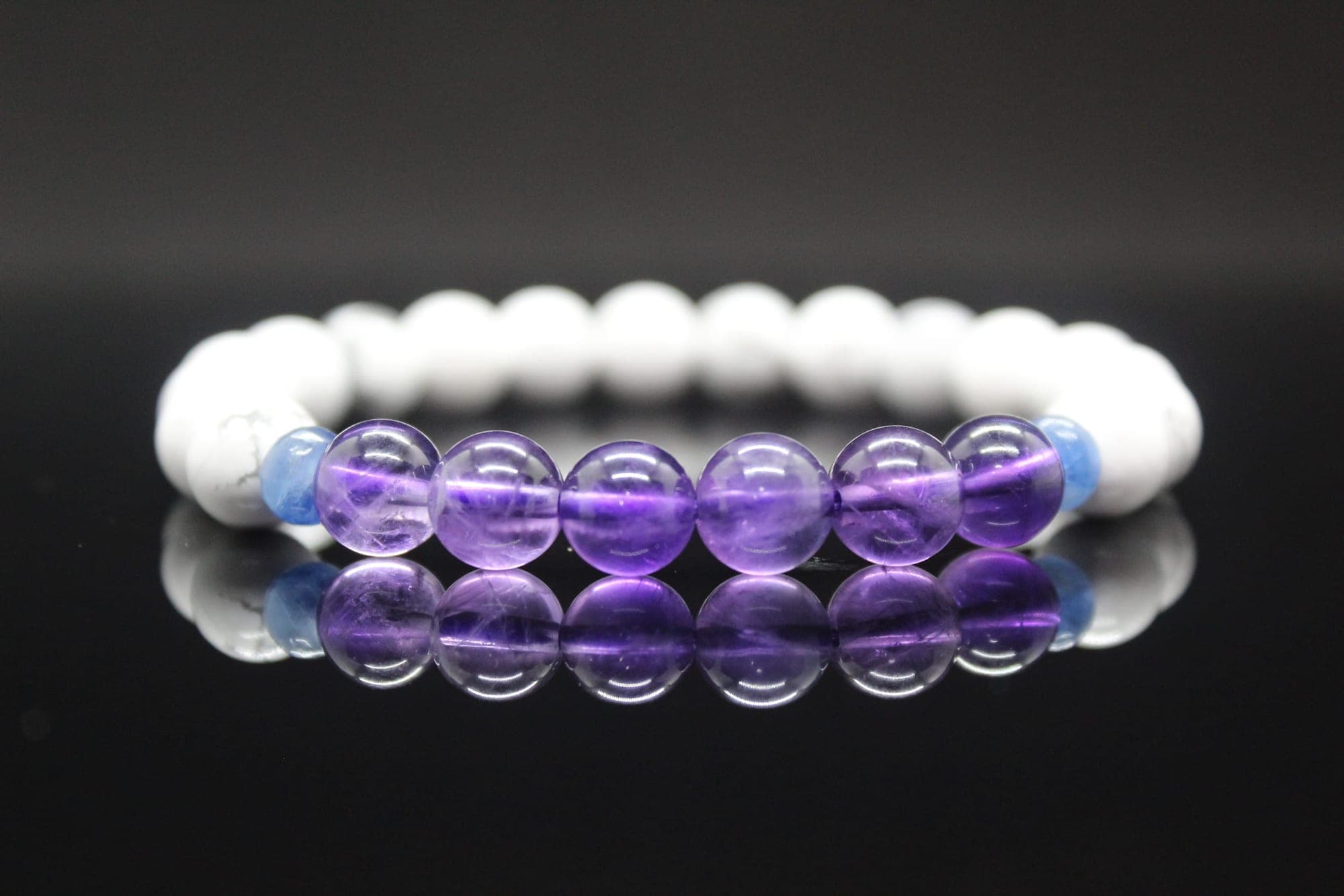
The Crown Energy Bracelet
$24.00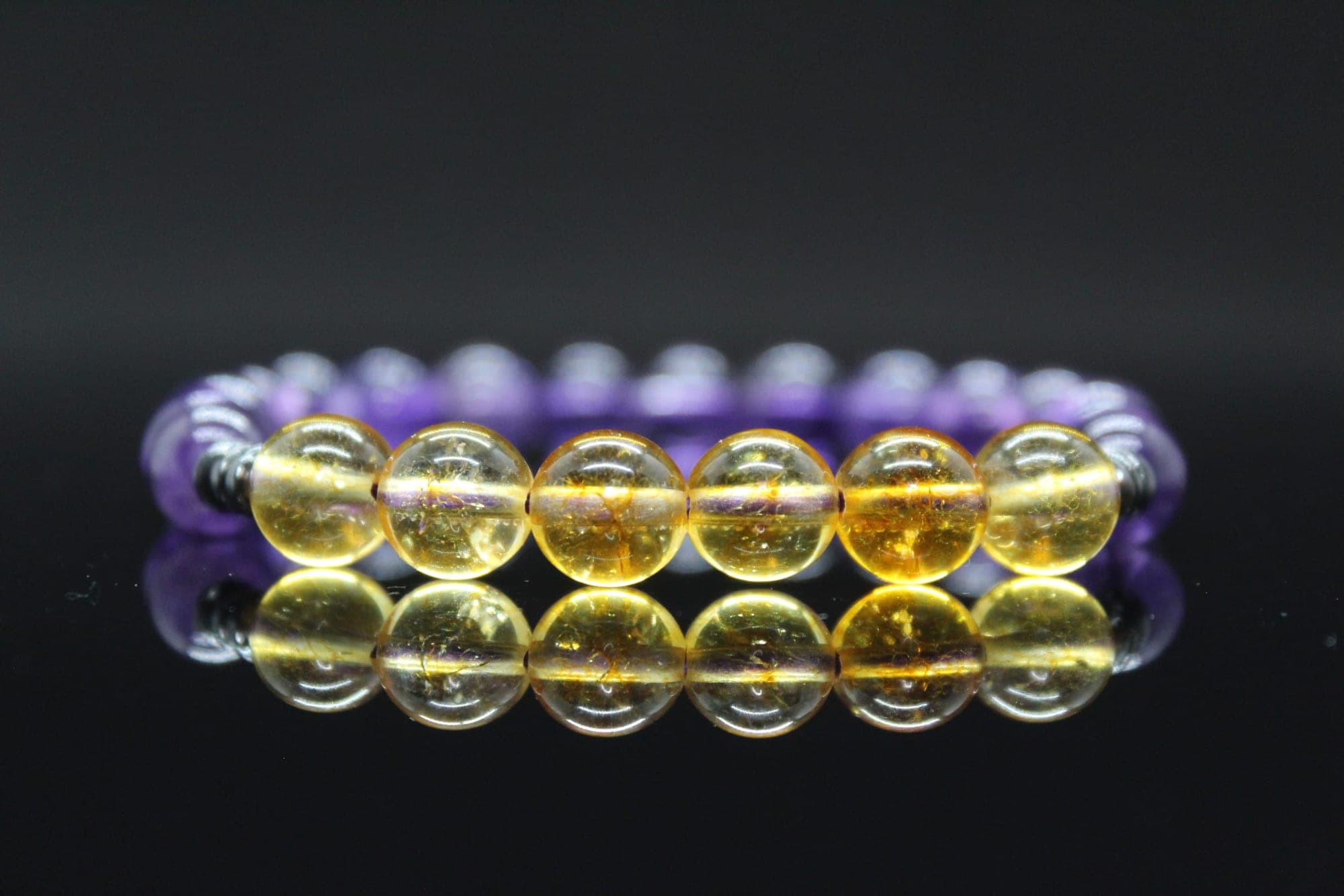
Clear Thoughts Energy Bracelet
$33.00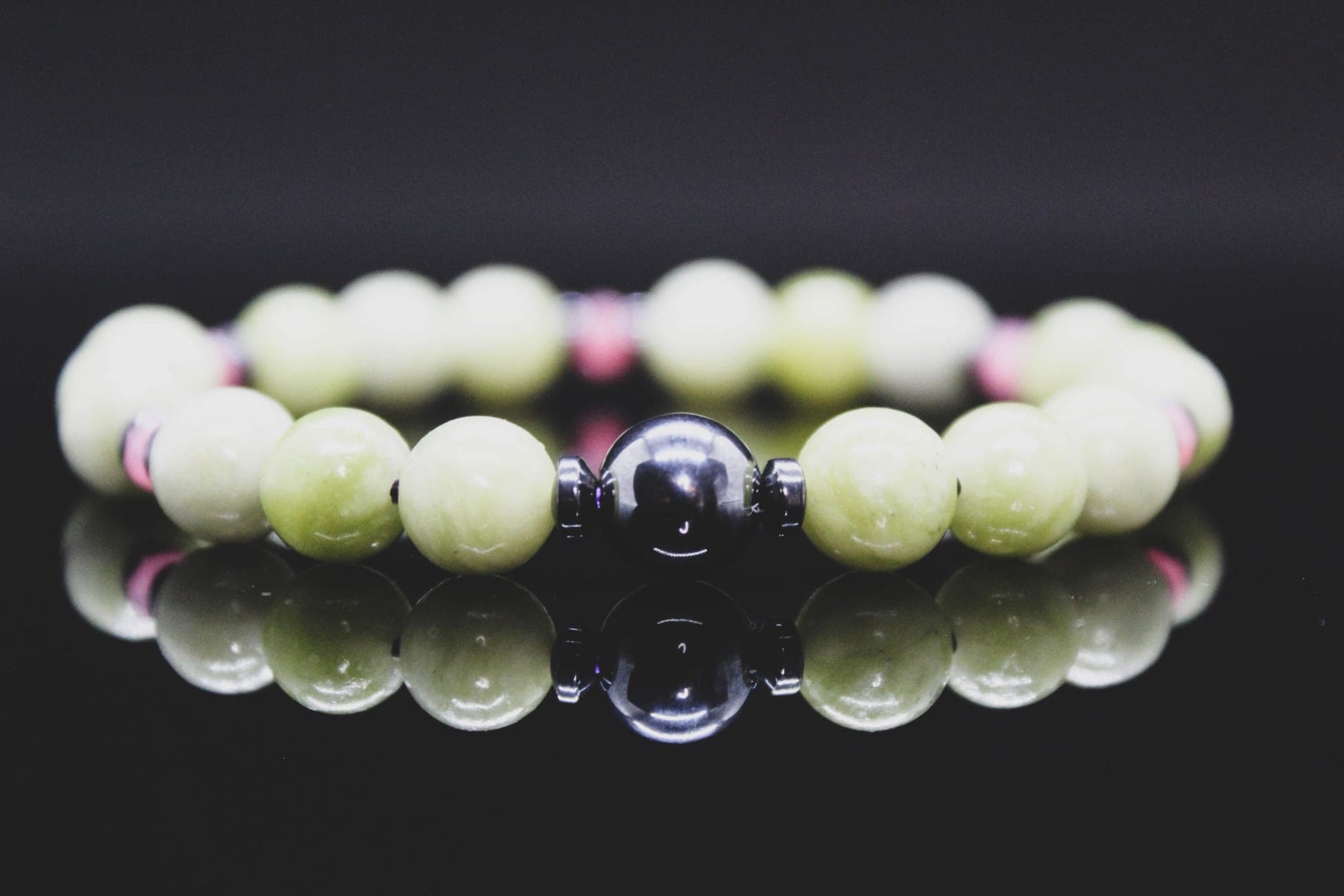
Grounding Love Energy Bracelet
$33.00