Photo: James St. John · CC BY 2.0 · Wikimedia Commons
Amber
Stone of Ancient Sunlight
Energy Focus
Meaning & uses
Amber Meaning
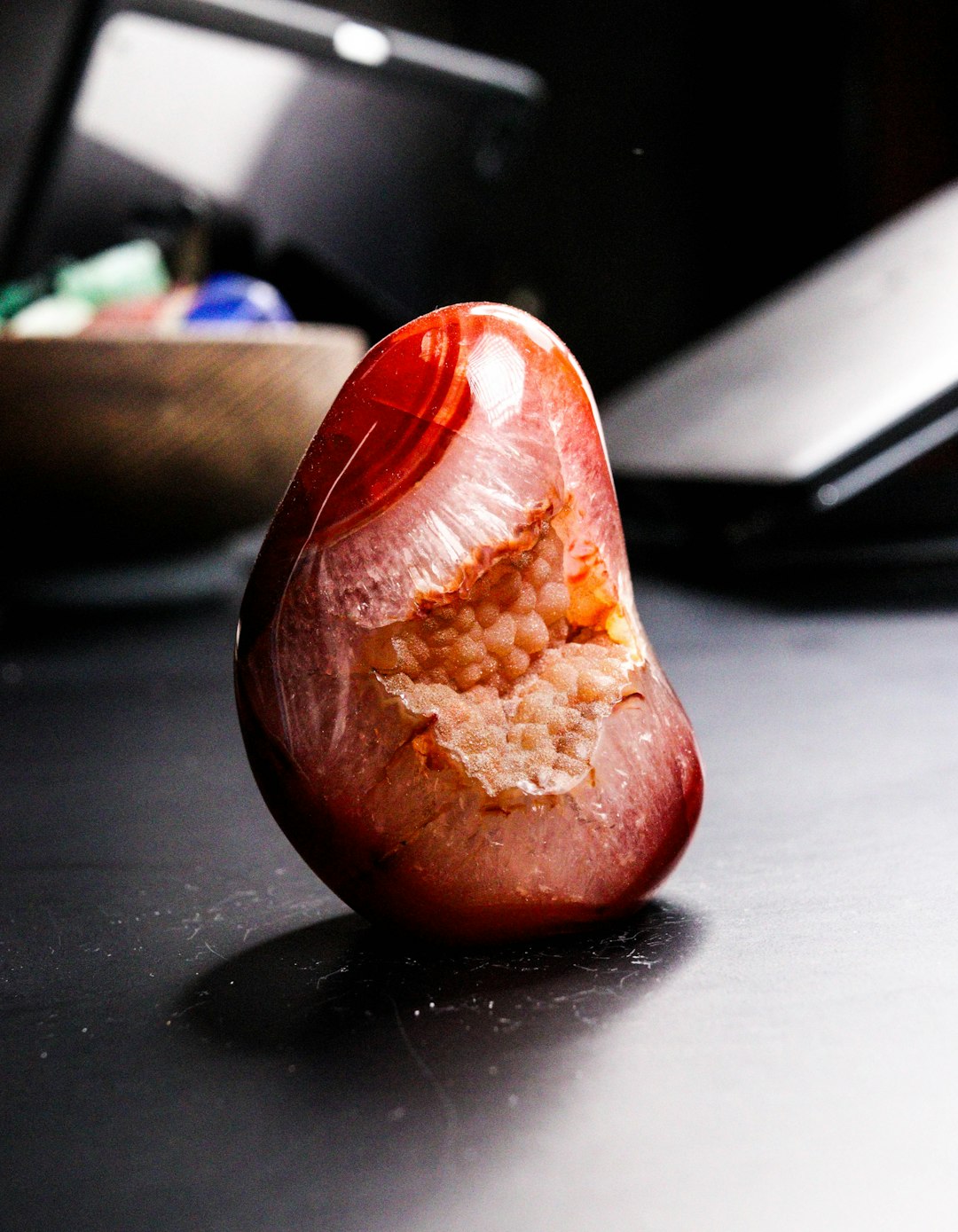
Warm, golden, and older than almost anything else in this directory, Amber isn't a mineral at all — it's fossilized tree resin, and the small worlds sometimes trapped inside it make it one of the closest things to a time machine any stone in this collection offers.
What Is Amber?
Amber begins as tree resin, a sticky secretion certain trees, most famously ancient conifers, produce in response to injury. Buried and left undisturbed for a very long time, that resin slowly loses its volatile compounds and its organic molecules cross-link into a stable, hardened state. The timeline matters: resin that's only partially transformed, typically under a million years old, is called copal — softer, more chemically reactive, and commonly sold as amber even though it isn't quite the real thing yet. True amber generally means resin that's had millions of years to finish the process.
Because it started as a sticky liquid, Amber is uniquely good at trapping and preserving whatever touched it before it hardened — insects, spiders, plant fragments, even occasional small vertebrates, frozen in place in extraordinary detail. Amber inclusions are a genuine, major source of paleontological data about ancient ecosystems; contrary to popular fiction, though, actual DNA doesn't survive anywhere near that long, even inside amber.
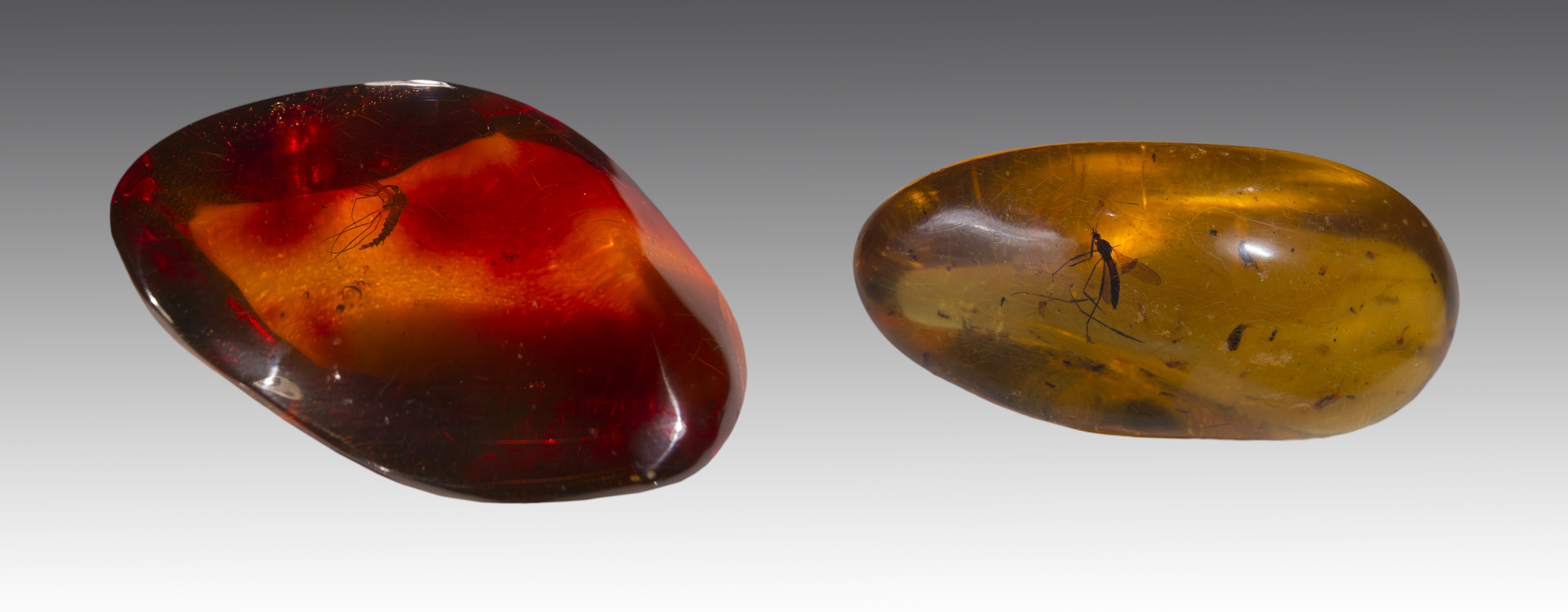
Most Amber comes from three major sources, each geologically distinct: the Baltic region (Poland, Russia's Kaliningrad area, and neighbors), source of roughly the majority of the world's supply, formed around 44 million years ago; the Dominican Republic, known for exceptionally clear, inclusion-rich material and a rare variety that fluoresces blue in sunlight; and Myanmar, whose amber is dramatically older, around 99 million years, and scientifically significant enough that it's yielded genuinely startling fossils, including preserved dinosaur feather fragments. Myanmar's amber trade has also become a well-documented ethical concern in recent years, mined in a region affected by armed conflict — worth asking about when sourcing matters to you.
A Stone With a History
Amber may be the single stone in this directory with the strangest linguistic legacy: the modern word "electricity" comes directly from it. The ancient Greeks called it elektron, and observed that rubbing it with cloth caused it to attract light objects like feathers and straw — the earliest documented description of static electricity in Western science, made by Thales of Miletus around 600 BCE, more than two thousand years before anyone understood what electricity actually was.
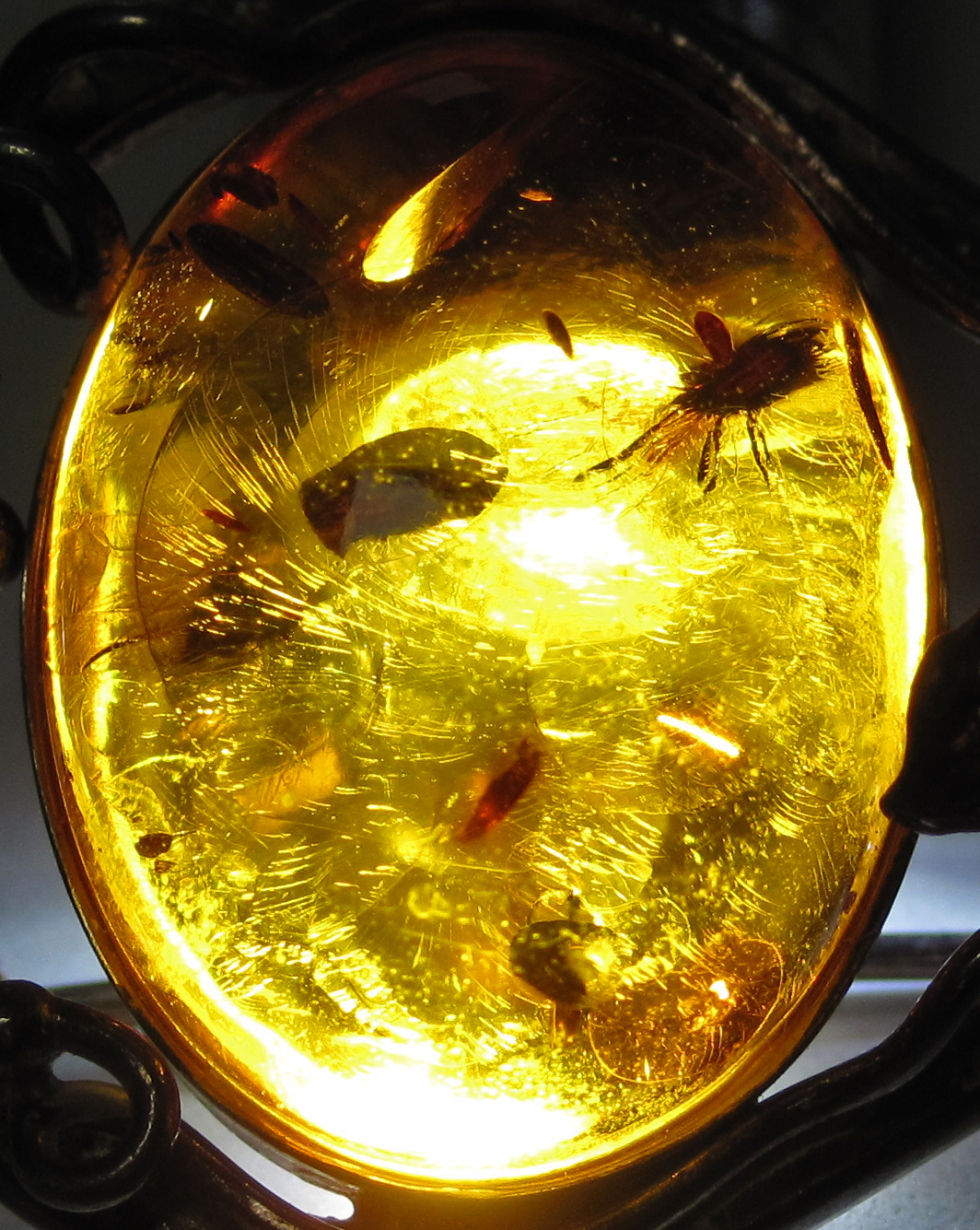
Baltic Amber specifically moved south along the Amber Road, a trade network active for millennia that carried it over a thousand miles to the Mediterranean world, connecting Northern Europe to Greece, Rome, and Egypt long before most other major ancient trade routes existed. The Roman naturalist Pliny the Elder wrote about it at length, correctly identifying it as fossilized resin rather than the more mythical explanations some of his contemporaries preferred.
Amber's most famous single object, though, is the Amber Room: an entire chamber paneled in amber, gold leaf, and mirrors, gifted by Prussia's King Friedrich Wilhelm I to Russia's Peter the Great in 1716 and installed at the Catherine Palace outside St. Petersburg. Nazi forces looted and dismantled it in 1941; it vanished during the war and has never been found, making its fate one of art history's most famous unsolved mysteries. A painstaking reconstruction, built from historical photographs, was completed in 2003 and remains on display today.
Meaning and Symbolism
Amber's meaning follows naturally from what it physically is: sunlight and warmth, quite literally preserved and carried forward across an almost unimaginable span of time. That combination, ancient age paired with a warm, golden glow, has given it a long-standing reputation for protection and grounded positivity rather than intensity or transformation.
Carried or worn to
- Invite warmth, positivity, and protection
- Ground the body during stress or uncertainty
- Support a settled, calm state of mind
- Connect to a sense of continuity and ancient wisdom
Chakra, Zodiac & Element
Amber is tied to both the Solar Plexus and Sacral Chakras, its warm golden-orange color matching this directory's usual convention for confidence and grounded vitality. Its Fire and Earth elements reflect the same balance — Fire for its sunlit color, Earth for its long, buried, fossilized origin.
Astrologically it's linked to Leo, a sun-ruled sign that matches Amber's warm color and steady confidence directly.
How to Use and Care for Amber
Amber needs real care, more than most stones in this directory. At just 2–2.5 on the Mohs scale, it's genuinely soft and easily scratched, so it suits pendants and earrings far better than rings that take daily knocks. It's also sensitive to heat, solvents, and alcohol-based products like perfume, which can dull or damage its surface — apply cosmetics before putting Amber on, not after. Because it's fossilized resin rather than mineral, it's also combustible: keep it well away from open flame.
That same flammability is actually a practical authentication tool. A heated needle touched briefly to a hidden spot on real Amber releases a faint, pine-like resinous scent; imitation resin or plastic smells sharply chemical instead — a simple test worth knowing given how often copal and plastic are sold as genuine Amber.
One specific product is worth a direct warning: Amber teething necklaces, marketed for babies on the claim that skin contact releases pain-relieving succinic acid, have been specifically flagged by pediatric health authorities as unsafe. There's no credible evidence the claimed effect works, and loose necklaces on infants carry real strangulation and choking risks. Skip these regardless of the folklore.
Frequently Asked Questions
Is Amber a crystal or a mineral?
What's the difference between Amber and copal?
Why does amber sometimes contain insects?
Are Amber teething necklaces safe for babies?
Is Amber safe to wear every day?
What chakra is Amber associated with?
A piece of ancient sunlight, patient enough to wait millions of years just to be held.
Shop by energy
Bracelets for the Solar Plexus and Sacral chakras
We don't have an Amber bracelet yet. These share its Solar Plexus or Sacral chakra energy.
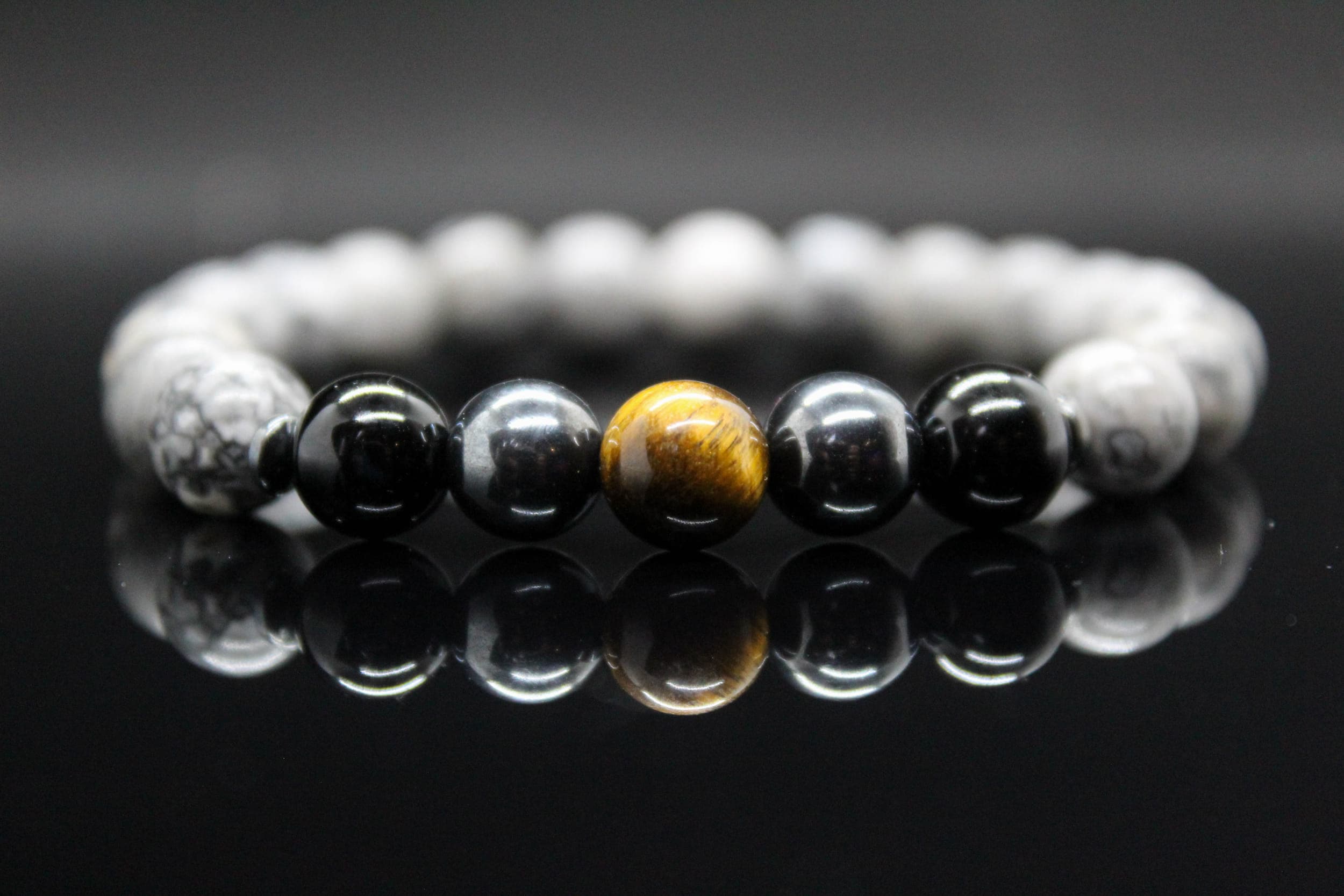
Energetic Balance Energy Bracelet
$24.00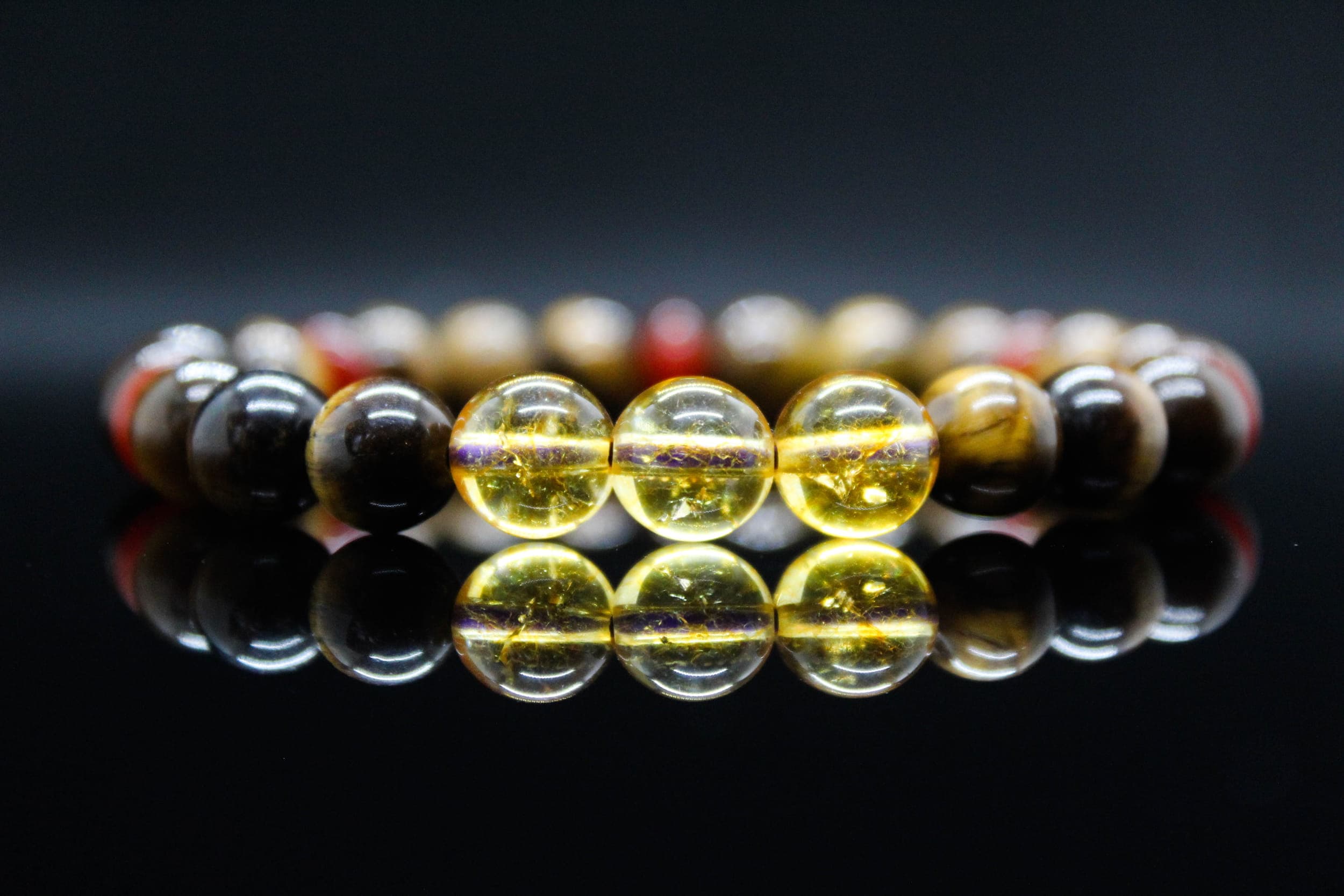
Focus Manifest Energy Bracelet
$24.00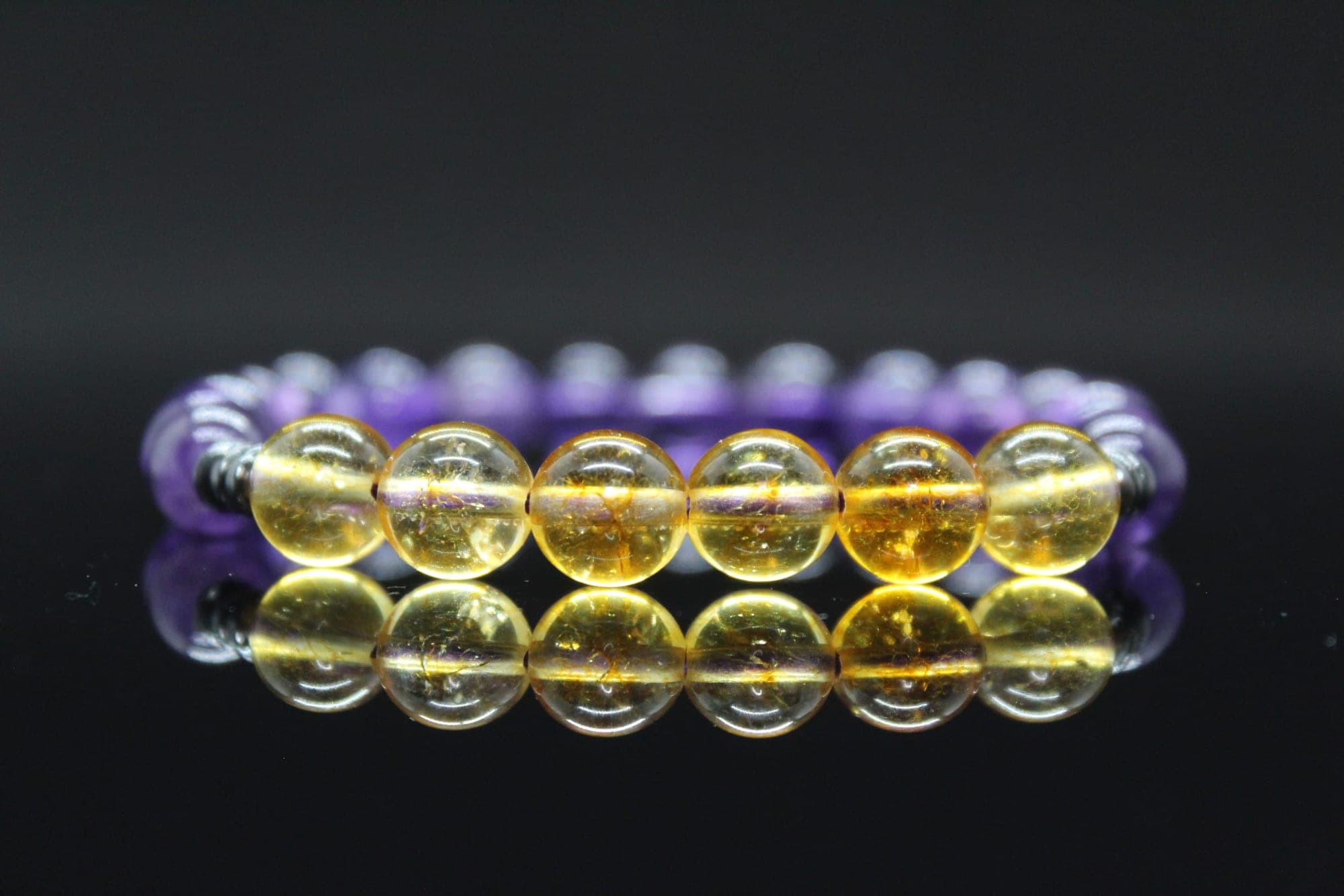
Clear Thoughts Energy Bracelet
$33.00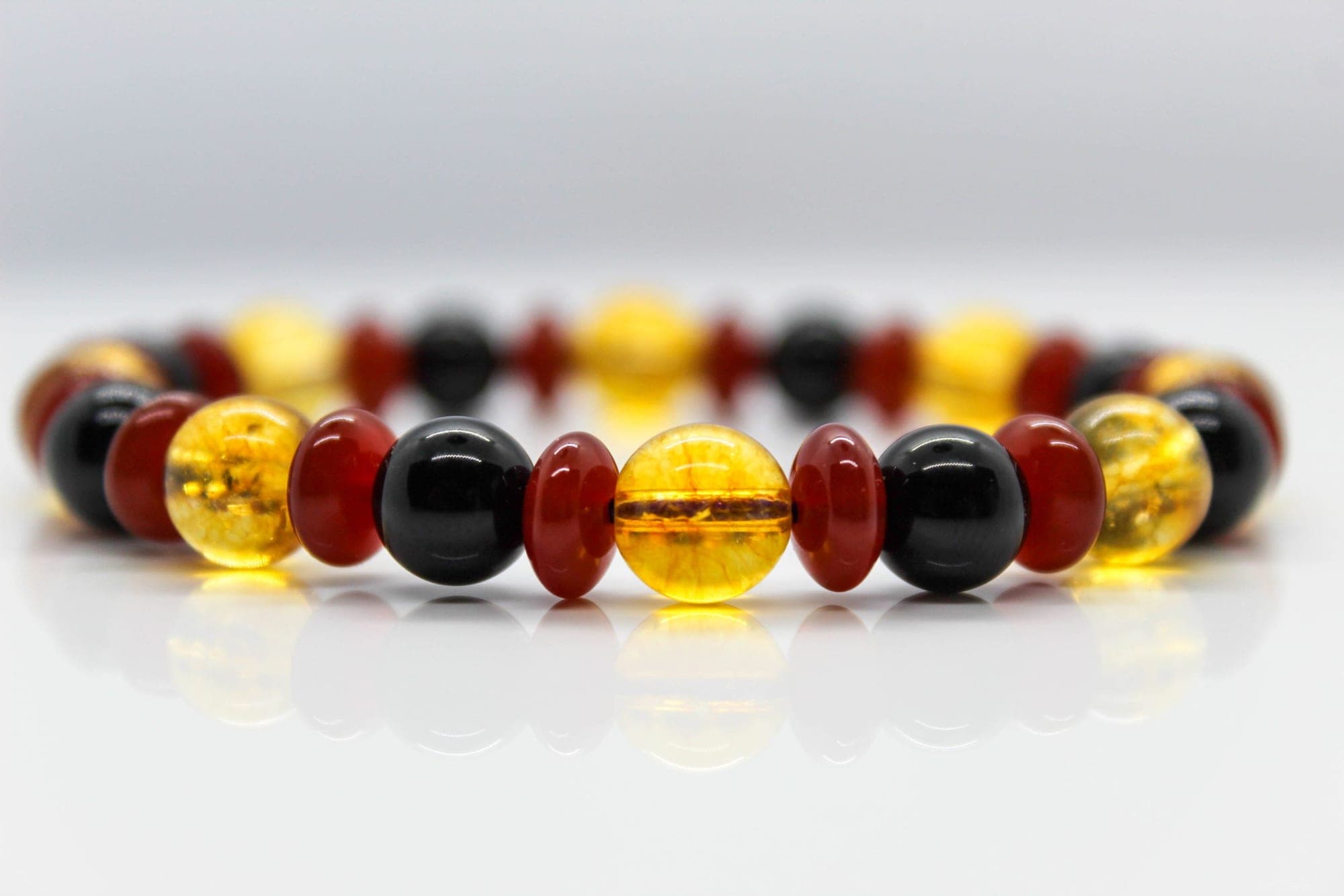
Protective Manifestation Energy Bracelet
$33.00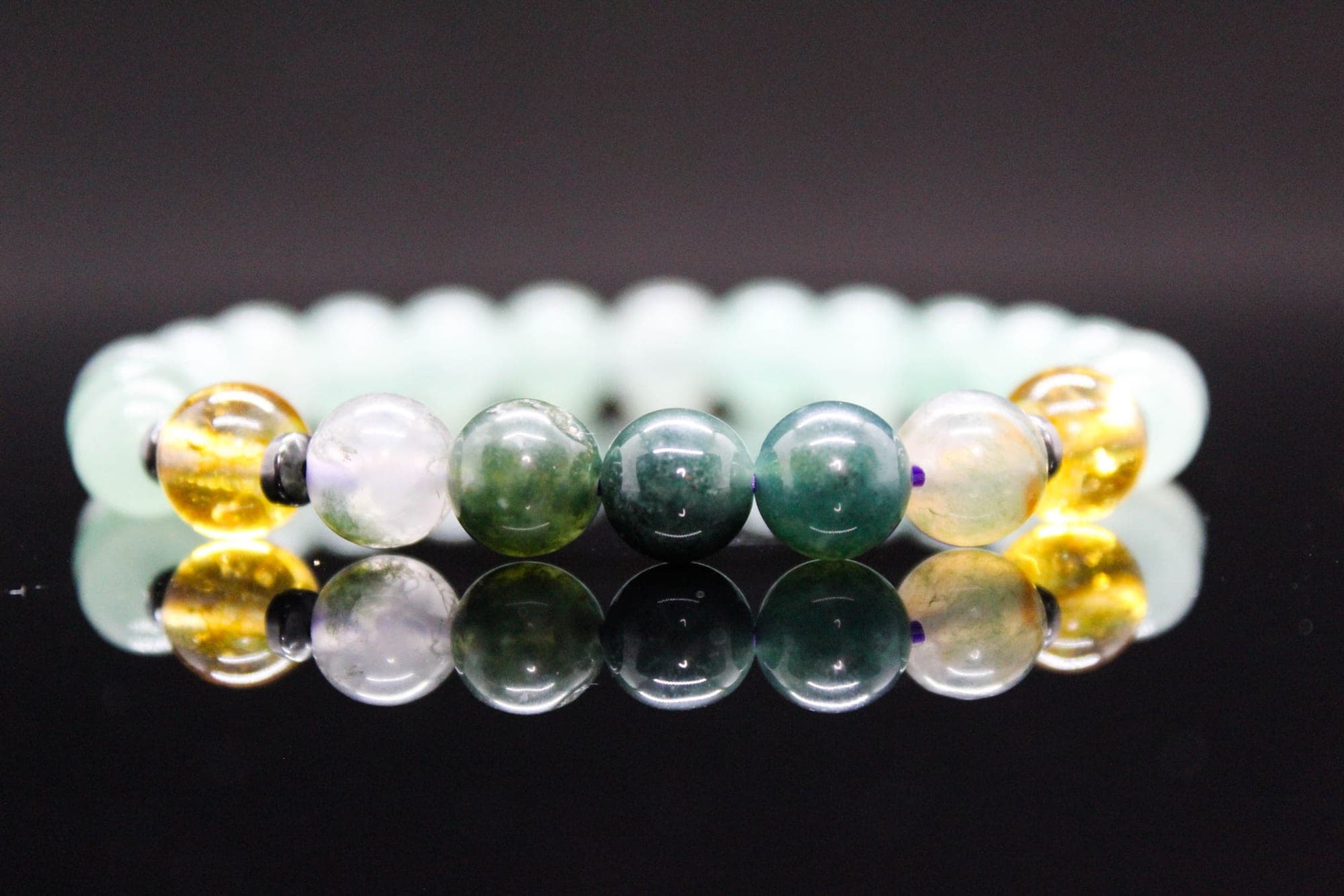
The Opulence Energy Bracelet
$33.00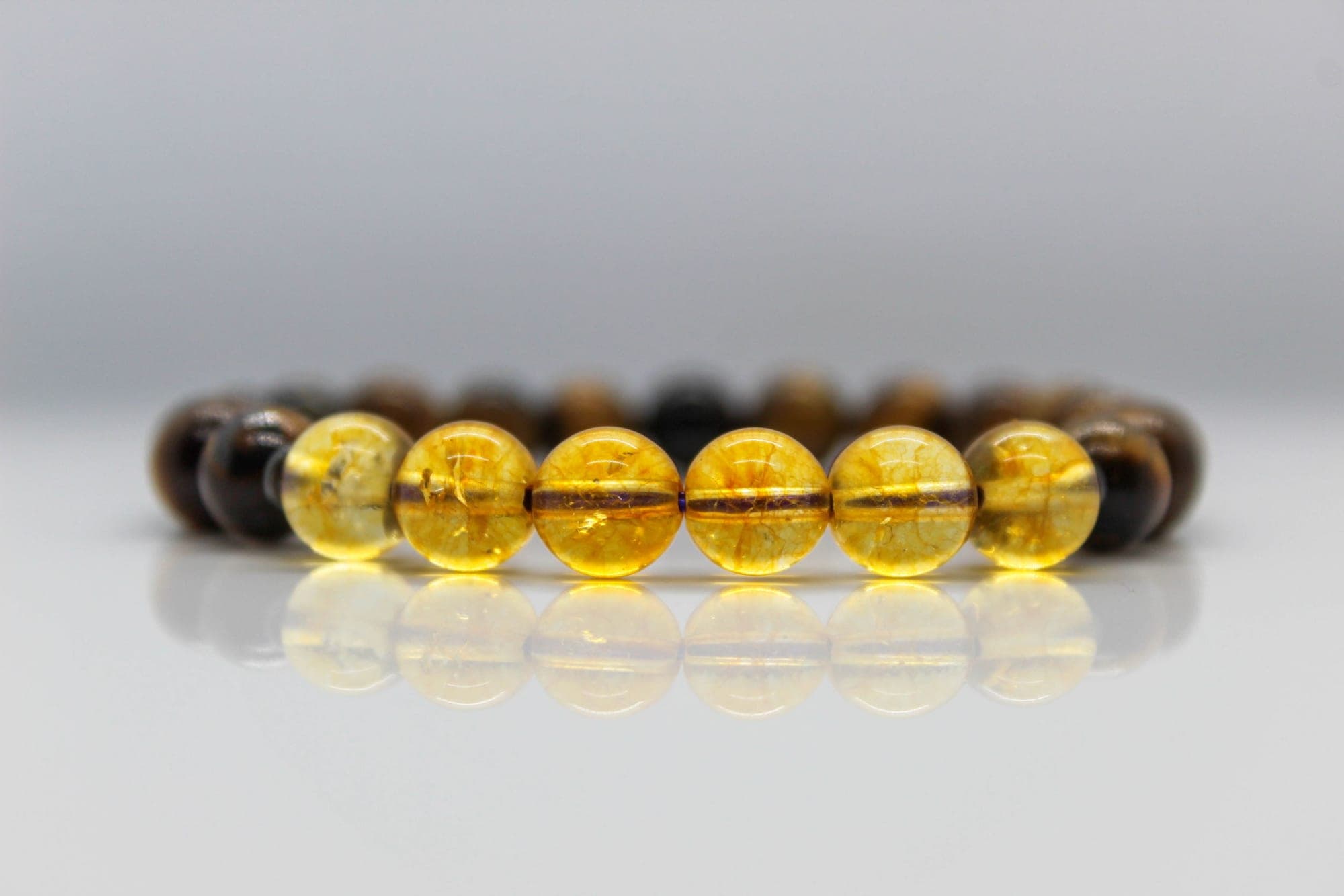
The Symba Energy Bracelet
$33.00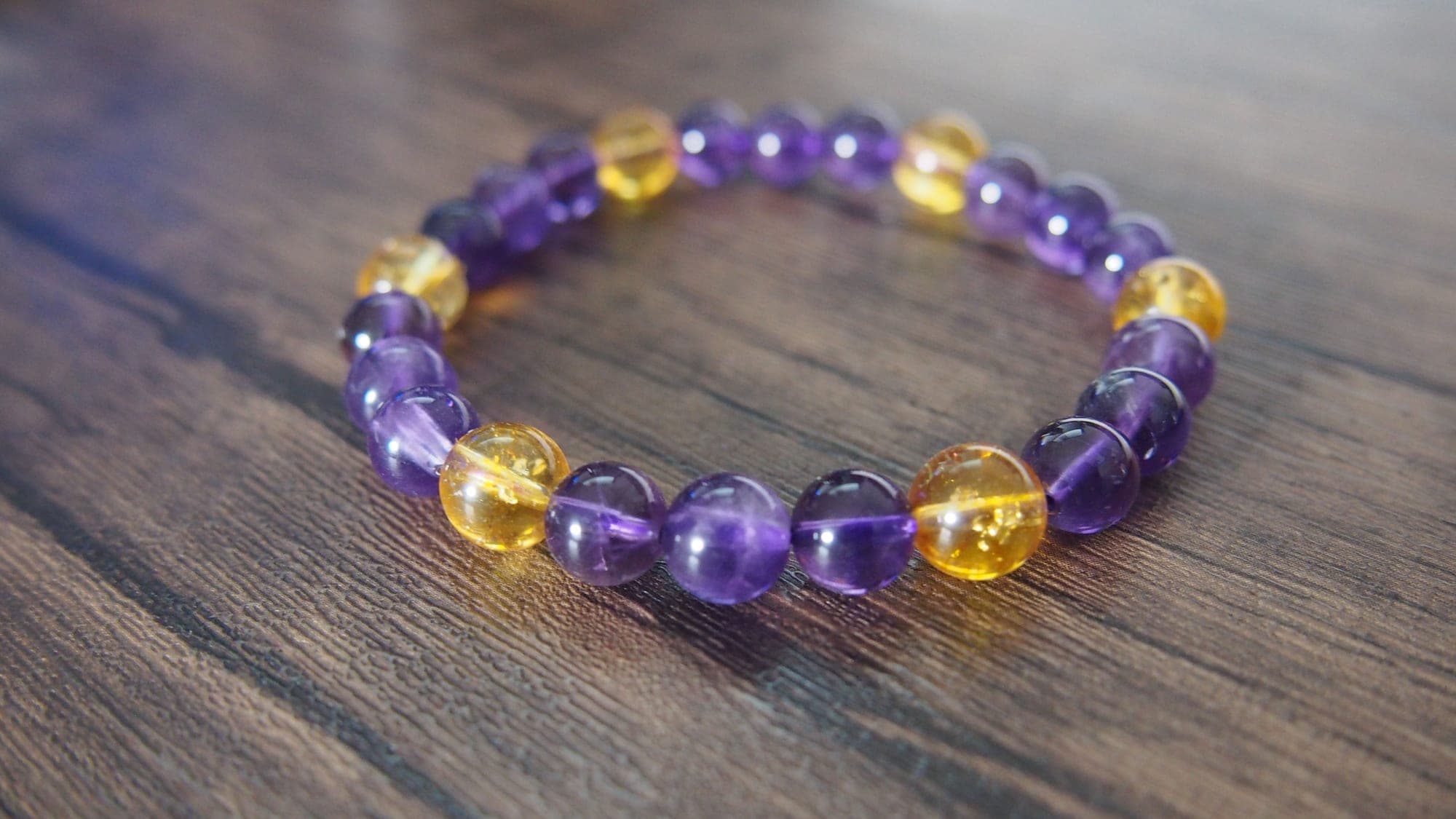
The Kobe Energy Bracelet
$33.00