Turquoise
Stone of Protection
Energy Focus
Meaning & uses
Turquoise Meaning
Independently treasured across ancient Egypt, Persia, and the American Southwest with no contact between any of them, Turquoise may be the most consistently protective stone across more unconnected cultures than any other in this directory.
What Is Turquoise?
Turquoise is a copper aluminum phosphate, its sky-blue color coming from copper and its greener tints from iron substituting into the same structure — a close chemical cousin, in coloring mechanism only, to Malachite's copper carbonate. It's a secondary mineral, forming only under a specific combination of conditions: copper-bearing rock, aluminum-rich host material, and water percolating through both slowly in an arid climate, which is exactly why the world's classic Turquoise deposits cluster in desert regions rather than turning up everywhere copper does.

That same formation process leaves Turquoise notably porous and relatively soft, at 5–6 on the Mohs scale — a trait worth understanding before buying or wearing it, since it shapes nearly everything about how the stone should be cared for.
A Stone With a History
The name itself is a small historical accident: "Turquoise" comes from the French for "Turkish stone," not because the mineral came from Turkey, but because medieval European traders received it via Turkish merchants who were moving it west from its actual source in Persia — a name describing a trade route rather than an origin.
That Persian source, the Neyshabur mines in what's now Iran, has produced the finest, most saturated blue Turquoise for well over 2,000 years, prized highly enough that "Persian turquoise" remains a quality benchmark in the gem trade today, independent of where a given stone actually came from.

Egypt's Sinai Peninsula mines are older still, worked since at least 2600 BCE, among the oldest continuously documented gemstone mining operations anywhere on Earth — Turquoise appears throughout the treasures recovered from Tutankhamun's tomb. An ocean away and with no historical contact between the two traditions, Turquoise independently became central to the art, jewelry, and ceremonial life of Native American peoples of the American Southwest, particularly the Navajo, Zuni, and Pueblo, with mining sites like Cerrillos, New Mexico, worked since long before European contact.
Meaning and Symbolism
Turquoise's "Stone of Protection" reputation is unusual for how independently it developed. Egyptian, Persian, and Native American traditions all arrived at broadly similar protective associations for Turquoise without contact with one another — a level of cross-cultural agreement this directory doesn't see very often, and one of the stronger arguments for how deeply the association runs.
Carried or worn to
- Provide protection during travel and new situations
- Support clear, honest communication
- Calm anxiety and ease emotional overwhelm
- Strengthen a sense of safety and belonging
Chakra, Zodiac & Element
Turquoise is tied to the Throat Chakra, its blue color matching this directory's usual convention for communication-focused stones. Its Air and Earth elements pair communication with grounded protection — the same combination its meaning draws on throughout.
Astrologically it's linked to Sagittarius and Pisces, and it's one of the modern birthstones for December.
How to Use and Care for Turquoise
Turquoise needs more specific care than most stones in this directory because of its porosity. Perfume, lotion, cosmetics, hairspray, and chlorinated pool water can all discolor or degrade it over time, so the standard practical advice is to put Turquoise jewelry on last, after any other products, and take it off before swimming.
It's also worth knowing that most Turquoise sold today is treated in some way. Stabilization — impregnating the porous stone with a clear polymer to harden it and lock in color — is standard, widely accepted, and usually disclosed; genuinely natural, untreated high-grade material is rare and commands a real premium. A separate and less honest problem is outright substitution: dyed Howlite or Magnesite, both naturally white, porous minerals that take blue dye readily, are commonly sold fraudulently as Turquoise, so buying from a seller who can speak clearly to what you're getting matters more here than with most stones in this directory.
Frequently Asked Questions
Why is it called "Turquoise" if it's not from Turkey?
Is Turquoise usually treated?
How can I tell real Turquoise from fake?
Is Turquoise a birthstone?
Is Turquoise safe to wear every day?
What chakra is Turquoise associated with?
A stone three unconnected civilizations all reached for — for roughly the same reason.
Shop by energy
Bracelets for the Throat chakra
We don't have a Turquoise bracelet yet. These share its Throat chakra energy.
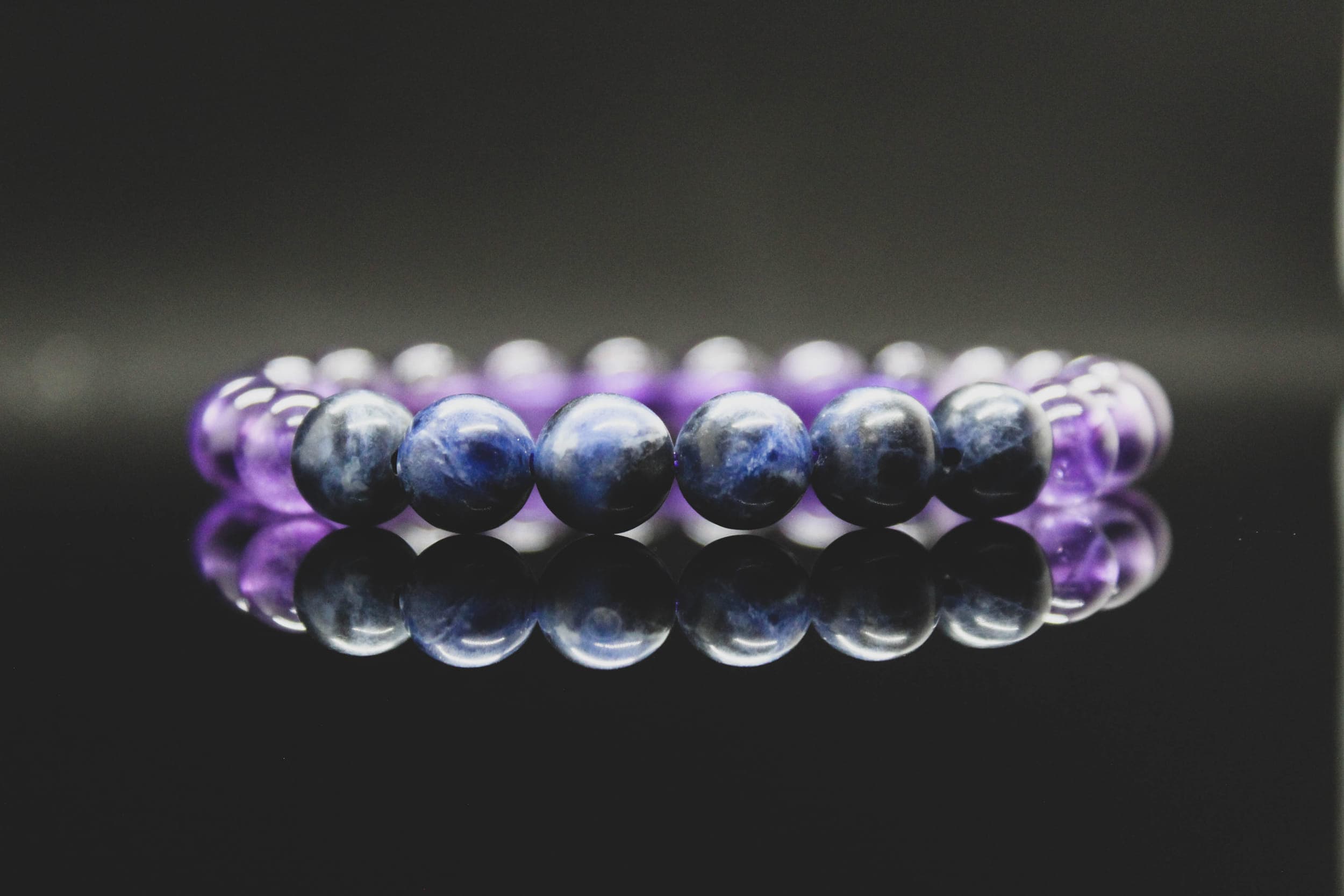
Creative Balance Energy Bracelet
$24.00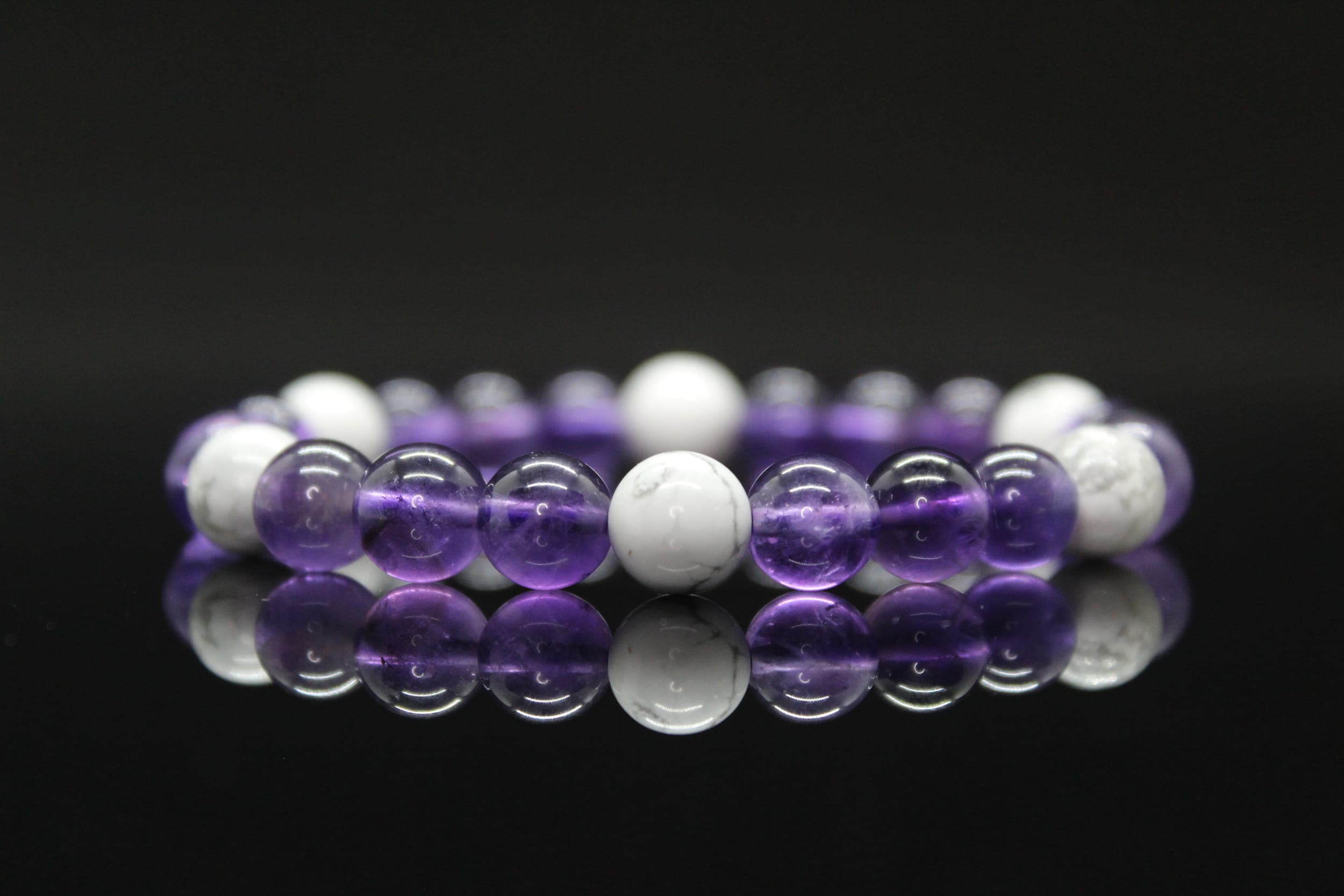
Higher Self Energy Bracelet
$24.00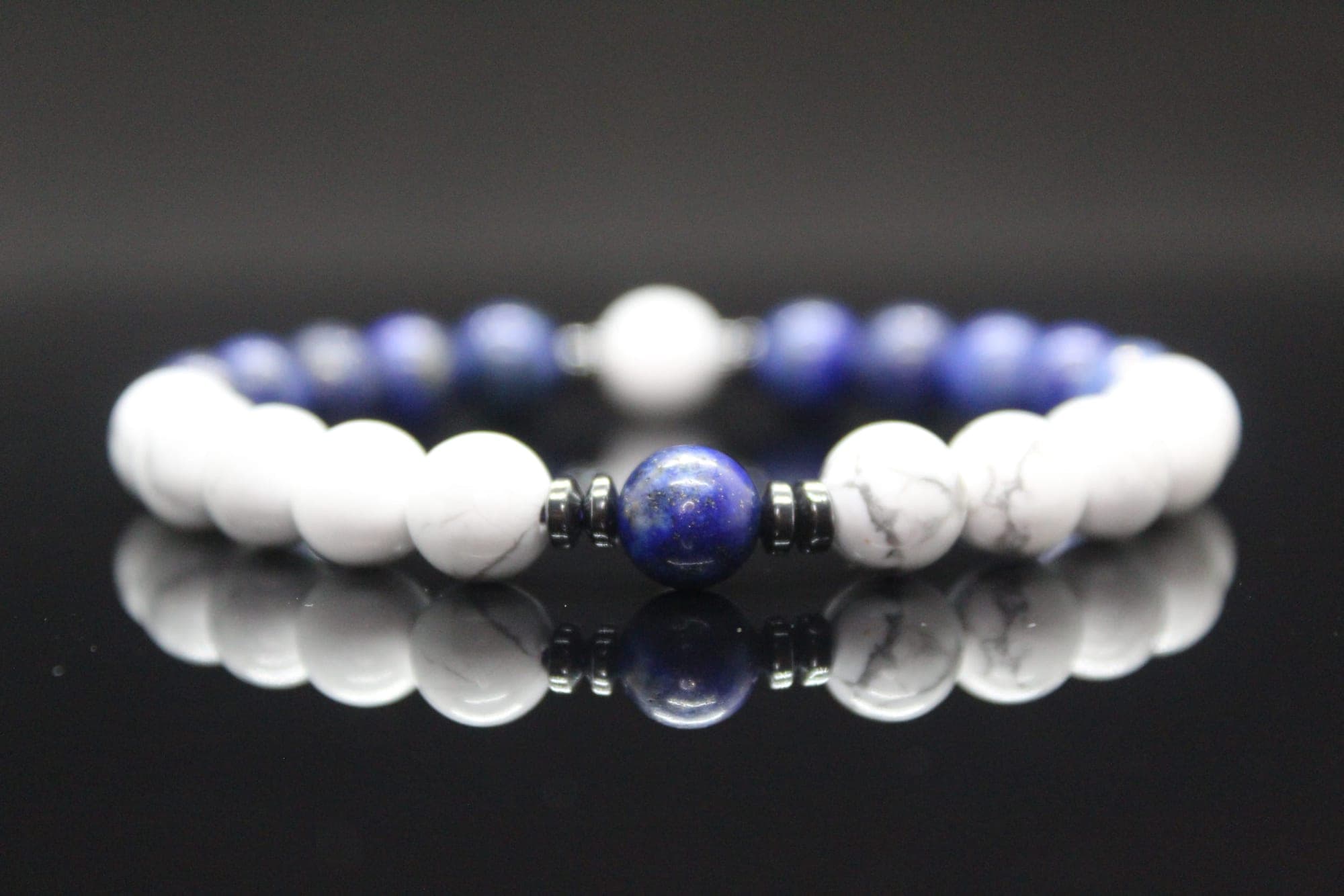
Divine Harmony Energy Bracelet
$24.00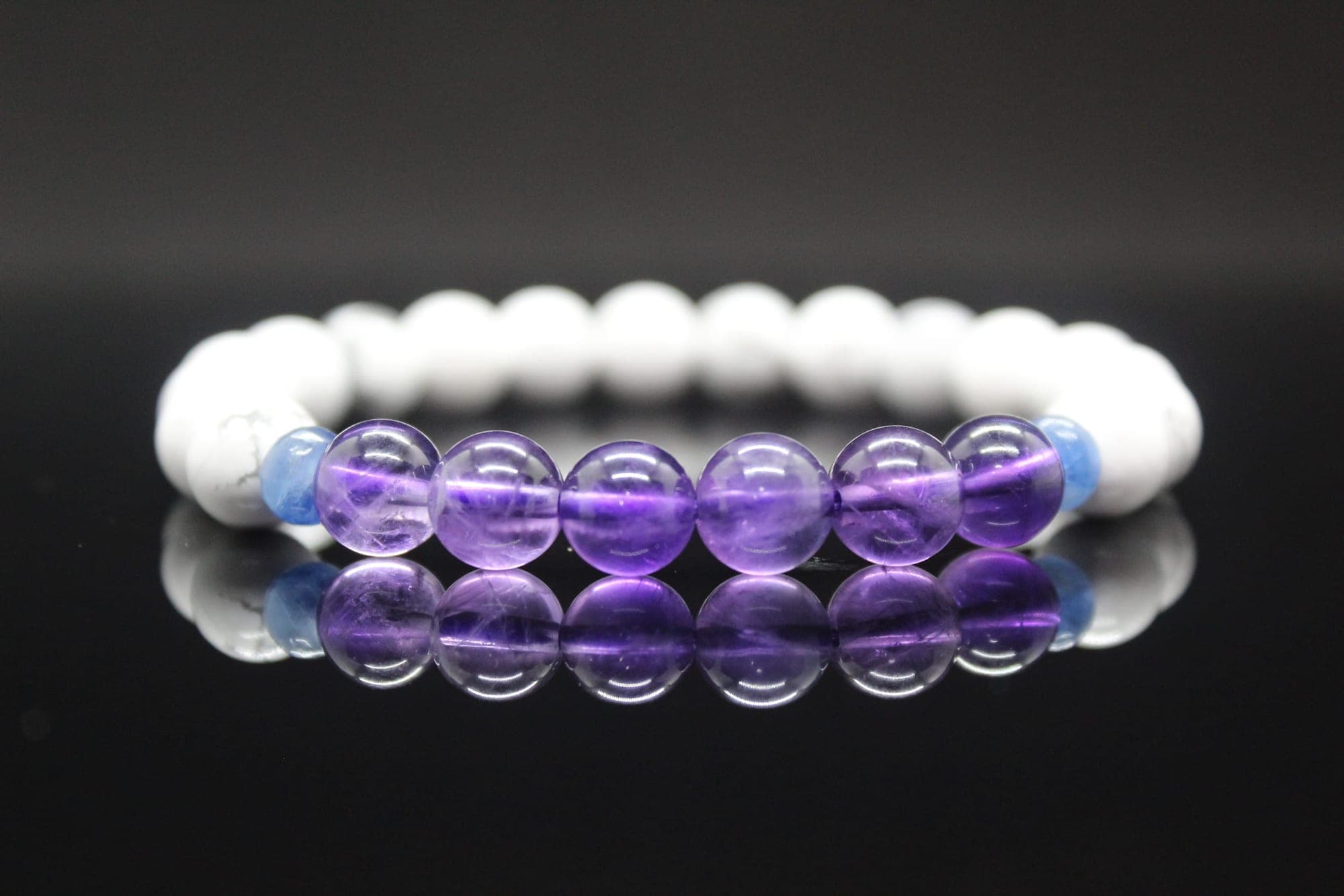
The Crown Energy Bracelet
$24.00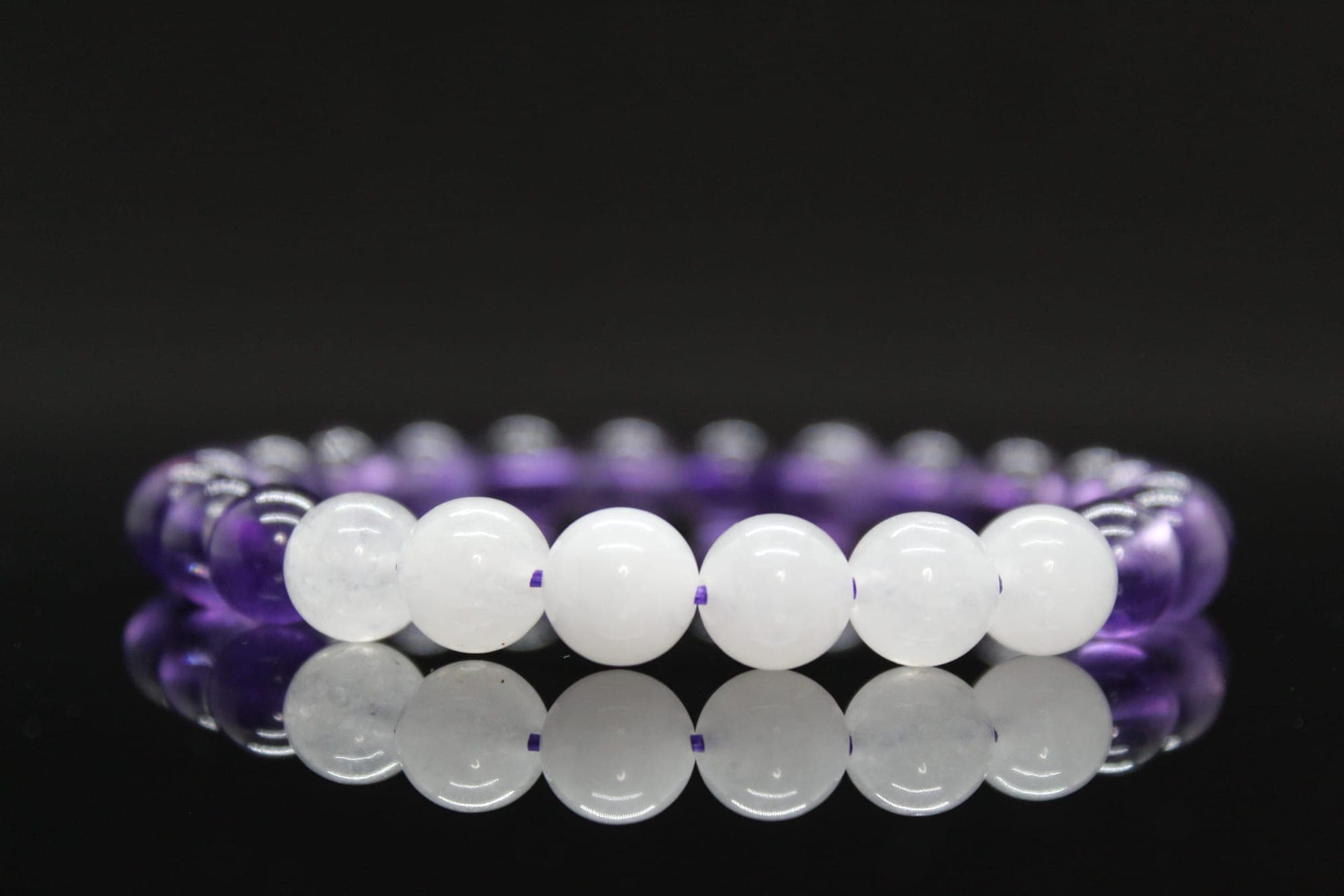
Divine Calming Energy Bracelet
$24.00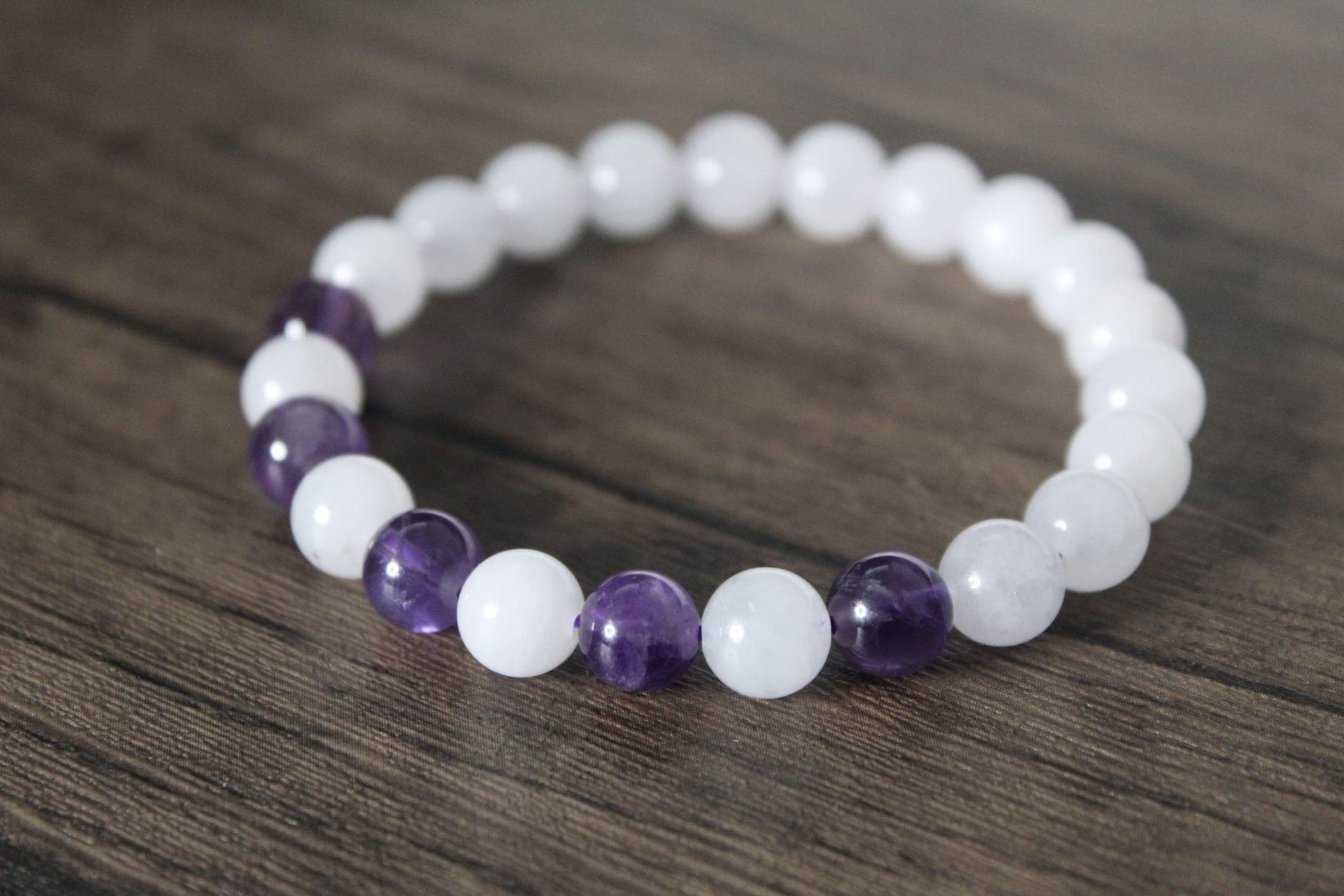
Divine Thoughts Energy Bracelet
$33.00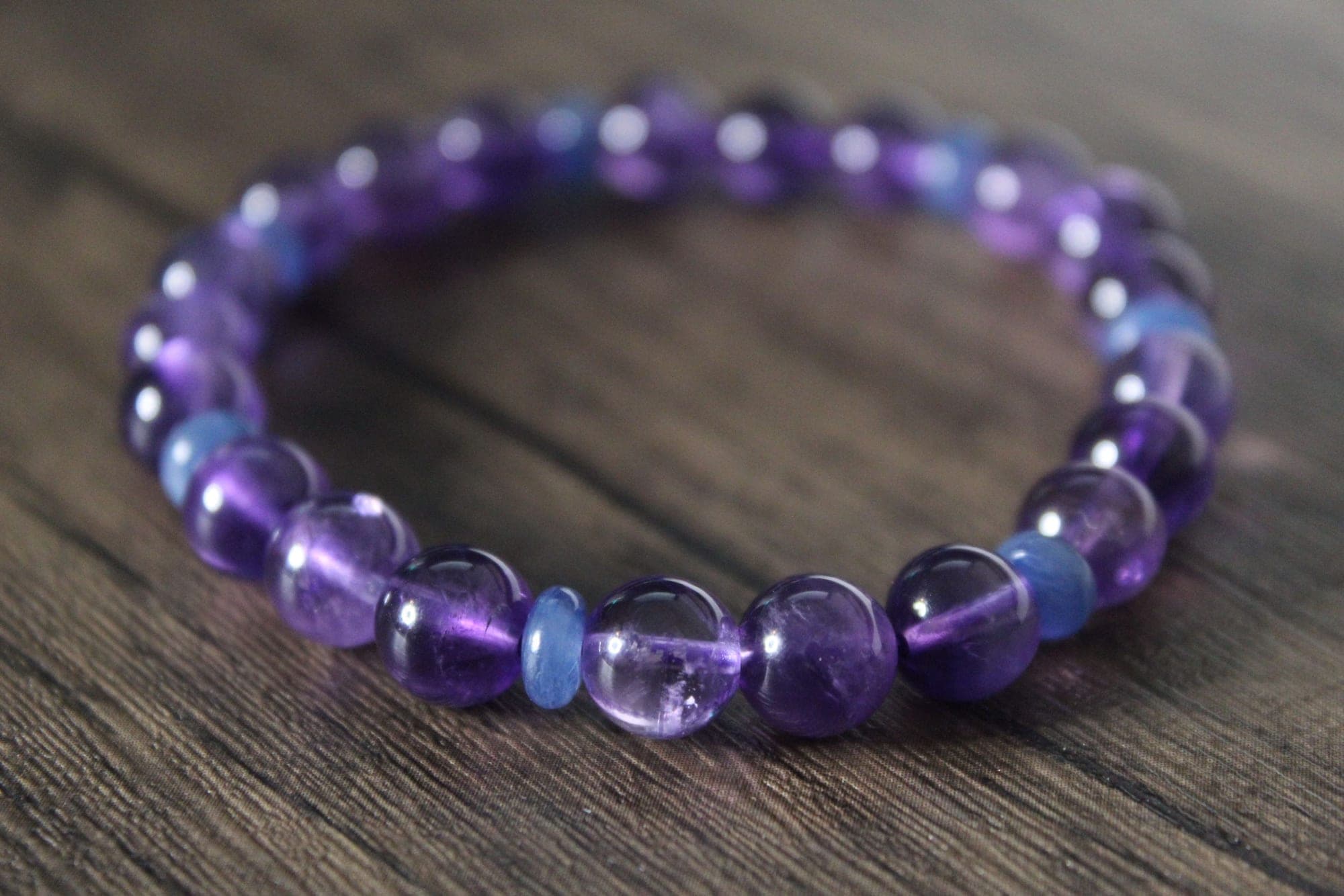
Creative Flow Energy Bracelet
$33.00