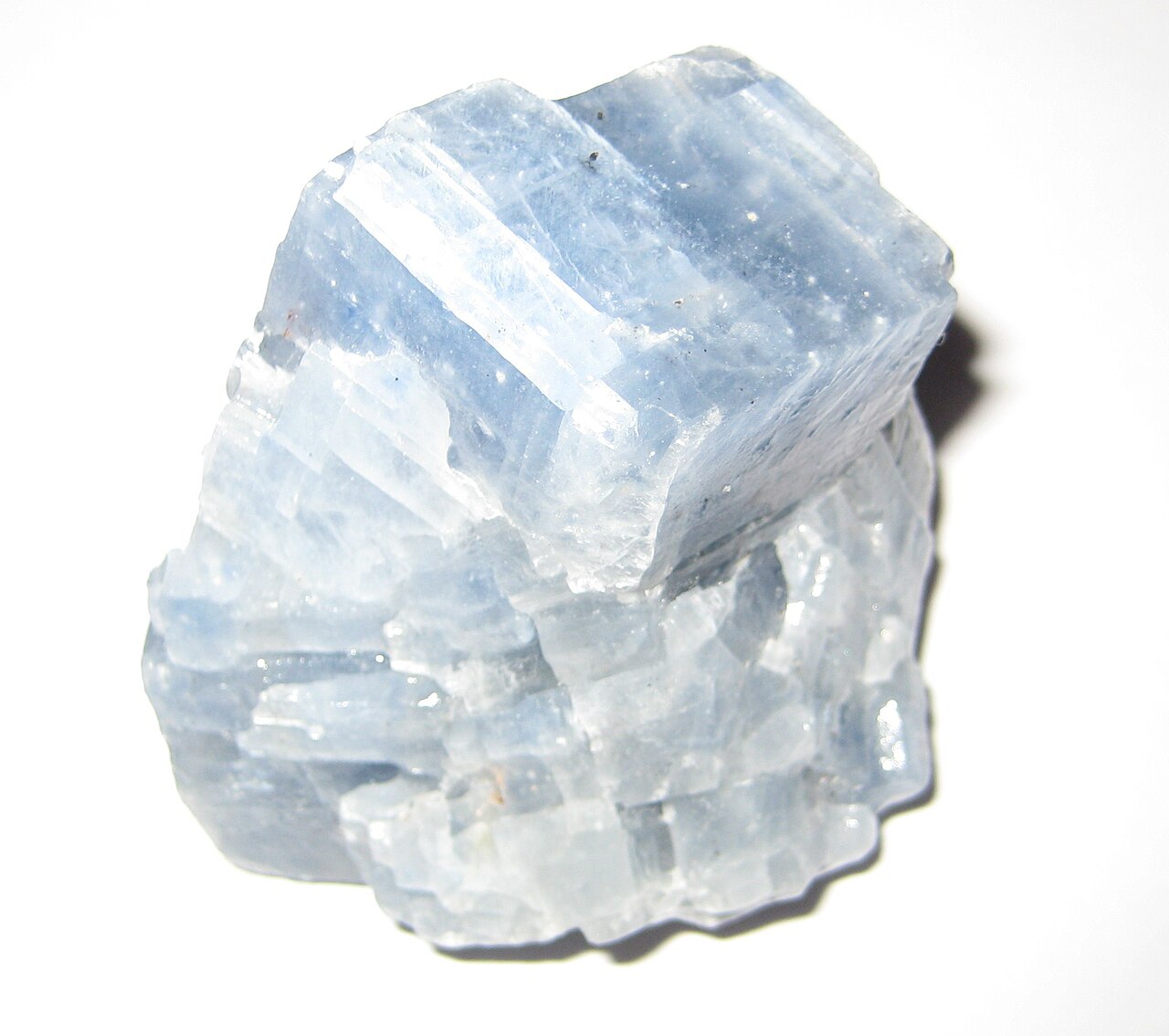
Aquamarine
Stone of Courage and Calm
Energy Focus
Meaning & uses
Aquamarine Meaning
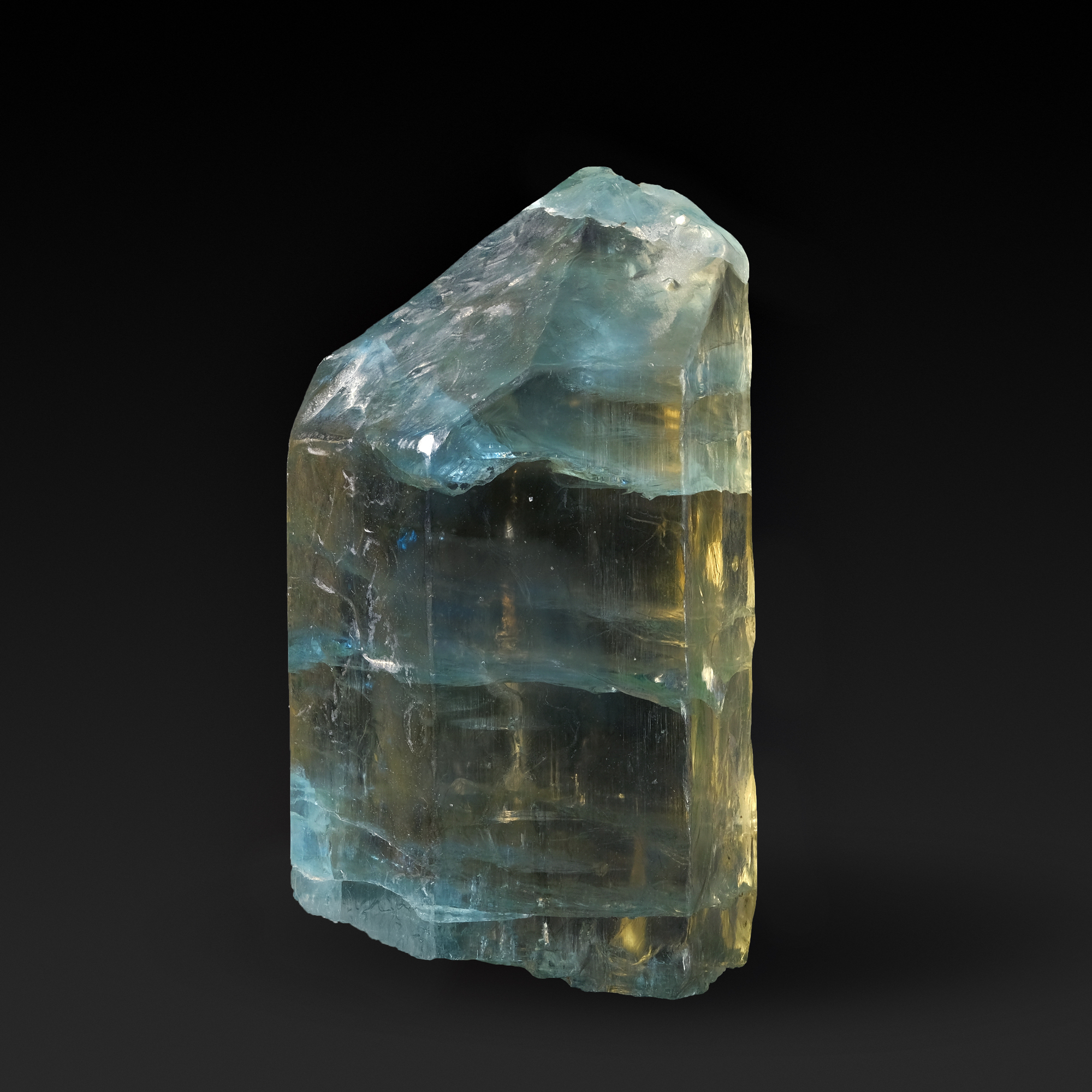
Named for the sea it resembles, Aquamarine was historically carried by sailors as a talisman for safe passage — a stone of calm courage over turbulent water, literal or emotional.
What Is Aquamarine?
Aquamarine is the blue-to-blue-green variety of beryl — the same mineral family as Emerald, though colored by a different trace element. Where Emerald gets its green from chromium or vanadium, Aquamarine's color comes from iron within the crystal structure. Much of the Aquamarine sold today has also been heat-treated, a long-standing and widely disclosed industry practice that shifts naturally greenish stones toward a purer, more saturated blue by altering the iron's oxidation state.
The name comes directly from Latin — aqua marina, "water of the sea" — a name that's stayed accurate for as long as the stone has been used, in a way surprisingly few gemstone names manage. Beryl's other varieties cover a wider color range than most people expect: pink and peach tones are sold as Morganite, golden-yellow as Heliodor, and red beryl (Bixbite) is genuinely one of the rarest gemstones on Earth. Aquamarine and Emerald remain by far the most well known.

A Sailor's Stone
Aquamarine's association with the sea isn't just about color. Roman and medieval sailors carried it as a protective talisman, believing it calmed rough water, warded off seasickness, and guaranteed safe passage across dangerous crossings. Medieval Europeans also carried it as a supposed protection against poison — a belief with no basis in the stone's actual chemistry, but a widespread one for centuries regardless.
Brazil's Minas Gerais region has produced some of the largest gem-quality Aquamarine crystals ever found, including the Dom Pedro Aquamarine — at over 10,000 carats, the largest cut aquamarine in the world, now on permanent display at the Smithsonian.
Its popularity resurfaced strongly in the early 20th century, when Aquamarine's pale, cool color became a defining stone of Art Deco jewelry — set in geometric platinum designs that were built around exactly the kind of clean, icy blue Aquamarine does best.
Meaning and Symbolism
Aquamarine's meaning follows its name and history closely: calm rather than absence of fear, courage that comes from staying steady through something uncertain rather than avoiding it. It's a stone for the moment before a hard conversation or a big departure — not for erasing the nerves, but for crossing anyway.
Carried or worn for
- Calming anxiety before travel or difficult conversations
- Encouraging honest, clear communication
- Soothing emotional stress
- Sharpening mental clarity under pressure
Chakra, Zodiac & Element
Aquamarine is tied to the Throat Chakra, continuing its long association with honest, calm communication — fitting for a stone once trusted to steady sailors' nerves enough to speak clearly under pressure. Its Water element is about as direct a match as any stone in the directory gets.
Astrologically it's the modern birthstone for March and is linked to Pisces, Gemini, and Aries — Pisces for its watery intuition, Gemini for its throat-centered communication, and Aries for the seasonal overlap of March's birthstone traditions.

How to Use and Care for Aquamarine
At 7.5–8 on the Mohs scale, Aquamarine is harder and more durable than quartz-family stones, which makes it a genuinely practical choice for rings and other everyday jewelry that takes regular knocks. It's water-safe for routine cleansing, though — like many beryls — it can be sensitive to sudden temperature changes, so avoid moving it straight from hot water to cold or leaving it in a hot car.
It pairs naturally with Amethyst for a gentle throat-and-crown combination, or with Blue Lace Agate to lean even further into calm, honest communication.
Frequently Asked Questions
What month is Aquamarine the birthstone for?
What's the difference between Aquamarine and Emerald?
Is Aquamarine durable enough for an engagement ring?
Is Aquamarine always blue?
What chakra is Aquamarine associated with?
Is heat-treated Aquamarine less valuable than natural color?
A cool, steady companion for anyone heading into uncertain water.
Shop by energy
Bracelets for the Throat chakra
We don't have an Aquamarine bracelet yet. These share its Throat chakra energy.
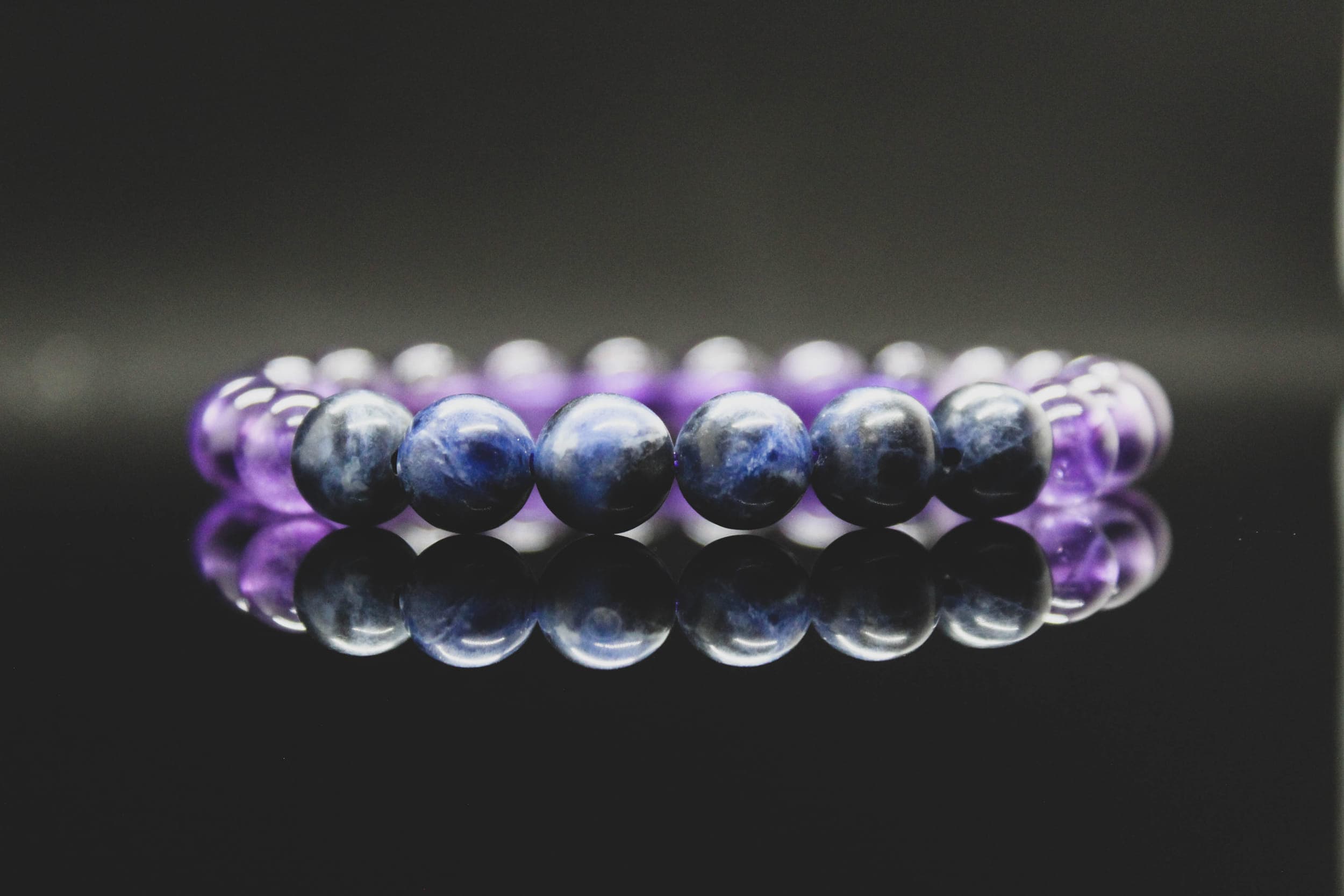
Creative Balance Energy Bracelet
$24.00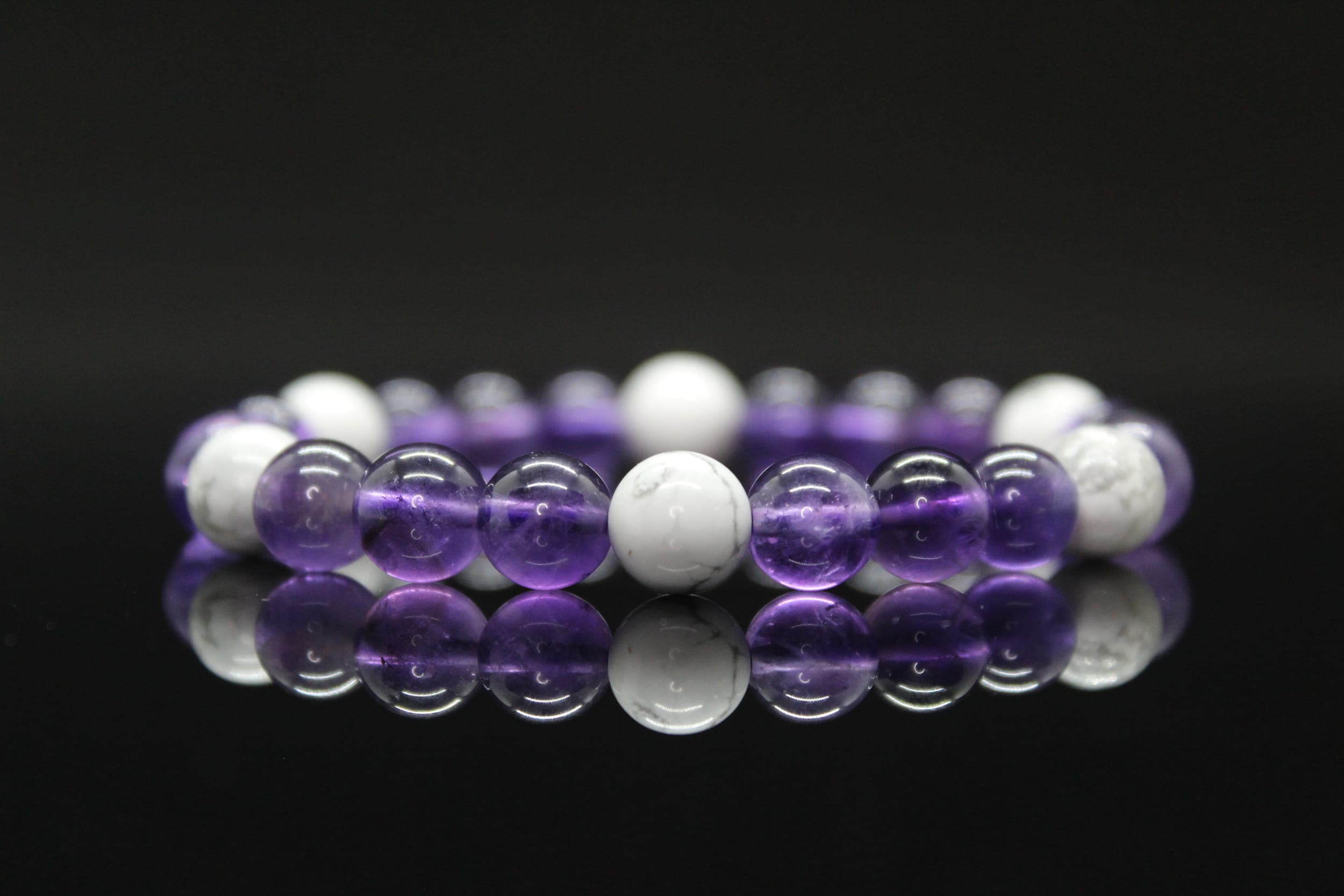
Higher Self Energy Bracelet
$24.00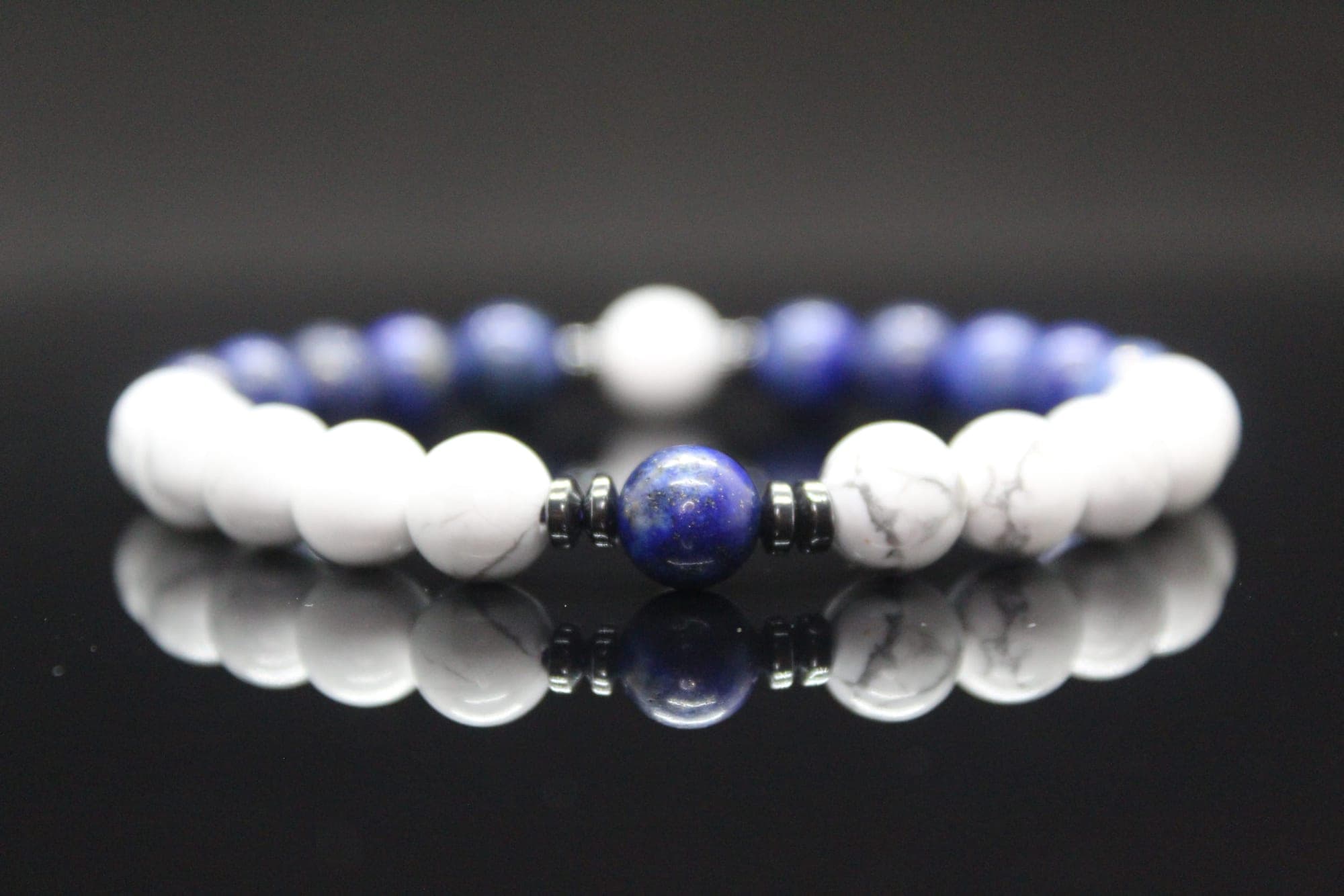
Divine Harmony Energy Bracelet
$24.00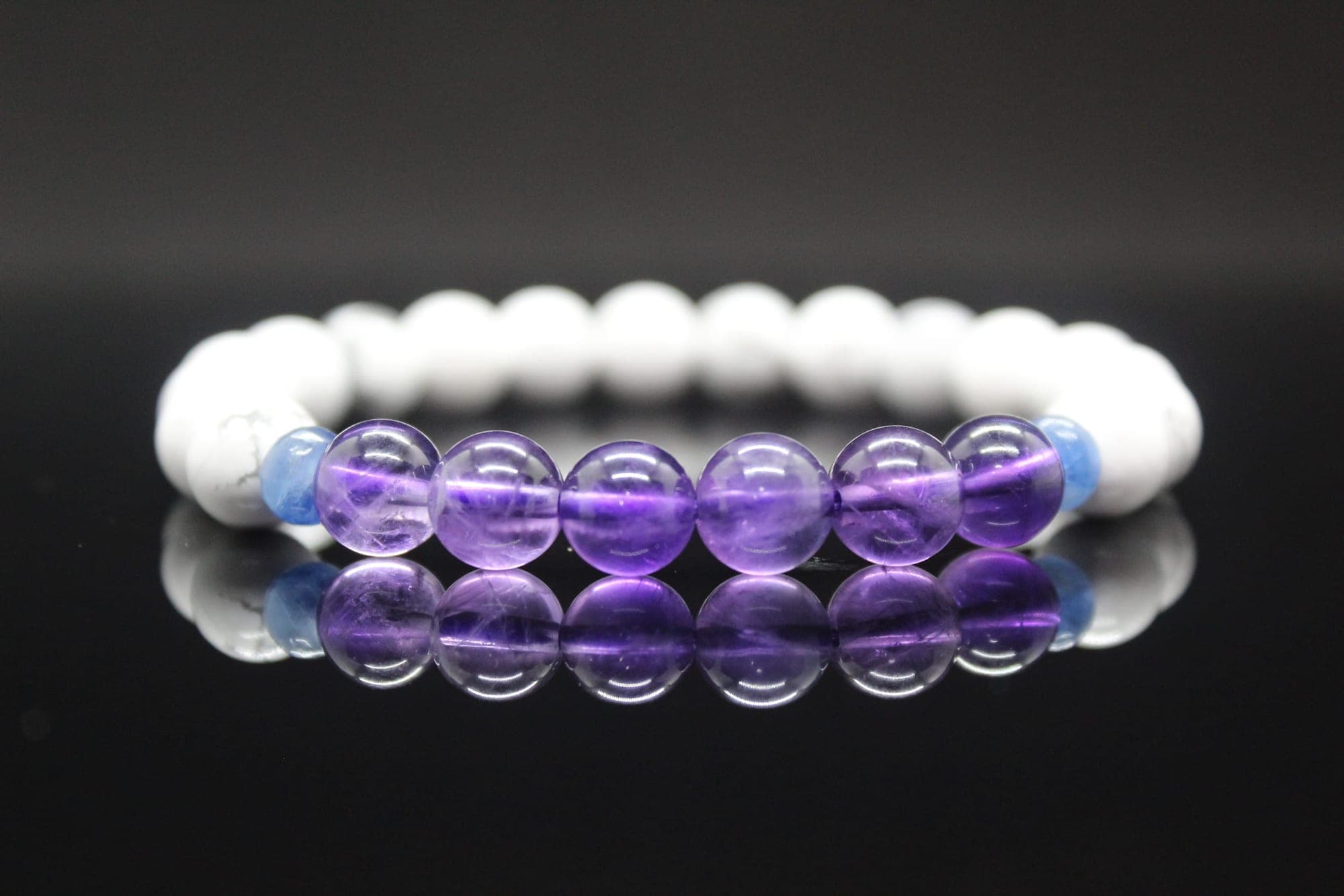
The Crown Energy Bracelet
$24.00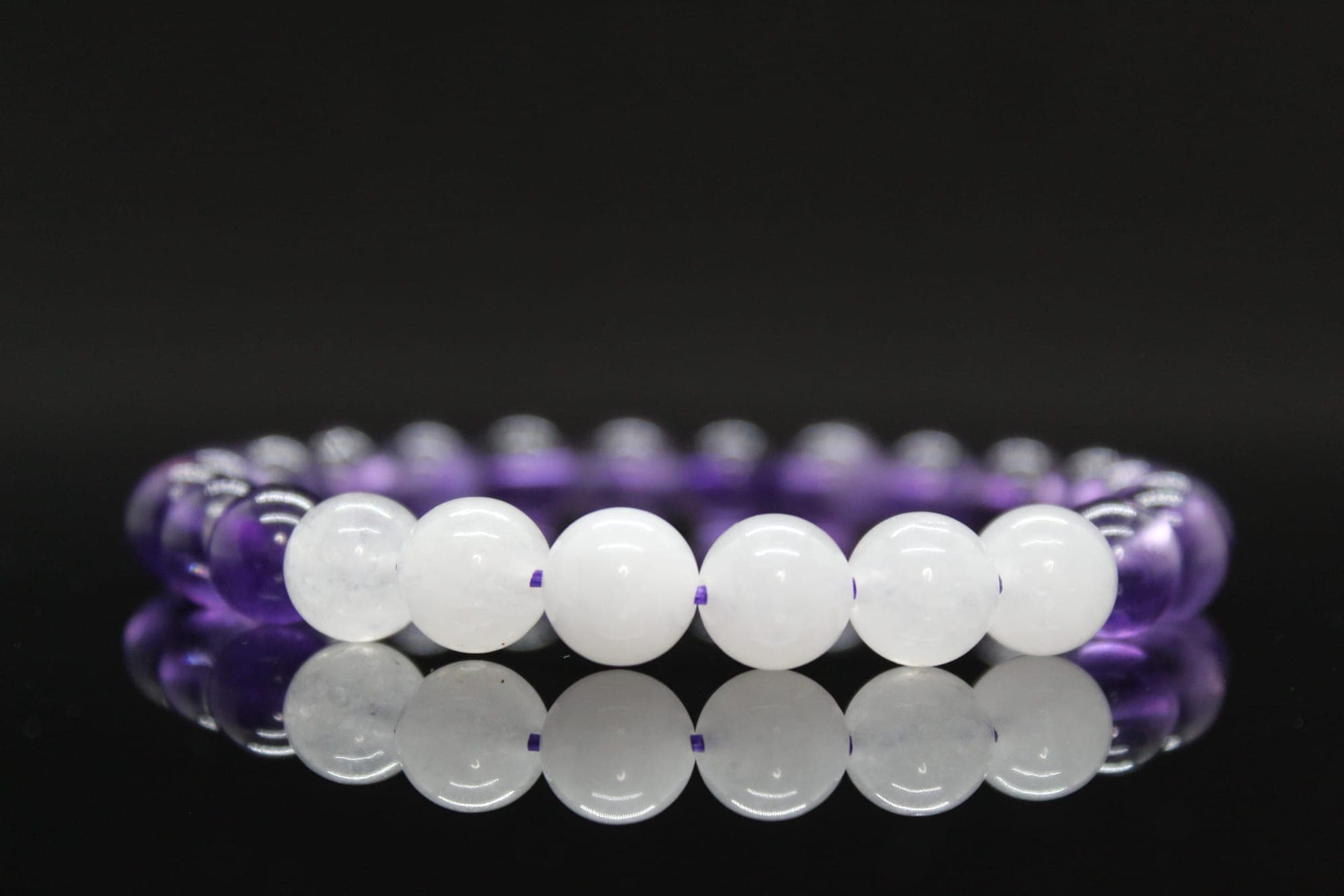
Divine Calming Energy Bracelet
$24.00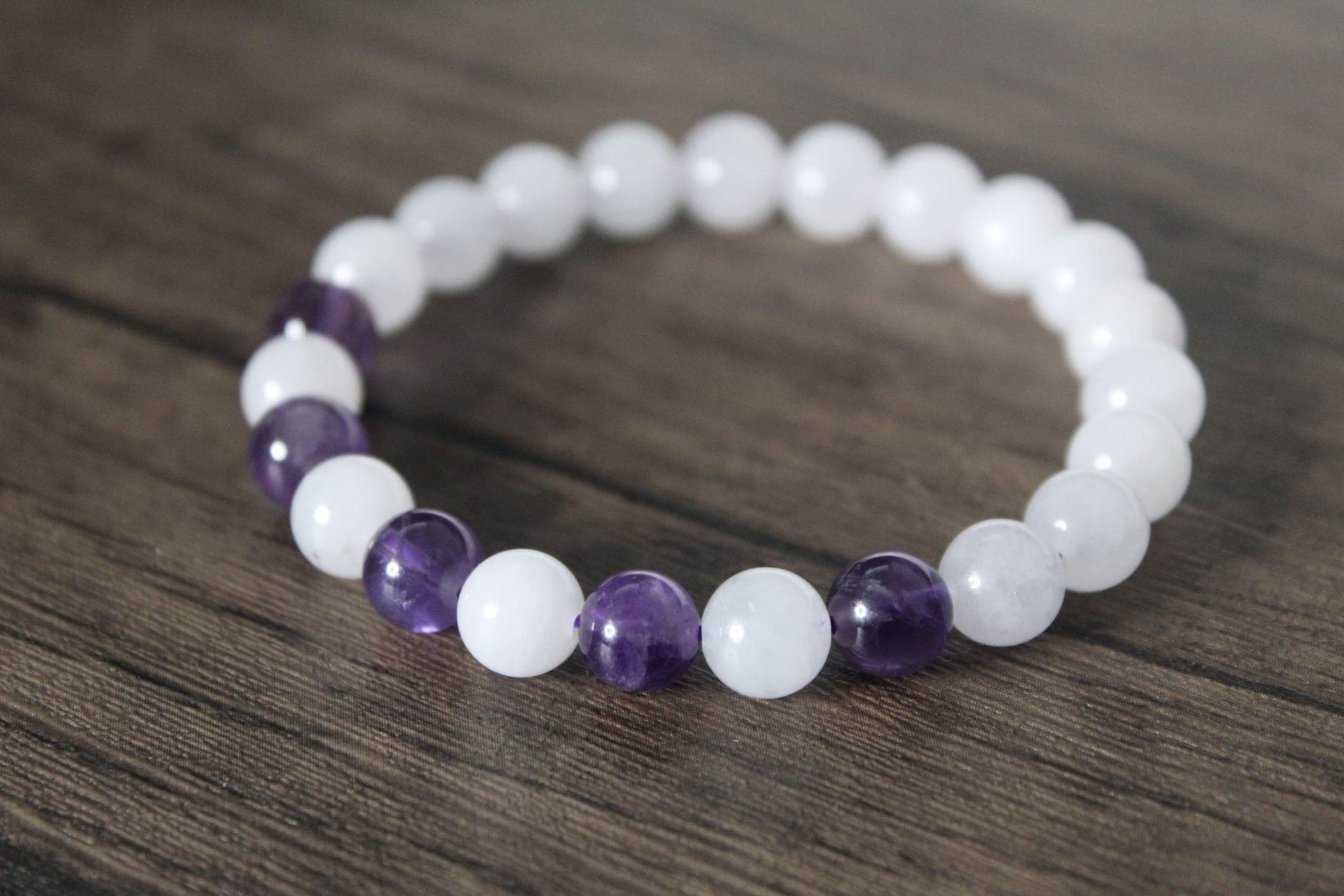
Divine Thoughts Energy Bracelet
$33.00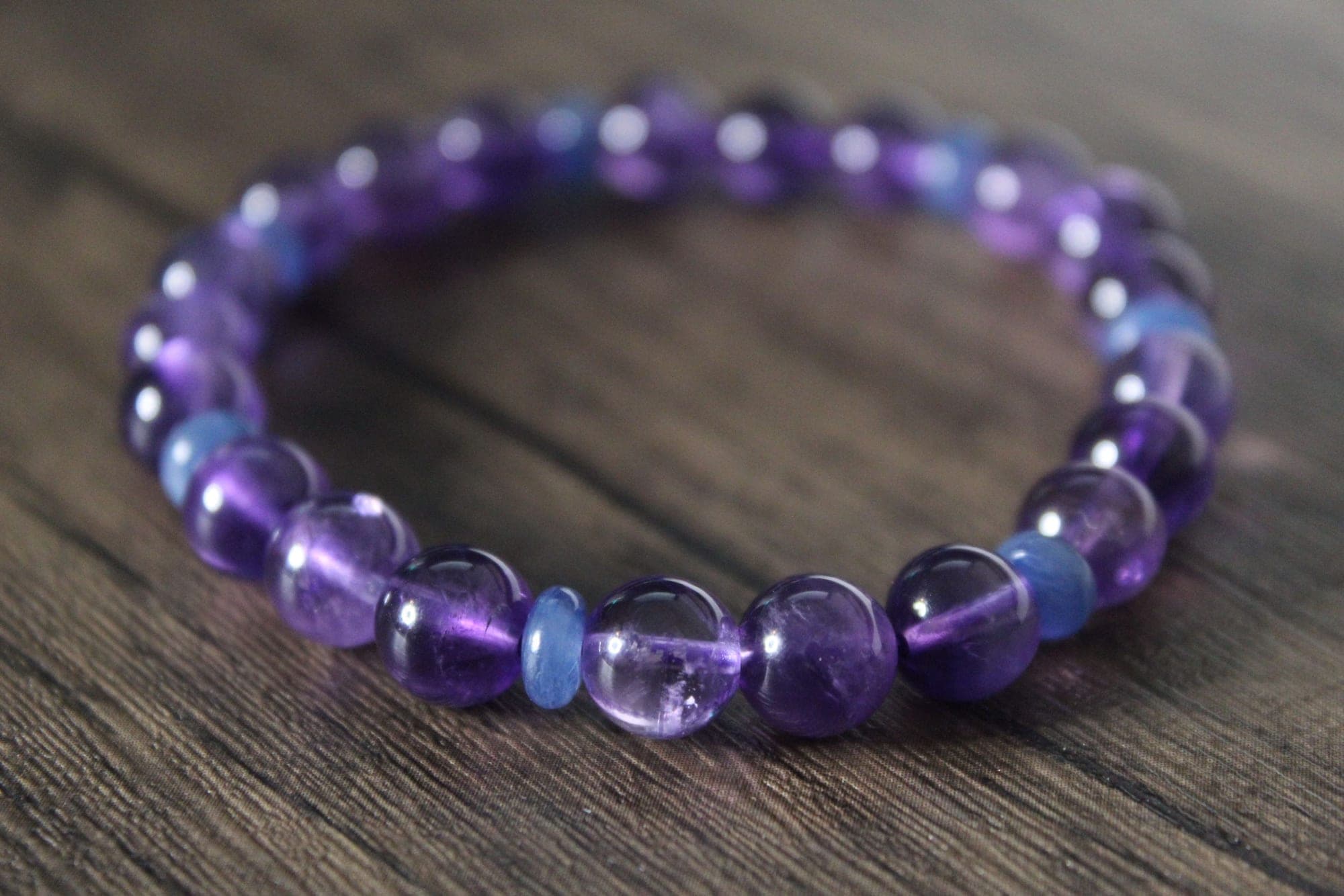
Creative Flow Energy Bracelet
$33.00