Meaning & uses
Tiger's Eye Meaning
A golden band of light that moves across the stone as it turns, Tiger's Eye earned its name honestly — and its formation story is even stranger than its appearance suggests.
What Is Tiger's Eye?
Tiger's Eye is a variety of quartz known for chatoyancy, a silky, moving band of reflected light also called the "cat's eye effect." What makes it unusual is how that effect gets there: Tiger's Eye doesn't start out as quartz at all. It begins as crocidolite, a fibrous blue mineral related to asbestos, which is gradually replaced fiber by fiber with silica over a long span of geological time — a process called pseudomorphic replacement, where one mineral takes over another's exact structure without disturbing its shape. The original fibrous texture survives the swap intact, and that preserved fiber alignment is exactly what produces Tiger's Eye's signature banded sheen.
Because the quartz has fully replaced the original crocidolite fibers, finished Tiger's Eye is silica, not asbestos — but the connection is worth knowing if you ever cut or grind raw material yourself, where standard dust precautions are sensible the same way they are with Serpentine.

The classic golden-brown color comes from iron oxide staining the stone during or after that replacement process. Material that escapes this staining keeps a cooler blue-grey tone instead, sold under the name Hawk's Eye or Blue Tiger's Eye — the same stone, colored by a different chemical accident.
A Stone With a History
Tiger's Eye has long been associated with protection and watchfulness, an association that follows naturally from its eye-like appearance — traditional accounts describe it being carried by Roman soldiers into battle for courage and protection, and it's long been linked to the kind of all-seeing, protective eye imagery found across several ancient cultures.

Its modern commercial history is centered on South Africa's Northern Cape province, part of a major iron-formation belt that remains the dominant global source today, alongside significant deposits in Australia and India.
Meaning and Symbolism
Tiger's Eye's "Stone of Confidence" reputation draws on two things at once: an eye that seems to watch, and a warm, golden color that reads as vitality rather than caution. Together they give the stone a specific symbolic register — not confidence as bravado, but confidence built on clear-eyed awareness of what's actually happening around you.
That combination makes Tiger's Eye a practical, grounded stone within this directory rather than a mystical one. It's reached for less during deep spiritual work and more during ordinary situations that call for steady nerve — a difficult conversation, a public moment, a decision that needs to be made without flinching.
Carried or worn to
- Build practical, grounded confidence
- Sharpen focus and clear decision-making
- Support courage in high-pressure moments
- Encourage follow-through on started goals
Chakra, Zodiac & Element
Tiger's Eye is tied to both the Solar Plexus and Sacral Chakras — Solar Plexus for confidence and personal will, Sacral for the warm, vital energy its golden-brown color carries. Its Fire and Earth elements reflect the same balance: Fire for its warmth and courage, Earth for the grounded, practical nature of its confidence.
Astrologically it's linked to Leo, a sun-ruled sign built around confidence, along with Capricorn, known for grounded ambition, and Gemini, whose dual nature echoes the stone's own watchful, perceptive quality.
How to Use and Care for Tiger's Eye
At 7 on the Mohs scale, Tiger's Eye is one of the more durable stones in this entire directory, holding up to daily wear as well as any quartz-family stone — a genuine advantage over the softer, more delicate stones that need special handling. Rings, bracelets, and pendants all suit it well for everyday use.
It's water-safe for routine cleansing. Tiger's Eye pairs especially well with Carnelian, the two working as a team where Carnelian gets an idea moving and Tiger's Eye supplies the steady nerve to actually finish it; see our Crystal Combinations guide for more on why the pairing works.
Frequently Asked Questions
How does Tiger's Eye actually form?
Is Tiger's Eye a form of asbestos?
What's the difference between Tiger's Eye and Blue Tiger's Eye?
Is Tiger's Eye safe to wear every day?
Can Tiger's Eye get wet?
What chakra is Tiger's Eye associated with?
A practical stone for anyone who needs steady nerve more than they need a miracle.
Shop this stone
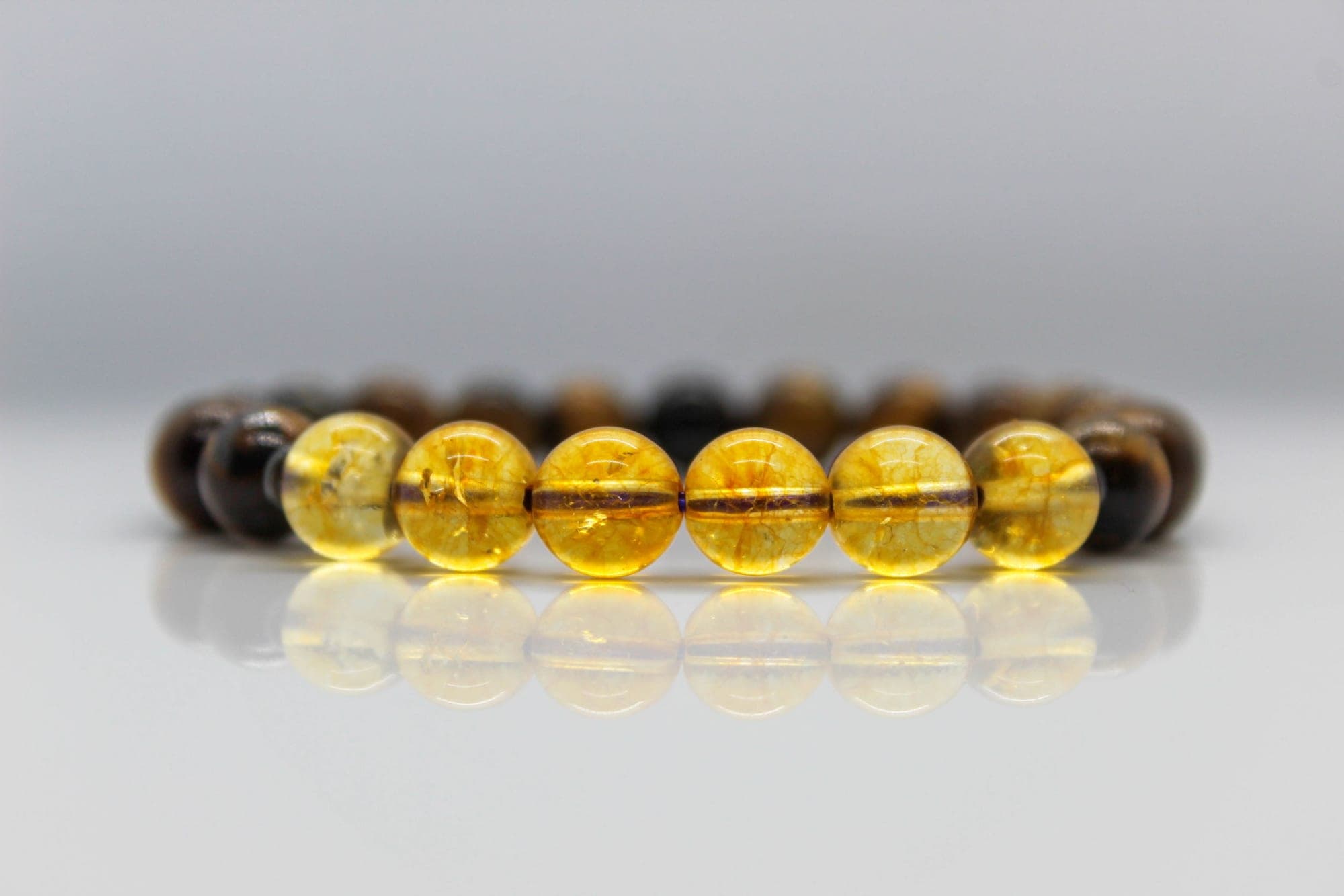
Bracelets with Tiger's Eye
The Symba Energy Bracelet
$33.00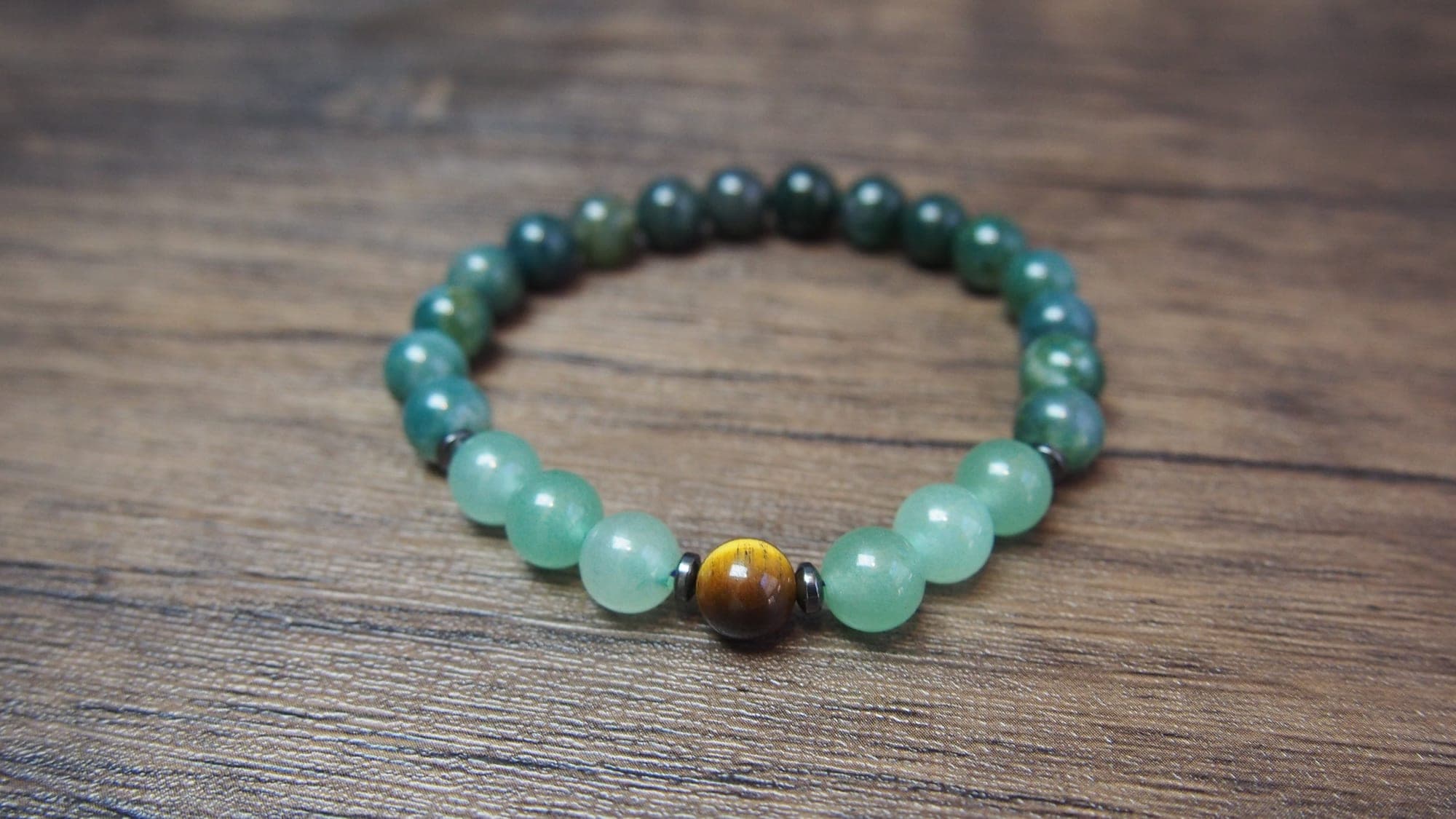
Prosperity Energy Bracelet
$24.00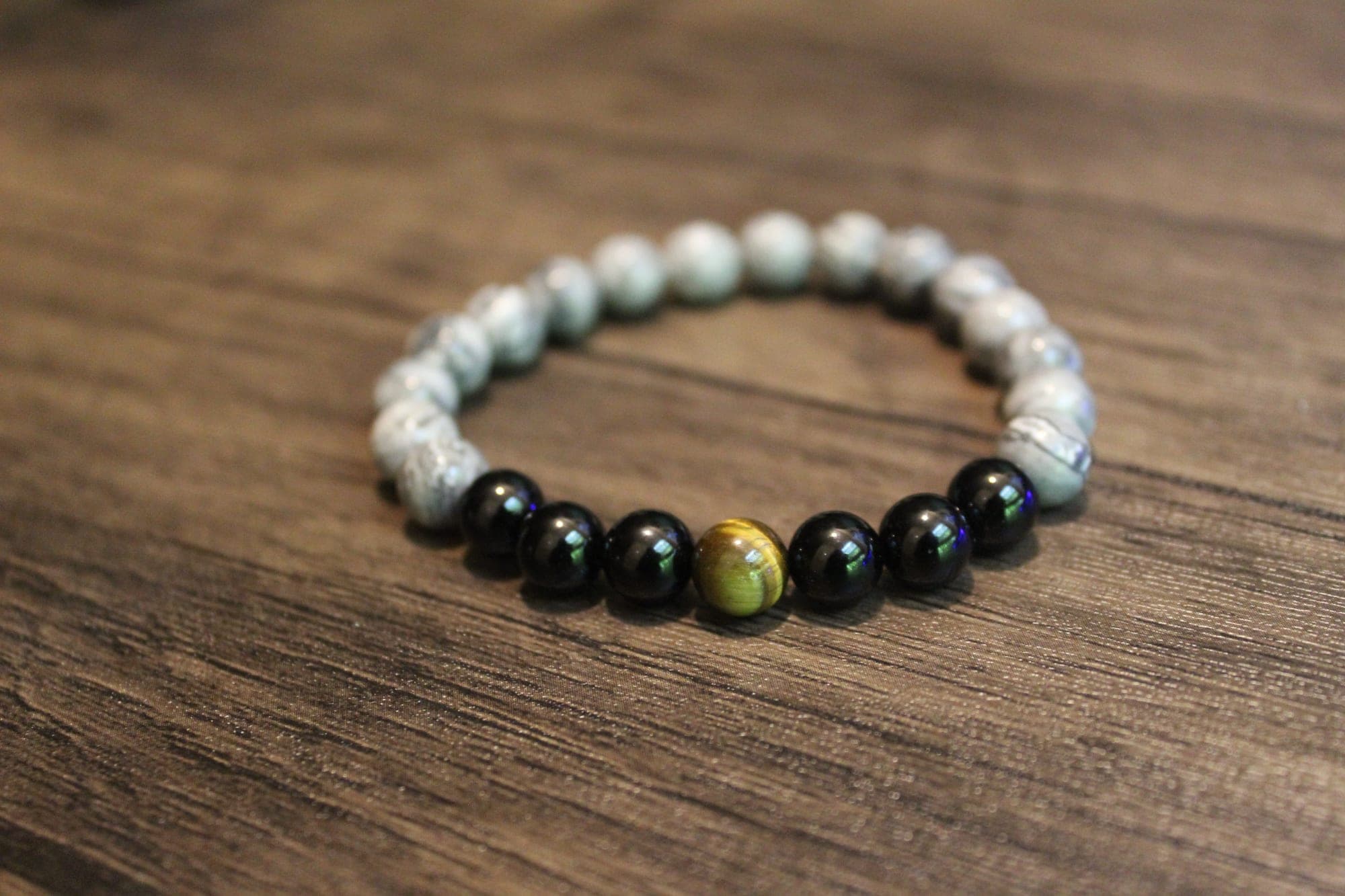
Grounding Manifestation Energy Bracelet
$24.00
Focus Manifest Energy Bracelet
$24.00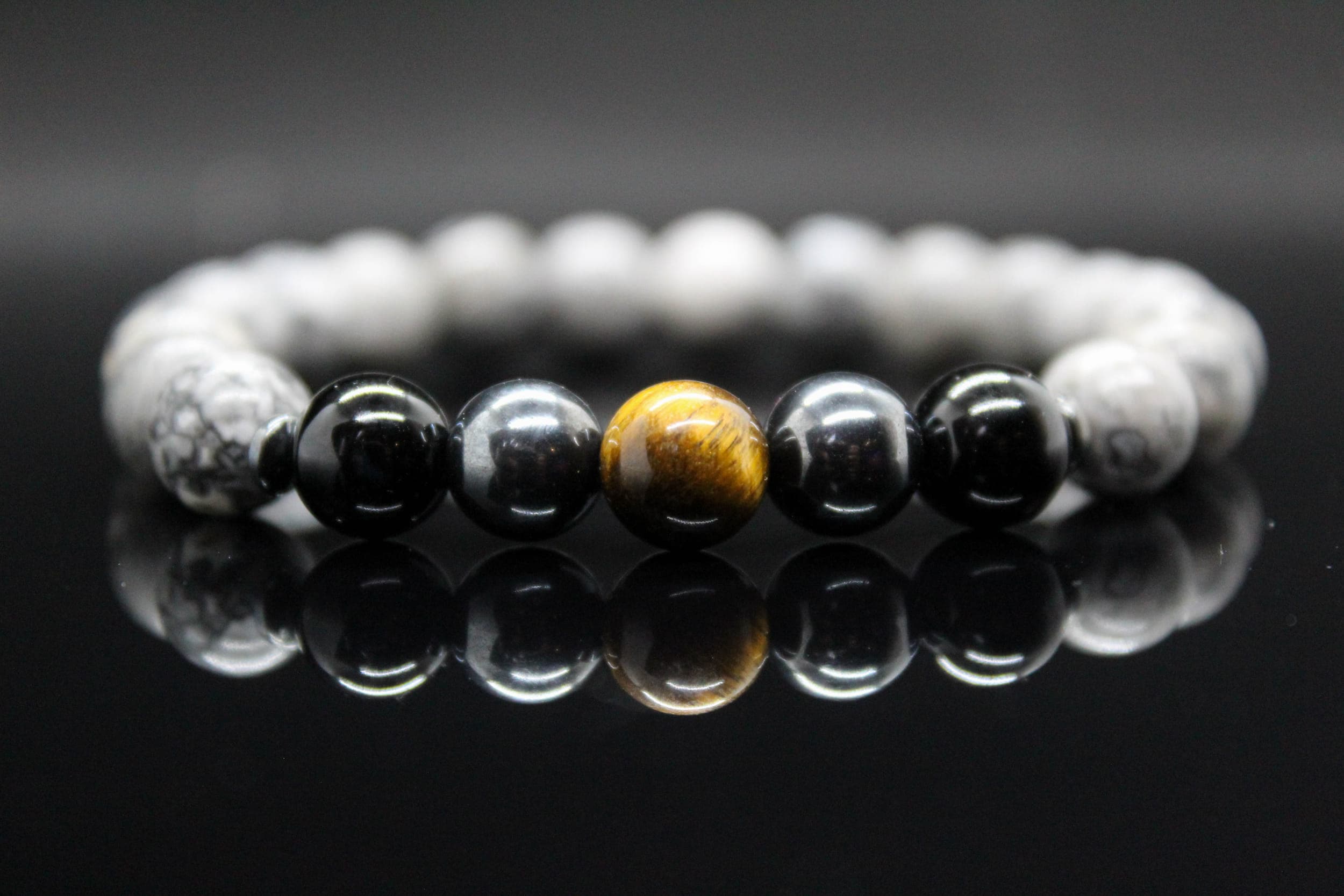
Energetic Balance Energy Bracelet
$24.00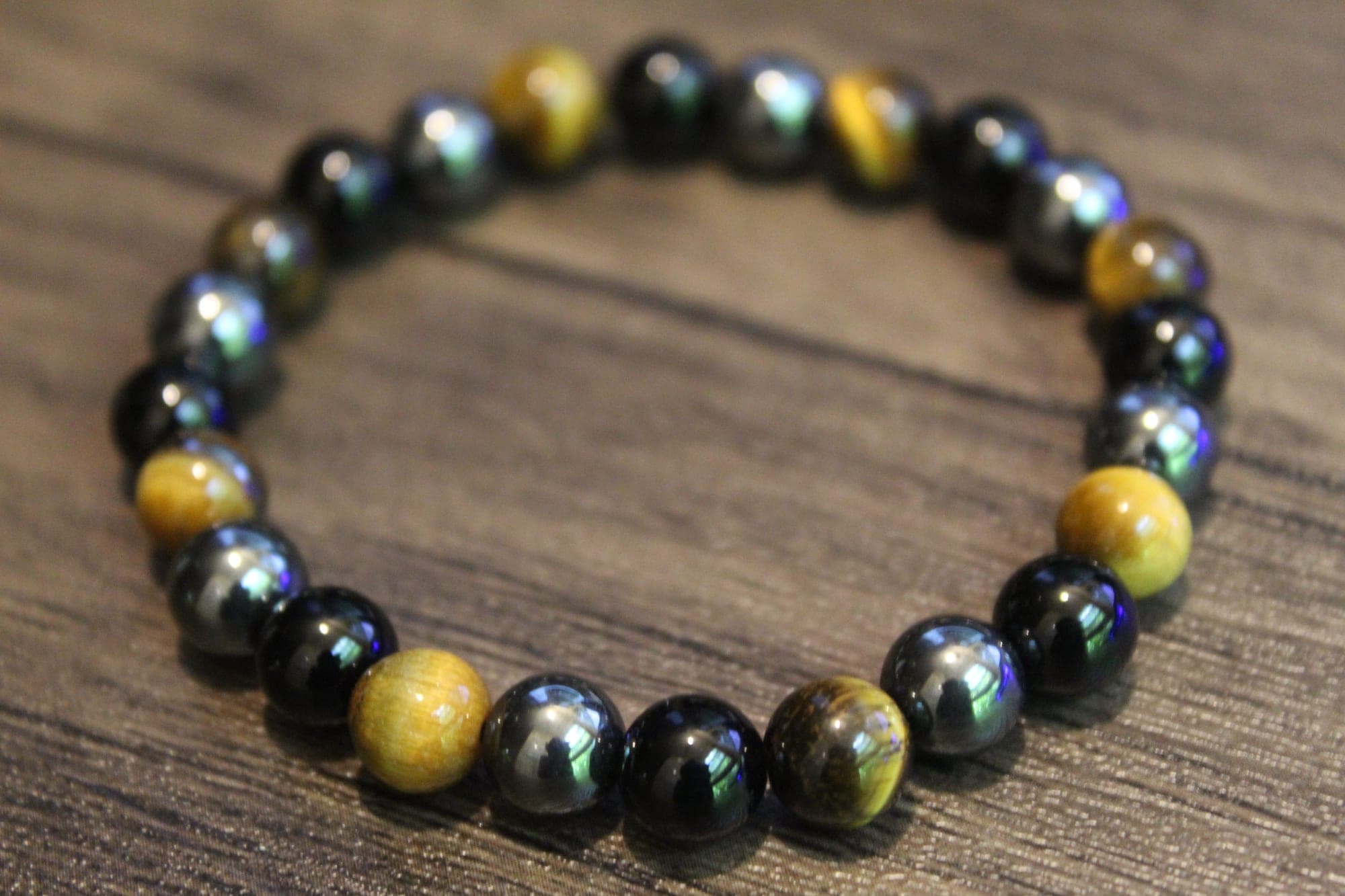
Ground Balance Manifest Energy Bracelet
$33.00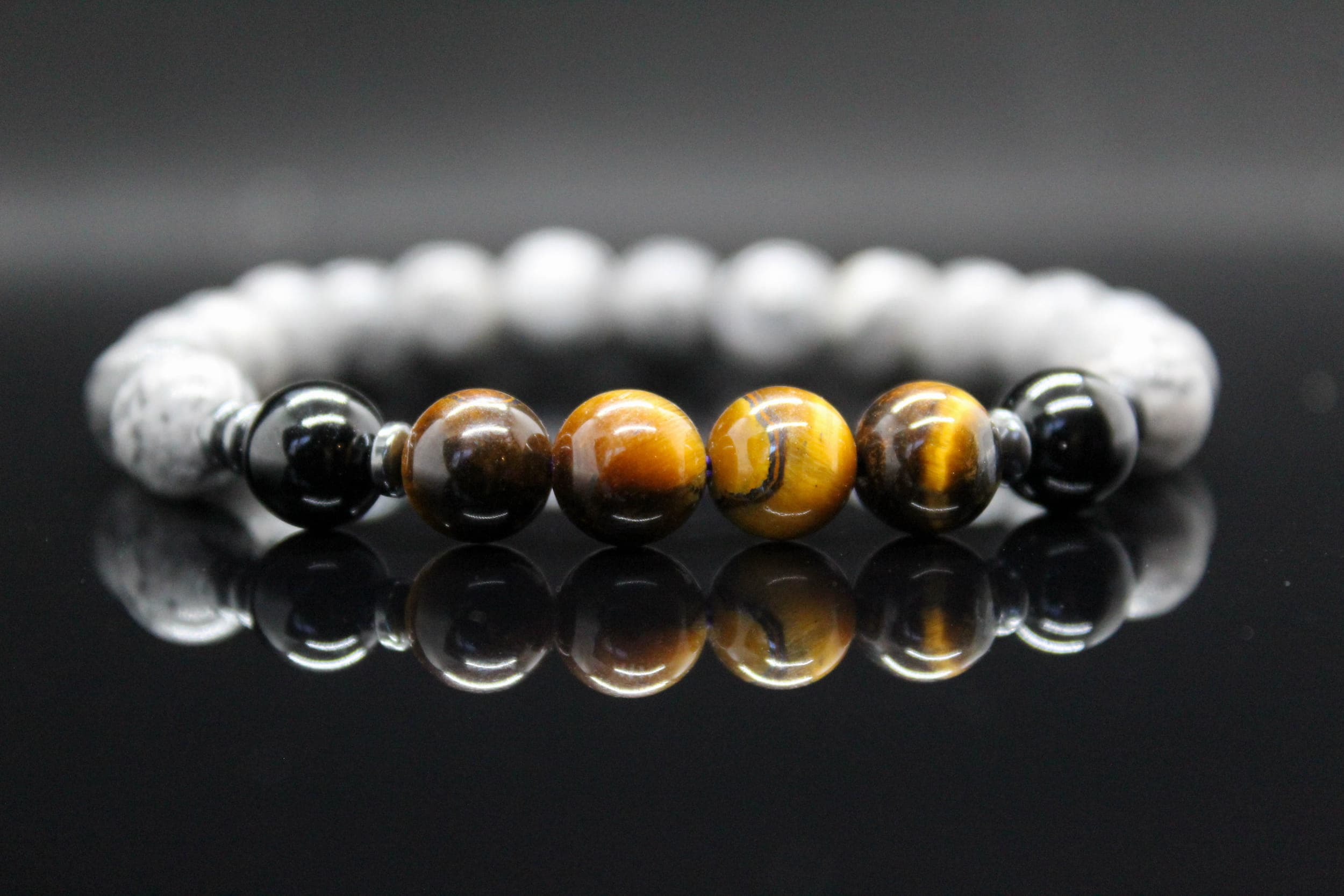
Manifestation Flow Energy Bracelet
$24.00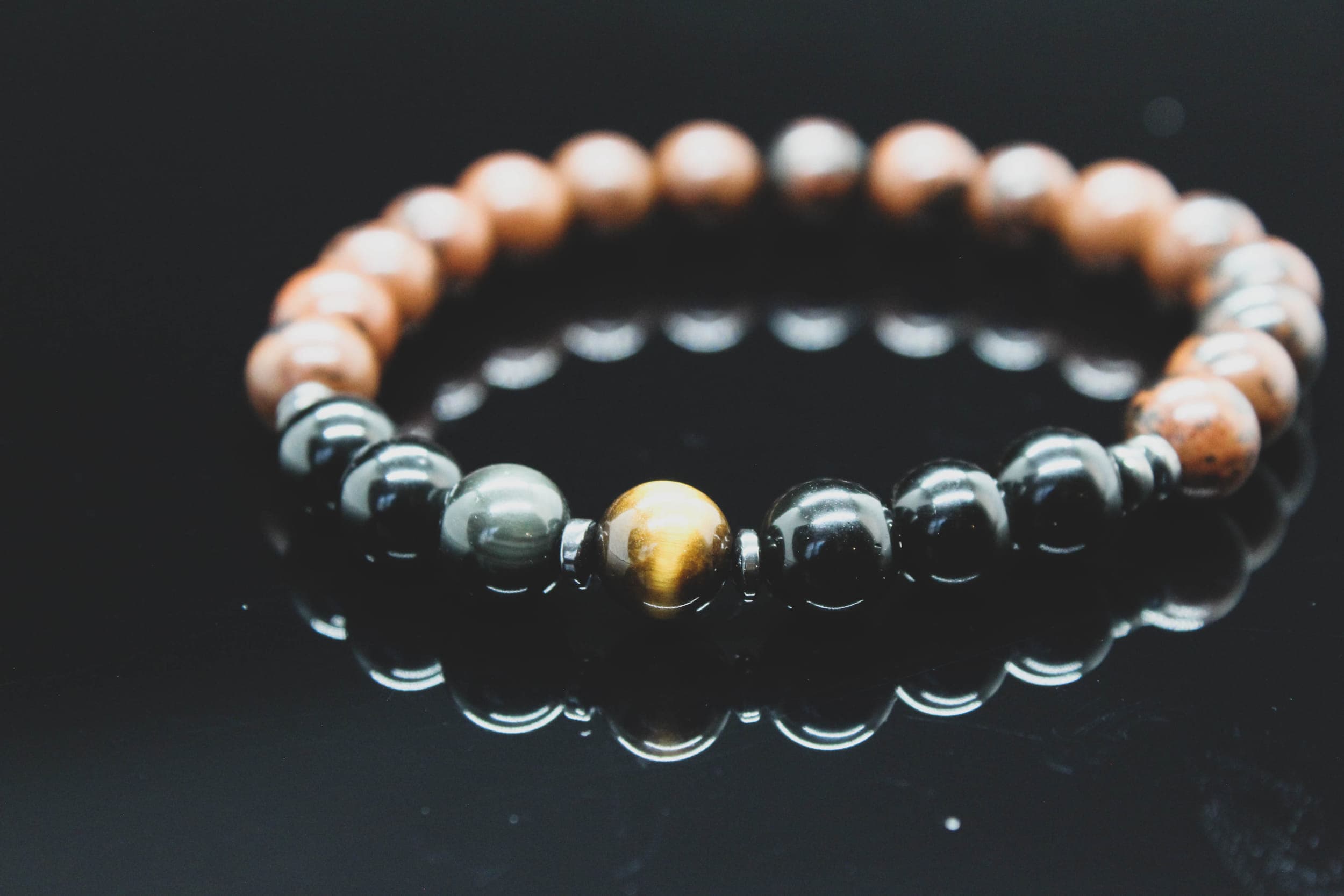
Grounding Self-Love Energy Bracelet
$24.00Pairings
Tiger's Eye Pairs Well With
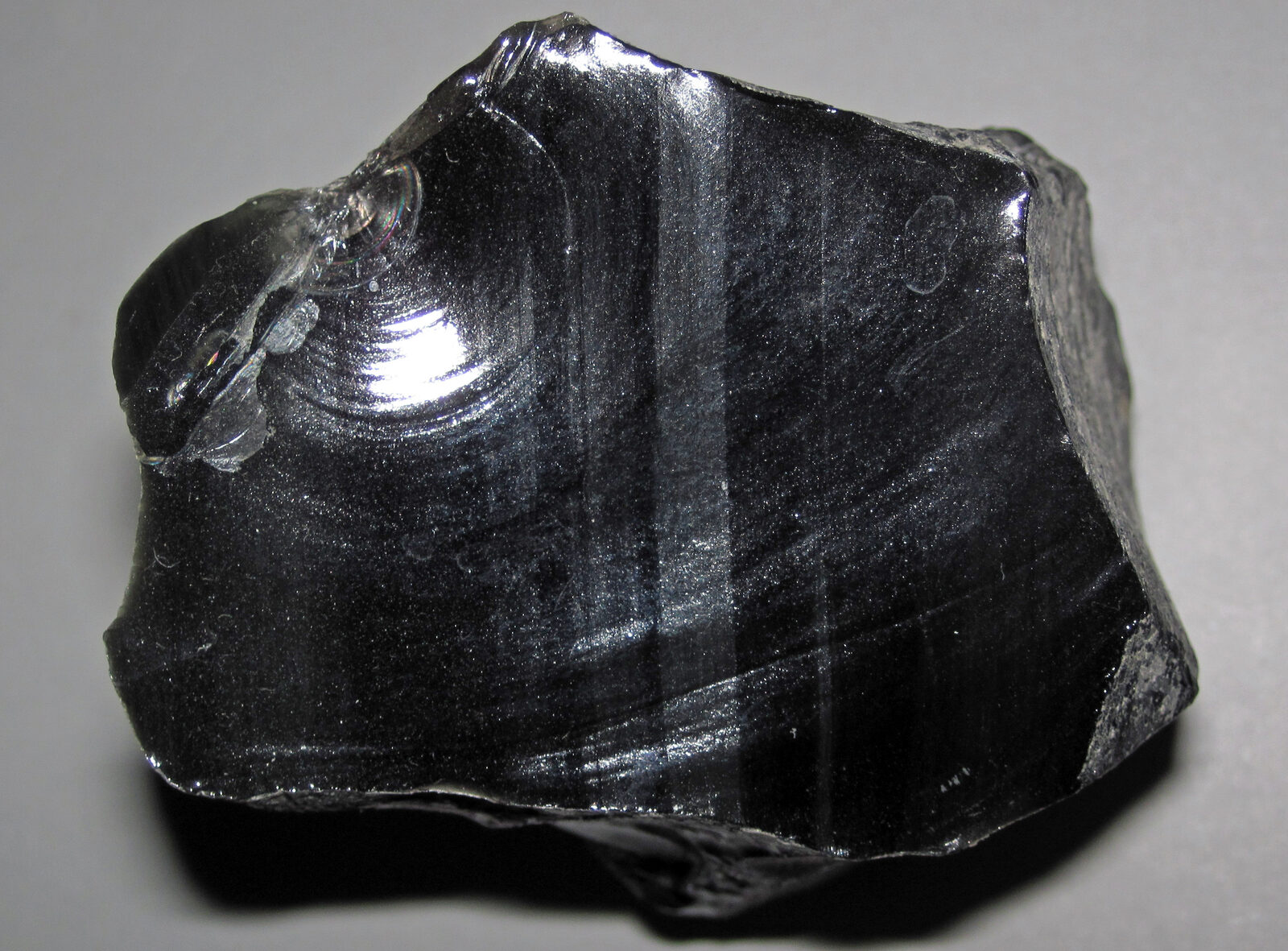

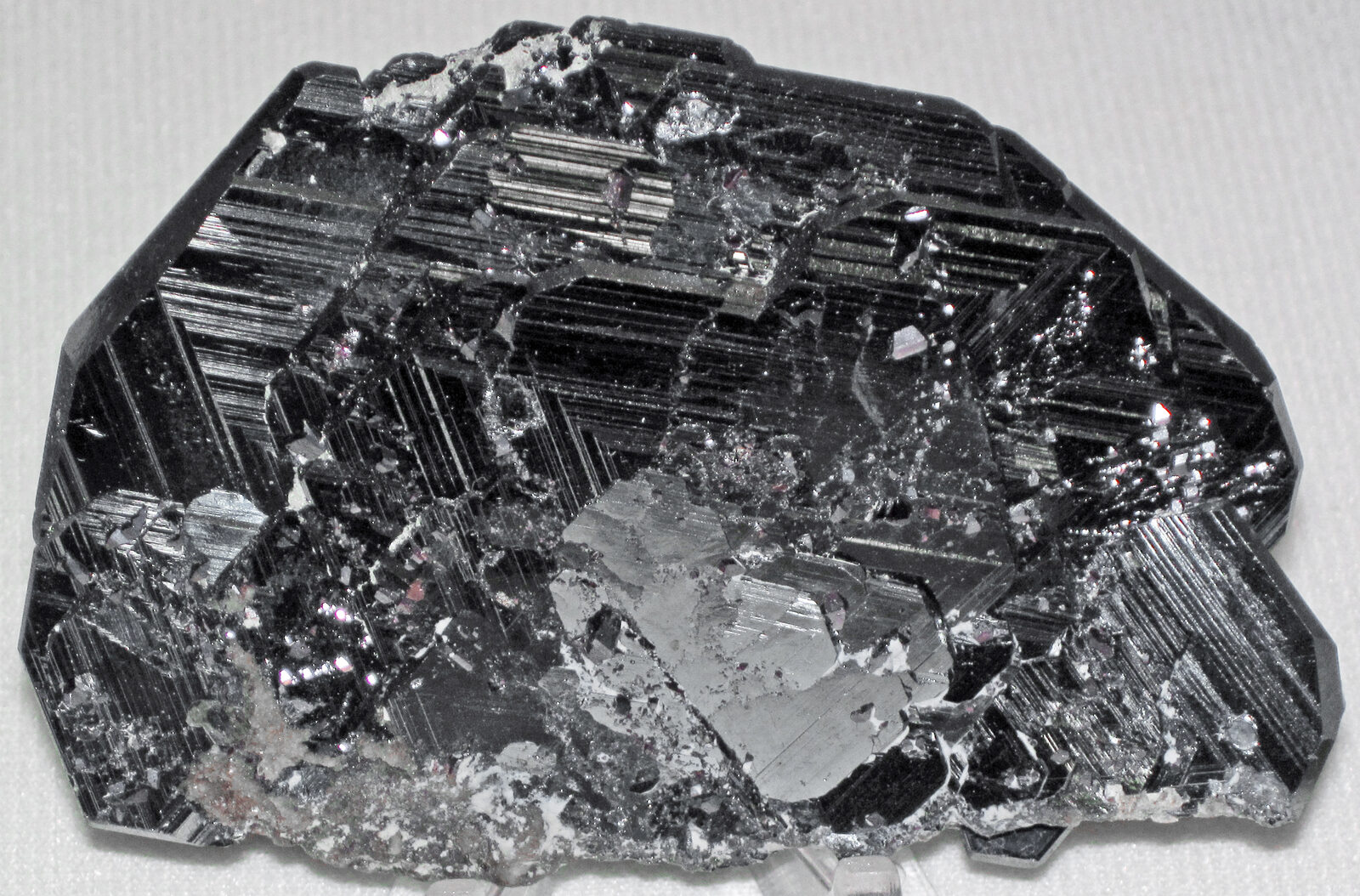
Black Obsidian + Tiger's Eye + Hematite
Triple protection
A three-stone shield: obsidian blocks what's coming in, tiger's eye steadies your nerve, hematite keeps you grounded through it. Popular enough that it's also sold pre-strung as a single bracelet.
Read more →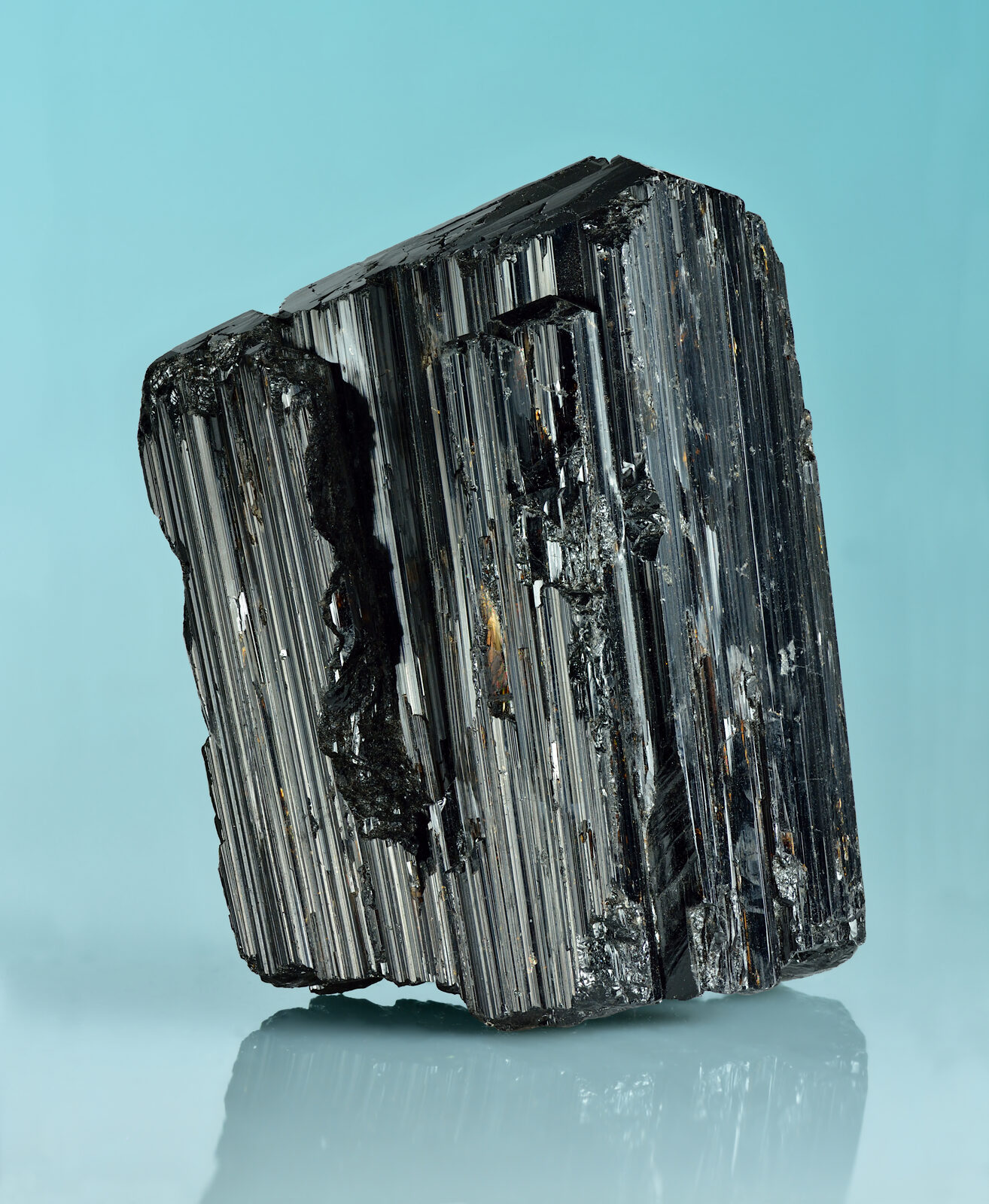
Black Tourmaline + Tiger's Eye
Working-day pocket pair
A practical, wearable combination for the office or a long day out — tourmaline as a shield against other people's static, tiger's eye to keep you moving forward through it.
Read more →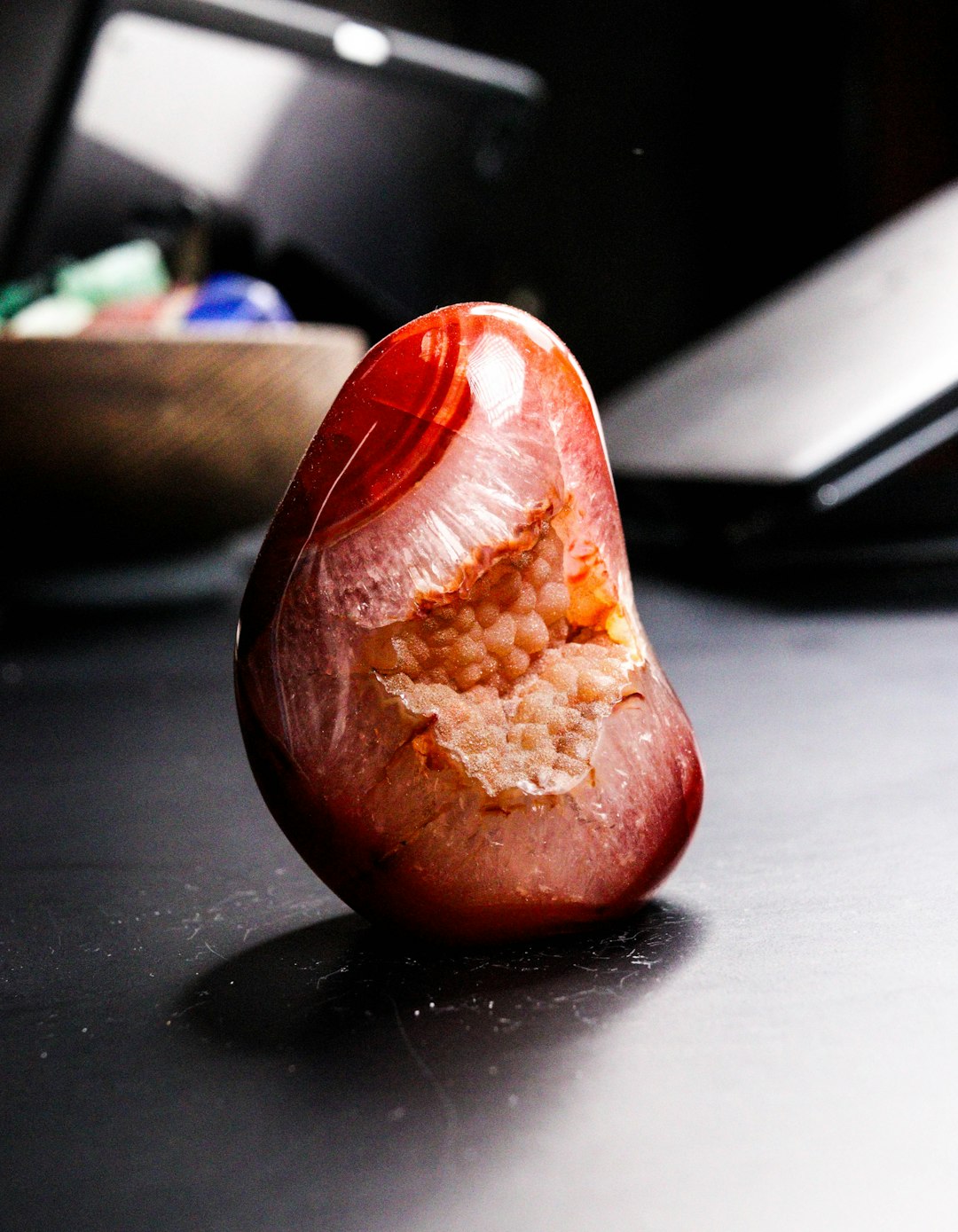
Carnelian + Tiger's Eye
Confidence, courage, follow-through
Carnelian gets a creative idea moving; tiger's eye supplies the steady nerve to actually finish it. Start it, then finish it.
Read more →