Photo: CarlesMillan · CC BY-SA 4.0 · Wikimedia Commons
Rhodonite
Stone of Forgiveness
Energy Focus
Meaning & uses
Rhodonite Meaning
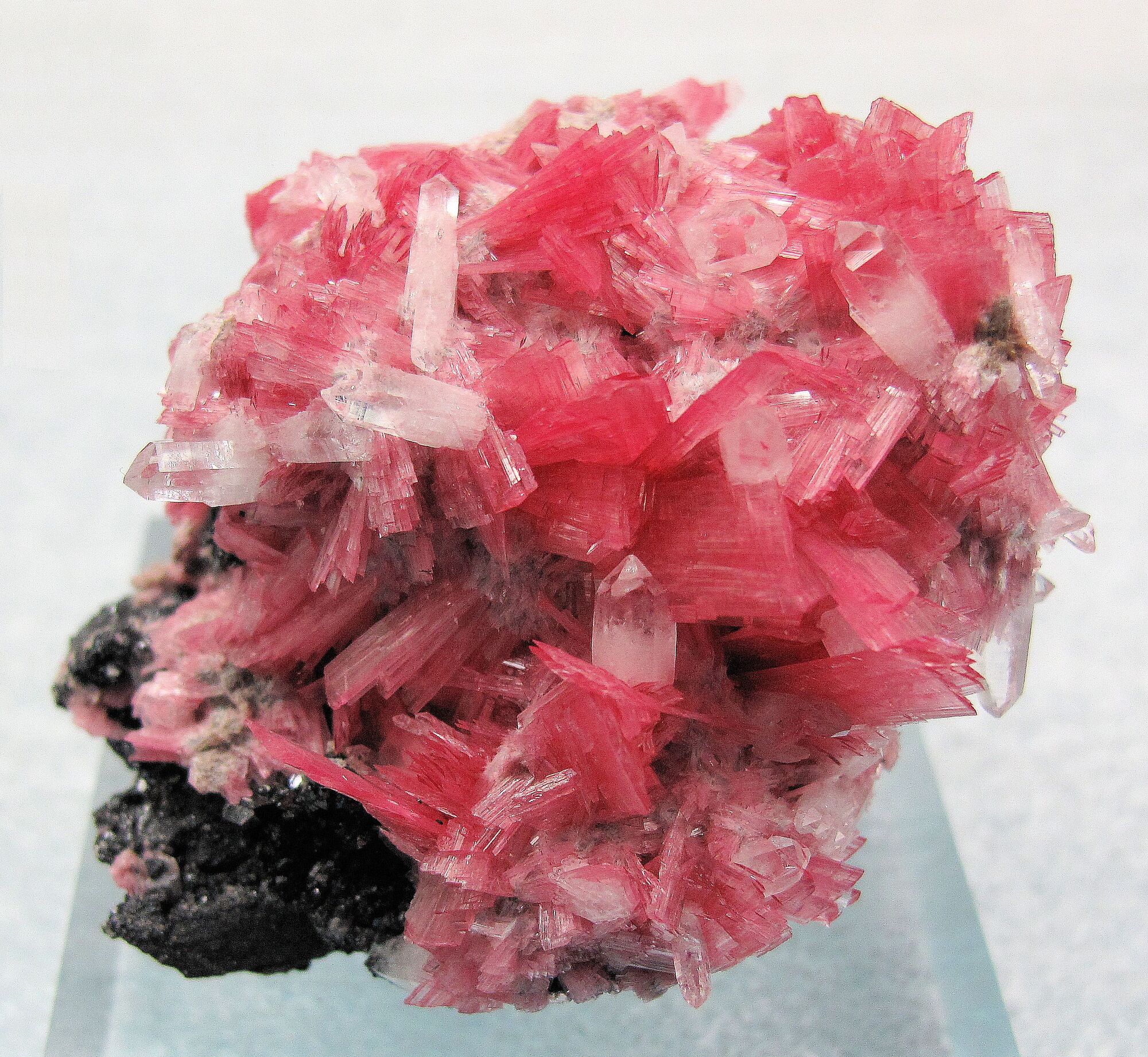
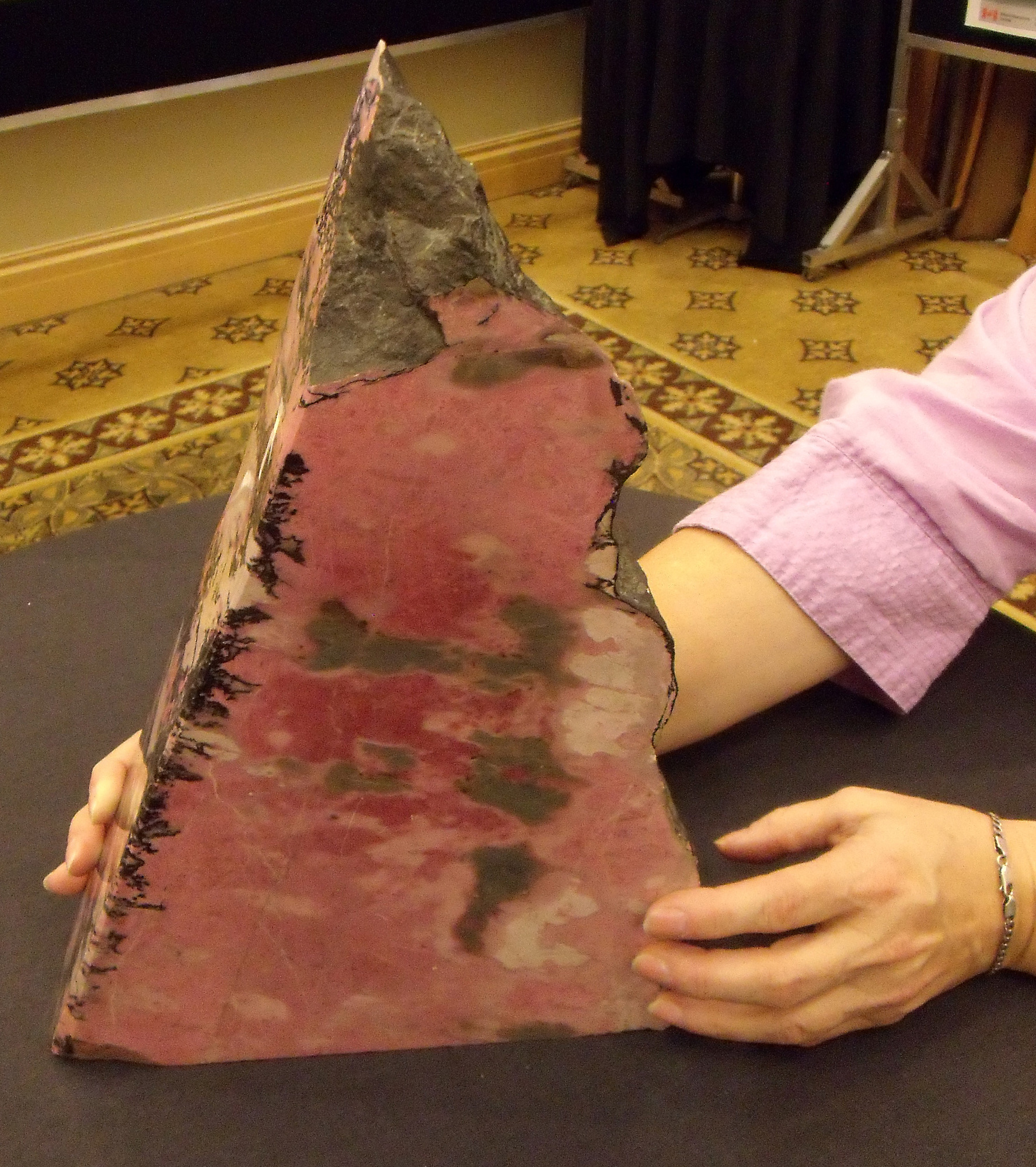
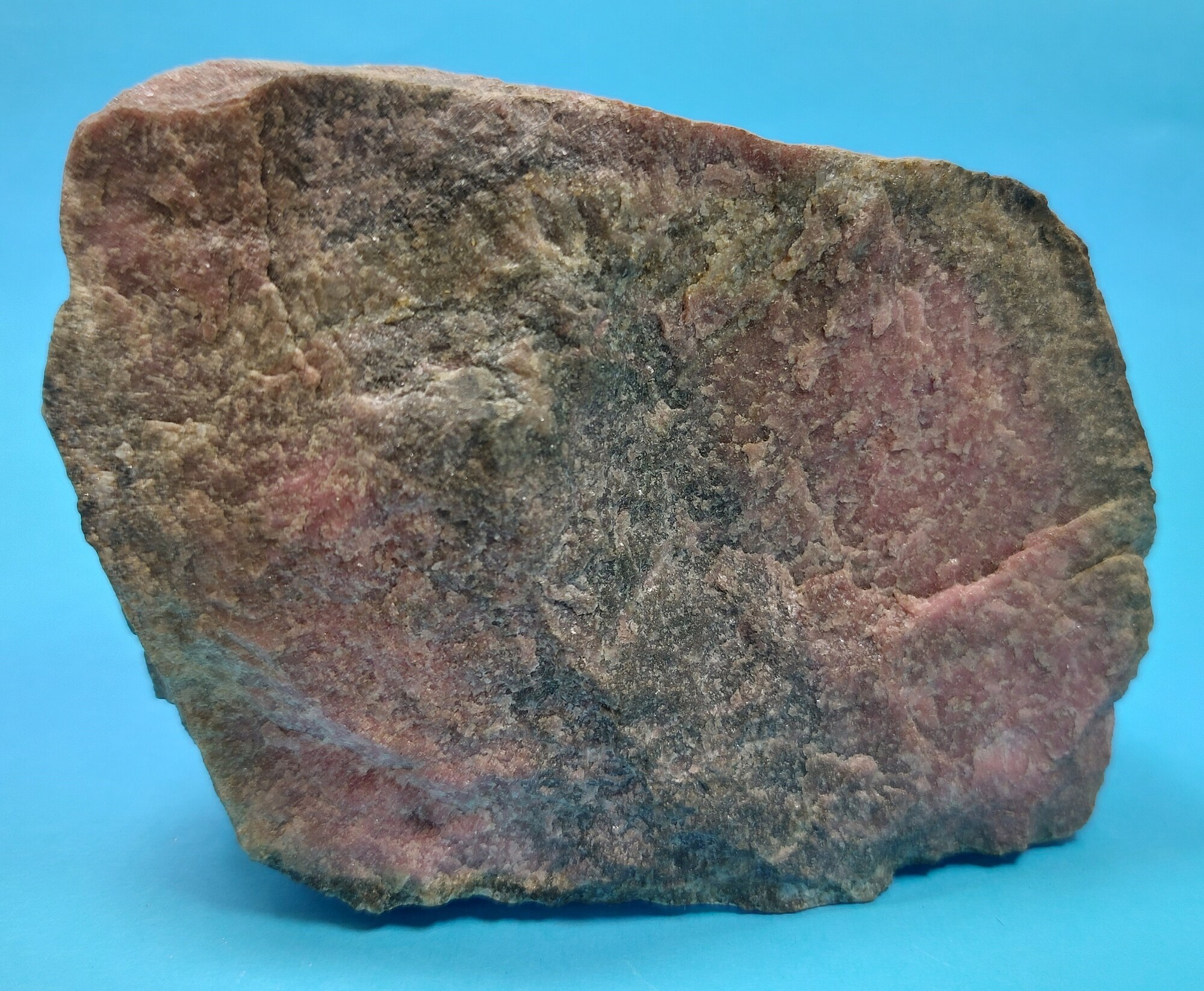
Streaked with black manganese veining through a rich pink-to-red body, Rhodonite is traditionally carried as a stone of forgiveness — for others, and just as often for oneself.
What Is Rhodonite?
Rhodonite is a manganese silicate, its pink-to-red color coming directly from the manganese in its chemical structure, typically threaded with black veining from manganese oxides that formed as the stone weathered. It's frequently confused with Rhodochrosite, a manganese carbonate that shares a similar pink color and name root, but the two are chemically distinct minerals, and Rhodonite's black veining is one of the more reliable ways to tell them apart at a glance, since Rhodochrosite more often shows white or cream banding instead.
Rhodonite forms in metamorphic rock, typically where manganese-rich sediments were altered by heat and pressure over long periods — a slow, transformative process that mirrors much of the stone's traditional symbolism.
A Stone With a History
Rhodonite has a particularly strong association with Russia, where large deposits in the Ural Mountains were worked extensively from the 18th century onward and used for grand decorative objects — vases, columns, and inlaid panels — commissioned by Russian nobility, including pieces still on display in St. Petersburg's palaces today. This historical Russian material, sometimes called Eosite, remains especially prized for its deep, saturated color.
Beyond Russia, Rhodonite has since been found in significant quantities in Australia and the United States, broadening its availability well beyond its original decorative-stone reputation.
Meaning and Symbolism
Rhodonite's meaning centers on forgiveness and emotional healing — releasing old resentment, whether directed at someone else or held against oneself, rather than dwelling on it. Its black veining running through pink is often read symbolically as a reminder that difficult experience and love can coexist within the same story rather than canceling each other out.
That forgiveness-focused reputation makes Rhodonite a stone particularly associated with healing after conflict, encouraging compassion without requiring someone to forget or minimize what happened.
Carried or worn to
- Support forgiveness of others and oneself
- Heal old emotional wounds
- Balance love with healthy boundaries
- Release resentment and self-criticism
Chakra, Zodiac & Element
Rhodonite is tied to the Heart Chakra, its pink color a direct match for compassion, though its darker veining ties it to grounded, practical love rather than purely soft sentiment. Its Earth element reinforces that same grounded, patient quality.
Astrologically it's linked to Taurus, a sign associated with steady loyalty and practical, patient love that matches Rhodonite's forgiveness-centered reputation.
How to Use and Care for Rhodonite
At 5.5–6.5 on the Mohs scale, Rhodonite is moderately durable but softer than quartz-family stones, so it suits pendants, earrings, and occasional-wear rings better than jewelry that takes daily knocks. It's generally safe to rinse in lukewarm water, though prolonged soaking and harsh chemicals are best avoided.
Because its color can be affected by prolonged direct sunlight, storing it away from constant strong light helps preserve its saturation over time.
Frequently Asked Questions
What's the difference between Rhodonite and Rhodochrosite?
Is Rhodonite safe to wear every day?
Can Rhodonite get wet?
What chakra is Rhodonite associated with?
Where does the finest Rhodonite come from?
A stone that holds both the wound and the healing in the same piece of rock.
Shop by energy
Bracelets for the Heart chakra
We don't have a Rhodonite bracelet yet. These share its Heart chakra energy.
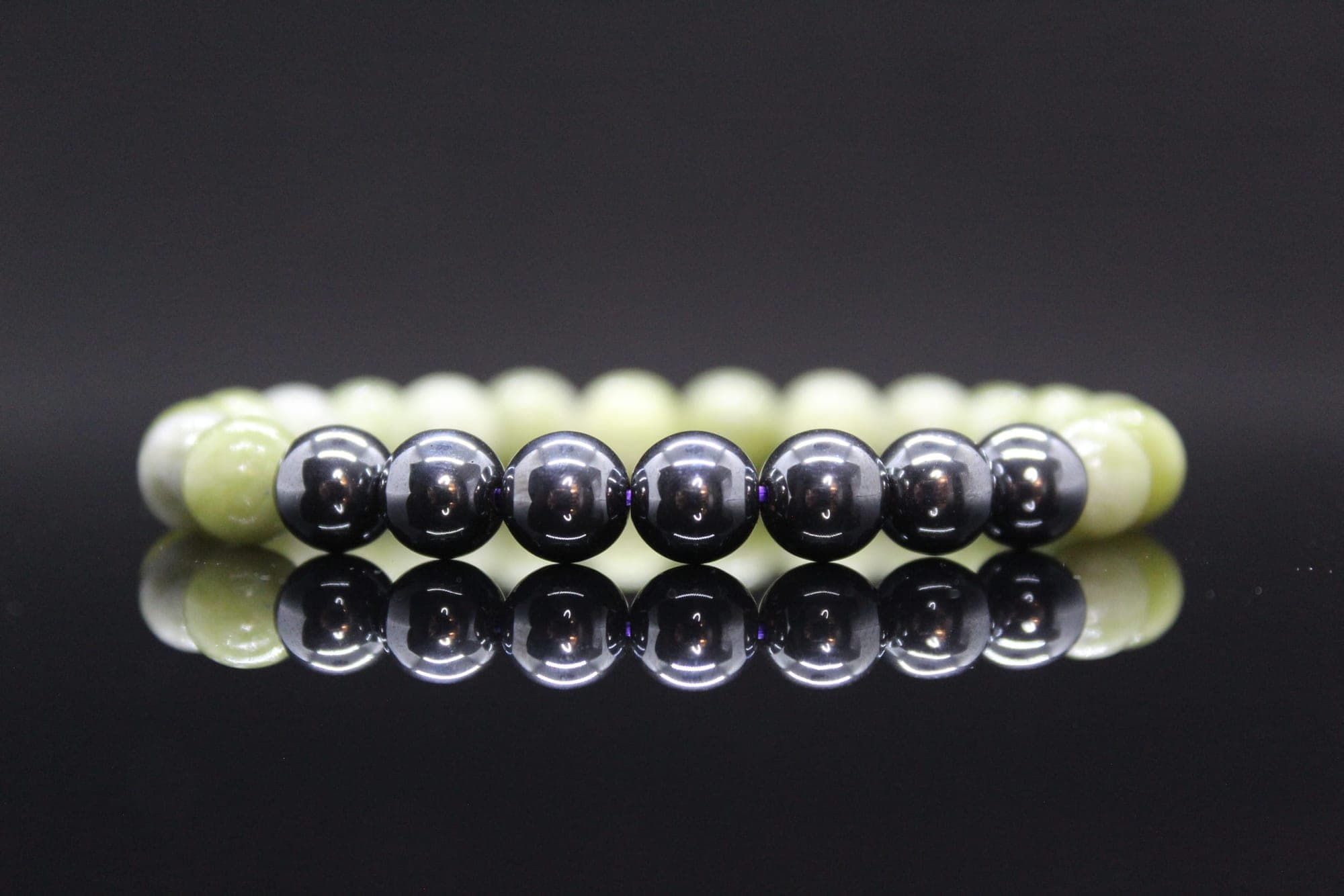
Life Force Energy Bracelet
$24.00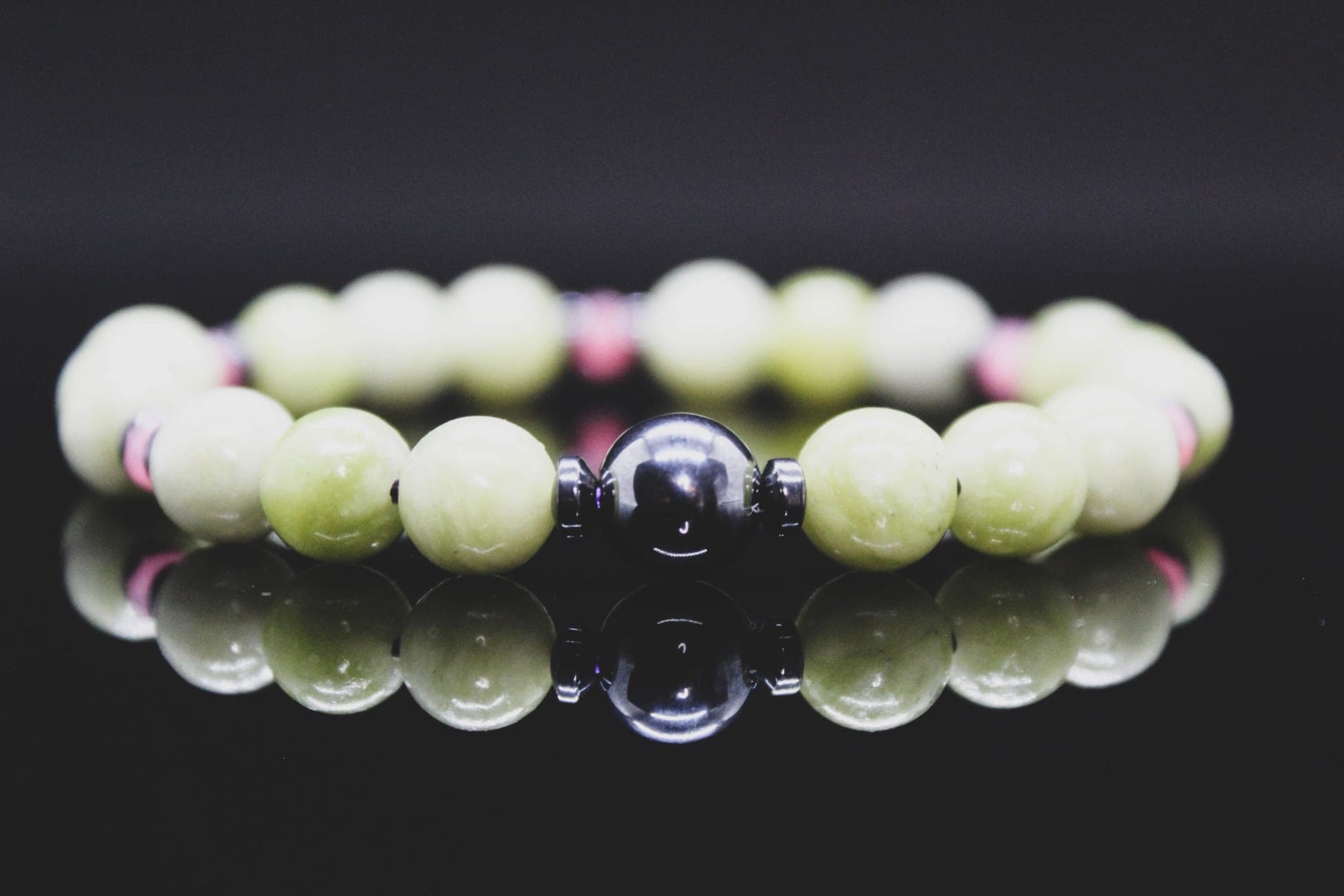
Grounding Love Energy Bracelet
$33.00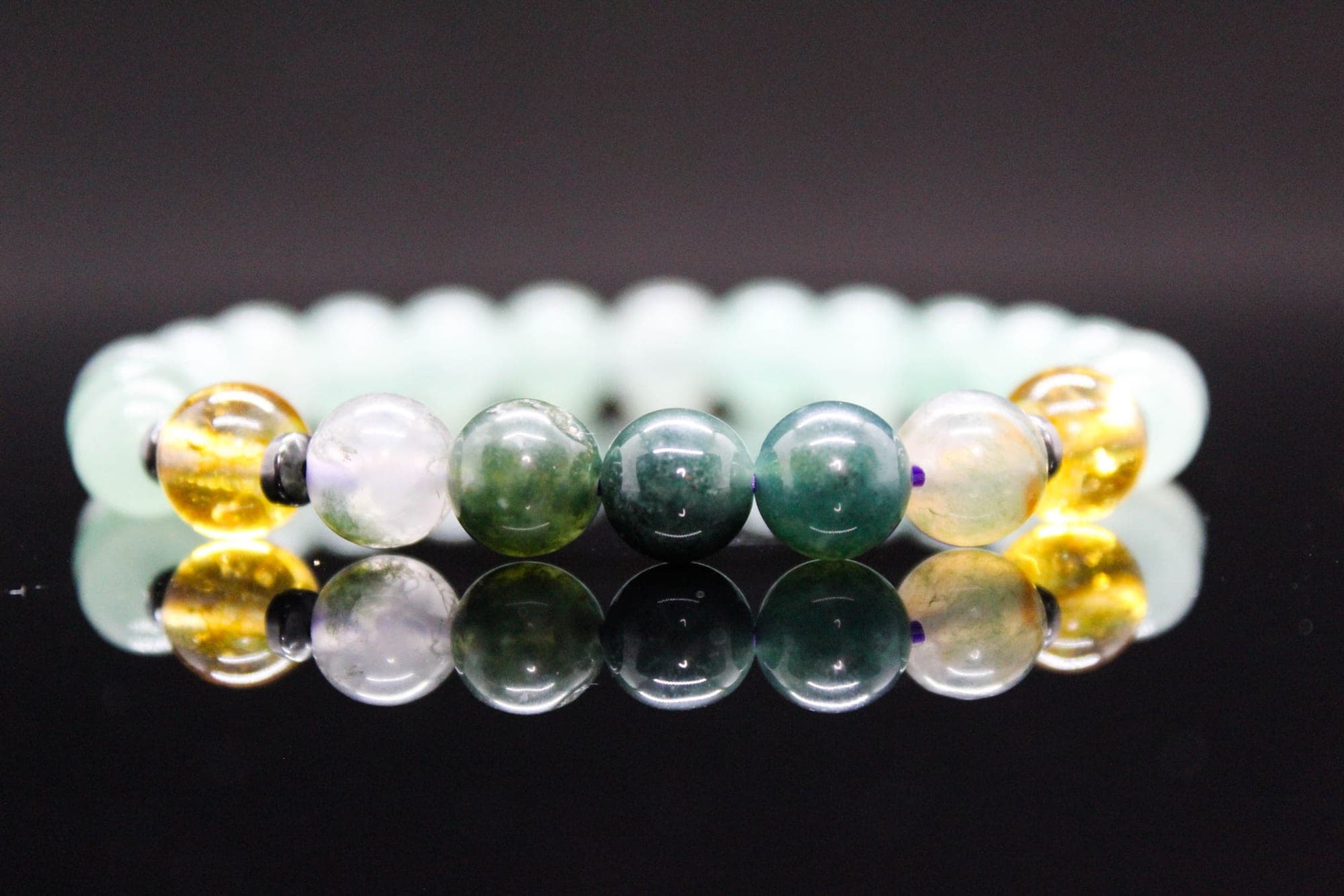
The Opulence Energy Bracelet
$33.00
Divine Calming Energy Bracelet
$24.00
Divine Thoughts Energy Bracelet
$33.00
More Love Energy Bracelet
$33.00
The Dinero Energy Bracelet
$33.00