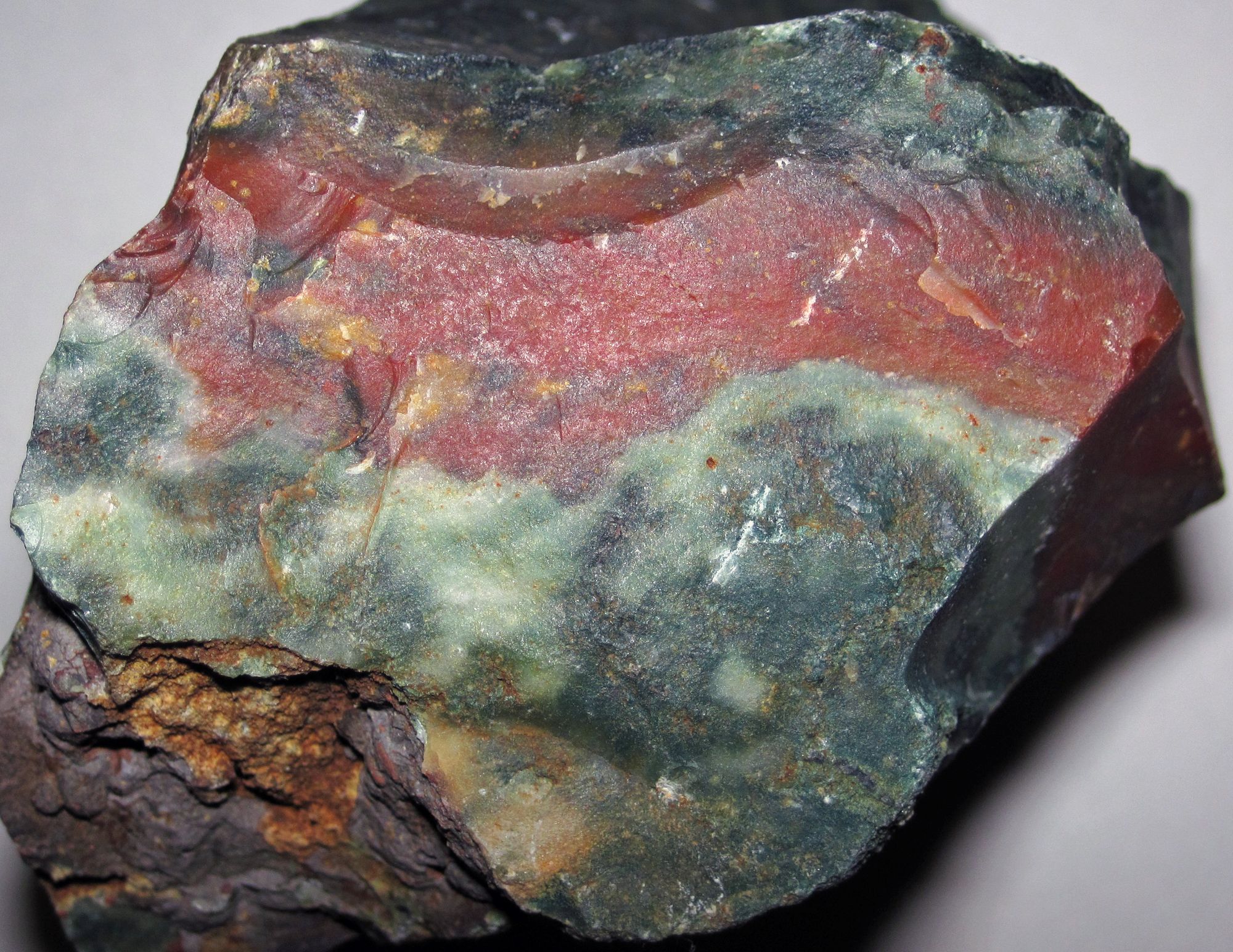
Photo: Ivar Leidus · CC BY-SA 4.0 · Wikimedia Commons
Prehnite
Stone of Unconditional Love
Meaning & uses
Prehnite Meaning
Pale, soft-edged, and gently translucent, Prehnite carries a quieter kind of love than most heart-associated stones — less a dramatic gesture, more a steady presence that doesn't need to prove itself.
What Is Prehnite?
Prehnite is a calcium aluminum silicate that typically forms inside gas cavities in basaltic and other volcanic rock, often growing alongside Apophyllite and various zeolite minerals in the same pockets. Rather than forming sharp, well-defined individual crystal points, it more commonly grows as rounded, grape-like botryoidal clusters or as fine, radiating needle-like sprays — soft, layered shapes rather than dramatic geometric ones, which is part of why the finished stone reads as gentle even before its meaning enters the picture.

South Africa's Cape of Good Hope region is Prehnite's original source and remains historically significant, while Australia has become a major modern producer of gem-quality material. Its color comes from small amounts of iron substituting into the mineral's structure in place of aluminum — more iron generally means a deeper, more saturated green, while iron-poor specimens can turn up nearly colorless or white.
A Stone With a History
Prehnite holds a genuinely unique distinction in mineralogy: it was the first mineral ever formally named after a person. Colonel Hendrik von Prehn, a Dutch military officer stationed at the Cape of Good Hope in the late 18th century, brought specimens of the then-unclassified green mineral back to Europe, where German mineralogist Abraham Gottlob Werner — the same Werner who first described and named Kyanite around the same period — formally identified and named it in his honor in 1788 or 1789.
That naming milestone means Prehnite carries no ancient carving or amulet tradition the way stones identified centuries earlier do; its documented history begins squarely in the age of systematic European mineralogy rather than antiquity, making it one of the more recently named stones in this entire directory despite having formed underground for a very long time before anyone thought to describe it.
Meaning and Symbolism
Prehnite's "Stone of Unconditional Love" reputation grows out of its gentle, unassuming physical presence. It doesn't form the way flashier stones do — no sharp points, no dramatic single crystal to admire from one angle — and that soft, rounded, layered growth has made it a natural symbol for a quieter, steadier kind of love than the more intense stones in this directory represent: present without needing to announce itself.

That gentleness extends to how it's traditionally used: less a stone for confronting something difficult head-on, more one for sitting quietly with whatever's already present and trusting it without forcing anything.
Carried or worn to
- Support unconditional love and self-acceptance
- Ease anxiety with a calm, steady presence
- Deepen quiet intuition and inner trust
- Soften the urge to overthink or overanalyze
Chakra, Zodiac & Element
Prehnite is tied to both the Heart and Solar Plexus Chakras — Heart for its core association with love, Solar Plexus for the quiet, gut-level trust its meaning leans on rather than louder outward confidence. Its Earth element matches its volcanic-cavity origin, grounded and unhurried.
Astrologically it's linked to Libra, a sign built around balance and harmony — a natural match for a stone whose whole identity is steadiness rather than intensity.
How to Use and Care for Prehnite
At 6–6.5 on the Mohs scale, Prehnite is durable enough for regular wear in rings, bracelets, or pendants, holding up comparably well to Moonstone or Labradorite. It's a relatively low-maintenance stone by this directory's standards — no unusual chemical sensitivities or directional softness to plan around, just the standard care any moderately hard stone benefits from.
A brief rinse in room-temperature water is fine for routine cleansing, though avoiding prolonged soaking and sudden temperature changes is good practice for any stone, Prehnite included.
Frequently Asked Questions
Why is Prehnite called the "Stone of Unconditional Love"?
Who was Prehnite named after?
Where does Prehnite come from?
Is Prehnite safe to wear every day?
Can Prehnite get wet?
What chakra is Prehnite associated with?
A stone that doesn't ask to be noticed — only to be trusted.
Shop by energy
Bracelets for the Heart and Solar Plexus chakras
We don't have a Prehnite bracelet yet. These share its Heart or Solar Plexus chakra energy.
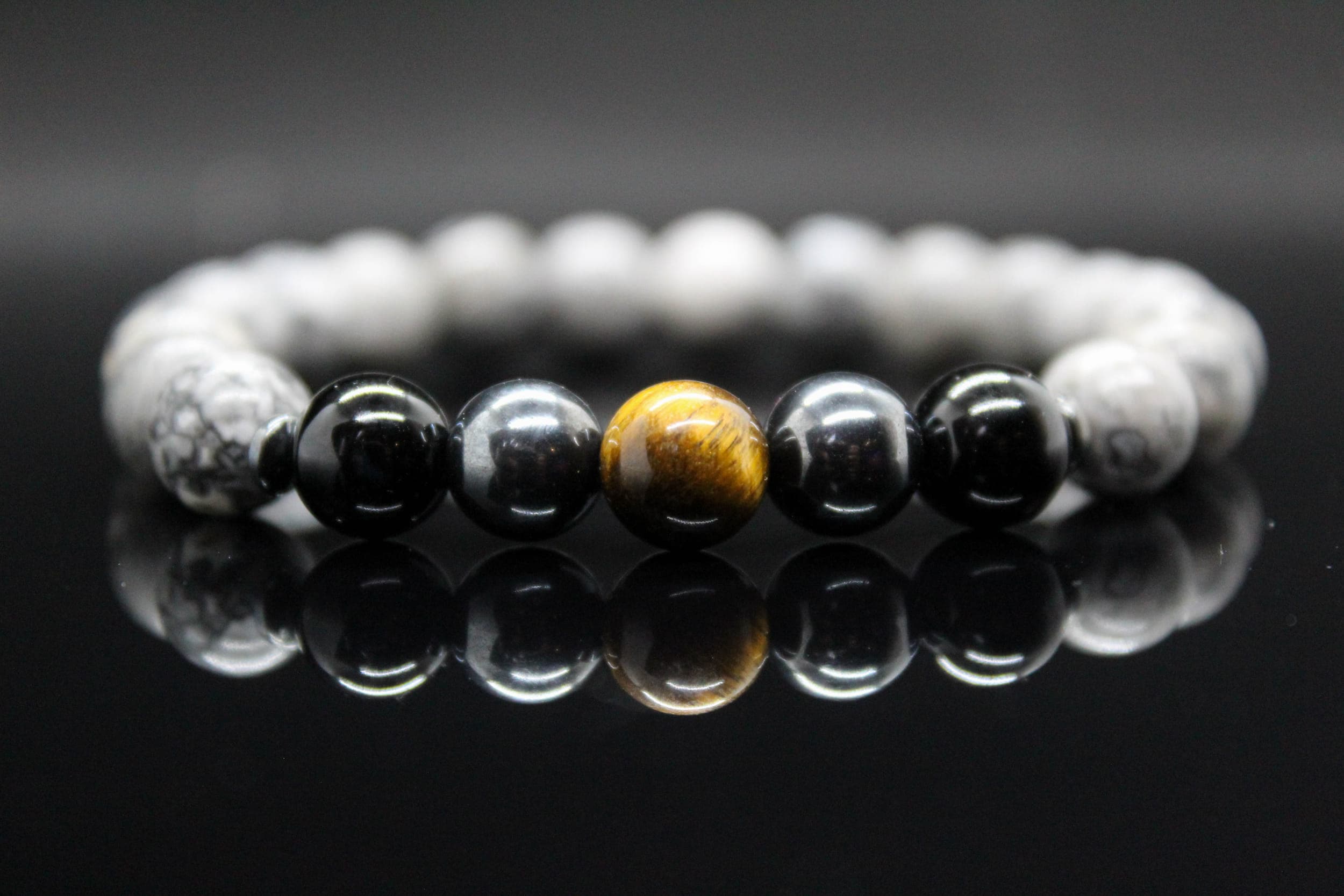
Energetic Balance Energy Bracelet
$24.00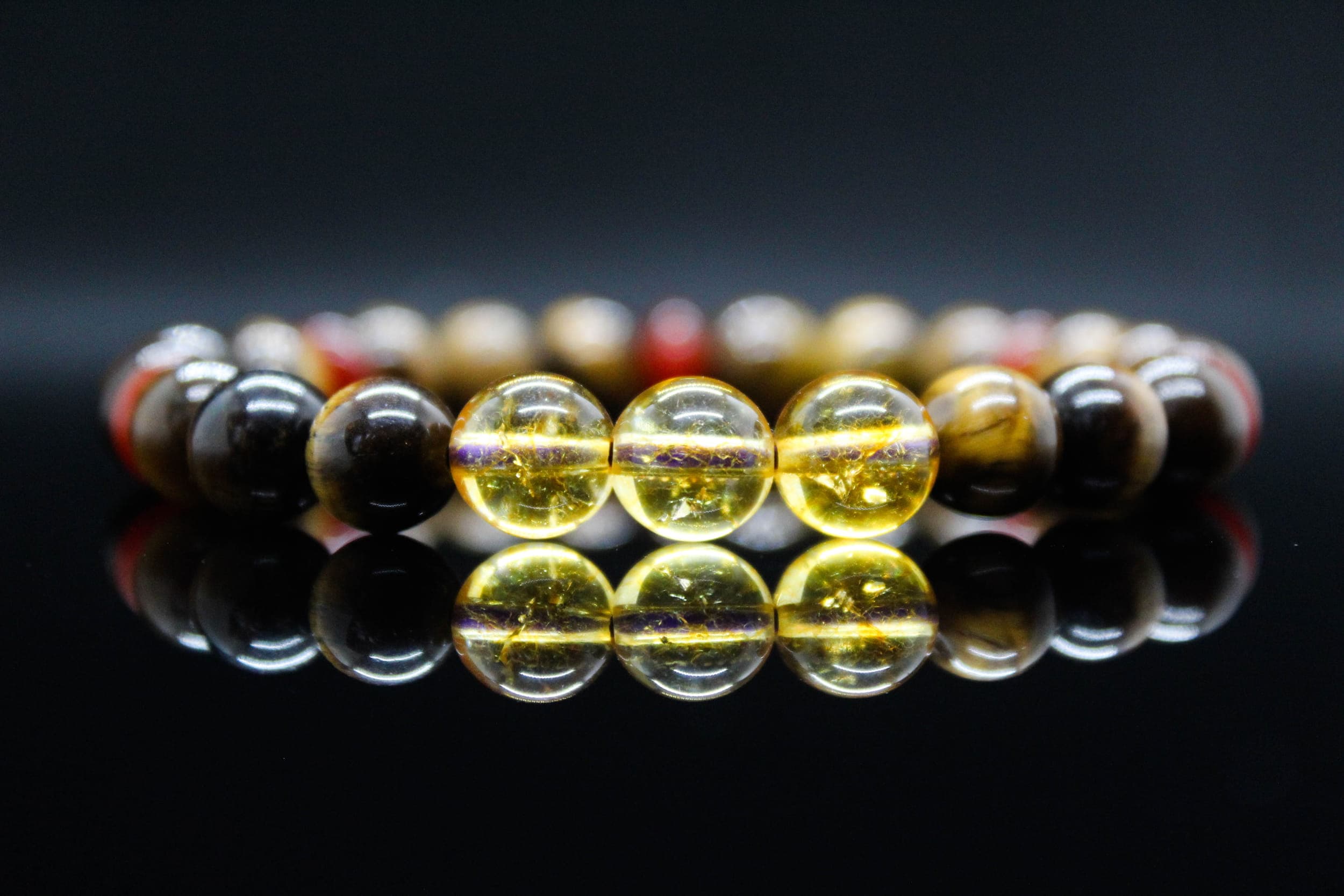
Focus Manifest Energy Bracelet
$24.00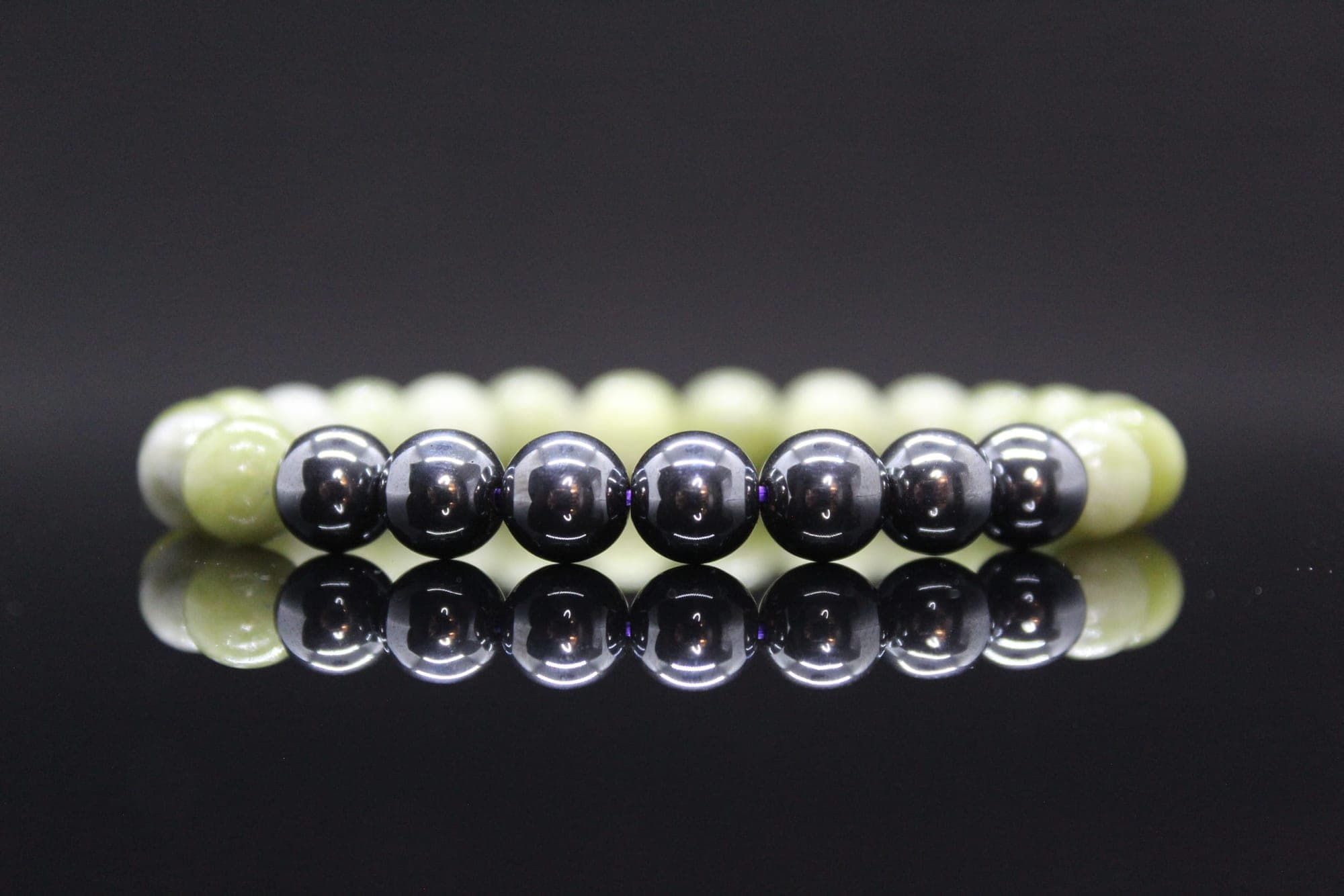
Life Force Energy Bracelet
$24.00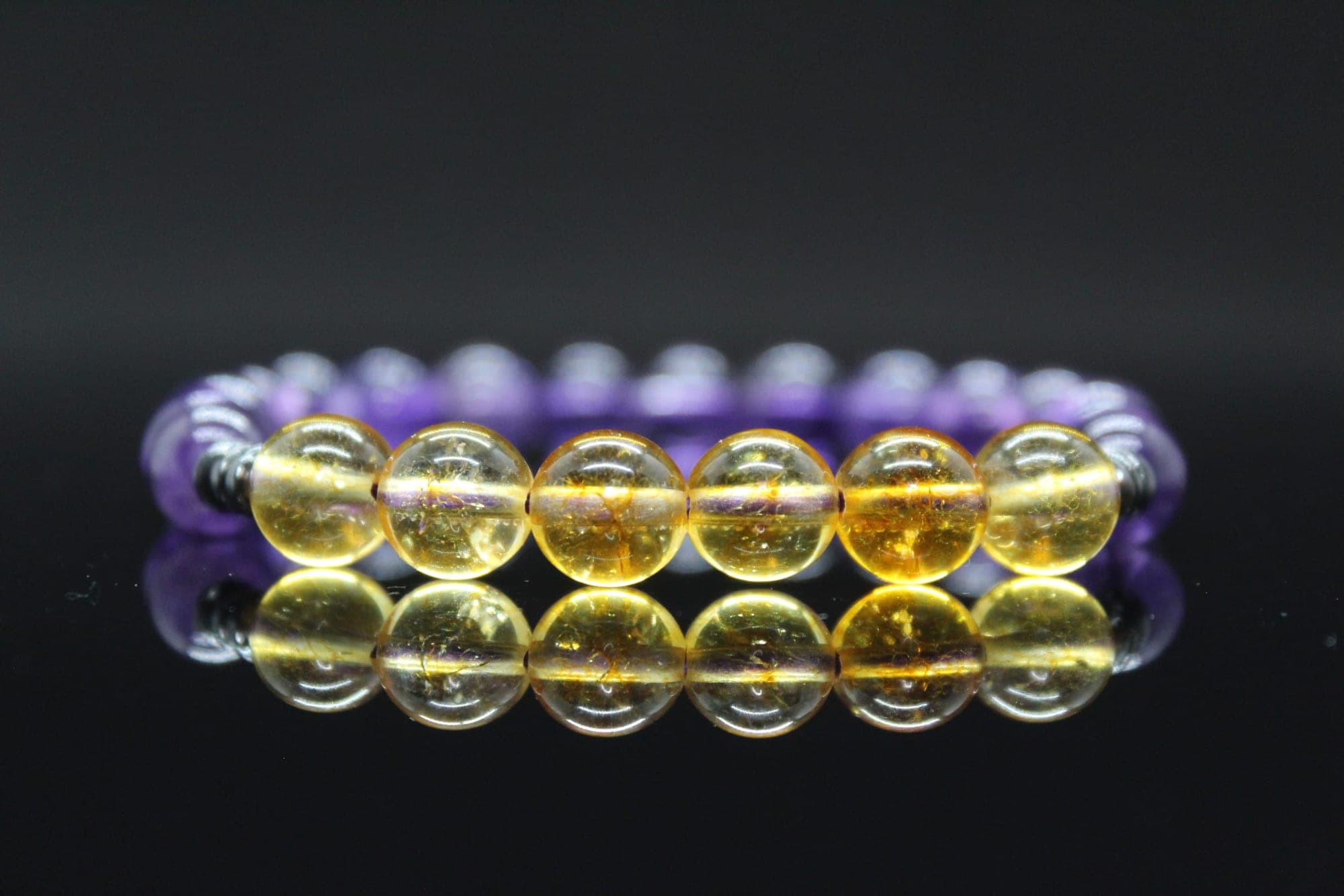
Clear Thoughts Energy Bracelet
$33.00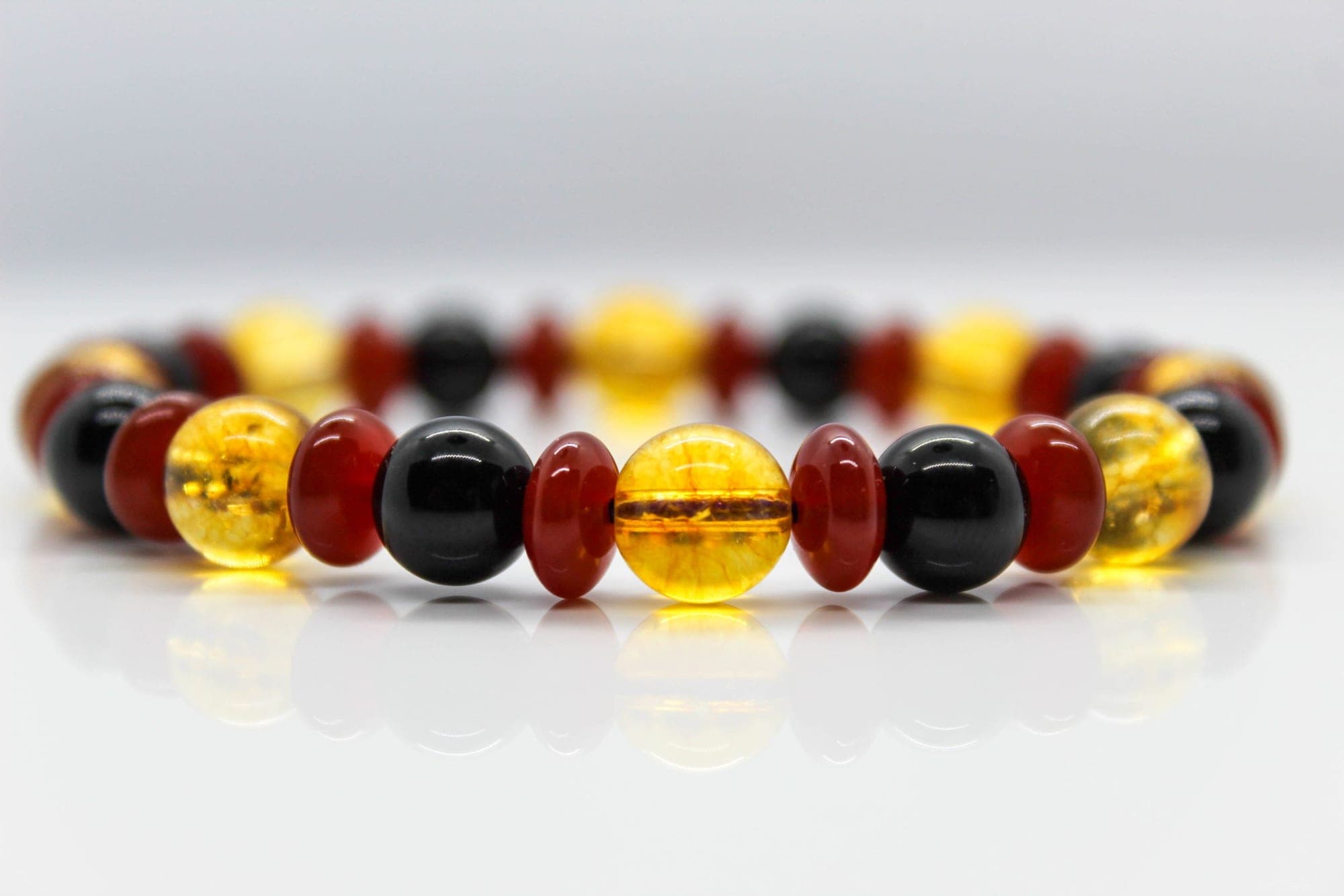
Protective Manifestation Energy Bracelet
$33.00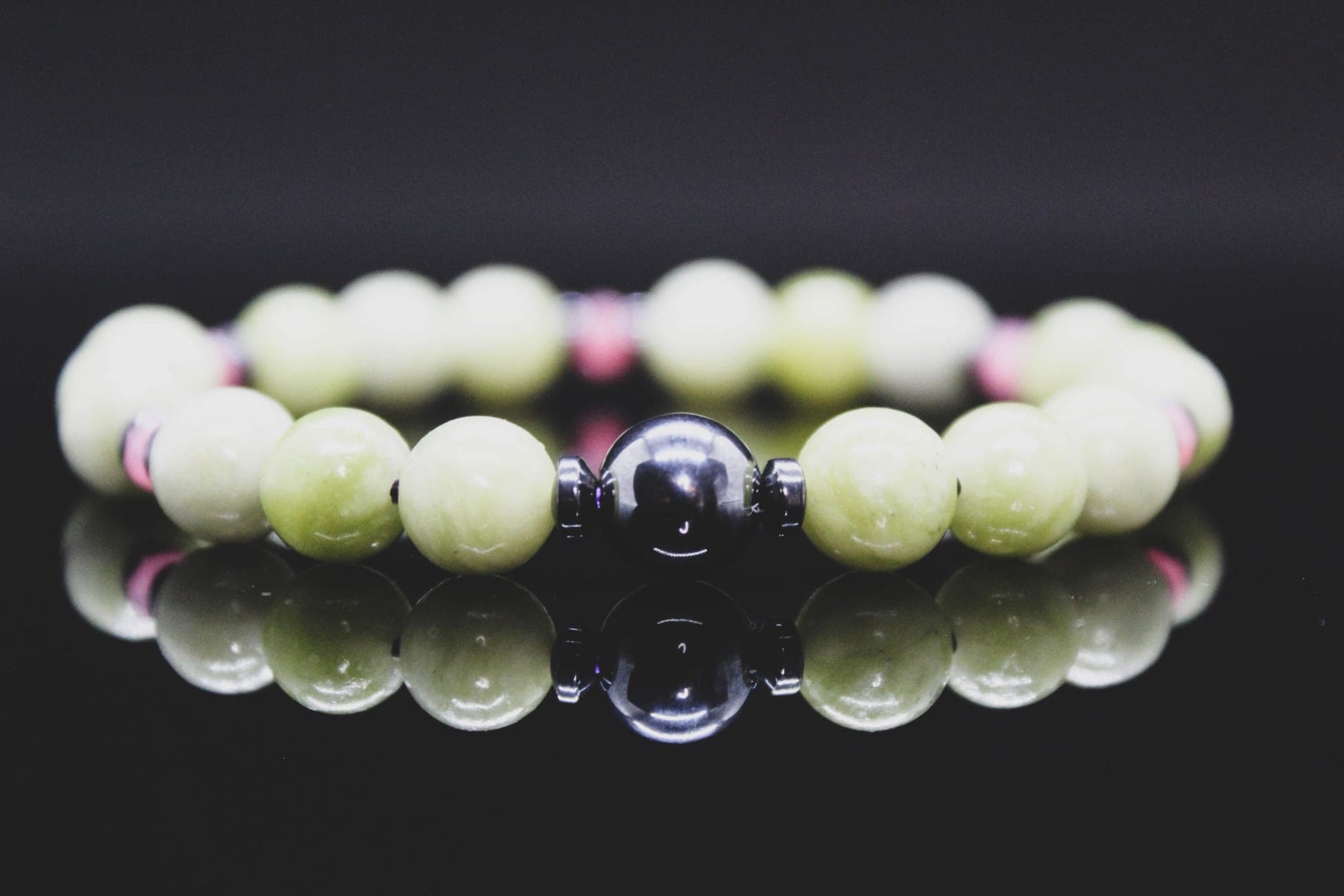
Grounding Love Energy Bracelet
$33.00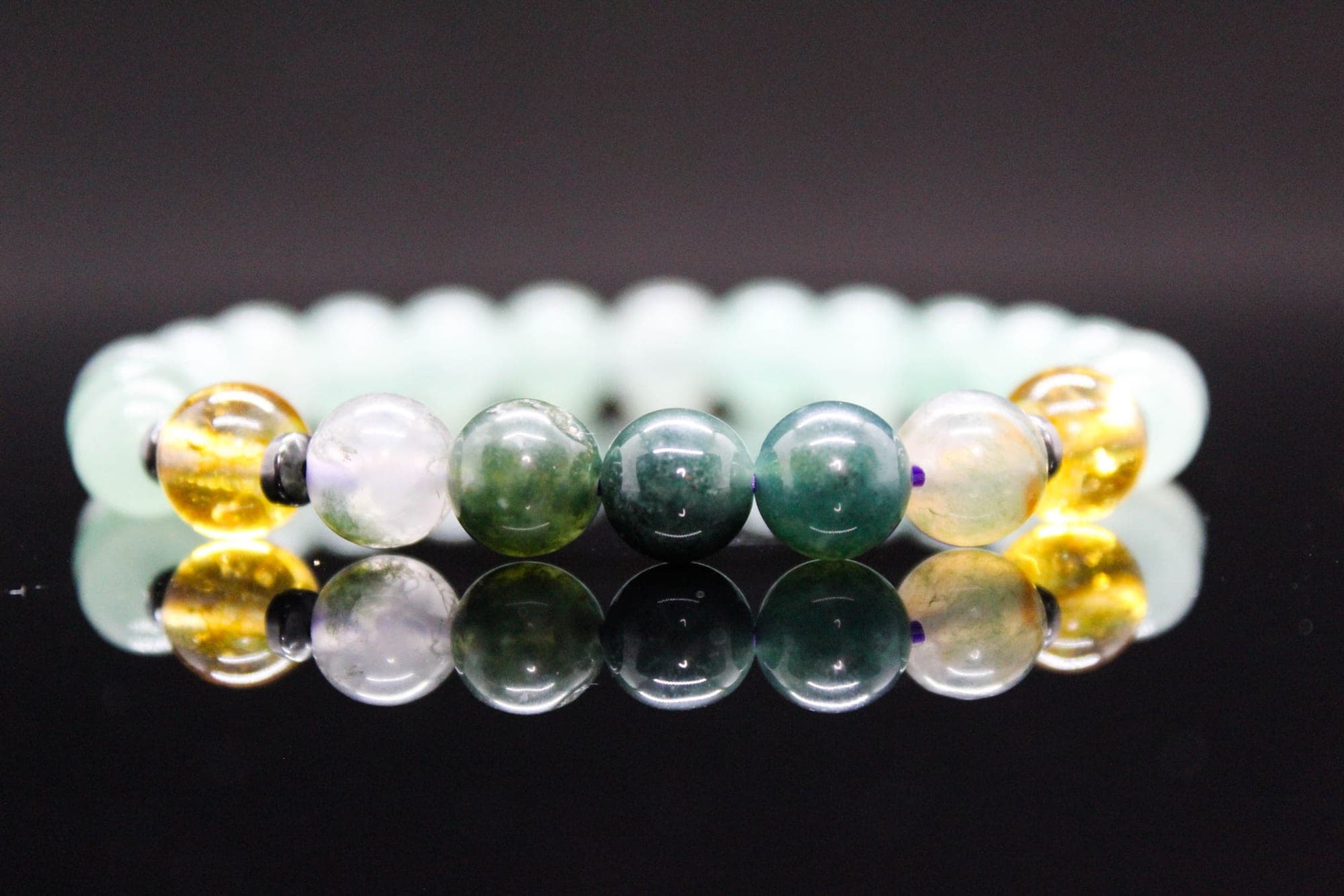
The Opulence Energy Bracelet
$33.00